REVIEW 4 major objections 4 minor 3 cited by
Nonperturbative Quantum Gravity in a Closed Lorentzian Universe
T0 review · 4 major / 4 minor · reviewed 2026-08-07 · deepseek-v4-flash
Pith's one-line read In a closed universe, quantum gravity can still make physical predictions: trace out the part you cannot see.
desk verdict A well-structured proposal that partial observability resolves the closed-universe predictivity problem; the mechanism is fresh, the toy model is honest, but the e^{-S_env} suppression rests on an unproven random-coefficient ansatz, so it lands as a promising framework rather than a derivation. read the letter →
The pith
A machine-rendered reading of the paper's core claim, the machinery that carries it, and where it could break.
The reading
What carries the argument
The load-bearing mechanism is the partial trace over the environment in the unconstrained Hilbert space, combined with a statistical treatment of the coefficients of the unique quantum-gravitational state. In the path-integral language, tracing out environmental states breaks the wormhole connectivity that would otherwise force a rank-one structure, so the leading topology of $(\rho^{\rm acc}_{ij})^2$ factorizes and the replica-wormhole corrections are suppressed by $1/Z \sim e^{-S_{\rm env}}$. In the operator formalism, the coefficients $c^{\kappa}_{na}$ in $|\Omega_\kappa\rangle$ are modeled as independent random variables with zero mean and variance $1/e^{S_{\rm univ}}$, with Wick-like higher moments; after tracing over $e^{S_{\rm env}}$ environmental states, the relative variance of the reduced density matrix elements falls as $e^{-S_{\rm env}}$. This is what converts an unpredictable unique universe state into classical, einselected probabilities.
What would settle it
In a solvable closed-universe model where the microstate coefficients can be computed rather than assumed random, compute the relative variance of the reduced density matrix; if it fails to decrease as $e^{-S_{\rm env}}$, the central claim is falsified.
Extended reading notes
Core claim
The central claim is that robust probabilistic prediction in a closed universe is possible without external observers, because observers are by definition partial. After decomposing the unconstrained Hilbert space into accessible and environmental parts, $H_0 = H_{\rm acc}\otimes H_{\rm env}$, and tracing out the environment, the resulting reduced density matrix $\rho^{\rm acc}$ is approximately diagonal in an einselected pointer basis and its entries are stable against the $\alpha$-microstate averaging that makes the full-universe state unpredictable. The argument has two complementary legs: a Lorentzian path-integral analysis in which replica-wormhole corrections to $(\rho^{\rm acc}_{ij})^2$ are suppressed by the environment's partition function $Z_{\rm env}\sim e^{S_{\rm env}}$, and an operator-formalism model in which the coefficients of the unique state $|\Omega_\kappa\rangle$ are treated as random variables with variance $e^{-S_{\rm univ}}$, so tracing over $e^{S_{\rm env}}$ environmental states reduces the relative variance by $e^{-S_{\rm env}}$. The paper concludes that physical questions are inherently subsystem-relative and that asking about all degrees of freedom of the universe is not meaningful.
Load-bearing premise
Everything depends on the coefficients of the unique universal state behaving like independent, Gaussian-type random variables; if the microscopic degrees of freedom are not effectively chaotic, the exponential suppression of uncertainties does not follow.
Editorial extensions
If this is right
- Physical predictions in a closed universe should be phrased as relative probabilities in the einselected basis of an accessible subsystem, not as projections on the full universal state.
- The fractional error of any such prediction is of order $e^{-S_{\rm env}/2}$, so predictions about subsystems with large environment entropy are exponentially precise.
- No external observer, added basis, or augmented Hilbert space is required; quantum gravity itself supplies the elements needed for prediction.
- Questions involving all degrees of freedom of the universe are not meaningful within the theory; only subsystem-relative questions are.
- Predictions should not be weighted by global spacetime volume, connecting the framework to realistic cosmological settings where local questions are asked.
Reading between the lines
- If the paper is right, the emergence of classicality and decoherence in cosmology would follow from the structure of nonperturbative quantum gravity plus partial observability, rather than being imposed by a separate measurement postulate.
- The exponential suppression gives a quantitative criterion for when cosmological predictions are trustworthy: the environment entropy of the observer's accessible region must be large, so early-universe or small-environment probes would carry inherently large uncertainties.
- The random-coefficient assumption could be tested in solvable two-dimensional gravity models of closed universes, where the alpha-microstate ensemble is explicit, by checking whether the variance of reduced density-matrix elements really falls as $e^{-S_{\rm env}}$.
- If the claim holds, it suggests a path to a multiverse picture with positive spatial curvature, since global-volume weighting in standard eternal-inflation measures would be replaced by subsystem-relative probabilities.
Editorial analysis
A structured set of objections, weighed in public.
Referee Report
Summary. The paper addresses the problem of making physical predictions in nonperturbative quantum gravity in a closed Lorentzian universe, where recent work suggests that the Hilbert space for each α-sector is one-dimensional and real, making conventional projective probability assignments impossible. The authors propose that partial observability resolves this problem: an observer has access only to a subsystem of the universe, and tracing out the inaccessible environmental degrees of freedom yields a reduced density matrix whose elements have fractional uncertainties suppressed by e^{-S_env}, with S_env the environment entropy. This is argued in both the Lorentzian path-integral formalism (centrally Eq. (3.16)) and an operator formalism (Section 4) based on a microscopic model with random coefficients c^κ_na. The authors conclude that physical predictions are inherently relational and confined to accessible subsystems, so no external observer or additional postulate is needed.
Significance. If the central result holds, the paper offers a self-contained resolution of an important conceptual problem in quantum gravity: how probabilities can emerge in a closed universe without external observers. The quantitative prediction of exponential suppression in the environment entropy is concrete and distinguishes this framework from observer-augmented approaches. The paper is explicit about its microscopic model and about several limitations, including the Wick-like higher-moment assumption and the leading-topology nature of the path-integral estimate. The connection between α-microstate averaging, einselection, and partial observability is timely and clearly presented. However, the validity of the central claim depends on statistical assumptions that are asserted rather than derived, so the current manuscript is best viewed as a plausible framework with a key missing derivation.
major comments (4)
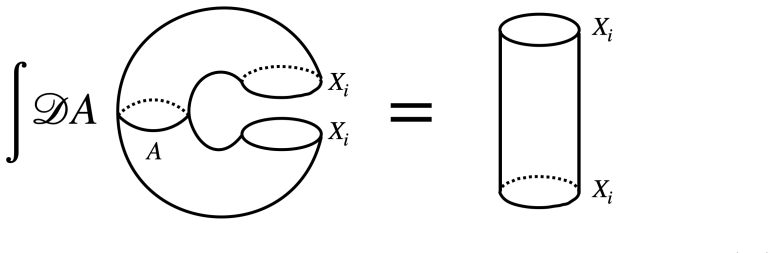
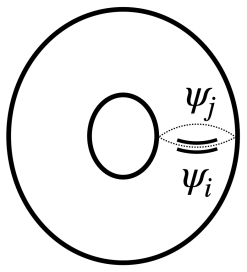
- [Section 3.3, Eq. (3.16)] The central precision estimate is not computed from the path integral. The text states that for Senv << Sacc 'we expect the wormhole contributions to become significant' and explicitly excludes contributions from more complex topologies, while the quantitative suppression is obtained from an unnormalized Z_env with a Gaussian regulator whose rate Γ is introduced by hand (Eqs. (3.17)-(3.19)). Since no saddle-point computation of the diagrams in Fig. 7 is given, Eq. (3.16) functions as an estimate rather than a derived result. The microscopic model in Section 4 supplies a derivation only under the additional random-coefficient assumption. Please either supply a genuine computation of the leading disconnected and replica-wormhole contributions, including the role of Γ, or present Eq. (3.16) as a conjecture whose evidence is clearly assessed.
- [Section 4.1, Eqs. (4.4)-(4.13)] The e^{-S_env} suppression is entirely due to the statistical Ansatz in Eq. (4.4) (zero mean, variance 1/e^{Suniv}, independence in κ) together with the Wick-like higher-moment condition stated after Eq. (4.7). The paper gives no independent derivation of these conditions from the closed-universe path integral; the analogy to black-hole chaos is suggestive but not a microscopic computation. If the coefficients are correlated across the environmental index a, or if the fourth-moment scaling deviates from the assumed Wick behavior, the variance in Eq. (4.11) need not be exponentially suppressed and predictions could remain α-microstate dependent. Because this is the main quantitative support for Eq. (3.16), the central claim is conditional on an unproven assumption. Please either derive the moment structure from a concrete model or provide an explicit test, such as a solvable toy model, that exhibits the required statistics.
- [Section 3.2, Eq. (3.7) and footnote 13] The argument assumes that the factorization H0 = Hacc ⊗ Henv descends naturally to the constrained Hilbert space, with footnote 13 acknowledging that correlations between states in \hatH_acc and \hatH_env due to constraints are ignored. The Wheeler-DeWitt constraint is a nonlocal, global condition, and it is not established that a partial trace over unconstrained environmental states corresponds to a partial trace over constrained environmental degrees of freedom, nor that Senv = ln dim \hatH_env is the correct entropy entering the exponent of Eq. (3.16). This is load-bearing because the identity of Senv determines the size of the claimed suppression. Please discuss the conditions under which constraint-induced correlations can be neglected, or generalize Eq. (3.16) accordingly.
- [Section 4.2, Eqs. (4.14), (4.18)-(4.19)] The constrained reduced density matrix \hatρ^acc is approximately maximally mixed, being the identity up to corrections of order e^{-S_env/2}. To obtain nontrivial classical probabilities, the paper embeds this matrix in the unconstrained Hilbert space, but the embedding is acknowledged as possibly non-unique, and the claim that diagonalization yields the einselected basis is only an expectation ('we expect'). Without a criterion fixing the embedding, it is unclear whether the resulting probabilities are physical or an artifact of the embedding choice. This point is central to the paper's conclusion that the selected basis coincides with the standard einselected basis, so a derivation or a concrete example showing embedding independence is needed.
minor comments (4)
- [Section 4.1, Eqs. (4.2)-(4.3)] Please define the averaging notation explicitly: as written, \hatρ^2 in Eq. (4.3) is the average over κ of the square of the matrix element, not the square of the averaged matrix element in Eq. (4.2); this distinction is important for understanding the role of Nα and should be stated in the text.
- [Section 3.2, text near Fig. 7] The phrase 'appropriately expended to all elements' should presumably read 'appropriately expanded to all elements'.
- [Section 3.3, Eqs. (3.13)-(3.15)] The derivation of Z involves a formal factor 2πδ(0) that is removed by gauge fixing; please specify the regularization used, for example by relating it to the parameter Γ introduced in Eq. (3.17), so that the definition of Suniv entering the final error estimate is unambiguous.
- [Introduction and Section 2.3] The abstract and introduction state that the Hilbert space is one-dimensional 'as induced by spacetime wormholes'; since this premise is imported from Refs. [6-10], a brief statement of the assumptions behind that result would improve self-containedness.
Circularity Check
No significant circularity: the e^{-S_env} suppression is derived from an explicit, flagged random-coefficient ansatz and from counting environmental states, not from a fit or from the conclusion itself.
full rationale
The paper's central claim, Eq. (3.16), is not equivalent to its inputs by construction. The path-integral estimate in Sec. 3.3 counts contributions to (rho^acc_ij)^2 versus rho^acc_ij^2 and argues that the replica-wormhole diagrams are suppressed by one power of the environmental partition function Z_env ~ e^{S_env}; this is a counting argument, not a restatement of the conclusion. In the operator formalism (Sec. 4.1), the suppression arises from an explicit statistical ansatz for the coefficients c^kappa_na: zero mean, variance 1/e^{Suniv}, and Wick-like higher moments, as stated in Eq. (4.4) and the sentence after Eq. (4.7) that 'These results assume Wick-like behavior for higher moments'. The resulting variance ratio in Eq. (4.13), Var(rho^acc_n=m)/(rho^acc_n=m)^2 ~ e^{-S_env}, is a direct combinatorial consequence of summing over e^{S_env} environmental terms. The assumption is flagged by the authors as an assumption, and the paper does not tune it to data or rename it as a prediction. Self-citations such as Refs. [15], [35], [39], and [50] are peripheral: they support analogies or background notions, not the load-bearing uniqueness or suppression argument, which rests on external references [6-10] and on the explicitly stated microscopic model. No step reduces to a fit or to a self-citation chain. The random-coefficient ansatz is a strong physical assumption and a correctness risk, but that is not circularity.
Assumptions & free parameters
free parameters (1)
- environment characteristic rate Gamma =
unspecified, >0; drops out after gauge fixing
assumptions (6)
- domain assumption The nonperturbative quantum gravitational Hilbert space is one-dimensional and real for each alpha-microstate.
- domain assumption The Lorentzian gravitational path integral computes ensemble averages over alpha-microstates, with wormhole contributions encoded in the alpha-ensemble.
- domain assumption Gauged CRT symmetry provides a natural identification between Hilbert space and dual and implies the one-dimensional Hilbert spaces are real.
- ad hoc to paper The coefficients c^kappa_na behave as independent random variables with zero mean and variance 1/e^{Suniv}, with Wick-like higher moments.
- ad hoc to paper The factorization H0 = H_acc tensor H_env descends naturally to the constrained Hilbert space, ignoring constraint-induced correlations.
- domain assumption A single spacetime M dominates the path integral, so the Hilbert space factorizes as a single term in the sum over spacetimes.
invented entities (1)
-
alpha-microstates |alpha_kappa>
Cite this review
Pith. "Pith review of Nonperturbative Quantum Gravity in a Closed Lorentzian Universe." pith.science (2026). https://pith.science/paper/F2BAPT34
@misc{pith2026250520390,
  author       = {Pith},
  title        = {Pith review of: Nonperturbative Quantum Gravity in a Closed Lorentzian Universe},
  year         = {2026},
  howpublished = {\url{https://pith.science/paper/F2BAPT34}},
  note         = {Machine review of arXiv:2505.20390}
}
abstract
We study how meaningful physical predictions can arise in nonperturbative quantum gravity in a closed Lorentzian universe. In such settings, recent developments suggest that the quantum gravitational Hilbert space is one-dimensional and real for each $\alpha$-sector, as induced by spacetime wormholes. This appears to obstruct the conventional quantum-mechanical prescription of assigning probabilities via projection onto a basis of states. While previous approaches have introduced external observers or augmented the theory to resolve this issue, we argue that quantum gravity itself contains all the necessary ingredients to make physical predictions. We demonstrate that the emergence of classical observables and probabilistic outcomes can be understood as a consequence of partial observability: physical observers access only a subsystem of the universe. Tracing out the inaccessible degrees of freedom yields reduced density matrices that encode classical information, with uncertainties exponentially suppressed by the environment's entropy. We develop this perspective using both the Lorentzian path integral and operator formalisms and support it with a simple microscopic model. Our results show that quantum gravity in a closed universe naturally gives rise to meaningful, robust predictions without recourse to external constructs.
Figures


Figures from the paper (5 more)



Forward citations
Cited by 3 Pith papers
-
Observers and Timekeepers: From the Page-Wootters Mechanism to the Gravitational Path Integral
Metric summation produces the problem of time, topology summation produces the one-dimensional Hilbert space, and a timekeeper path integral gives observer-dependent holography.
-
Junctions, strings, clocks and gravitational memory in three dimensional dS space
Transient closed-string fluctuations in dS3 are shown order by order to be encoded in gravitational junction shifts at I±, with the monotonic time shift forming an emergent clock.
-
The Baby Universe is Fine and the CFT Knows It: On Holography for Closed Universes
A closed universe in AdS/CFT is not ruled out by recent SWAP-test arguments; the one-dimensional Hilbert space seen from the CFT is external indistinguishability, and CFT data can reconstruct the closed universe's geometry.
Reference graph
Works this paper leans on
-
[1]
The large N limit of superconformal field theories and supergravity,
J. M. Maldacena, “The large N limit of superconformal field theories and supergravity,” Int. J. Theor. Phys. 38, 1113 (1999) [arXiv:hep-th/9711200]
arXiv 1999
-
[2]
Holographic derivation of entanglement entropy from AdS/CFT,
S. Ryu and T. Takayanagi, “Holographic derivation of entanglement entropy from AdS/CFT,” Phys. Rev. Lett.96, 181602 (2006) [arXiv:hep-th/0603001]
arXiv 2006
-
[3]
A covariant holographic entanglement entropy proposal,
V. E. Hubeny, M. Rangamani and T. Takayanagi, “A covariant holographic entanglement entropy proposal,” JHEP 07, 062 (2007) [arXiv:0705.0016 [hep-th]]
arXiv 2007
-
[4]
Quantum corrections to holographic entanglement entropy,
T. Faulkner, A. Lewkowycz and J. Maldacena, “Quantum corrections to holographic entanglement entropy,” JHEP 11, 074 (2013) [arXiv:1307.2892 [hep-th]]
arXiv 2013
-
[5]
Quantum extremal surfaces: holographic entanglement entropy beyond the classical regime,
N. Engelhardt and A. C. Wall, “Quantum extremal surfaces: holographic entanglement entropy beyond the classical regime,” JHEP01, 073 (2015) [arXiv:1408.3203 [hep-th]]
arXiv 2015
-
[6]
Entanglement wedge reconstruction and the information paradox,
G. Penington, “Entanglement wedge reconstruction and the information paradox,” JHEP09, 002 (2020) [arXiv:1905.08255 [hep-th]]
arXiv 2020
-
[7]
The Page curve of Hawking radiation from semiclassical geometry,
A. Almheiri, R. Mahajan, J. Maldacena and Y. Zhao, “The Page curve of Hawking radiation from semiclassical geometry,” JHEP03, 149 (2020) [arXiv:1908.10996 [hep-th]]
arXiv 2020
-
[8]
Closed universes in two dimensional gravity,
M. Usatyuk, Z. Y. Wang and Y. Zhao, “Closed universes in two dimensional gravity,” SciPost Phys. 17, 051 (2024) [arXiv:2402.00098 [hep-th]]
arXiv 2024
Show all 58 references
-
[9]
Closed universes, factorization, and ensemble averaging,
M. Usatyuk and Y. Zhao, “Closed universes, factorization, and ensemble averaging,” JHEP02, 052 (2025) [arXiv:2403.13047 [hep-th]]
2025 arXiv
-
[10]
Gauging spacetime inversions in quantum gravity,
D. Harlow and T. Numasawa, “Gauging spacetime inversions in quantum gravity,” arXiv:2311.09978 [hep-th]
-
[11]
Black holes as red herrings: topological fluctuations and the loss of quantum coherence,
S. Coleman, “Black holes as red herrings: topological fluctuations and the loss of quantum coherence,” Nucl. Phys. B307, 867 (1988)
1988
-
[12]
Loss of incoherence and determination of coupling constants in quantum gravity,
S. B. Giddings and A. Strominger, “Loss of incoherence and determination of coupling constants in quantum gravity,” Nucl. Phys. B307, 854 (1988). 21
1988
-
[13]
Transcending the ensemble: baby universes, spacetime wormholes, and the order and disorder of black hole information,
D. Marolf and H. Maxfield, “Transcending the ensemble: baby universes, spacetime wormholes, and the order and disorder of black hole information,” JHEP08, 044 (2020) [arXiv:2002.08950 [hep-th]]
2020 arXiv
-
[14]
An algebra of observables for de Sitter space,
V. Chandrasekaran, R. Longo, G. Penington and E. Witten, “An algebra of observables for de Sitter space,” JHEP02, 082 (2023) [arXiv:2206.10780 [hep-th]]
2023 arXiv
-
[15]
de Sitter space is sometimes not empty,
V. Balasubramanian, Y. Nomura and T. Ugajin, “de Sitter space is sometimes not empty,” JHEP 02, 135 (2024) [arXiv:2308.09748 [hep-th]]
2024 arXiv
-
[16]
Quantum mechanics and observers for gravity in a closed universe,
D. Harlow, M. Usatyuk and Y. Zhao, “Quantum mechanics and observers for gravity in a closed universe,” arXiv:2501.02359 [hep-th]
-
[17]
The gravitational path integral from an observer’s point of view,
A. I. Abdalla, S. Antonini, L. V. Iliesiu and A. Levine, “The gravitational path integral from an observer’s point of view,” JHEP05, 059 (2025) [arXiv:2501.02632 [hep-th]]
2025 arXiv
-
[18]
On observers in holographic maps,
C. Akers, G. Bueller, O. DeWolfe, K. Higginbotham, J. Reinking and R. Rodriguez, “On observers in holographic maps,” JHEP05, 201 (2025) [arXiv:2503.09681 [hep-th]]
2025 arXiv
-
[19]
Quantum theory of gravity. I. The canonical theory,
B. S. DeWitt, “Quantum theory of gravity. I. The canonical theory,” Phys. Rev.160, 1113 (1967)
1967
-
[20]
Dynamical structure and definition of energy in general relativity,
R. L. Arnowitt, S. Deser and C. W. Misner, “Dynamical structure and definition of energy in general relativity,” Phys. Rev.116, 1322 (1959)
1959
-
[21]
Quantum mechanics of the gravitational field,
C. Teitelboim, “Quantum mechanics of the gravitational field,” Phys. Rev. D25, 3159 (1982)
1982
-
[22]
Derivation of the Wheeler-DeWitt equation from a path integral for minisuperspace models,
J. J. Halliwell, “Derivation of the Wheeler-DeWitt equation from a path integral for minisuperspace models,” Phys. Rev. D38, 2468 (1988)
1988
-
[23]
Wave functions constructed from an invariant sum over histories satisfy constraints,
J. J. Halliwell and J. B. Hartle, “Wave functions constructed from an invariant sum over histories satisfy constraints,” Phys. Rev. D43, 1170 (1991)
1991
-
[24]
Quantization of relativistic systems with constraints,
E. S. Fradkin and G. A. Vilkovisky, “Quantization of relativistic systems with constraints,” Phys. Lett. B 55, 224 (1975)
1975
-
[25]
Operator quantization of relativistic dynamical systems subject to first class constraints,
I. A. Batalin and E. S. Fradkin, “Operator quantization of relativistic dynamical systems subject to first class constraints,” Phys. Lett. B128, 303 (1983)
1983
-
[26]
Quantum linearization instabilities of de Sitter space-time. II,
A. Higuchi, “Quantum linearization instabilities of de Sitter space-time. II,” Class. Quant. Grav. 8, 1983 (1991)
1991
-
[27]
Quantization of diffeomorphism invariant theories of connections with local degrees of freedom,
A. Ashtekar, J. Lewandowski, D. Marolf, J. Mourao and T. Thiemann, “Quantization of diffeomorphism invariant theories of connections with local degrees of freedom,” J. Math. Phys. 36, 6456 (1995) [arXiv:gr-qc/9504018]
1995 arXiv
-
[28]
Refined algebraic quantization: systems with a single constraint,
D. Marolf, “Refined algebraic quantization: systems with a single constraint,” arXiv:gr-qc/9508015. 22
-
[29]
Group averaging and refined algebraic quantization: Where are we now?,
D. Marolf, “Group averaging and refined algebraic quantization: Where are we now?,” in Proceedings of the Ninth Marcel Grossmann Meeting on General Relativity , edited by V. G. Gurzadyan, R. T. Jantzen, and R. Ruffini (World Scientific, 2002), p. 1348 [arXiv:gr-qc/0011112]
2002 arXiv
-
[30]
The Hilbert space of de Sitter JT: a case study for canonical methods in quantum gravity,
J. Held and H. Maxfield, “The Hilbert space of de Sitter JT: a case study for canonical methods in quantum gravity,” arXiv:2410.14824 [hep-th]
-
[31]
Complex actions in two-dimensional topology change,
J. Louko and R. D. Sorkin, “Complex actions in two-dimensional topology change,” Class. Quant. Grav. 14, 179 (1997). [arXiv:gr-qc/9511023]
1997 arXiv
-
[32]
Quantization of four form fluxes and dynamical neutralization of the cosmological constant,
R. Bousso and J. Polchinski, “Quantization of four form fluxes and dynamical neutralization of the cosmological constant,” JHEP06, 006 (2000) [arXiv:hep-th/0004134]
2000 arXiv
-
[33]
The Anthropic landscape of string theory,
L. Susskind, “The Anthropic landscape of string theory,” inUniverse or Multiverse? , edited by B. Carr (Cambridge University Press, 2007), p. 247 [arXiv:hep-th/0302219]
2007 arXiv
-
[34]
The statistics of string/M theory vacua,
M. R. Douglas, “The statistics of string/M theory vacua,” JHEP05, 046 (2003) [arXiv:hep-th/0303194]
2003 arXiv
-
[35]
Reanalyzing an evaporating black hole,
Y. Nomura, “Reanalyzing an evaporating black hole,” Phys. Rev. D99, 086004 (2019) [arXiv:1810.09453 [hep-th]]
2019 arXiv
-
[36]
Replica wormholes and the black hole interior,
G. Penington, S. H. Shenker, D. Stanford and Z. Yang, “Replica wormholes and the black hole interior,” JHEP 03, 205 (2022) [arXiv:1911.11977 [hep-th]]
2022 arXiv
-
[37]
Replica wormholes and the entropy of Hawking radiation,
A. Almheiri, T. Hartman, J. Maldacena, E. Shaghoulian and A. Tajdini, “Replica wormholes and the entropy of Hawking radiation,” JHEP05, 013 (2020) [arXiv:1911.12333 [hep-th]]
2020 arXiv
-
[38]
A nonperturbative toolkit for quantum gravity,
V. Balasubramanian and T. Yildirim, “A nonperturbative toolkit for quantum gravity,” arXiv:2504.16986 [hep-th]
-
[39]
Physical theories, eternal inflation, and the quantum universe,
Y. Nomura, “Physical theories, eternal inflation, and the quantum universe,” JHEP11, 063 (2011) [arXiv:1104.2324 [hep-th]]
2011 arXiv
-
[40]
Baby universes, holography, and the swampland,
J. McNamara and C. Vafa, “Baby universes, holography, and the swampland,” arXiv:2004.06738 [hep-th]
2004 arXiv
-
[41]
Anthropic bound on the cosmological constant,
S. Weinberg, “Anthropic bound on the cosmological constant,” Phys. Rev. Lett.59, 2607 (1987)
1987
-
[42]
Predictions from quantum cosmology,
A. Vilenkin, “Predictions from quantum cosmology,” Phys. Rev. Lett.74, 846 (1995) [arXiv:gr-qc/9406010]
1995 arXiv
-
[43]
Evidence for the multiverse in the standard model and beyond,
L. J. Hall and Y. Nomura, “Evidence for the multiverse in the standard model and beyond,” Phys. Rev. D 78, 035001 (2008) [arXiv:0712.2454 [hep-ph]]. 23
2008 arXiv
-
[44]
One bubble to rule them all,
J. Hartle and T. Hertog, “One bubble to rule them all,” Phys. Rev. D95, 123502 (2017) [arXiv:1604.03580 [hep-th]]
2017 arXiv
-
[45]
The no boundary density matrix,
V. Ivo, Y.-Z. Li and J. Maldacena, “The no boundary density matrix,” JHEP02, 124 (2025) [arXiv:2409.14218 [hep-th]]
2025 arXiv
-
[46]
Real no-boundary wave function in Lorentzian quantum cosmology,
J. Diaz Dorronsoro, J. J. Halliwell, J. B. Hartle, T. Hertog and O. Janssen, “Real no-boundary wave function in Lorentzian quantum cosmology,” Phys. Rev. D96, 043505 (2017) [arXiv:1705.05340 [gr-qc]]
2017 arXiv
-
[47]
Pointer basis of quantum apparatus: Into what mixture does the wave packet collapse?,
W. H. Zurek, “Pointer basis of quantum apparatus: Into what mixture does the wave packet collapse?,” Phys. Rev. D24, 1516 (1981)
1981
-
[48]
Decoherence, einselection, and the quantum origins of the classical,
W. H. Zurek, “Decoherence, einselection, and the quantum origins of the classical,” Rev. Mod. Phys. 75, 715 (2003) [arXiv:quant-ph/0105127]
2003 arXiv
-
[49]
Evolution without evolution: dynamics described by stationary observables,
D. N. Page and W. K. Wootters, “Evolution without evolution: dynamics described by stationary observables,” Phys. Rev. D27, 2885 (1983)
1983
-
[50]
Quantum mechanics, spacetime locality, and gravity,
Y. Nomura, “Quantum mechanics, spacetime locality, and gravity,” Found. Phys.43, 978 (2013) [arXiv:1110.4630 [hep-th]]
2013 arXiv
-
[51]
Properties of the scale factor measure,
R. Bousso, B. Freivogel and I.-S. Yang, “Properties of the scale factor measure,” Phys. Rev. D79, 063513 (2009) [arXiv:0808.3770 [hep-th]]
2009 arXiv
-
[52]
Watchers of the multiverse,
J. Garriga and A. Vilenkin, “Watchers of the multiverse,” JCAP05, 037 (2013) [arXiv:1210.7540 [hep-th]]
2013 arXiv
-
[53]
A local Wheeler-DeWitt measure for the string landscape,
B. Friedrich, A. Hebecker, M. Salmhofer, J. C. Strauss and J. Walcher, “A local Wheeler-DeWitt measure for the string landscape,” Nucl. Phys. B992, 116230 (2023) [arXiv:2205.09772 [hep-th]]
2023
-
[54]
The static quantum multiverse,
Y. Nomura, “The static quantum multiverse,” Phys. Rev. D86, 083505 (2012) [arXiv:1205.5550 [hep-th]]
2012 arXiv
-
[55]
Spatial curvature falsifies eternal inflation,
M. Kleban and M. Schillo, “Spatial curvature falsifies eternal inflation,” JCAP06, 029 (2012) [arXiv:1202.5037 [astro-ph.CO]]
2012 arXiv
-
[56]
What can the observation of nonzero curvature tell us?,
A. H. Guth and Y. Nomura, “What can the observation of nonzero curvature tell us?,” Phys. Rev. D 86, 023534 (2012) [arXiv:1203.6876 [hep-th]]
2012 arXiv
-
[57]
Absolute entropy and the observer’s no-boundary state,
A. Blommaert, J. Kudler-Flam and E. Y. Urbach, “Absolute entropy and the observer’s no-boundary state,” arXiv:2505.14771 [hep-th]
-
[58]
Observers seeing gravitational Hilbert spaces: abstract sources for an abstract path integral,
H. Z. Chen, “Observers seeing gravitational Hilbert spaces: abstract sources for an abstract path integral,” arXiv:2505.15892 [hep-th]. 24
Reviewed August 7, 2026 · model on record in the stance chip above.
Discussion (0). Sign in to comment.