REVIEW 5 major objections 7 minor 6 cited by
From Foresight to Forethought: VLM-In-the-Loop Policy Steering via Latent Alignment
T0 review · 5 major / 7 minor · reviewed 2026-08-09 · deepseek-v4-flash
Pith's one-line read A latent world model plus a language-aligned VLM can steer a robot's action selection at run time, lifting success rates by over 30 percent even for task descriptions never seen during training.
desk verdict A genuinely useful decoupling of prediction from verification, with real-robot evidence that is promising but still thin in places; worth serious review. read the letter →
The pith
A machine-rendered reading of the paper's core claim, the machinery that carries it, and where it could break.
The reading
What carries the argument
The load-bearing mechanism is a latent-text alignment: a Recurrent State Space Model (RSSM) world model encodes the current observation and forward-simulates future latent states for each action plan, and a single linear projection maps those latent states into the text-token space of the Llama-3.2 VLM. The VLM is then LoRA-fine-tuned on a small VQA dataset to translate a latent rollout into a behavior narration, and finally re-queried (as a multiple-choice question) to rank the narrated plans against the task description. The same pretrained world-model encoder replaces the VLM's image encoder, so prediction stays in the latent space while evaluation happens in natural language.
What would settle it
Run the Cup task with FOREWARN while perturbing the world model's latent predictions so that an imagined handle-grasp is replaced by a rim-grasp, and check whether the VLM's selection and the executed outcome diverge. If the VLM still picks the originally intended plan despite the corrupted narration, the paper's claim that latent-aligned narration is the cause of the success would be undermined.
Extended reading notes
Core claim
FOREWARN's central claim is that the bottleneck in using VLMs for policy steering is representational, not reasoning: off-the-shelf VLMs fail because low-level action commands and raw images do not expose the fine-grained contact and object-state details that determine success. By replacing the VLM's image tokenizer with a pretrained world-model encoder and dynamics model, and fine-tuning the language model with LoRA to narrate the resulting latent sequences (e.g., 'the robot grasps the cup by the rim'), the same VLM can then be re-queried to select the best of K candidate plans. In the paper's experiments this latent-aligned verifier improves base-policy task success from 0.30, 0.20, and 0.10 to 0.80, 0.70, and 0.70 on Cup, Bag, and Fork tasks respectively, and retains 0.60-0.80 success under novel task descriptions, outperforming VLM baselines that do not decouple prediction from evaluation by roughly 40 percent.
Load-bearing premise
The scheme rests on the latent world model's imagined rollouts preserving the fine-grained interaction details (grasp location, contact, object state) that the narration and ranking depend on; if the imagination is wrong, the VLM's critique is wrong and steering fails.
Editorial extensions
If this is right
- The base diffusion policy's success rate on the three real-robot tasks rises from 0.10-0.30 to 0.70-0.80 once FOREWARN selects among its sampled plans.
- The steering remains effective when the task description is swapped for a novel one (e.g., the cup handle is oily), where end-to-end latent classifiers and category-predicting VLMs collapse.
- FOREWARN's behavior-narration step alone acts as a preemptive failure monitor, catching failures before execution with balanced true-positive and true-negative rates above 0.75.
- Because the VLM never sees low-level actions or reconstructed images, the system runs in 3.7 seconds per steering decision, nearly six times faster than a VLM that must predict outcomes directly.
Reading between the lines
- Editorial inference: if the relationship holds, the approach should transfer to stronger VLM backbones and larger world models, with steering quality tracking world-model rollout fidelity rather than VLM commonsense.
- Editorial inference: the same latent-narration trick could be applied to other verification tasks beyond manipulation, such as judging safety or social appropriateness, since it only requires narrating imagined futures.
- Editorial inference: a testable prediction is that deliberately corrupting the world model's predicted contact details (e.g., swapping the imagined grasp location) would degrade steering exactly when the narration changes, which would isolate how much of the gain comes from latent alignment versus the VLM's prior knowledge.
Editorial analysis
A structured set of objections, weighed in public.
Referee Report
Summary. FOREWARN proposes a runtime policy-steering framework that decouples outcome prediction from outcome evaluation. A DreamerV3-style latent world model (foresight) imagines future latent states for K candidate action plans sampled from a base generative policy, and a LoRA-fine-tuned Llama-3.2-11B-Vision VLM, aligned to those latent states through a linear projection, narrates each imagined rollout in text and then selects the plan that best satisfies the task description (forethought). The paper formalizes steering as a stochastic model-predictive control problem (Eqs. 1-3) and validates the system on three real Franka manipulation tasks (Cup, Bag, and a two-phase Fork-to-Bowl task) with a Diffusion Policy base policy, comparing against VLM-Act, VLM-Img(-Oracle), VLM-DynLat-Category, and Classifier-Dyn-Latent. Reported results include narration GT accuracy of 0.82 (Table I), steering success rates of 0.60-0.80 versus 0.10-0.50 for the base policy under both training and novel task descriptions (Table II), a component-level breakdown (Table X), a failure-monitoring application, and inference-time measurements (Table III). The Limitations section transparently attributes the primary failures to the world model's imprecise imagination.
Significance. If the central results hold, FOREWARN is a practical and transferable recipe: a frozen latent world model combined with a lightly fine-tuned VLM can serve as an open-vocabulary verifier for generative manipulation policies without reward engineering or additional robot data collection, while returning natural-language justifications for the selected plan. The three-task hardware study with several ablations (Tables I, II, X), the component-level bottleneck analysis, the inference-time measurements, and the explicit disclosure of the world-model failure source are genuine strengths: the headline claims are falsifiable success rates measured on real robots, and the main failure mode is identified rather than hidden. The main weaknesses are in the strength of the comparisons (unmatched fine-tuning setups for VLM-Act, no Oracle steering condition, small trial counts, and author-adjudicated narration labels) rather than in internal inconsistency or circularity; with those comparisons tightened, the framework would be a solid contribution to test-time policy improvement for multimodal generative policies.
major comments (5)
- [Abstract; §V-B, Table II] The abstract's headline comparison - that FOREWARN 'outperforms (by ~40%) alternative VLM approaches that do not decouple the prediction of outcomes from verification' - is not reproducible from Table II as an aggregate: averaged over the six conditions, FOREWARN is about 59% better (relative success rate) than VLM-DynLat-Category and about 139% better than VLM-Act, and the only cell that yields approximately 40% is the Bag-task novel-description comparison against VLM-Act (0.70 vs 0.50). Please state exactly which comparison the 40% figure refers to, or replace it with an aggregate computed from Table II. The same section claims that 'FOREWARN outperforms all the baselines in both training and novel task contexts,' but Table II shows Classifier-Dyn-Latent matching FOREWARN on all three training-description cells (Cup 0.80, Bag 0.70, Fork 0.70) and VLM-DynLat-Category matching on Cup-training (0.80); this sentence should be revised to acknowledge the ties, which the following paragraph partially does.
- [§V-A, §V-B; Tables VI and VII] The central claim that decoupling prediction from verification drives FOREWARN's gains rests primarily on the comparison with VLM-Act, but the two systems are fine-tuned under different optimization protocols: FOREWARN uses bf16 precision, batch size 10, and learning rate 1e-4 (Table VI), while VLM-Act uses 4-bit quantization, batch size 1, and learning rate 1e-5 (Table VII). Because the learning rate and batch size differ by an order of magnitude, the large reported gaps (e.g., narration GT accuracy 0.82 vs 0.37 in Table I) cannot be cleanly attributed to architectural decoupling versus the possibility that VLM-Act is undertrained. Please match the fine-tuning protocols, or report a sweep over learning rate and batch size for VLM-Act (with comparable total step counts), to show that the gap is not an artifact of optimization.
- [§V-B, Table II; Eq. (3); §VI] Eq. (3) conditions the verifier on predicted latent rollouts z_{t:t+T} from f_phi, and the Limitations section - supported by the component accuracies in Table X (world model 0.78 average, the weakest stage) - asserts that the system's primary failures stem from the world model's imprecise imagination. Given that assertion, the steering experiments in Table II should include a FOREWARN-Oracle condition that feeds posterior latents (computed from ground-truth future observations) instead of predicted ones. Table I provides the Oracle only for the narration stage, where the gap is small (0.85 vs 0.82 GT accuracy), but that does not settle the steering question because the VLM ranks six candidates and the prompt in Fig. 9 instructs it to assume each narration is executed exactly as described, so narration errors from the world model propagate directly into selection. An Oracle steering condition would separate world-model-induced failures from VLM/narration failures and would directly test the paper's bottleneck attribution; without it, that attribution is an extrapolation from component metrics. If the Oracle condition cannot be run, the paper should argue explicitly why the small narration-stage gap bounds the steering-stage effect.
- [§V-B; Tables I and II] All success-rate claims rest on 20 trials per condition (Table II) and on narration evaluations whose sample count is reported inconsistently (Section V-A says 30 test rollouts; the Table I caption says 50 rollouts), and no significance tests, confidence intervals, or explanation of what the +/- values represent are provided. Several comparisons that the text treats as meaningful are within the noise of a 20-trial experiment, for example FOREWARN vs Classifier-Dyn-Latent on the three training-description cells (0.80/0.70/0.70 in both rows) and FOREWARN vs VLM-Act on Bag-novel (0.70 vs 0.50, each with a standard error of roughly 0.10-0.15 under the stated trial count); the 'over 30%' improvement over the base policy is, however, comfortably larger than this noise. Please report exact tests or bootstrap confidence intervals at least for the comparisons underlying the headline claims, and state precisely how the means and +/- values in Tables I and II were computed (across fine-tuning seeds, across trials, or both).
- [§V-A; Table I] The GT Accuracy metric in Table I is adjudicated by a human labeler who, the paper states, is one of the authors, and the same authors produced the narration labels used to fine-tune FOREWARN and VLM-Act; no inter-annotator agreement, second labeler, or blinded protocol is reported. Because the narration labels must discriminate fine-grained details (grasp by handle vs rim vs interior), which are precisely the distinctions on which the compared methods differ, the Table I comparisons (e.g., FOREWARN 0.82 vs VLM-Img-Oracle 0.52 GT accuracy) are vulnerable to labeler bias in favor of the authors' own system. Please add an independent labeler with reported agreement (e.g., Cohen's kappa) or a pre-registered labeling rubric, and state explicitly that the novel task descriptions used in Table II were excluded from all fine-tuning and classifier-training data for every method.
minor comments (7)
- [§V-A; Table I] Section V-A reports that the Table I results are 'averaged across 30 test rollouts for each task,' while the Table I caption states 'We use 50 rollouts to evaluate the performance'; please make the evaluation count consistent and state it clearly.
- [§V-B] The paragraph on out-of-distribution generalization claims that the method 'can generalize to those variations with small performance drop' across the six scenarios of Fig. 5, but no success rates, trial counts, or error bars are reported for those scenarios; please add quantitative results or temper the claim.
- [§V-B, Table II] The base policy's success rate is higher under novel descriptions than under training descriptions for every task (Cup 0.50 vs 0.30, Bag 0.40 vs 0.20, Fork 0.30 vs 0.10), a pattern the paper does not discuss even though the novel conditions are framed as more demanding; an explanation (e.g., that the novel preferences align with the policy's dominant mode) would clarify the robustness result.
- [§IV-B; §V] Eqs. (2) and (3) write an expectation over the stochastic latent dynamics, while the implementation uses only the most likely latent prediction ('we use only the most likely prediction as the outcome'); please state this approximation explicitly in the formulation and comment on whether the stochasticity of f_phi affects the steering result.
- [Table X] The component accuracies and the overall system accuracy in Table X are not obviously commensurable (for example, the Cup overall system accuracy of 0.90 exceeds the Cup world-model accuracy of 0.80), so the component analysis should state the metric and sample used for each column to support its interpretation as a bottleneck analysis.
- [Abstract; §I; References] The abstract and Section I contain the typo 'altnerative' (should be 'alternative'), and reference [2] is listed as 'anonymous authors. Anonymous title,' which must be completed or replaced before publication.
- [§V-A] The claim that FOREWARN 'outperforms VLM-Act by over 50% on every task' holds for GT Accuracy but not for the LLM Score on the Bag task (0.72 vs 0.50, an improvement of about 44%); please qualify the claim by metric.
Circularity Check
No significant circularity: FOREWARN's central claims are grounded in real-robot trials and supervised component evaluations, with self-citations used only as background motivation.
full rationale
FOREWARN's derivation chain is not circular. The world model is pretrained with dynamics/reconstruction losses on offline rollouts, the VLM is LoRA-finetuned to narrate the frozen world model's latent rollouts using manually annotated behavior narrations, and policy steering is evaluated as real-robot success rates against human-defined task preferences; none of the headline numbers in Table II is a fitted constant or a renaming of the training objective. The self-citations to [32,42] (Hybrid IRL / IRL without RL) are used only to motivate collecting both successful and failed rollouts and to frame local search; the paper does not derive its 30%/40% claims from these theorems, and the real-robot experiments stand independently. Section VI's admission that the world model's imprecise imagination is the primary failure source identifies a performance bottleneck—and the absence of a FOREWARN-Oracle steering condition is a missing control—but neither makes the prediction equal to its input by construction. The VQA fine-tuning set does reuse DWM, but labels are human annotations of observed behavior and the world model is frozen, so the VLM's narration is supervised rather than self-consistent. Hence no reduction of a claimed result to its own inputs is present.
Assumptions & free parameters
free parameters (2)
- Number of candidate modes K =
6
- Latent state downsampling factor =
T/4 = 16 tokens
assumptions (4)
- domain assumption The base policy's distribution contains at least one action plan that satisfies the task description.
- domain assumption The latent world model rollouts preserve fine-grained contact and outcome information needed for narration.
- domain assumption VLM commonsense reasoning over text narrations transfers to novel task descriptions.
- domain assumption The offline dataset DWM, with 250 rollouts plus 100 demonstrations per task, covers enough successes and failures to train a useful world model.
Cite this review
Pith. "Pith review of From Foresight to Forethought: VLM-In-the-Loop Policy Steering via Latent Alignment." pith.science (2026). https://pith.science/paper/FMCY7FHY
@misc{pith2026250201828,
  author       = {Pith},
  title        = {Pith review of: From Foresight to Forethought: VLM-In-the-Loop Policy Steering via Latent Alignment},
  year         = {2026},
  howpublished = {\url{https://pith.science/paper/FMCY7FHY}},
  note         = {Machine review of arXiv:2502.01828}
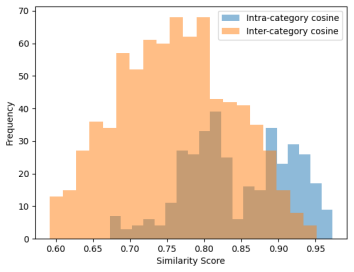
}
read the original abstract
While generative robot policies have demonstrated significant potential in learning complex, multimodal behaviors from demonstrations, they still exhibit diverse failures at deployment-time. Policy steering offers an elegant solution to reducing the chance of failure by using an external verifier to select from low-level actions proposed by an imperfect generative policy. Here, one might hope to use a Vision Language Model (VLM) as a verifier, leveraging its open-world reasoning capabilities. However, off-the-shelf VLMs struggle to understand the consequences of low-level robot actions as they are represented fundamentally differently than the text and images the VLM was trained on. In response, we propose FOREWARN, a novel framework to unlock the potential of VLMs as open-vocabulary verifiers for runtime policy steering. Our key idea is to decouple the VLM's burden of predicting action outcomes (foresight) from evaluation (forethought). For foresight, we leverage a latent world model to imagine future latent states given diverse low-level action plans. For forethought, we align the VLM with these predicted latent states to reason about the consequences of actions in its native representation--natural language--and effectively filter proposed plans. We validate our framework across diverse robotic manipulation tasks, demonstrating its ability to bridge representational gaps and provide robust, generalizable policy steering. Videos can be found on the project website: https://yilin-wu98.github.io/forewarn/.
Figures


Figures from the paper (14 more)



Forward citations
Cited by 6 Pith papers
-
DREAMSTEER: Latent World Models Can Steer VLA Policies During Deployment Without Any Finetuning
A frozen VLA plus latent world-model rollouts and a value model can raise real-robot OOD manipulation success from 23.75% to 66.25% without any target-environment finetuning.
-
EVE: A Generator-Verifier System for Generative Policies
Zero-shot VLM verifiers, ensembled and fused via guided diffusion, improve frozen generative robot policies' success rates by 1-2 percentage points on simulated manipulation tasks.
-
Learn from What We HAVE: History-Aware VErifier that Reasons about Past Interactions Online
A history-aware verifier that scores candidate actions using past interactions cuts failure rates in ambiguous robot manipulation tasks compared to using the generator alone.
-
Latent Policy Barrier: Learning Robust Visuomotor Policies by Staying In-Distribution
Latent Policy Barrier improves behavior-cloned visuomotor policies by using a latent dynamics model trained on expert and rollout data to guide actions back toward in-distribution expert states.
-
Adapting by Analogy: OOD Generalization of Visuomotor Policies via Functional Correspondence
A test-time method uses expert-provided functional correspondences to map out-of-distribution scenes to similar training scenes, letting a visuomotor policy reuse old behaviors without retraining.
-
Cross from Left to Right Brain: Adaptive Text Dreamer for Vision-and-Language Navigation
A dual-branch text-imagination system, with one LLM branch for state estimation and one for candidate-direction description, improves R2R navigation success over prior LLM-based VLN methods.
Reference graph
Works this paper leans on
-
[1]
Unpacking failure modes of generative policies: Runtime monitoring of consistency and progress
Christopher Agia, Rohan Sinha, Jingyun Yang, Ziang Cao, Rika Antonova, Marco Pavone, and Jeannette Bohg. Unpacking failure modes of generative policies: Runtime monitoring of consistency and progress. In 8th Annual Conference on Robot Learning , 2024
work page 2024
-
[2]
anonymous authors. Anonymous title. In Robotics: Science and Systems , 2024
work page 2024
-
[3]
Policy search by dynamic programming
James Bagnell, Sham M Kakade, Jeff Schneider, and Andrew Ng. Policy search by dynamic programming. Advances in neural information processing systems , 16, 2003
work page 2003
-
[4]
Rt-1: Robotics transformer for real-world control at scale
Anthony Brohan, Noah Brown, Justice Carbajal, Yev- gen Chebotar, Joseph Dabis, Chelsea Finn, Keerthana Gopalakrishnan, Karol Hausman, Alex Herzog, Jasmine Hsu, Julian Ibarz, Brian Ichter, Alex Irpan, Tomas Jackson, Sally Jesmonth, Nikhil Joshi, Ryan Julian, Dmitry Kalashnikov, Yuheng Kuang, Isabel Leal, Kuang- Huei Lee, Sergey Levine, Yao Lu, Utsav Malla,...
arXiv 2022
-
[5]
Rt-2: Vision-language-action models transfer web knowledge to robotic control
Anthony Brohan, Noah Brown, Justice Carbajal, Yevgen Chebotar, Xi Chen, Krzysztof Choromanski, Tianli Ding, Danny Driess, Avinava Dubey, Chelsea Finn, Pete Flo- rence, Chuyuan Fu, Montse Gonzalez Arenas, Keerthana Gopalakrishnan, Kehang Han, Karol Hausman, Alex Herzog, Jasmine Hsu, Brian Ichter, Alex Irpan, Nikhil Joshi, Ryan Julian, Dmitry Kalashnikov, Y...
arXiv 2023
-
[6]
Diffusion policy: Visuomotor policy learning via action diffusion
Cheng Chi, Zhenjia Xu, Siyuan Feng, Eric Cousineau, Yilun Du, Benjamin Burchfiel, Russ Tedrake, and Shuran Song. Diffusion policy: Visuomotor policy learning via action diffusion. The International Journal of Robotics Research, 2024
2024
-
[7]
Universal manipulation interface: In- the-wild robot teaching without in-the-wild robots
Cheng Chi, Zhenjia Xu, Chuer Pan, Eric Cousineau, Benjamin Burchfiel, Siyuan Feng, Russ Tedrake, and Shuran Song. Universal manipulation interface: In- the-wild robot teaching without in-the-wild robots. In Proceedings of Robotics: Science and Systems (RSS) , 2024
2024
-
[8]
Agibot world colosseum
AgiBot World Colosseum contributors. Agibot world colosseum. https://github.com/OpenDriveLab/ AgiBot-World, 2024
2024
Show all 69 references
-
[9]
The complexity of theorem-proving procedures
Stephen A Cook. The complexity of theorem-proving procedures. In Logic, automata, and computational complexity: The works of Stephen A. Cook , pages 143–
-
[10]
Aha: A vision- language-model for detecting and reasoning over failures in robotic manipulation
Jiafei Duan, Wilbert Pumacay, Nishanth Kumar, Yi Ru Wang, Shulin Tian, Wentao Yuan, Ranjay Krishna, Dieter Fox, Ajay Mandlekar, and Yijie Guo. Aha: A vision- language-model for detecting and reasoning over failures in robotic manipulation. In International Conference on Learni...
2025
-
[11]
The llama 3 herd of models
Abhimanyu Dubey, Abhinav Jauhri, Abhinav Pandey, Abhishek Kadian, Ahmad Al-Dahle, Aiesha Letman, Akhil Mathur, Alan Schelten, Amy Yang, Angela Fan, et al. The llama 3 herd of models. arXiv preprint arXiv:2407.21783, 2024
2024 arXiv
-
[12]
Efficient imitation under misspecifi- cation
Nicolas Espinosa-Dice, Sanjiban Choudhury, Wen Sun, and Gokul Swamy. Efficient imitation under misspecifi- cation. arXiv preprint arXiv:2503.13162 , 2025
2025 arXiv
-
[13]
Rh20t: A robotic dataset for learning diverse skills in one-shot
Hao-Shu Fang, Hongjie Fang, Zhenyu Tang, Jirong Liu, Junbo Wang, Haoyi Zhu, and Cewu Lu. Rh20t: A robotic dataset for learning diverse skills in one-shot. In RSS 2023 Workshop on Learning for Task and Motion Planning, 2023
2023
-
[14]
Zhao, and Chelsea Finn
Zipeng Fu, Tony Z. Zhao, and Chelsea Finn. Mobile aloha: Learning bimanual mobile manipulation with low- cost whole-body teleoperation. In Conference on Robot Learning (CoRL), 2024
2024
-
[15]
Letter to john von neumann, 1956
Kurt Godel. Letter to john von neumann, 1956. URL https://ecommons.cornell.edu/server/api/core/bitstreams/ 46aef9c4-288b-457d-ab3e-bb6cb1a4b88e/content
1956
-
[16]
Task success is not enough: Investigating the use of video-language models as behavior critics for catching undesirable agent behav- iors
Lin Guan, Yifan Zhou, Denis Liu, Yantian Zha, Heni Ben Amor, and Subbarao Kambhampati. Task success is not enough: Investigating the use of video-language models as behavior critics for catching undesirable agent behav- iors. In First Conference on Language Modeling , 2024. UR...
2024
-
[17]
Inverse reward design
Dylan Hadfield-Menell, Smitha Milli, Pieter Abbeel, Stu- art J Russell, and Anca Dragan. Inverse reward design. Advances in neural information processing systems , 30, 2017
2017
-
[18]
Mastering diverse domains through world models
Danijar Hafner, Jurgis Pasukonis, Jimmy Ba, and Timo- thy Lillicrap. Mastering diverse domains through world models. arXiv preprint arXiv:2301.04104 , 2023
2023 arXiv
-
[19]
Run-time observation interventions make vision- language-action models more visually robust
Asher J Hancock, Allen Z Ren, and Anirudha Majum- dar. Run-time observation interventions make vision- language-action models more visually robust. arXiv preprint arXiv:2410.01971, 2024
2024 arXiv
-
[20]
LoRA: Low-rank adaptation of large language models
Edward J Hu, Yelong Shen, Phillip Wallis, Zeyuan Allen- Zhu, Yuanzhi Li, Shean Wang, Lu Wang, and Weizhu Chen. LoRA: Low-rank adaptation of large language models. In International Conference on Learning Repre- sentations, 2022. URL https://openreview.net/forum?id= nZeVKeeFYf9
2022
-
[21]
Toward general- purpose robots via foundation models: A survey and meta-analysis
Yafei Hu, Quanting Xie, Vidhi Jain, Jonathan Francis, Jay Patrikar, Nikhil Keetha, Seungchan Kim, Yaqi Xie, Tianyi Zhang, Hao-Shu Fang, et al. Toward general- purpose robots via foundation models: A survey and meta-analysis. arXiv preprint arXiv:2312.08782 , 2023
2023 arXiv
-
[22]
Future success prediction in open-vocabulary object manipulation tasks based on end-effector trajectories, 2025
Motonari Kambara and Komei Sugiura. Future success prediction in open-vocabulary object manipulation tasks based on end-effector trajectories, 2025. URL https:// arxiv.org/abs/2412.19112
2025 arXiv
-
[23]
Behavior generation with latent actions
Seungjae Lee, Yibin Wang, Haritheja Etukuru, H Jin Kim, Nur Muhammad Mahi Shafiullah, and Lerrel Pinto. Behavior generation with latent actions. In Forty-first International Conference on Machine Learning , 2024
2024
-
[24]
Model-based runtime monitoring with interac- tive imitation learning
Huihan Liu, Shivin Dass, Roberto Mart ´ın-Mart´ın, and Yuke Zhu. Model-based runtime monitoring with interac- tive imitation learning. In IEEE International Conference on Robotics and Automation (ICRA) , 2024
2024
-
[25]
Multi-task interactive robot fleet learning with visual world models
Huihan Liu, Yu Zhang, Vaarij Betala, Evan Zhang, James Liu, Crystal Ding, and Yuke Zhu. Multi-task interactive robot fleet learning with visual world models. In 8th Annual Conference on Robot Learning , 2024
2024
-
[26]
Reflect: Summarizing robot experiences for failure explanation and correction
Zeyi Liu, Arpit Bahety, and Shuran Song. Reflect: Summarizing robot experiences for failure explanation and correction. In Conference on Robot Learning , pages 3468–3484. PMLR, 2023
2023
-
[27]
Steering your generalists: Improving robotic foundation models via value guidance
Mitsuhiko Nakamoto, Oier Mees, Aviral Kumar, and Sergey Levine. Steering your generalists: Improving robotic foundation models via value guidance. Confer- ence on Robot Learning (CoRL) , 2024
2024
-
[28]
Algorithms for inverse reinforcement learning
Andrew Y Ng et al. Algorithms for inverse reinforcement learning
-
[29]
OpenAI, Josh Achiam, Steven Adler, Sandhini Agar- wal, Lama Ahmad, Ilge Akkaya, Florencia Leoni Ale- man, Diogo Almeida, Janko Altenschmidt, Sam Altman, Shyamal Anadkat, Red Avila, Igor Babuschkin, Suchir Balaji, Valerie Balcom, Paul Baltescu, Haiming Bao, Mohammad Bavarian, J...
2024 arXiv
-
[30]
Dinov2: Learning robust visual features without supervision
Maxime Oquab, Timoth ´ee Darcet, Th ´eo Moutakanni, Huy V V o, Marc Szafraniec, Vasil Khalidov, Pierre Fernandez, Daniel HAZIZA, Francisco Massa, Alaaeldin El-Nouby, et al. Dinov2: Learning robust visual features without supervision. Transactions on Machine Learning Research, 2023
2023
-
[31]
Learning to search: Functional gradient techniques for imitation learning
Nathan D Ratliff, David Silver, and J Andrew Bagnell. Learning to search: Functional gradient techniques for imitation learning. Autonomous Robots, 27:25–53, 2009
2009
-
[32]
Hybrid inverse rein- forcement learning
Juntao Ren, Gokul Swamy, Zhiwei Steven Wu, J Andrew Bagnell, and Sanjiban Choudhury. Hybrid inverse rein- forcement learning. arXiv preprint arXiv:2402.08848 , 2024
2024 arXiv
-
[33]
Multimodal diffusion transformer: Learning versatile behavior from multimodal goals
Moritz Reuss, ¨Omer Erdinc ¸ Ya˘gmurlu, Fabian Wenzel, and Rudolf Lioutikov. Multimodal diffusion transformer: Learning versatile behavior from multimodal goals. In Robotics: Science and Systems , 2024
2024
-
[34]
Efficient reductions for imitation learning
St ´ephane Ross and Drew Bagnell. Efficient reductions for imitation learning. In Proceedings of the thirteenth international conference on artificial intelligence and statistics, pages 661–668. JMLR Workshop and Confer- ence Proceedings, 2010
2010
-
[35]
A reduction of imitation learning and structured prediction to no-regret online learning
St ´ephane Ross, Geoffrey Gordon, and Drew Bagnell. A reduction of imitation learning and structured prediction to no-regret online learning. In Proceedings of the fourteenth international conference on artificial intelli- gence and statistics , pages 627–635. JMLR Workshop an...
2011
-
[36]
Motionlm: Multi-agent mo- tion forecasting as language modeling
Ari Seff, Brian Cera, Dian Chen, Mason Ng, Aurick Zhou, Nigamaa Nayakanti, Khaled S Refaat, Rami Al- Rfou, and Benjamin Sapp. Motionlm: Multi-agent mo- tion forecasting as language modeling. In Proceedings of the IEEE/CVF International Conference on Computer Vision, pages 8579...
2023
-
[37]
Shafiullah, Siyuan
Nur Muhammad Mahi. Shafiullah, Siyuan. Feng, Ler- rel. Pinto, and Russ. Tedrake. Supervised policy learning for real robots, July 2024. URL https:// supervised-robot-learning.github.io. Tutorial presented at the Robotics: Science and Systems (RSS), Delft
2024
-
[38]
On the sample complexity of end-to-end training vs
Shai Shalev-Shwartz and Amnon Shashua. On the sample complexity of end-to-end training vs. semantic abstraction training. arXiv preprint arXiv:1604.06915 , 2016
2016 arXiv
-
[39]
Real-time anomaly detection and reactive planning with large lan- guage models
Rohan Sinha, Amine Elhafsi, Christopher Agia, Matthew Foutter, Ed Schmerling, and Marco Pavone. Real-time anomaly detection and reactive planning with large lan- guage models. In Robotics: Science and Systems , 2024
2024
-
[40]
Hybrid rl: Using both offline and online data can make rl efficient
Yuda Song, Yifei Zhou, Ayush Sekhari, J Andrew Bag- nell, Akshay Krishnamurthy, and Wen Sun. Hybrid rl: Using both offline and online data can make rl efficient. arXiv preprint arXiv:2210.06718 , 2022
2022 arXiv
-
[41]
Of moments and matching: A game- theoretic framework for closing the imitation gap
Gokul Swamy, Sanjiban Choudhury, J Andrew Bagnell, and Steven Wu. Of moments and matching: A game- theoretic framework for closing the imitation gap. In International Conference on Machine Learning , pages 10022–10032. PMLR, 2021
2021
-
[42]
Inverse reinforcement learning without reinforcement learning
Gokul Swamy, David Wu, Sanjiban Choudhury, Drew Bagnell, and Steven Wu. Inverse reinforcement learning without reinforcement learning. In International Confer- ence on Machine Learning , pages 33299–33318. PMLR, 2023
2023
-
[43]
All roads lead to likelihood: The value of reinforcement learning in fine- tuning
Gokul Swamy, Sanjiban Choudhury, Wen Sun, Zhi- wei Steven Wu, and J Andrew Bagnell. All roads lead to likelihood: The value of reinforcement learning in fine- tuning. arXiv preprint arXiv:2503.01067 , 2025
2025
-
[44]
Open X-Embodiment: Robotic learning datasets and RT-X models
Open X-Embodiment Team. Open X-Embodiment: Robotic learning datasets and RT-X models. In IEEE International Conference on Robotics and Automation (ICRA), 2024
2024
-
[45]
The virtues of laziness in model-based rl: A unified objective and algorithms
Anirudh Vemula, Yuda Song, Aarti Singh, Drew Bagnell, and Sanjiban Choudhury. The virtues of laziness in model-based rl: A unified objective and algorithms. In International Conference on Machine Learning , pages 34978–35005. PMLR, 2023
2023
-
[46]
Vincent, Haruki Nishimura, Masha Itkina, Paarth Shah, Mac Schwager, and Thomas Kollar
Joseph A. Vincent, Haruki Nishimura, Masha Itkina, Paarth Shah, Mac Schwager, and Thomas Kollar. How generalizable is my behavior cloning policy? a statis- tical approach to trustworthy performance evaluation. IEEE Robotics and Automation Letters , 9(10):8619– 8626, 2024. doi:...
2024
-
[47]
Inference- time policy steering through human interactions
Yanwei Wang, Lirui Wang, Yilun Du, Balakumar Sun- daralingam, Xuning Yang, Yu-Wei Chao, Claudia Perez- D’Arpino, Dieter Fox, and Julie Shah. Inference- time policy steering through human interactions. arXiv preprint arXiv:2411.16627, 2024
2024 arXiv
-
[48]
I can tell what i am doing: Toward real-world natural language grounding of robot experiences
Zihan Wang, Brian Liang, Varad Dhat, Zander Brum- baugh, Nick Walker, Ranjay Krishna, and Maya Cakmak. I can tell what i am doing: Toward real-world natural language grounding of robot experiences. In 8th Annual Conference on Robot Learning , 2024
2024
-
[49]
ivideogpt: Inter- active videogpts are scalable world models
Jialong Wu, Shaofeng Yin, Ningya Feng, Xu He, Dong Li, Jianye Hao, and Mingsheng Long. ivideogpt: Inter- active videogpts are scalable world models. In Advances in Neural Information Processing Systems , 2024
2024
-
[50]
Daydreamer: World models for physical robot learning
Philipp Wu, Alejandro Escontrela, Danijar Hafner, Pieter Abbeel, and Ken Goldberg. Daydreamer: World models for physical robot learning. In Conference on robot learning, pages 2226–2240. PMLR, 2023
2023
-
[51]
Zhao, Vikash Kumar, Sergey Levine, and Chelsea Finn
Tony Z. Zhao, Vikash Kumar, Sergey Levine, and Chelsea Finn. Learning fine-grained bimanual manip- ulation with low-cost hardware, 2023. URL https://arxiv. org/abs/2304.13705
2023 arXiv
-
[52]
Maximum entropy inverse reinforcement learning
Brian D Ziebart, J Andrew Bagnell, Anind K Dey, et al. Maximum entropy inverse reinforcement learning. 2008. APPENDIX A. Algorithm & Implementation Details
2008
-
[53]
Rollouts from Demonstration Dataset Cup Task Bag Task Fork Task Fig
Base Policy: We use Diffusion Policy [6] as our robot action generation model due to its strong ability to capture multimodal and complex robot behaviors. Rollouts from Demonstration Dataset Cup Task Bag Task Fork Task Fig. 6: Multimodality in Demonstration Datasets. Training ...
-
[54]
Each mode has 25 demonstrations
picking up the fork by the handle and dropping high; 3) picking up the fork by the tines and dropping low; 4) picking up the fork by the handle and dropping low. Each mode has 25 demonstrations. Figure 6 presents multimodal demonstrations for each task, and Table IV details th...
-
[55]
The effectiveness of world models has been demonstrated across various embodied domains [25, 50]
World Model: Motivation. The effectiveness of world models has been demonstrated across various embodied domains [25, 50]. In our problem setting, it provides several key advantages: 1) it grounds low-level actions, difficult for a VLM to interpret—by predicting future image o...
-
[56]
The robot aims to grasp the cup. Describe the behavior
it compresses information into latent states that not only retain essential details for high-quality image decoding but also effectively predict the next latent state given an action. Architecture. We use DreamerV3, a state-of-the-art recurrent world model from [18]. Our world...
-
[57]
We use Llama-3.2-11B-Vision-Instruct model as our VLM backbone
Vision Language Model: Architecture. We use Llama-3.2-11B-Vision-Instruct model as our VLM backbone. We modify the original Llama Model to incorporate the explicit world model to predict outcomes of the action plans first and then use VLM to reason about the latent states to g...
-
[58]
handle, rim
Remember to pay attention to the details of grasping part of the object, e.g. handle, rim. If gripper is not contacting the cup or the cup is lying down on the table, describe the behavior and must state it as a failure in the output
-
[59]
The first three dimensions are the x, y, z positions of the robot gripper
Both the robot state and the actions have 8 dimensions. The first three dimensions are the x, y, z positions of the robot gripper. X direction is moving forward and backward in the image and Y is moving left and right. Z is moving up and down. The 4th to 7th values are the qua...
-
[60]
Do not include any additional text, explanations, or information
Your response must strictly align with the image observation. Do not include any additional text, explanations, or information. Action Sequences: {Action Plan} Current State: {proprioceptive states} Input:{general task description} Fig. 11: Prompt Template for Behavior Narrati...
-
[61]
This baseline is an ablated version of FORE- W ARNwithout the explicit world model
Additional Details of Baselines: VLM-Act. This baseline is an ablated version of FORE- W ARNwithout the explicit world model. It uses the original Llama-3.2-11B-Vision-Instruct model as shown in right part of Fig. 7 and finetuned with the same labels as in VQA Dataset. Hyperpa...
-
[62]
Pay attention to the grasping process as it shows the grip part
-
[63]
Do not hallucinate over the contact position
-
[64]
handle, inner surface, etc
If the grasp is achieved, the sentence should focus on which part of the object it grasps and makes contact with, e.g. handle, inner surface, etc
-
[65]
If the cup is not grasped in the robot's gripper, the sentence should describe the failure
4. If the cup is not grasped in the robot's gripper, the sentence should describe the failure. <image token> x 16 Fig. 12: Prompt Template for Behavior Narration for GPT- 4o in Cup Task. Hyperparameter Value Embedding Dimension 64 Number of Head 1 Attention Dropout 0.05 Embedd...
-
[66]
15 demonstrates the setup of our real-world experiments
Real Robot Setup: Fig. 15 demonstrates the setup of our real-world experiments. We employ two cameras, a RealSense D435 camera on the Franka hand and a Zed mini 2i camera placed in front of the robot. In order to increase the contact region and compilancy, we replace the origi...
-
[67]
We include additional qualitative examples for Cup and Bag tasks in Fig 16
Supplementary Experiments & Analyses: More Qualitative Examples for Policy Steering. We include additional qualitative examples for Cup and Bag tasks in Fig 16. These examples further demonstrate the effectiveness of our policy steering system for different tasks. The imagined...
-
[68]
V-A and queries the VLM again to decide if the behavior is a success or failure within the context of the task description ℓ
Classifier-Dyn-Latent takes the predicted latent states as input and trains a transformer-based binary classifier to gen- erate binary output with the same dataset as VLM-DynLat- Binary; 3) VLM-Act uses generated behavior narrations in Sec. V-A and queries the VLM again to dec...
-
[69]
grasp- ing the cup
Metric Ablations: Metrics for Behavior Narration. We investigate four com- mon text-generation metrics proposed in prior work [10]: Cosine Similarity , ROUGE-L, LLM Fuzzy Matching , and Bi- nary Success Rate . To assess each metric’s correlation with ground-truth labels, we sa...
Reviewed August 9, 2026 · model on record in the stance chip above.
Discussion (0). Continue with ORCID to comment.