Predicting Early Stages Of Alzheimer's Disease And Identifying Key Biomarkers Using Deep Artificial Neural Network And Ensemble Of Machine Learning Methodologies
Pith reviewed 2026-07-03 17:04 UTC · model grok-4.3
The pith
A stacking ensemble of four classifiers plus a neural network predicts early Alzheimer's stages from ADNI data and ranks biomarkers.
A machine-rendered reading of the paper's core claim, the machinery that carries it, and where it could break.
Core claim
The paper claims that iterative imputation, Borderline SVM-SMOTE balancing, wrapper and embedded feature selection, followed by a stacking ensemble of Logistic Regression, Extra Trees, Bagging KNN, and LightGBM together with a separate artificial neural network, enables prediction of early Alzheimer's stages on the ADNI cohort and identifies important biomarkers through the resulting feature rankings.
What carries the argument
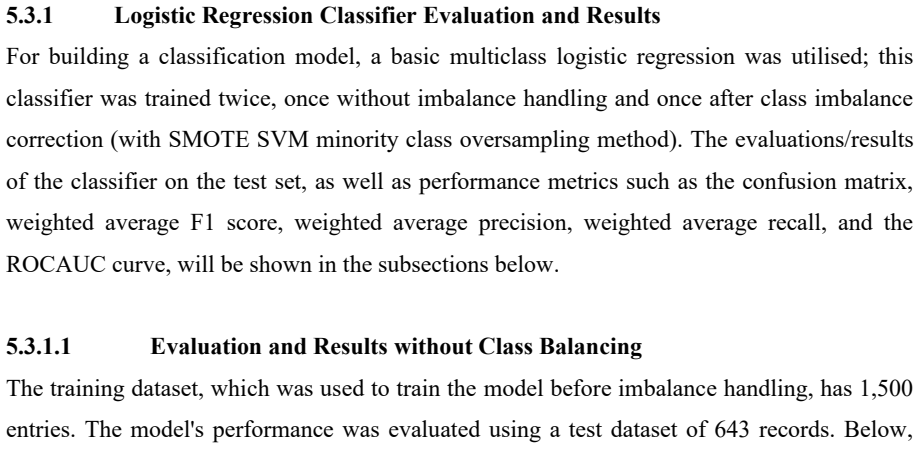
The stacking ensemble that combines Logistic Regression, Extra Trees, Bagging KNN, and LightGBM as base classifiers, trained after imputation, oversampling, and feature selection, alongside a parallel artificial neural network for performance comparison.
If this is right
- The stacking ensemble and neural network will be ranked against one another on precision, recall, F1-score, and AUC-ROC to declare the stronger approach.
- A short list of biomarkers will emerge from the feature selection and model training steps.
- Early-stage prediction will be possible using the retained clinical, neuropsychological, and neuroimaging measures.
- The identified biomarkers can be examined for their role in guiding timely management steps.
Where Pith is reading between the lines
- The biomarker rankings could be checked against longitudinal ADNI follow-up records to see whether they track actual disease progression.
- The same imputation-plus-oversampling steps might transfer to other imbalanced medical classification tasks.
- If the top features remain stable across slight changes in the selection method, they become stronger candidates for targeted testing.
- Integration of the best model into screening workflows could be tested by measuring how often it flags cases that later receive clinical confirmation.
Load-bearing premise
That the preprocessing steps and models fitted to the ADNI cohort produce predictions that hold for new patients and that the highest-ranked features reflect real clinical biomarkers rather than artifacts of the dataset.
What would settle it
An independent test set drawn from a different patient population where the ensemble and neural network show no improvement over chance on the same metrics, or where the top selected features show no link to Alzheimer's pathology in separate clinical data.
Figures










read the original abstract
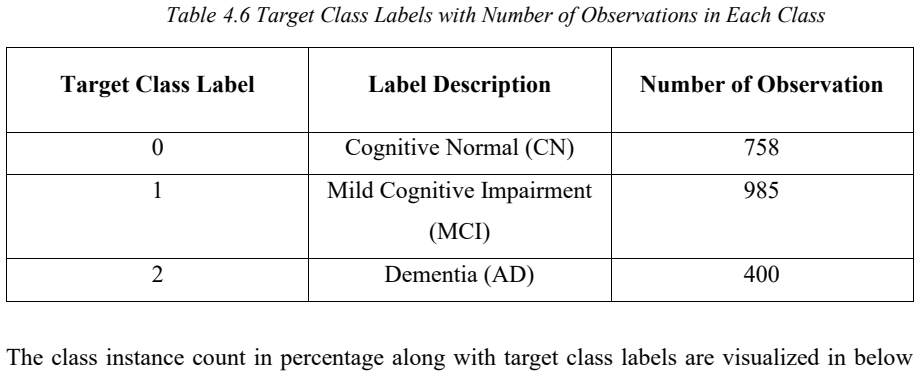
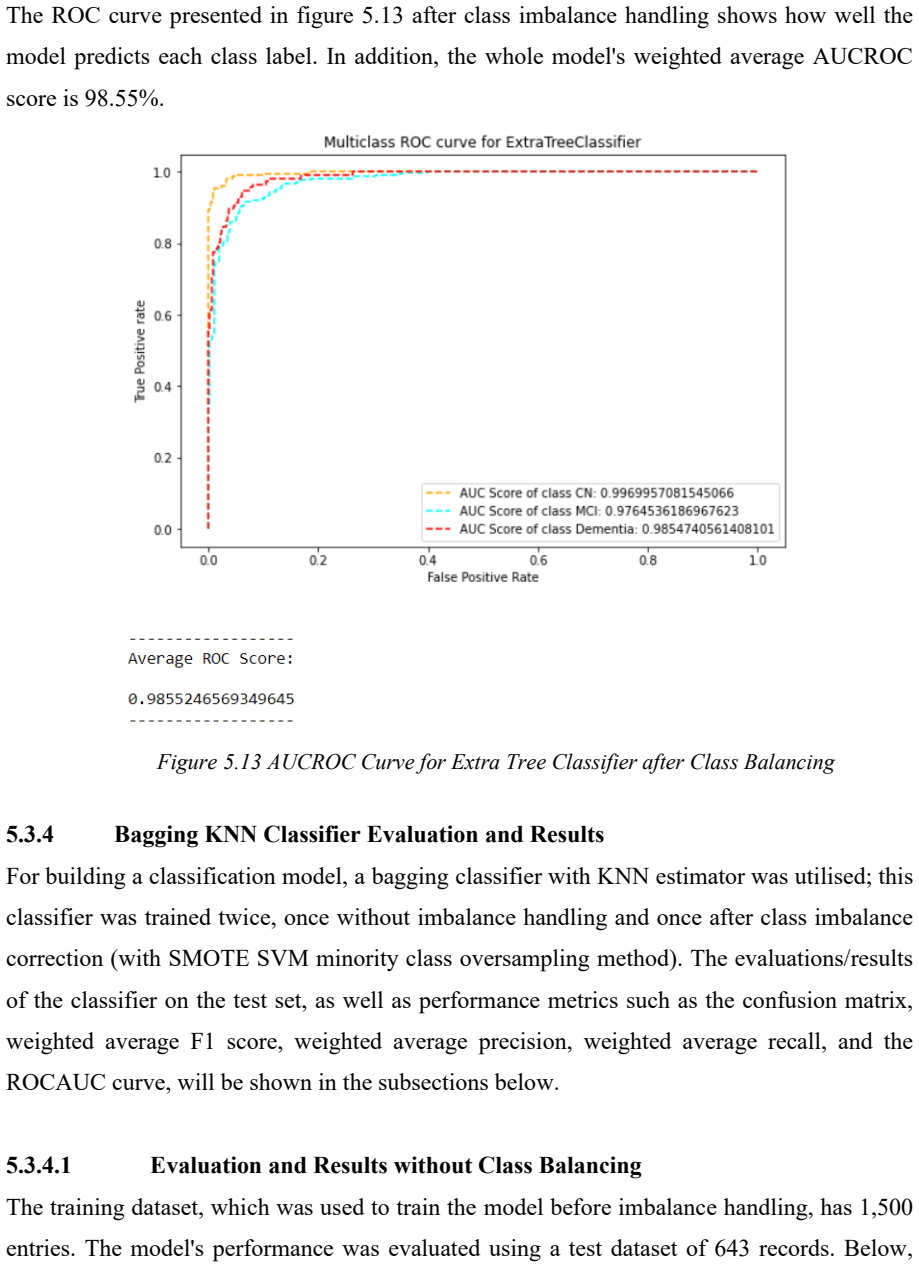
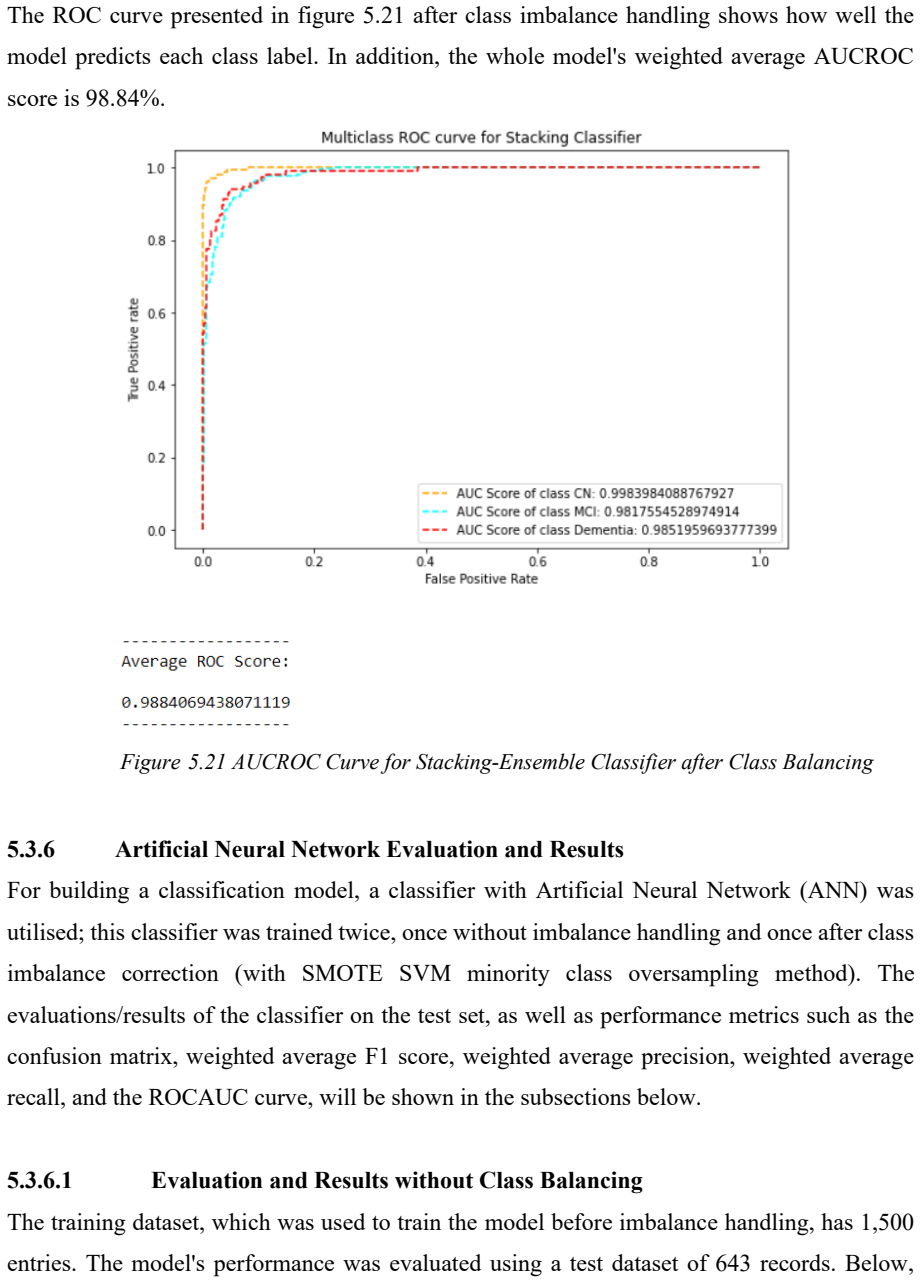
Alzheimers disease (AD) is a brain disorder that develops slowly and mainly affects memory, thinking, language, and daily activities. It is one of the most common causes of dementia and creates many difficulties for patients as well as their families. In the early stage, the symptoms are often mild and may look like normal ageing. For this reason, many people are diagnosed late, when the disease has already progressed. At present, there is no complete cure for AD. Still, early detection can help doctors manage the condition better and take suitable steps at the right time. In this study, a machine learning model is proposed to detect the early stages of Alzheimers disease using clinical details, neuropsychological test scores, and neuroimaging-related measures. The data used in this work is collected from the Alzheimers Disease Neuroimaging Initiative (ADNI). As the dataset has missing values, iterative imputation is applied to fill them. The dataset also has class imbalance, which is handled using Borderline SVM-SMOTE. After that, feature selection is carried out using wrapper-based and embedded methods so that only important features are used for training. The selected features are divided into training and testing sets, and feature scaling is applied. A stacking ensemble model is developed using Logistic Regression, Extra Trees, Bagging KNN, and LightGBM as base classifiers. Along with this, an artificial neural network is also trained on the same dataset. The performance of these models is compared using precision, recall, F1-score, and AUC-ROC. This study aims to find the best classifier and also identify important biomarkers that may help in the early diagnosis of Alzheimers disease.
Editorial analysis
A structured set of objections, weighed in public.
Referee Report
Summary. The manuscript proposes an ML pipeline on ADNI data for early Alzheimer's detection: iterative imputation for missing values, Borderline SVM-SMOTE for class imbalance, wrapper/embedded feature selection, followed by train/test split and scaling. It trains a stacking ensemble (Logistic Regression, Extra Trees, Bagging KNN, LightGBM bases) plus an ANN, compares them on precision/recall/F1/AUC-ROC, and aims to identify key biomarkers.
Significance. If the reported metrics and feature rankings prove valid, the work would offer a practical multi-model comparison for a high-impact clinical task and could surface candidate biomarkers from clinical, neuropsychological, and imaging variables. The combination of ensemble methods with an ANN is a standard but potentially useful contribution when properly validated.
major comments (2)
- [Abstract / Methodology] Abstract and Methodology: iterative imputation and Borderline SVM-SMOTE are applied to the full dataset before feature selection and the train/test split (with scaling only after the split). This ordering leaks test-set information into the imputed values and synthetic minority samples, so the reported precision/recall/F1/AUC-ROC values and the wrapper/embedded feature rankings cannot be interpreted as unbiased estimates of generalization or stable biomarker signals. This directly undermines the central claims of useful prediction and biomarker identification.
- [Methodology] Methodology: no description is given of whether feature selection, imputation, and SMOTE were nested inside cross-validation or performed once on the pooled data; the absence of this detail makes it impossible to assess whether the performance numbers reflect out-of-sample prediction.
minor comments (2)
- [Abstract] Abstract contains repeated minor spelling inconsistencies ("Alzheimers" without apostrophe) and lacks any numerical performance values, which reduces readability.
- The manuscript would benefit from explicit reporting of hyperparameter search ranges, the exact number of folds, and the external test-set size if one exists.
Simulated Author's Rebuttal
We thank the referee for the constructive and detailed comments on our manuscript. We agree that the described pipeline ordering introduces potential data leakage and that the lack of detail on cross-validation nesting prevents proper assessment of the results. We will revise the methodology section to nest all preprocessing steps inside cross-validation and provide explicit descriptions of the validation procedure.
read point-by-point responses
-
Referee: [Abstract / Methodology] Abstract and Methodology: iterative imputation and Borderline SVM-SMOTE are applied to the full dataset before feature selection and the train/test split (with scaling only after the split). This ordering leaks test-set information into the imputed values and synthetic minority samples, so the reported precision/recall/F1/AUC-ROC values and the wrapper/embedded feature rankings cannot be interpreted as unbiased estimates of generalization or stable biomarker signals. This directly undermines the central claims of useful prediction and biomarker identification.
Authors: We agree that the current manuscript description applies iterative imputation and Borderline SVM-SMOTE to the full dataset before the train/test split, which risks leakage of test information. In the revised version we will restructure the pipeline so that imputation, SMOTE, feature selection, and scaling are performed exclusively inside each fold of a nested cross-validation procedure. This change will ensure the reported metrics and feature rankings reflect unbiased generalization performance. revision: yes
-
Referee: [Methodology] Methodology: no description is given of whether feature selection, imputation, and SMOTE were nested inside cross-validation or performed once on the pooled data; the absence of this detail makes it impossible to assess whether the performance numbers reflect out-of-sample prediction.
Authors: We acknowledge that the original submission omitted any description of nesting. The revised Methodology section will explicitly state that imputation, SMOTE, feature selection, and scaling are nested within cross-validation folds, with a clear diagram and pseudocode to document the out-of-sample evaluation protocol. revision: yes
Circularity Check
No significant circularity; empirical pipeline contains no derivation chain
full rationale
The manuscript presents an applied ML study on ADNI data with no equations, no claimed first-principles derivations, and no self-citations used to justify uniqueness or ansatzes. All steps (iterative imputation, Borderline SVM-SMOTE, wrapper/embedded feature selection, train/test split, scaling, stacking ensemble, ANN) are described procedurally rather than as a mathematical reduction. Reported metrics are empirical performance numbers, not quantities asserted to follow from prior results by construction. While the described preprocessing order risks leakage, this is a methodological validity issue outside the enumerated circularity patterns; the central claims do not reduce to their inputs by definition or self-reference.
Axiom & Free-Parameter Ledger
free parameters (2)
- model hyperparameters
- feature selection thresholds
axioms (1)
- domain assumption ADNI data after imputation and SMOTE is representative of the target clinical population
Reference graph
Works this paper leans on
-
[1]
Ahmed, M.R., Zhang, Y., Feng, Z., Lo, B., Inan, O.T. and Liao, H., (2019) Neuroimaging and Machine Learning for Dementia Diagnosis: Recent Advancements and Future Prospects. IEEE Reviews in Biomedical Engineering , [online] 12, pp.19 –33. Available at: https://ieeexplore.ieee.org/stamp/stamp.jsp?tp=&arnumber=8572804. Akil, B., Zhou, Y. and Rohm, U., (2018...
-
[2]
Available at: https://ieeexplore.ieee.org/stamp/stamp.jsp?tp=&arnumber=8282683. Ryu, S.E., Shin, D.H. and Chung, K., (2020) Prediction model of dementia risk based on XGBoost using derived variable extraction and hyper parameter optimization. IEEE Access, [online] 8, pp.177708 –177720. Available at: https://ieeexplore.ieee.org/stamp/stamp.jsp?tp=&arnumber...
discussion (0)
Sign in with ORCID, Apple, or X to comment. Anyone can read and Pith papers without signing in.