A Unified Halo Mass Function Across Dark Matter Models from High-Resolution Multi-Scale Simulations
Pith reviewed 2026-06-27 09:19 UTC · model grok-4.3
The pith
A single calibrated fitting function describes the dark matter halo mass function across models from 10^6 to 10^16 solar masses.
A machine-rendered reading of the paper's core claim, the machinery that carries it, and where it could break.
Core claim
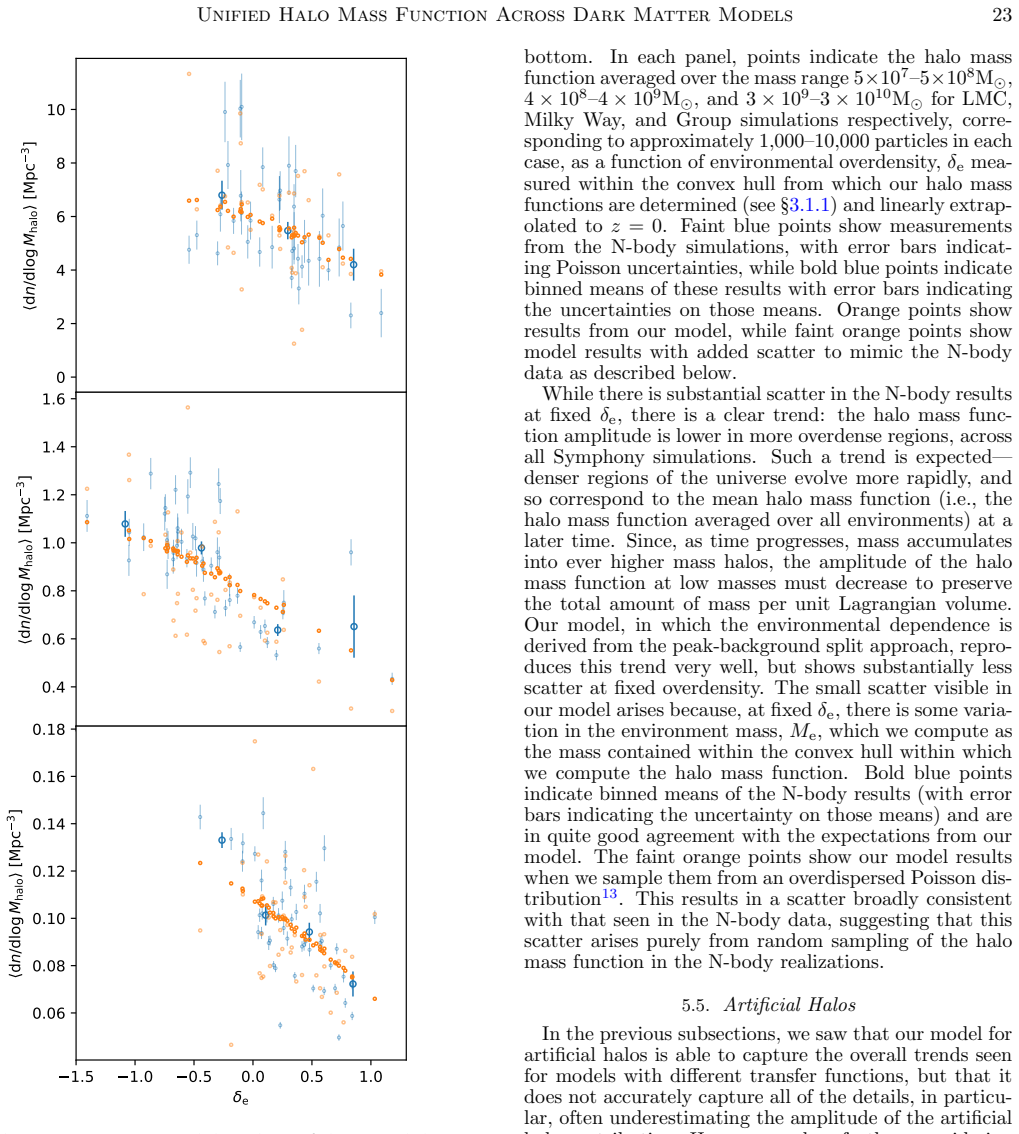
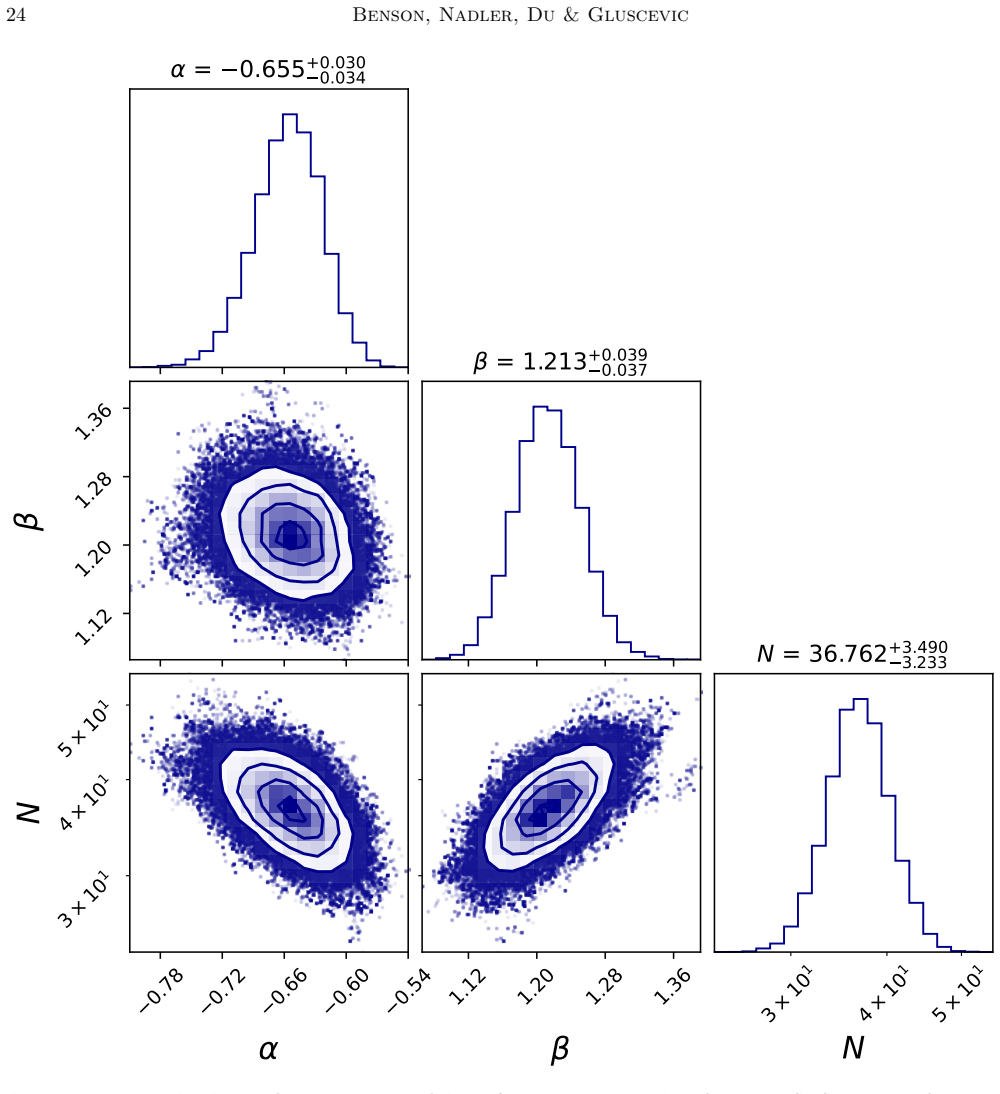
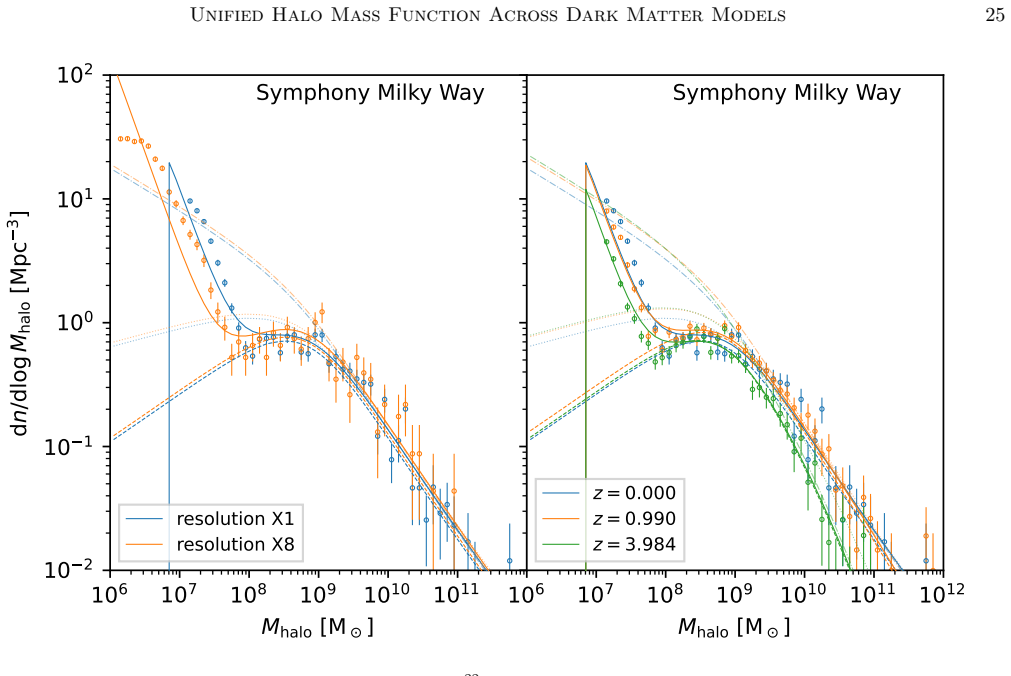
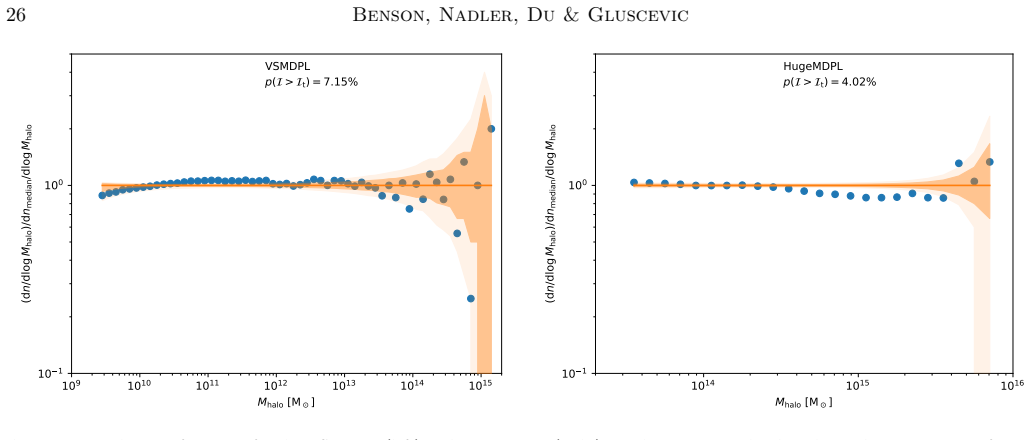
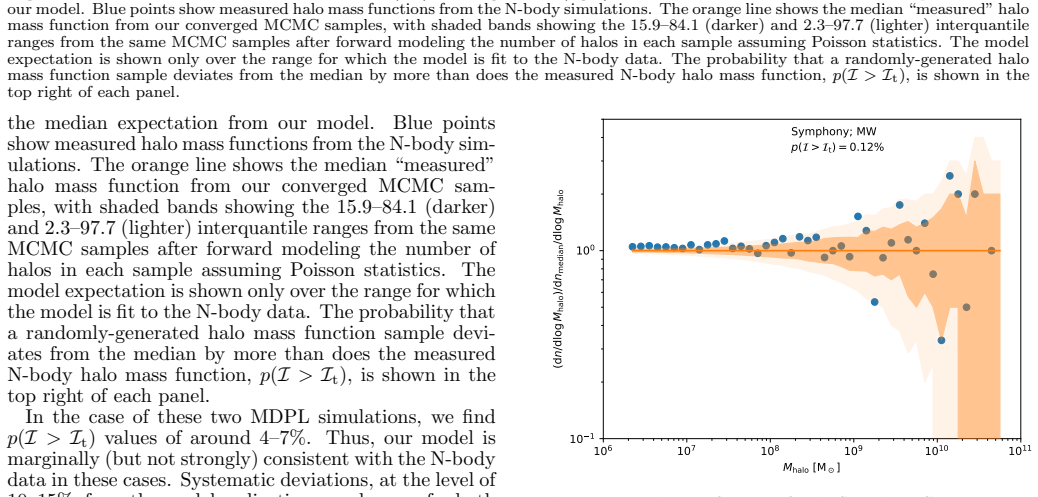
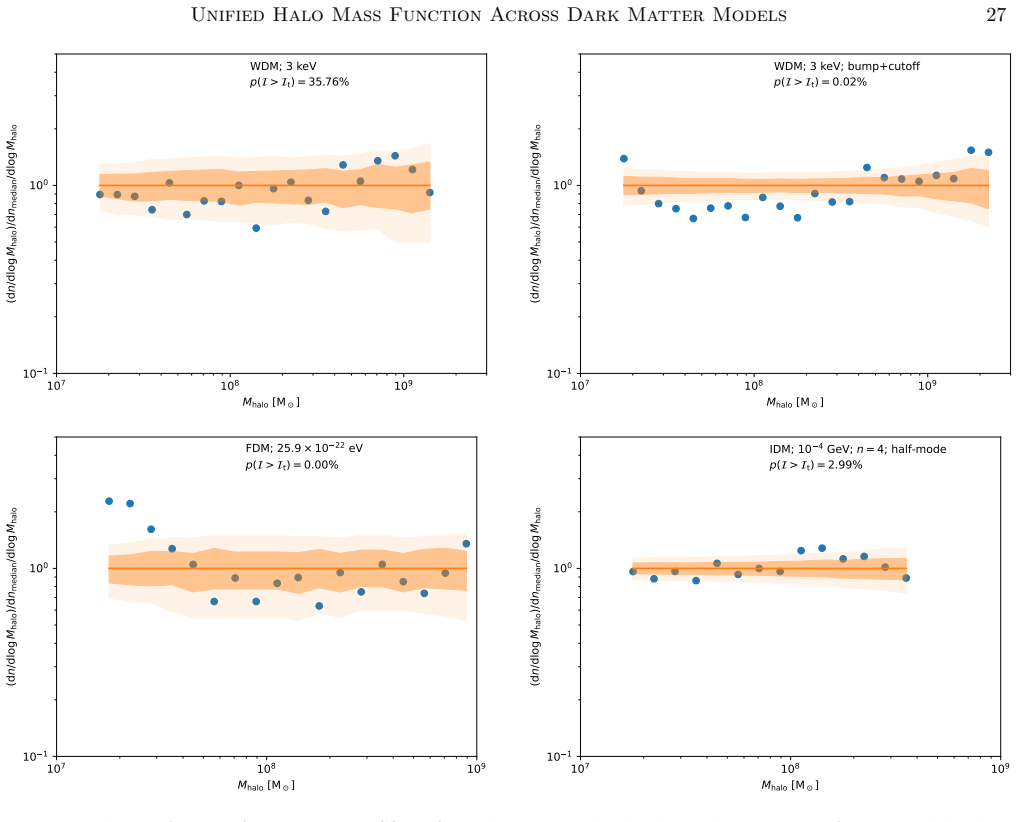
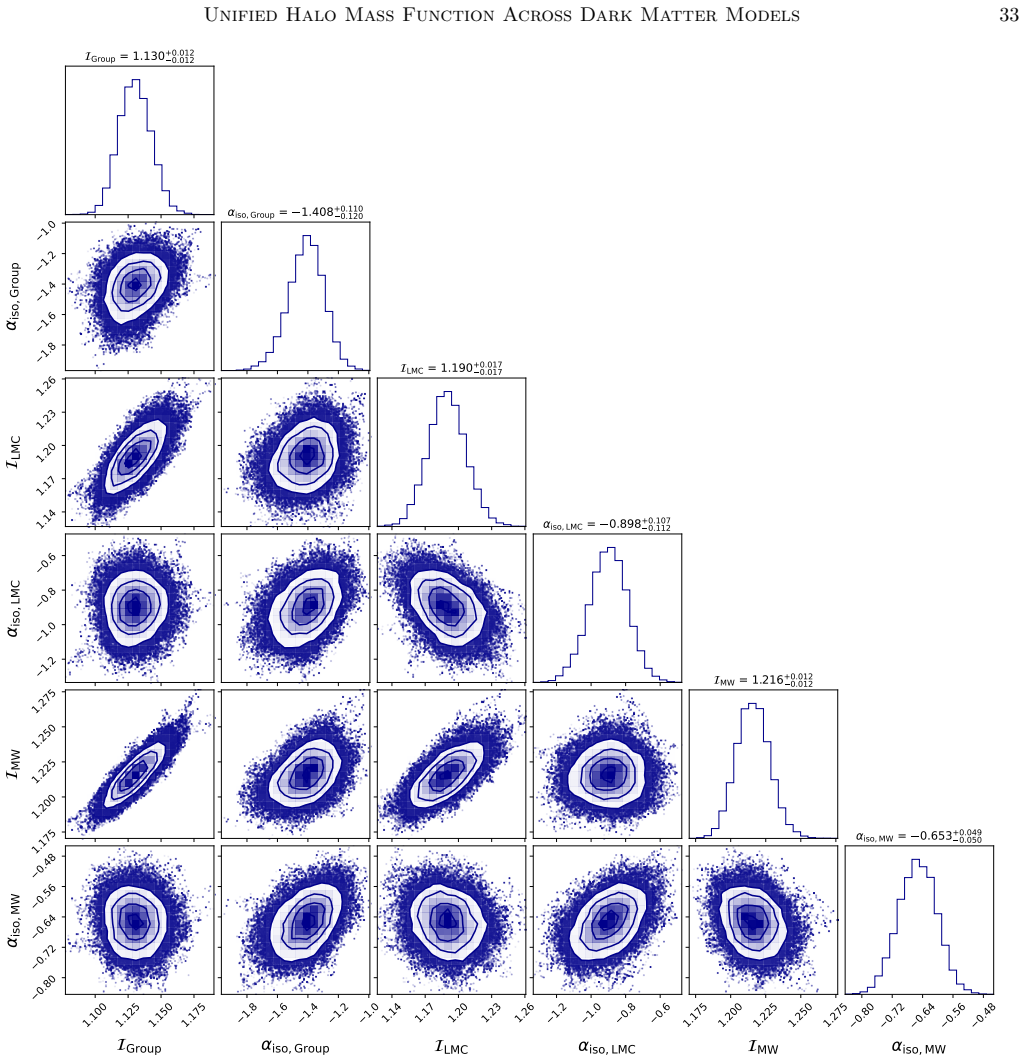
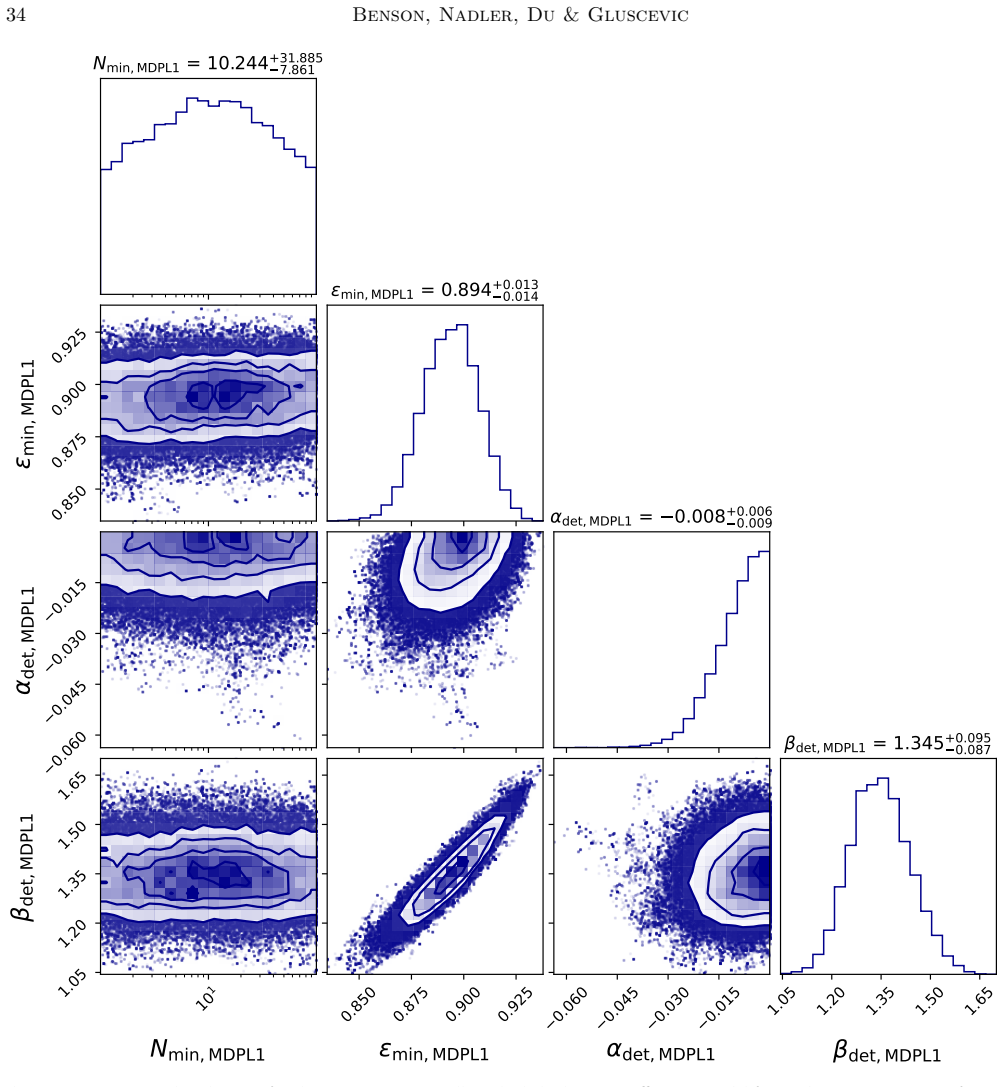
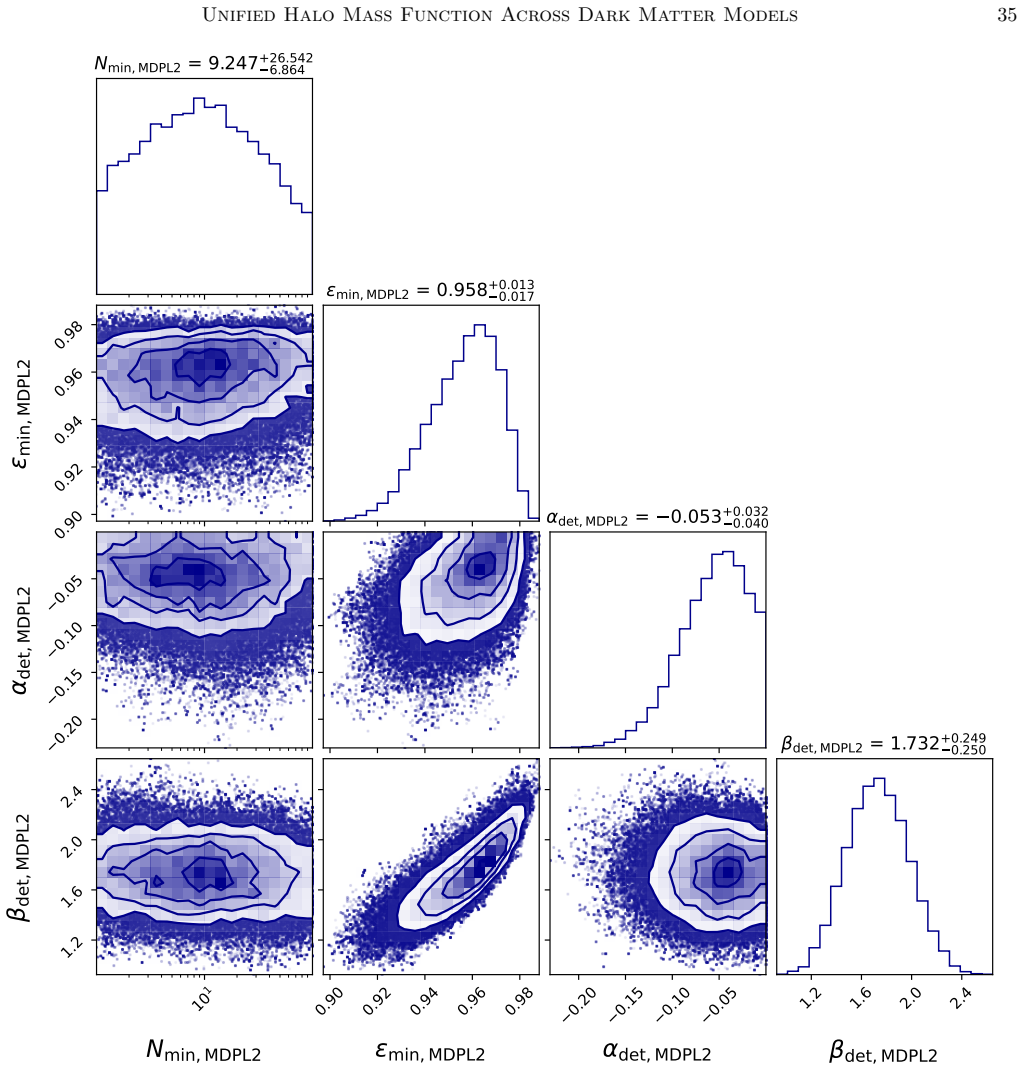
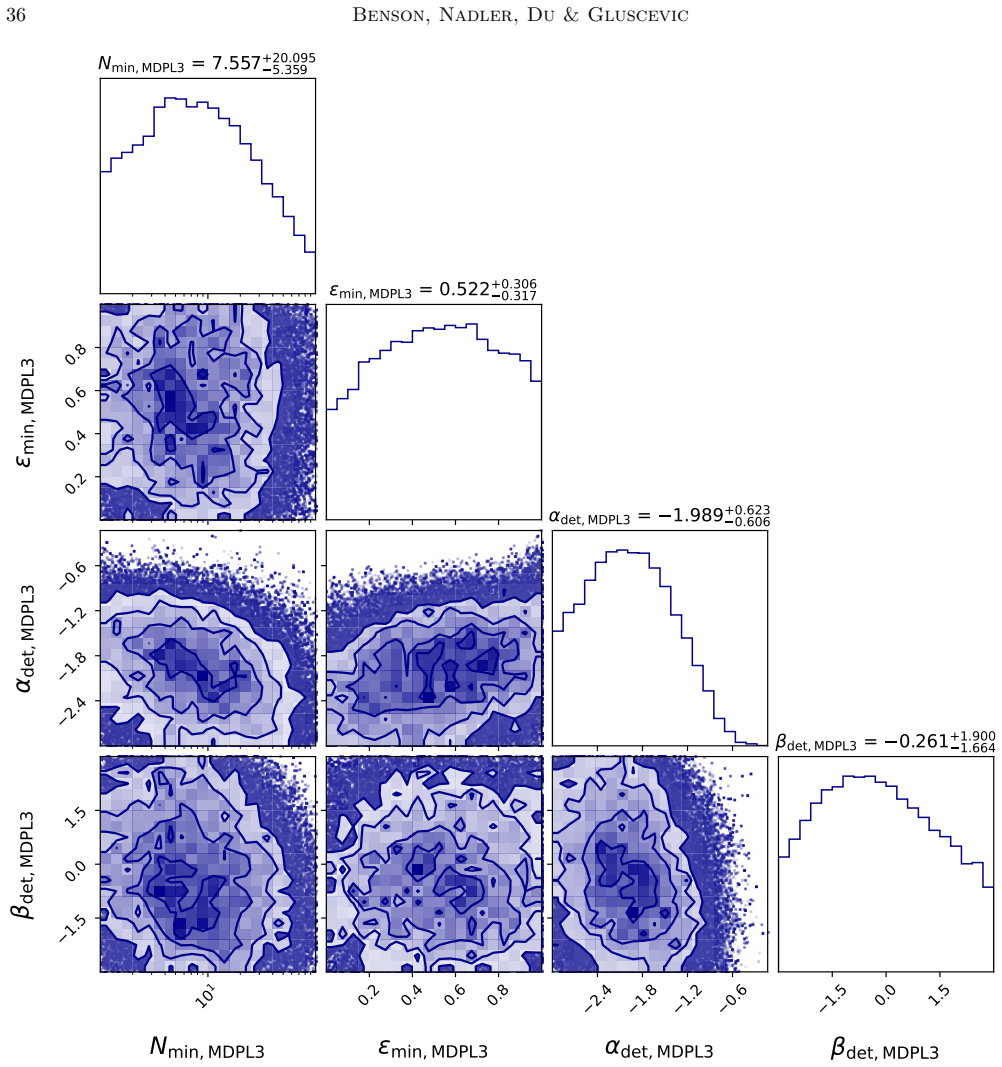
The authors calibrate flexible fitting functions for the halo mass function and the window function, together with parameterized models for finite-box effects, halo isolation, detection efficiency, and artificial-halo contamination. When tested against measurements from MultiDark Planck boxes and zoom-in simulations of group-, Milky-Way-, and LMC-mass halos (including both CDM and non-CDM runs), the model remains consistent with the N-body results across redshifts and halo masses from 10^6 to 10^16 solar masses, typically at 12 percent precision while capturing small-scale cut-offs, oscillations, and enhancements. Integration with a simple environmental-density model yields a robust descript
What carries the argument
Flexible fitting functions for the halo mass function and window function, together with parameterized corrections for simulation systematics.
If this is right
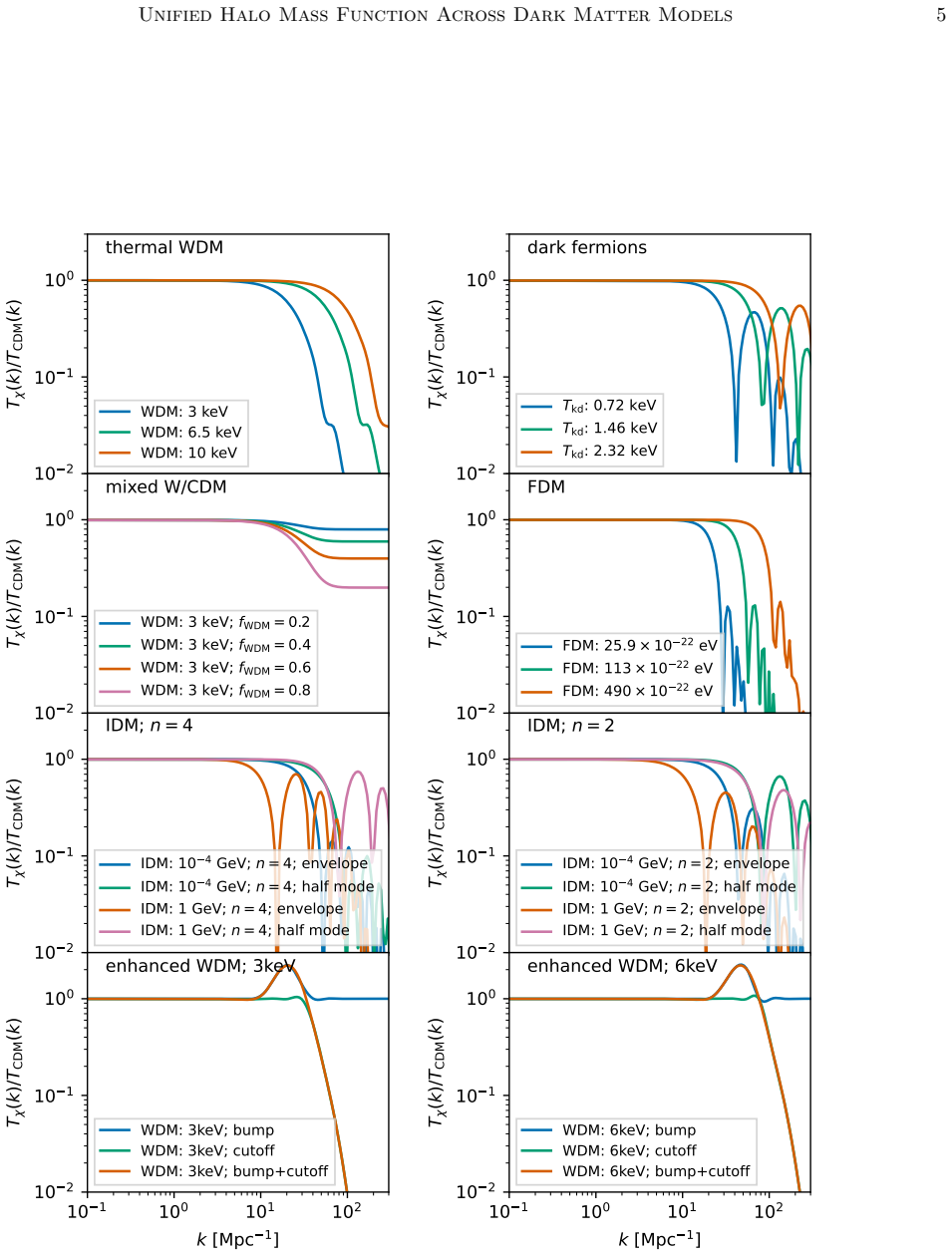
- The function captures small-scale cut-offs, oscillations, and enhancements for a range of power spectra.
- It maintains 12 percent typical precision, with 40-50 percent deviations only in limited mass intervals for certain spectra.
- Combined with an environmental-density model it describes how local density alters halo abundance.
- It supplies halo abundances accurate to 10^7 solar masses for thermal relics, axions, and dark-sector-interaction models.
- It serves as a critical ingredient for model-independent dark-matter inference from forthcoming data.
Where Pith is reading between the lines
- The same calibration approach could be extended to predict halo abundances in dark matter models that have never been simulated directly.
- Using the function in galaxy-formation models would reduce one source of uncertainty when converting observed galaxy counts into constraints on dark matter particle properties.
- Future zoom-in simulations at even lower masses or higher redshifts could test whether the 12 percent precision holds outside the calibrated range.
- The environmental-density term suggests a route to include assembly bias effects in analytic halo abundance calculations.
Load-bearing premise
The chosen flexible fitting functions plus the parameterized models for box size, isolation, detection efficiency, and artificial halos are sufficient to describe all relevant simulation behaviors without large unmodeled residuals or model-specific biases.
What would settle it
A new high-resolution simulation in an uncalibrated dark matter model that produces halo mass function values deviating by more than 12 percent from the fitting function over the mass range 10^7 to 10^15 solar masses at redshifts 0 to 3.
Figures
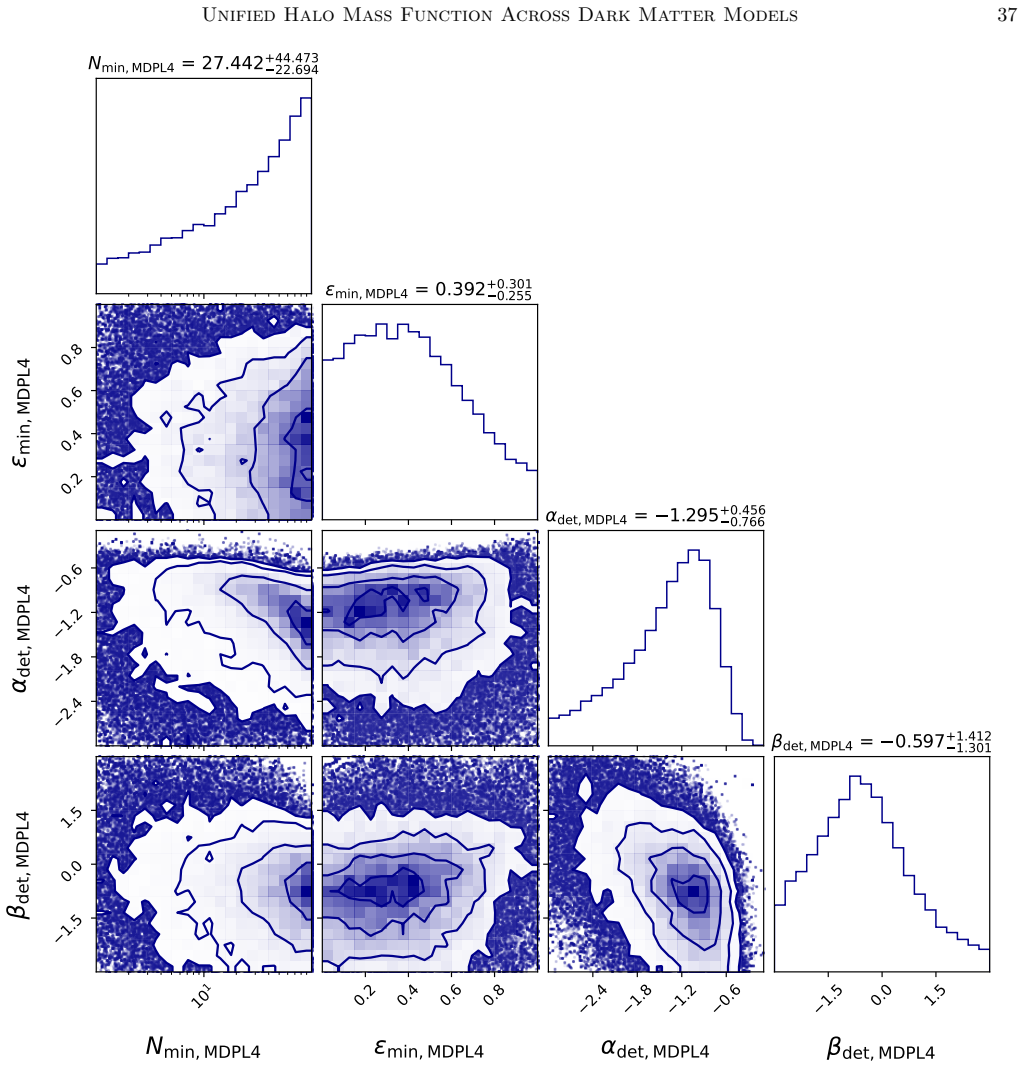
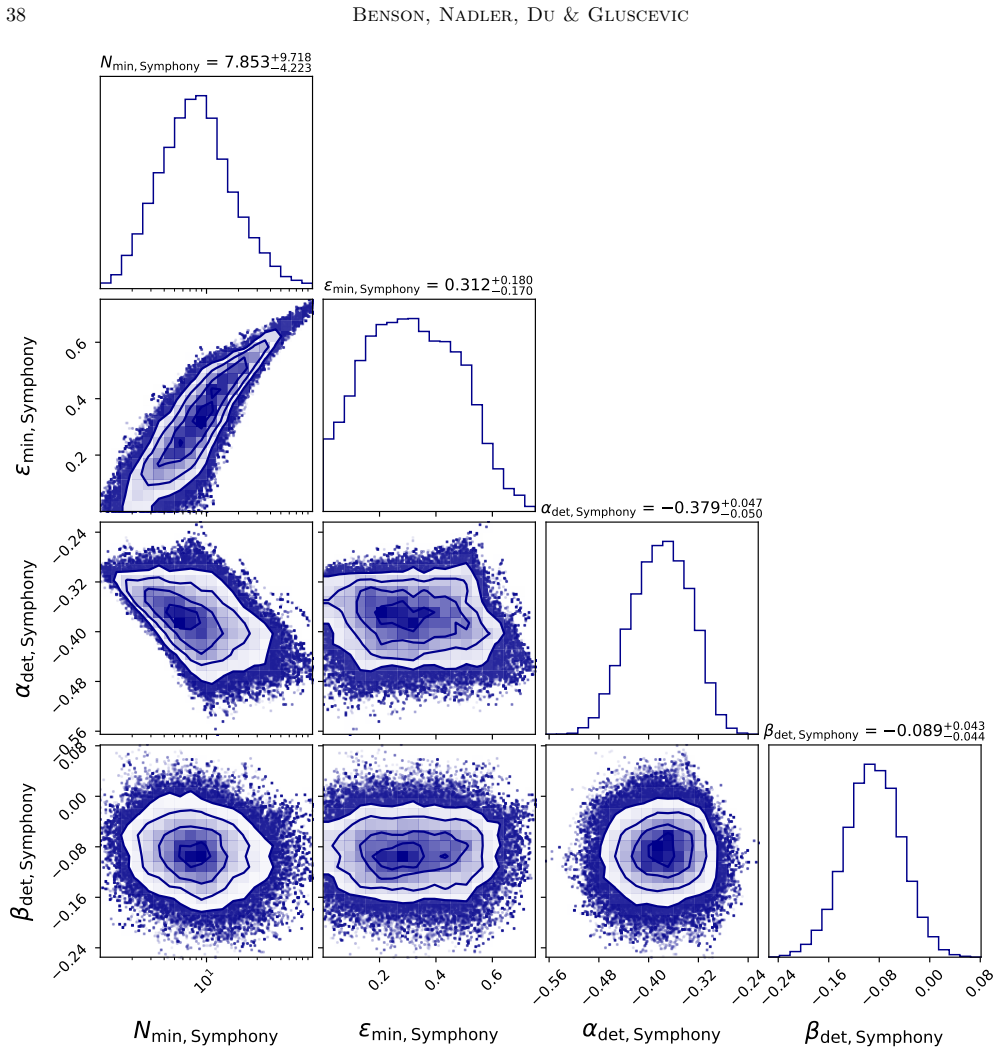
read the original abstract
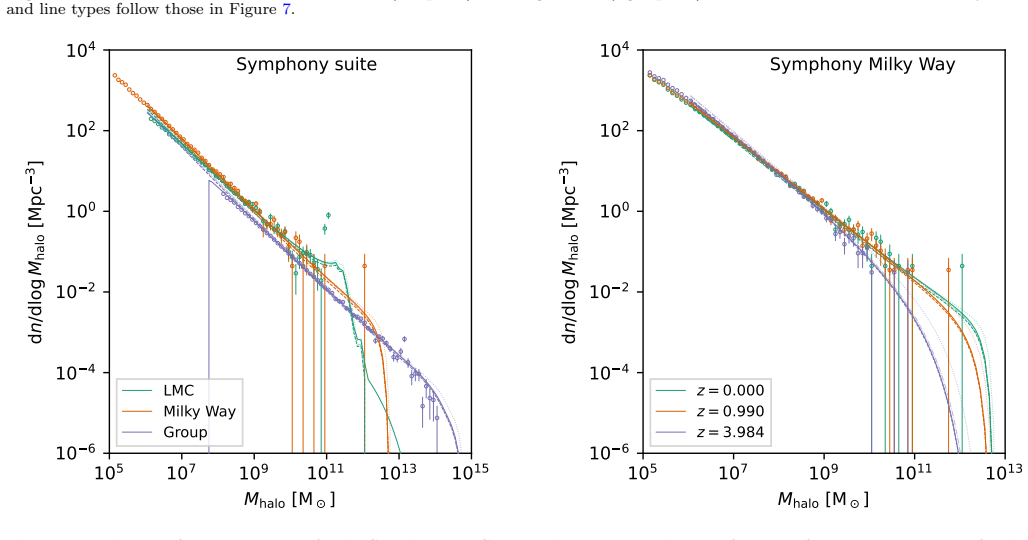
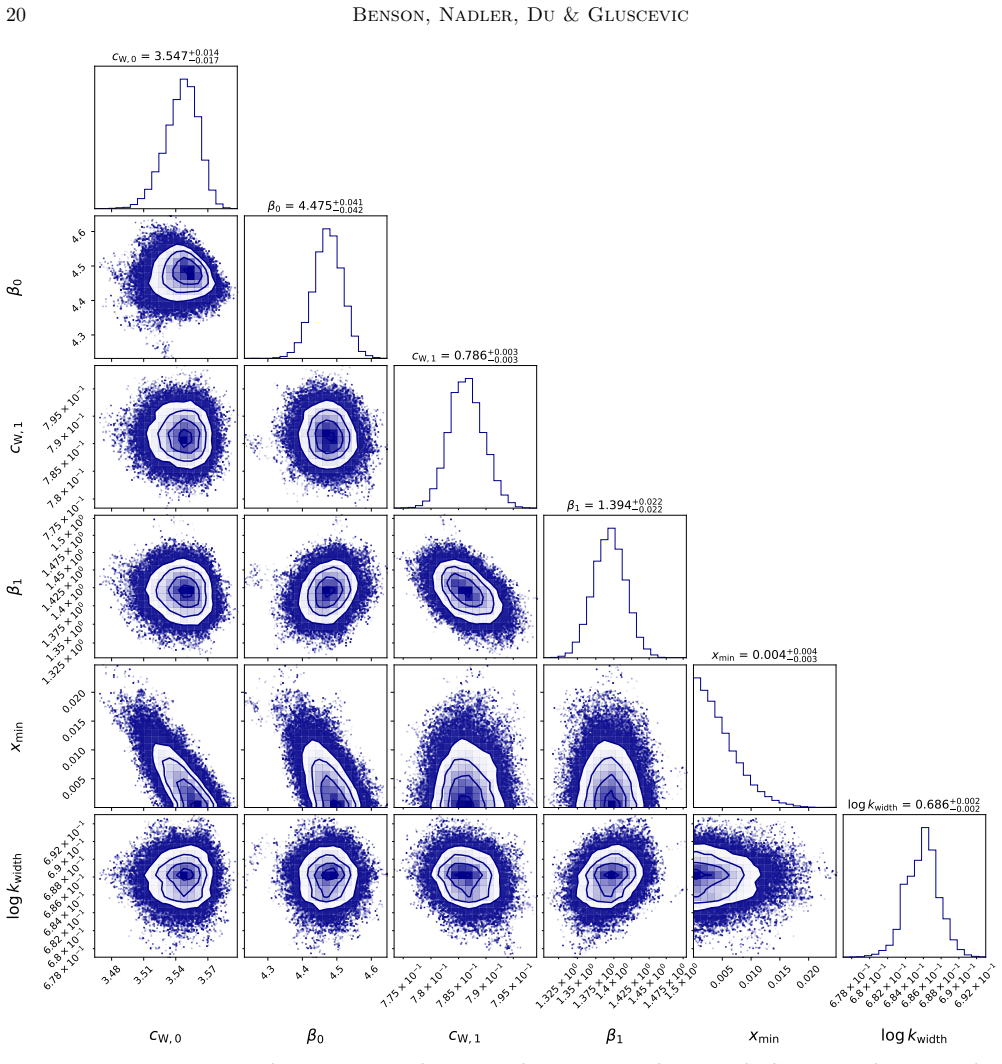
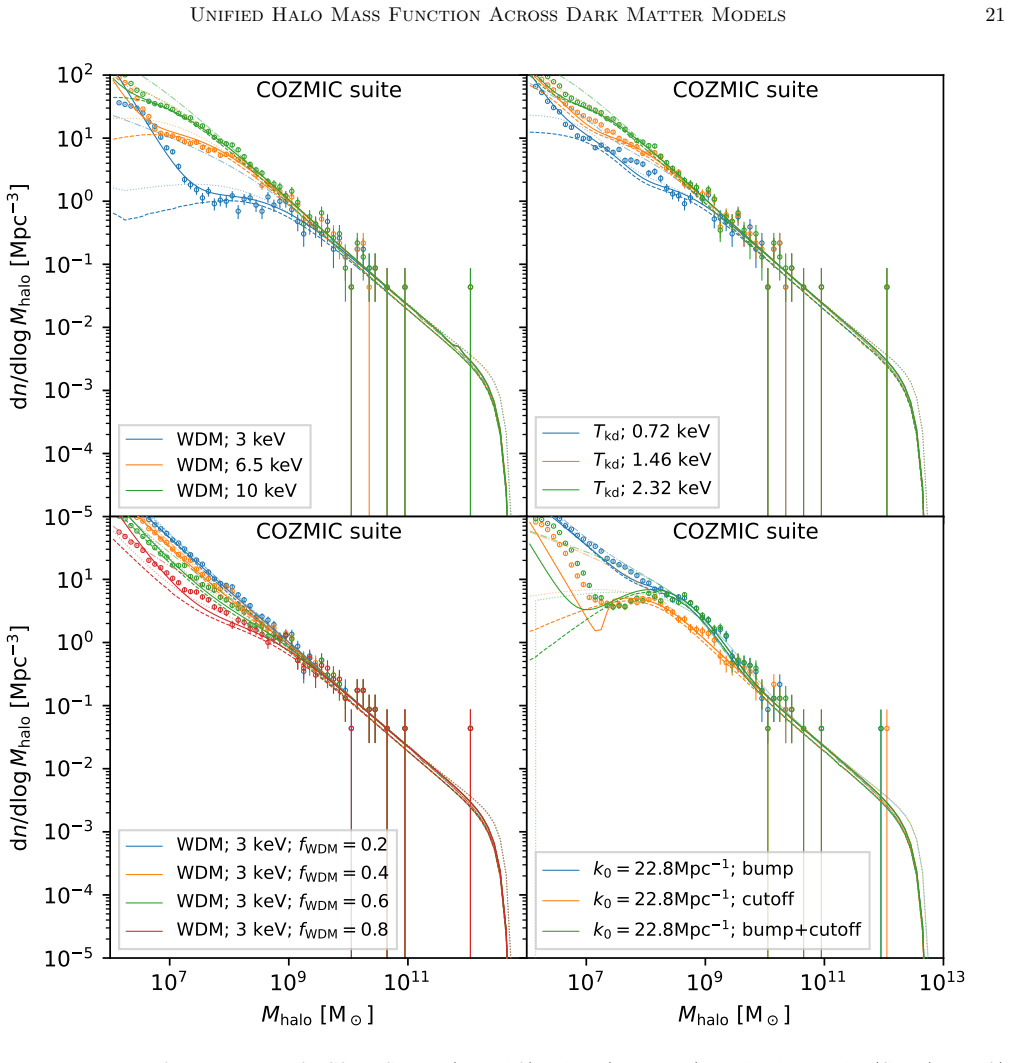
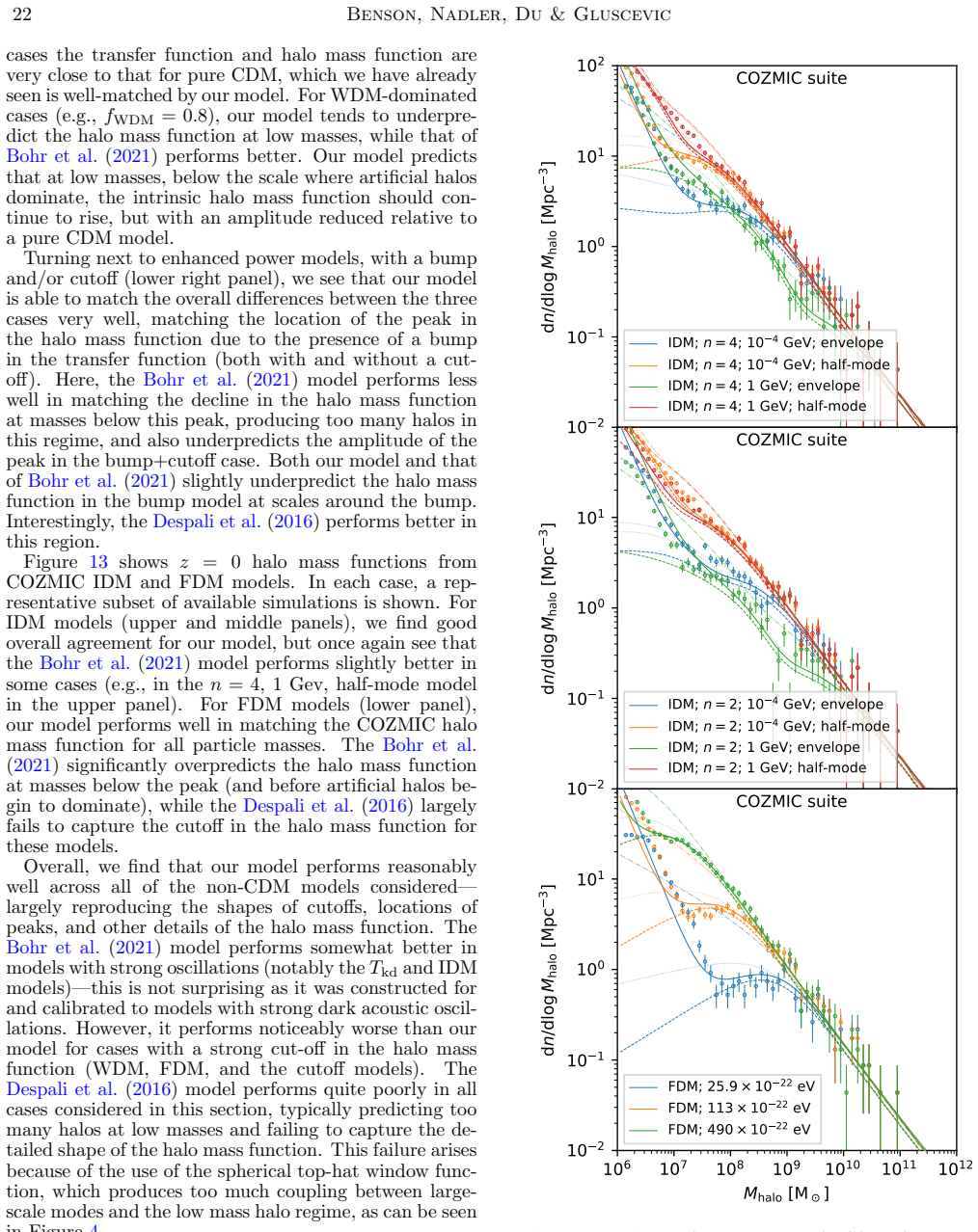
We measure the dark matter halo mass function, with backsplash halos removed, from a wide range of cosmological-box and zoom-in simulations. These include the MultiDark Planck boxes, along with a suite of zoom-in simulations of Group, Milky Way, and LMC-mass halos. The Milky Way simulations include both CDM and non-CDM initial conditions. Using these measurements, we calibrate the parameters of flexible fitting functions for the halo mass function and the window function, along with parameterized models for various systematics, including finite box size effects, halo isolation criteria, halo detection efficiency, and contamination by artificial halos (objects forming from particle noise in the initial conditions). We show that this model shows remarkable consistency with N-body simulations over a broad range of redshifts, and ten orders of magnitude in halo mass ($10^6\mathrm{M}_\odot$ to $10^{16}\mathrm{M}_\odot$). Our model typically maintains a high precision of 12% and captures complex behaviors, including small-scale cut-offs, oscillations, and enhancements. In specific mass intervals for certain power spectra, we see larger deviations of 40-50%. Furthermore, when integrated with a simple model for environmental dependence, this fitting function provides a robust description of how environmental density influences the halo mass function. This precision model captures a wide variety of dark matter paradigms (including thermal relics, axions, and models with dark-sector interactions), is accurate for halo masses down to $10^7\mathrm{M}_\odot$, and is a critical ingredient for model-independent dark-matter inference from forthcoming data.
Editorial analysis
A structured set of objections, weighed in public.
Referee Report
Summary. The paper measures the dark matter halo mass function (with backsplash halos removed) from MultiDark Planck boxes and zoom-in simulations spanning Group, Milky Way, and LMC-mass halos, including both CDM and non-CDM initial conditions. It calibrates parameters of flexible fitting functions for the HMF and window function, together with parameterized models for finite box size effects, halo isolation criteria, detection efficiency, and artificial halo contamination. The central claim is that the resulting model is consistent with N-body results over a broad redshift range and ten orders of magnitude in halo mass (10^6 to 10^16 M_⊙), achieving typical 12% precision while capturing cut-offs, oscillations, and enhancements (with 40-50% deviations noted in specific mass intervals for certain power spectra); when combined with a simple environmental model, it provides a unified description across DM paradigms including thermal relics, axions, and dark-sector interactions, accurate down to 10^7 M_⊙.
Significance. If the central claim holds after validation, the work would supply a practical, flexible fitting function for the HMF that spans CDM and multiple non-CDM models over an unprecedented mass and redshift range, directly supporting model-independent DM inference from upcoming surveys. The multi-scale simulation strategy and explicit treatment of several systematics are strengths that could make the calibrated form a useful reference tool, provided the fitting procedure demonstrates robustness beyond the calibration set.
major comments (2)
- [Abstract] Abstract: the central claim of ~12% typical precision across DM models and the assertion of 'remarkable consistency' rest on the calibration of the flexible HMF fitting function plus four parameterized systematics models, yet the manuscript supplies no description of the fitting procedure, cross-validation strategy, or error propagation; without these steps it is impossible to determine whether the quoted precision is general or an artifact of the calibration.
- [Abstract] Abstract: the parameterized models for finite box size, isolation criteria, detection efficiency, and artificial halo contamination are fitted simultaneously with the HMF function to the same simulation measurements; this raises the concrete risk that DM-model-specific residuals or simulation artifacts are absorbed into the extra parameters rather than the functional form capturing universal behavior, especially given the reported 40-50% deviations in particular mass intervals for certain power spectra.
minor comments (1)
- [Abstract] Abstract: the mass range 10^6 M_⊙ to 10^16 M_⊙ is stated without clarifying whether the lower limit applies uniformly to all DM models or only to those without strong small-scale cut-offs.
Simulated Author's Rebuttal
We thank the referee for their thorough review and constructive comments. We appreciate the recognition of the work's potential utility and address the major comments point by point below, describing the revisions planned to address the concerns.
read point-by-point responses
-
Referee: [Abstract] Abstract: the central claim of ~12% typical precision across DM models and the assertion of 'remarkable consistency' rest on the calibration of the flexible HMF fitting function plus four parameterized systematics models, yet the manuscript supplies no description of the fitting procedure, cross-validation strategy, or error propagation; without these steps it is impossible to determine whether the quoted precision is general or an artifact of the calibration.
Authors: We agree that the manuscript lacks a detailed description of the fitting procedure, cross-validation strategy, and error propagation. In the revised version, we will add a dedicated subsection in the Methods section that specifies the optimization algorithm employed, the cross-validation approach (using separate simulation suites for training and validation), and the method for propagating measurement uncertainties into the model parameters and quoted precision. This addition will allow readers to assess whether the 12% figure reflects general performance. revision: yes
-
Referee: [Abstract] Abstract: the parameterized models for finite box size, isolation criteria, detection efficiency, and artificial halo contamination are fitted simultaneously with the HMF function to the same simulation measurements; this raises the concrete risk that DM-model-specific residuals or simulation artifacts are absorbed into the extra parameters rather than the functional form capturing universal behavior, especially given the reported 40-50% deviations in particular mass intervals for certain power spectra.
Authors: We acknowledge the risk highlighted by simultaneous fitting. The systematics models are motivated by physical considerations and tested with dedicated simulation variations (e.g., box-size convergence runs). In the revision, we will add explicit validation tests in which systematics parameters are fixed using only CDM data and then applied to non-CDM simulations, along with separate residual plots per dark matter model. These additions will demonstrate that the HMF functional form, rather than the systematics parameters, accounts for model-specific features such as cut-offs and oscillations. We maintain that the approach captures universal behavior but agree that further documentation is warranted. revision: partial
Circularity Check
Fitting functions and systematics models calibrated directly to simulation measurements make reported consistency with N-body results tautological
specific steps
-
fitted input called prediction
[Abstract]
"Using these measurements, we calibrate the parameters of flexible fitting functions for the halo mass function and the window function, along with parameterized models for various systematics, including finite box size effects, halo isolation criteria, halo detection efficiency, and contamination by artificial halos... We show that this model shows remarkable consistency with N-body simulations over a broad range of redshifts, and ten orders of magnitude in halo mass (10^6 M_⊙ to 10^16 M_⊙). Our model typically maintains a high precision of 12%"
The fitting functions and systematics parameters are calibrated to the simulation measurements; the subsequent claim of consistency and 12% precision with those same N-body simulations is therefore an interpolation of the fitted quantities rather than an independent prediction or validation.
full rationale
The paper extracts halo mass function measurements from its suite of CDM and non-CDM simulations, then calibrates the parameters of its flexible fitting functions plus four parameterized systematics models to those same measurements. It subsequently presents the calibrated model as demonstrating 'remarkable consistency' and 'high precision of 12%' with the N-body simulations across mass and redshift ranges. Because the central claim of unification and precision is obtained by fitting to the identical data against which consistency is asserted, the agreement reduces to interpolation within the fitted inputs rather than an independent test. No load-bearing self-citations, uniqueness theorems, or ansatzes imported from prior work appear in the provided text; the circularity is confined to the fitted-input-called-prediction pattern.
Axiom & Free-Parameter Ledger
free parameters (3)
- parameters of the flexible halo mass function fitting function
- parameters of the window function fitting function
- parameters for finite box size effects, halo isolation, detection efficiency, and artificial halo contamination
axioms (1)
- domain assumption N-body simulations accurately capture the gravitational clustering physics for the dark matter models considered
Reference graph
Works this paper leans on
-
[1]
The three causes of low-mass assembly bias. , keywords =. doi:10.1093/mnras/staa430 , archivePrefix =. 1902.00030 , primaryClass =
-
[2]
arXiv e-prints , keywords =
JWST Lensed Quasar Dark Matter Survey V: Measuring the minimum halo mass with strong gravitational lensing. arXiv e-prints , keywords =
-
[3]
doi:10.5281/zenodo.16915369 , url =
Nadler, Ethan and Gluscevic, Vera and Benson, Andrew , title =. doi:10.5281/zenodo.16915369 , url =
-
[4]
Small-Scale Challenges to the CDM Paradigm. , keywords =. doi:10.1146/annurev-astro-091916-055313 , archivePrefix =. 1707.04256 , primaryClass =
-
[5]
Dark Matter Constraints from a Unified Analysis of Strong Gravitational Lenses and Milky Way Satellite Galaxies. , keywords =. doi:10.3847/1538-4357/abf9a3 , archivePrefix =. 2101.07810 , primaryClass =
-
[6]
Warm dark matter constraints using Milky Way satellite observations and subhalo evolution modeling. , keywords =. doi:10.1103/PhysRevD.106.123026 , archivePrefix =. 2111.13137 , primaryClass =
-
[7]
Constraints on Dark Matter Properties from Observations of Milky Way Satellite Galaxies. , keywords =. doi:10.1103/PhysRevLett.126.091101 , archivePrefix =. 2008.00022 , primaryClass =
-
[8]
Gravitationally Consistent Halo Catalogs and Merger Trees for Precision Cosmology
Gravitationally Consistent Halo Catalogs and Merger Trees for Precision Cosmology. , keywords =. doi:10.1088/0004-637X/763/1/18 , archivePrefix =. 1110.4370 , primaryClass =
work page internal anchor Pith review Pith/arXiv arXiv doi:10.1088/0004-637x/763/1/18
-
[9]
The Impact of Molecular Hydrogen Cooling on the Galaxy Formation Threshold. , keywords =. doi:10.3847/2041-8213/adbc6e , archivePrefix =. 2503.04885 , primaryClass =
-
[10]
The Effects of Linear Matter Power Spectrum Enhancement on Dark Matter Substructure. , keywords =. doi:10.3847/1538-4357/ae073b , archivePrefix =. 2507.16889 , primaryClass =
-
[11]
The Mass Function of Unprocessed Dark Matter Halos and Merger Tree Branching Rates
The mass function of unprocessed dark matter haloes and merger tree branching rates. , keywords =. doi:10.1093/mnras/stx343 , archivePrefix =. 1610.01057 , primaryClass =
work page internal anchor Pith review Pith/arXiv arXiv doi:10.1093/mnras/stx343
-
[12]
A Better Way to Define Dark Matter Haloes. arXiv e-prints , keywords =. doi:10.48550/arXiv.2207.11827 , archivePrefix =. 2207.11827 , primaryClass =
-
[13]
A new smooth-$k$ space filter approach to calculate halo abundances
A new smooth-k space filter approach to calculate halo abundances. , keywords =. doi:10.1088/1475-7516/2018/04/010 , archivePrefix =. 1801.02547 , primaryClass =
work page internal anchor Pith review Pith/arXiv arXiv doi:10.1088/1475-7516/2018/04/010 2018
-
[14]
Second Order Power Spectrum and Nonlinear Evolution at High Redshift
Second-Order Power Spectrum and Nonlinear Evolution at High Redshift. , keywords =. doi:10.1086/174502 , archivePrefix =. astro-ph/9311070 , primaryClass =
work page internal anchor Pith review Pith/arXiv arXiv doi:10.1086/174502
-
[15]
Dark matter halo merger histories beyond cold dark matter - I. Methods and application to warm dark matter. , keywords =. doi:10.1093/mnras/sts159 , archivePrefix =. 1209.3018 , primaryClass =
work page internal anchor Pith review Pith/arXiv arXiv doi:10.1093/mnras/sts159
-
[16]
Symphony: Cosmological Zoom-in Simulation Suites over Four Decades of Host Halo Mass. arXiv e-prints , keywords =. doi:10.48550/arXiv.2209.02675 , archivePrefix =. 2209.02675 , primaryClass =
-
[17]
The universality of the virial halo mass function and models for non-universality of other halo definitions. , keywords =. doi:10.1093/mnras/stv2842 , archivePrefix =. 1507.05627 , primaryClass =
work page internal anchor Pith review Pith/arXiv arXiv doi:10.1093/mnras/stv2842
-
[18]
MultiDark simulations: the story of dark matter halo concentrations and density profiles
MultiDark simulations: the story of dark matter halo concentrations and density profiles. , keywords =. doi:10.1093/mnras/stw248 , archivePrefix =. 1411.4001 , primaryClass =
work page internal anchor Pith review Pith/arXiv arXiv doi:10.1093/mnras/stw248
-
[19]
Astronomische Nachrichten , keywords =
The MultiDark Database: Release of the Bolshoi and MultiDark cosmological simulations. Astronomische Nachrichten , keywords =. doi:10.1002/asna.201211900 , adsurl =
-
[20]
Halo concentrations from extended Press-Schechter merger histories
Halo concentrations from extended Press-Schechter merger histories. , keywords =. doi:10.1093/mnras/stz695 , archivePrefix =. 1812.06026 , primaryClass =
work page internal anchor Pith review Pith/arXiv arXiv doi:10.1093/mnras/stz695
-
[21]
The Peak-Patch Picture of Cosmic Catalogs. I. Algorithms. , keywords =. doi:10.1086/192267 , adsurl =
-
[22]
Excursion Set Mass Functions for Hierarchical Gaussian Fluctuations. , keywords =. doi:10.1086/170520 , adsurl =
-
[23]
An analytic model for the spatial clustering of dark matter haloes
An analytic model for the spatial clustering of dark matter haloes. , keywords =. doi:10.1093/mnras/282.2.347 , archivePrefix =. astro-ph/9512127 , primaryClass =
work page internal anchor Pith review Pith/arXiv arXiv doi:10.1093/mnras/282.2.347
-
[24]
Mass Function Predictions Beyond LCDM
Mass Function Predictions Beyond CDM. , keywords =. doi:10.1088/0004-637X/732/2/122 , archivePrefix =. 1005.2239 , primaryClass =
work page internal anchor Pith review Pith/arXiv arXiv doi:10.1088/0004-637x/732/2/122
-
[25]
https://math.stackexchange.com/q/472783 , URL =
Surface of a sphere inside a concentric cube , AUTHOR =. https://math.stackexchange.com/q/472783 , URL =
-
[26]
How well do cosmological simulations reproduce individual-halo properties?
How Well do Cosmological Simulations Reproduce Individual Halo Properties?. , keywords =. doi:10.1088/0004-637X/711/2/1198 , archivePrefix =. 1001.5037 , primaryClass =
work page internal anchor Pith review Pith/arXiv arXiv doi:10.1088/0004-637x/711/2/1198
-
[27]
Constraining the Noise-Free Distribution of Halo Spin Parameters
Constraining the noise-free distribution of halo spin parameters. , keywords =. doi:10.1093/mnras/stx1804 , archivePrefix =. 1705.01915 , primaryClass =
work page internal anchor Pith review Pith/arXiv arXiv doi:10.1093/mnras/stx1804
-
[28]
Discreteness effects in simulations of hot/warm dark matter. , keywords =. doi:10.1111/j.1365-2966.2007.12053.x , archivePrefix =. astro-ph/0702575 , primaryClass =
-
[29]
The halo mass function and inner structure of ETHOS haloes at high redshift. , keywords =. doi:10.1093/mnras/stab1758 , archivePrefix =. 2101.08790 , primaryClass =
-
[30]
Milky Way-est: Cosmological Zoom-in Simulations with Large Magellanic Cloud and Gaia-Sausage-Enceladus Analogs. arXiv e-prints , keywords =. doi:10.48550/arXiv.2404.08043 , archivePrefix =. 2404.08043 , primaryClass =
-
[31]
The Rockstar Phase-Space Temporal Halo Finder and the Velocity Offsets of Cluster Cores
The ROCKSTAR Phase-space Temporal Halo Finder and the Velocity Offsets of Cluster Cores. , keywords =. doi:10.1088/0004-637X/762/2/109 , archivePrefix =. 1110.4372 , primaryClass =
work page internal anchor Pith review Pith/arXiv arXiv doi:10.1088/0004-637x/762/2/109
-
[32]
Halo and subhalo demographics with Planck cosmological parameters: Bolshoi-Planck and MultiDark-Planck simulations. , keywords =. doi:10.1093/mnras/stw1705 , archivePrefix =. 1602.04813 , primaryClass =
work page internal anchor Pith review Pith/arXiv arXiv doi:10.1093/mnras/stw1705
-
[33]
Symphony: Cosmological Zoom-in Simulation Suites over Four Decades of Host Halo Mass. , keywords =. doi:10.3847/1538-4357/acb68c , archivePrefix =. 2209.02675 , primaryClass =
-
[34]
The Origin of Star Formation Gradients in Rich Galaxy Clusters
The Origin of Star Formation Gradients in Rich Galaxy Clusters. , keywords =. doi:10.1086/309323 , archivePrefix =. astro-ph/0004078 , primaryClass =
work page internal anchor Pith review Pith/arXiv arXiv doi:10.1086/309323
-
[35]
The large-scale structure of the universe
-
[36]
Using the Evolution of Clusters to Constrain Omega
Cluster evolution as a diagnostic for Omega. , keywords =. doi:10.1093/mnras/282.1.263 , archivePrefix =. astro-ph/9601088 , primaryClass =
work page internal anchor Pith review Pith/arXiv arXiv doi:10.1093/mnras/282.1.263
-
[37]
The Large Scale Bias of Dark Matter Halos: Numerical Calibration and Model Tests
The Large-scale Bias of Dark Matter Halos: Numerical Calibration and Model Tests. , keywords =. doi:10.1088/0004-637X/724/2/878 , archivePrefix =. 1001.3162 , primaryClass =
work page internal anchor Pith review Pith/arXiv arXiv doi:10.1088/0004-637x/724/2/878
-
[38]
The properties of warm dark matter haloes
The properties of warm dark matter haloes. , keywords =. doi:10.1093/mnras/stt2431 , archivePrefix =. 1308.1399 , primaryClass =
work page internal anchor Pith review Pith/arXiv arXiv doi:10.1093/mnras/stt2431
-
[39]
Effective Window Function for Lagrangian Halos
Effective window function for Lagrangian halos. , keywords =. doi:10.1103/PhysRevD.96.103543 , archivePrefix =. 1511.01909 , primaryClass =
work page internal anchor Pith review Pith/arXiv arXiv doi:10.1103/physrevd.96.103543
-
[40]
Statistical Science , author =
Inference from iterative simulation using multiple sequences , volume =. Statistical Science , author =. 1992 , pages =
1992
-
[41]
Technometrics , author =
Procedures for. Technometrics , author =. 1969 , pages =
1969
-
[42]
Technometrics , author =
Rejecting. Technometrics , author =. 1972 , pages =
1972
-
[43]
A. Stat Comput , author =. 2006 , keywords =. doi:10.1007/s11222-006-8769-1 , abstract =
-
[44]
Cosmological parameters from CMB and other data: a Monte-Carlo approach
Cosmological parameters from CMB and other data: A Monte Carlo approach. , keywords =. doi:10.1103/PhysRevD.66.103511 , archivePrefix =. astro-ph/0205436 , primaryClass =
work page internal anchor Pith review Pith/arXiv arXiv doi:10.1103/physrevd.66.103511
-
[45]
The statistical properties of cold dark matter halo formation. , keywords =. doi:10.1111/j.1365-2966.2007.12516.x , archivePrefix =. 0708.1376 , primaryClass =
-
[46]
JSM Proceedings, Health Policy Statistics Section
A Multivariate Negative Binomial Regression Model. JSM Proceedings, Health Policy Statistics Section
-
[47]
arXiv e-prints , keywords =
A Variable-Slope Smooth- k Filter for Modeling Halo Abundances with Damped and Oscillatory Power Spectra. arXiv e-prints , keywords =
-
[48]
COZMIC. I. Cosmological Zoom-in Simulations with Initial Conditions Beyond Cold Dark Matter. , keywords =. doi:10.3847/1538-4357/adceef , archivePrefix =. 2410.03635 , primaryClass =
-
[49]
COZMIC. II. Cosmological Zoom-in Simulations with Fractional non-CDM Initial Conditions. , keywords =. doi:10.3847/1538-4357/adce83 , archivePrefix =. 2411.03431 , primaryClass =
-
[50]
COZMIC. III. Cosmological Zoom-in Simulations of Self-interacting Dark Matter with Suppressed Initial Conditions. , keywords =. doi:10.3847/1538-4357/adce82 , archivePrefix =. 2412.13065 , primaryClass =
-
[51]
The Connection between Galaxies and their Dark Matter Halos
The Connection Between Galaxies and Their Dark Matter Halos. , keywords =. doi:10.1146/annurev-astro-081817-051756 , archivePrefix =. 1804.03097 , primaryClass =
work page internal anchor Pith review Pith/arXiv arXiv doi:10.1146/annurev-astro-081817-051756
-
[52]
, year = 1974, month = feb, volume =
Formation of Galaxies and Clusters of Galaxies by Self-Similar Gravitational Condensation. , year = 1974, month = feb, volume =. doi:10.1086/152650 , adsurl =
-
[53]
Halo Models of Large Scale Structure
Halo models of large scale structure. , keywords =. doi:10.1016/S0370-1573(02)00276-4 , archivePrefix =. astro-ph/0206508 , primaryClass =
work page internal anchor Pith review Pith/arXiv arXiv doi:10.1016/s0370-1573(02)00276-4
-
[54]
The Open Journal of Astrophysics , keywords =
The halo model for cosmology: a pedagogical review. The Open Journal of Astrophysics , keywords =. doi:10.21105/astro.2303.08752 , archivePrefix =. 2303.08752 , primaryClass =
-
[55]
Pushing the limits of detectability: mixed dark matter from strong gravitational lenses. , keywords =. doi:10.1093/mnras/stad2251 , archivePrefix =. 2301.07265 , primaryClass =
-
[56]
Ellipsoidal collapse and an improved model for the number and spatial distribution of dark matter haloes. , keywords =. doi:10.1046/j.1365-8711.2001.04006.x , archivePrefix =. astro-ph/9907024 , primaryClass =
-
[57]
Evolution of the mass function of dark matter haloes. , keywords =. doi:10.1046/j.1365-2966.2003.07113.x , archivePrefix =. astro-ph/0301270 , primaryClass =
-
[58]
The halo mass function from the dark ages through the present day. , keywords =. doi:10.1111/j.1365-2966.2006.11204.x , archivePrefix =. astro-ph/0607150 , primaryClass =
-
[59]
Toward a halo mass function for precision cosmology: the limits of universality
Toward a Halo Mass Function for Precision Cosmology: The Limits of Universality. , keywords =. doi:10.1086/591439 , archivePrefix =. 0803.2706 , primaryClass =
work page internal anchor Pith review Pith/arXiv arXiv doi:10.1086/591439
-
[60]
Warm dark matter chills out: constraints on the halo mass function and the free-streaming length of dark matter with eight quadruple-image strong gravitational lenses. , keywords =. doi:10.1093/mnras/stz3480 , archivePrefix =. 1908.06983 , primaryClass =
-
[61]
JWST lensed quasar dark matter survey - I. Description and first results. , keywords =. doi:10.1093/mnras/stae499 , archivePrefix =. 2309.10101 , primaryClass =
-
[62]
JWST lensed quasar dark matter survey IV: Stringent warm dark matter constraints from the joint reconstruction of extended lensed arcs and quasar flux ratios. arXiv e-prints , keywords =. doi:10.48550/arXiv.2511.07513 , archivePrefix =. 2511.07513 , primaryClass =
work page internal anchor Pith review Pith/arXiv arXiv doi:10.48550/arxiv.2511.07513
-
[63]
Strong gravitational lenses from the Vera C. Rubin Observatory. Philosophical Transactions of the Royal Society of London Series A , keywords =. doi:10.1098/rsta.2024.0117 , archivePrefix =. 2406.08919 , primaryClass =
-
[64]
Constraining resonant dark matter self-interactions with strong gravitational lenses. , keywords =. doi:10.1103/PhysRevD.107.103008 , archivePrefix =. 2207.13111 , primaryClass =
-
[65]
Quantum fluctuations masquerade as haloes: bounds on ultra-light dark matter from quadruply imaged quasars. , keywords =. doi:10.1093/mnras/stac2677 , archivePrefix =. 2206.11269 , primaryClass =
-
[66]
Strong lensing signatures of self-interacting dark matter in low-mass haloes. , keywords =. doi:10.1093/mnras/stab2335 , archivePrefix =. 2105.05259 , primaryClass =
-
[67]
Universal structure of dark matter haloes over a mass range of 20 orders of magnitude. , keywords =. doi:10.1038/s41586-020-2642-9 , archivePrefix =. 1911.09720 , primaryClass =
-
[68]
The primordial matter power spectrum on sub-galactic scales. , keywords =. doi:10.1093/mnras/stac670 , archivePrefix =. 2112.03293 , primaryClass =
-
[69]
There's no place like home? Statistics of Milky Way-mass dark matter haloes. , keywords =. doi:10.1111/j.1365-2966.2010.16774.x , archivePrefix =. 0911.4484 , primaryClass =
-
[70]
Concentration, spin and shape of dark matter haloes: scatter and the dependence on mass and environment. , keywords =. doi:10.1111/j.1365-2966.2007.11720.x , archivePrefix =. astro-ph/0608157 , primaryClass =
-
[71]
Concentration, spin and shape of dark matter haloes as a function of the cosmological model: WMAP1, WMAP3 and WMAP5 results. , keywords =. doi:10.1111/j.1365-2966.2008.14029.x , archivePrefix =. 0805.1926 , primaryClass =
-
[72]
Intrinsic alignments of galaxies in the EAGLE and cosmo-OWLS simulations
Intrinsic alignments of galaxies in the EAGLE and cosmo-OWLS simulations. , keywords =. doi:10.1093/mnras/stv2198 , archivePrefix =. 1507.06996 , primaryClass =
work page internal anchor Pith review Pith/arXiv arXiv doi:10.1093/mnras/stv2198
-
[73]
Dark matter coupled to radiation: Limits from the Milky Way satellites. , keywords =. doi:10.1103/PhysRevD.111.023530 , archivePrefix =. 2406.19458 , primaryClass =
-
[74]
Bounds on Velocity-dependent Dark Matter-Proton Scattering from Milky Way Satellite Abundance. , keywords =. doi:10.3847/2041-8213/abd807 , archivePrefix =. 2010.02936 , primaryClass =
-
[75]
Constraints on Dark Matter Microphysics from the Milky Way Satellite Population. , keywords =. doi:10.3847/2041-8213/ab1eb2 , archivePrefix =. 1904.10000 , primaryClass =
-
[76]
2026 , eprint=
The functional form of galaxy and halo luminosity and mass functions , author=. 2026 , eprint=
2026
-
[77]
1959 , journal=
Fonctions de répartition à n dimensions et leurs marges , author=. 1959 , journal=
1959
-
[78]
doi:10.5281/zenodo.14649137 , url =
Nadler, Ethan and Rui, An and Gluscevic, Vera and Benson, Andrew and Du, Xiaolong , title =. doi:10.5281/zenodo.14649137 , url =
-
[79]
doi:10.5281/zenodo.14663119 , url =
Nadler, Ethan and Rui, An and Benson, Andrew and Gluscevic, Vera , title =. doi:10.5281/zenodo.14663119 , url =
-
[80]
doi:10.5281/zenodo.14666735 , url =
Nadler, Ethan and Rui, An and Daneng, Yang and Hai-Bo, Yu and Benson, Andrew and Gluscevic, Vera , title =. doi:10.5281/zenodo.14666735 , url =
discussion (0)
Sign in with ORCID, Apple, or X to comment. Anyone can read and Pith papers without signing in.