REVIEW 4 major objections 5 minor 6 cited by
How to Synthesize Text Data without Model Collapse?
T0 review · 4 major / 5 minor · reviewed 2026-08-11 · deepseek-v4-flash
Pith's one-line read Token-level editing of human text—resampling only the tokens a model already finds predictable—keeps test error bounded across iterative training rounds, preventing model collapse while improving downstream performance.
desk verdict The empirical non-iterative collapse finding and the ToEdit method are worth a look, but the theorem proving collapse avoidance has a hidden assumption that does not hold, so the theoretical guarantee is unsupported. read the letter →
The pith
A machine-rendered reading of the paper's core claim, the machinery that carries it, and where it could break.
The reading
What carries the argument
The paper's central object is a diagonal, idempotent edit matrix $M_i$ (with 1s indicating tokens to replace and 0s to keep) inside the recursion $\tilde Y_n^\top = M_{n-1}\hat Y_n + (1-M_{n-1})\tilde Y_{n-1}$. Theorem 1 claims that this editing yields the closed form $\hat w_{n+1} = w^* + (X^\top X)^{-1}X^\top(E_1 + \sum_{i=1}^n M_i E_{i+1})$, where the $E_i$ are independent label noises; the test-error bound then follows by taking the trace of the covariance and using the fact that the edited noises are weighted by the masks. In practice the same mechanism is instantiated through a U-shaped token-probability distribution: tokens with conditional probability above a threshold $p$ are resampled from a prior language model, while the rest of the human text is kept.
What would settle it
Compute the closed form for $\hat w_2$ in a two-sample, one-dimensional dataset with a single edited point and compare it with Eq. (5); a mismatch would show the induction step in Theorem 1 relies on an unstated condition. A second check is to run the editing recursion over many generations on a controlled corpus and measure whether the test-error bound $2\sigma^2 d/(T-d-1)$ actually holds.
Extended reading notes
Core claim
The central discovery the paper asserts is that replacing pure data synthesis with token-level editing changes the error dynamics of iterative training: under the paper's linear-model setting, any sequence of increasingly mild edits yields test error bounded by $E_{\mathrm{test}}(\hat w_{n+1}) \le 2\sigma^2 d/(T-d-1)$, independent of the number of generations, whereas pure synthesis gives $E_{\mathrm{test}}(\hat w_n) = \sigma^2 d/(T-d-1)\times n$. The same operation is shown empirically to improve over the source data across the three stages. The paper frames this as a bridge between human and synthetic data: semi-synthetic data preserves the original distribution's coverage while resampling the portions the model already knows, so it can improve performance without the collapse that pure synthetic data brings.
Load-bearing premise
The bound in Theorem 2 stands on a hidden algebraic condition in the proof, located in the induction step of Theorem 1 in Appendix A.1: the edit mask must commute with the least-squares projection, which the paper neither states nor justifies, and which fails for a generic dataset.
Editorial extensions
If this is right
- Mixing synthetic text into pre-training harms model performance even without iterative retraining, and the harm grows with the fraction of synthetic data.
- Under the paper's bound, recursive use of edited data should not accumulate test error, so future models could reuse their own edited outputs without collapse.
- ToEdit improves average downstream performance over source data in pre-training from scratch, continual pre-training, and supervised fine-tuning, without increasing data size.
- Because the method needs only a single forward pass per token, the data-editing cost stays far below autoregressive synthesis, making it practical on a single consumer GPU.
- If the theoretical result transfers beyond linear models, token editing becomes a cheap data-regularization tool for any training pipeline that wants to stay close to a trusted human distribution.
Reading between the lines
- The proof's hidden algebraic condition suggests a sharper target: characterize exactly which edit masks commute with the least-squares projection, and test whether natural token-resampling masks approximately satisfy that condition in practice.
- ToEdit can be read as a distributional regularizer that nudges the empirical token distribution toward higher entropy; if so, the threshold $p$ could be tuned per domain or per difficulty level rather than globally.
- The same single-forward-pass editing idea could be extended to other units of data, such as spans, sentences, or embedding coordinates, with the same claim of preserving coverage while reducing predictability.
- If the theoretical bound does not hold without the unstated condition, the practical gains may still survive, but the collapse-resistance guarantee would need a different proof or a restricted class of edit masks.
Signed reviews
Editorial analysis
A structured set of objections, weighed in public.
Referee Report
Summary. The paper studies the effect of synthetic data on language model pretraining and proposes ToEdit, a token-level editing method that replaces high-confidence tokens using a prior language model. The authors report that mixing synthetic data degrades pretraining (Section 3.1), characterize distributional narrowing and n-gram over-concentration (Section 3.2), and claim a theoretical guarantee (Theorem 2) that iterative token editing keeps test error bounded, thereby avoiding model collapse. Experiments compare ToEdit against source data in pretraining, continual pretraining, and fine-tuning (Tables 2-4). The theoretical guarantee is not established: the proof of Theorem 1 relies on unstated conditions on the edit masks and the projection matrix, and the bound in Theorem 2 does not follow from the given inequalities.
Significance. The question addressed is timely and relevant, and the non-iterative mixture experiments with the distributional analyses in Section 3 provide useful observations. The paper is transparent about experimental settings and provides a code repository, which are strengths. If the n-independent test-error bound were correct, it would be a meaningful extension of the model-collapse literature. However, the central proof is invalid as written and the empirical evidence does not directly test iterative collapse. The contribution reduces to a modest data-augmentation heuristic; the advertised guarantee of preventing model collapse is unsupported.
major comments (4)
- [Appendix A.1, Eqs. (29)-(31)] The derivation of Theorem 1 silently assumes M_i P = M_i and M_i M_j = 0 for i != j, where P = X(X^T X)^{-1} X^T. The disjointness condition is listed among 'properties of M_i' in the proof, but it is not implied by the recursive definition (3) nor stated in Theorem 1; the condition M_i P = M_i is not stated anywhere and is false for generic design matrices. A concrete counterexample: take T=2, d=1, X=(1,2)^T, M_1=diag(1,0). Then M_1 P is not equal to M_1, and recursion (3) yields w_2 = w* + (X^T X)^{-1}X^T [E_1 + M_1 E_2 + M_1(P-I)E_1], whereas Eq. (5) omits the term M_1(P-I)E_1. Since Theorem 2's bound is derived from Eq. (5), the main theoretical guarantee is unsupported.
- [Appendix A.2, Eqs. (36)-(43)] Even if Eq. (5) were granted, the passage from Eq. (36) to Eq. (43) is invalid. Eq. (36) is sigma^2 E[tr((X^T X)^{-1})] + sigma^2 sum_i E[tr((X^T X)^{-1} M_i)], and the second sum is nonnegative. Neglecting it cannot produce the upper bound 2 sigma^2 d/(T-d-1); it can only give the one-term estimate. The Cauchy-Schwarz bound in Eq. (41), together with the geometric decay assumption, yields the additional term sigma^2 sqrt(E[tr((X^T X)^{-2})]) sqrt(E[tr(M_1)])/(1-eta), which is not bounded by sigma^2 d/(T-d-1) under the stated hypotheses. Thus Eq. (6) is not a consequence of the proof.
- [Appendix G.3, Table 15] The assumed geometric decay ||M_i|| = ||M_{i-1}|| eta with eta in (0,1), introduced in Theorem 2 to obtain an n-independent bound, is supported by only three observations on one dataset: 12.5%, 11.76%, and 11.08%. Three points cannot establish a geometric ratio; no confidence intervals, no multiple seeds, and no measurements on the pretraining or domain-specific corpora used in Section 5 are provided. Since the boundedness of the sum in Eq. (42) is exactly what prevents the n-dependence, citing this table as 'supporting evidence' for the assumption is largely circular. The empirical support for the key assumption is therefore inadequate.
- [Section 5, Tables 2-4] The experiments do not validate the collapse-avoidance claim. All main comparisons are one-shot uses of the edited data; they compare ToEdit against source data in a single training run. The theoretical claim concerns behavior as n grows, and no experiment tracks test error over many generations of the editing process. The only iterative result, Table 16 in Appendix G.3, covers two generations and reports average scores rather than a collapse trajectory. Thus the paper's advertised conclusion that token-level editing prevents model collapse is not directly tested.
minor comments (5)
- [Appendix A.2] The heading 'Proof of Theorem 4.3' should read 'Proof of Theorem 2'; the numbering appears to be leftover from an earlier version.
- [Section 4.2, Eq. (3)] The notation \tilde X_n^T = X conflicts with the use of \tilde X_n as the design matrix in \hat w_n = \tilde X_n^\dagger \tilde Y_n; the transpose convention should be harmonized.
- [Section 4.1, Algorithm 1] Algorithm 1 describes resampling from the prior distribution but does not mention top-k; the choice k=8 appears only in Section 5.1, so the method description should be self-contained.
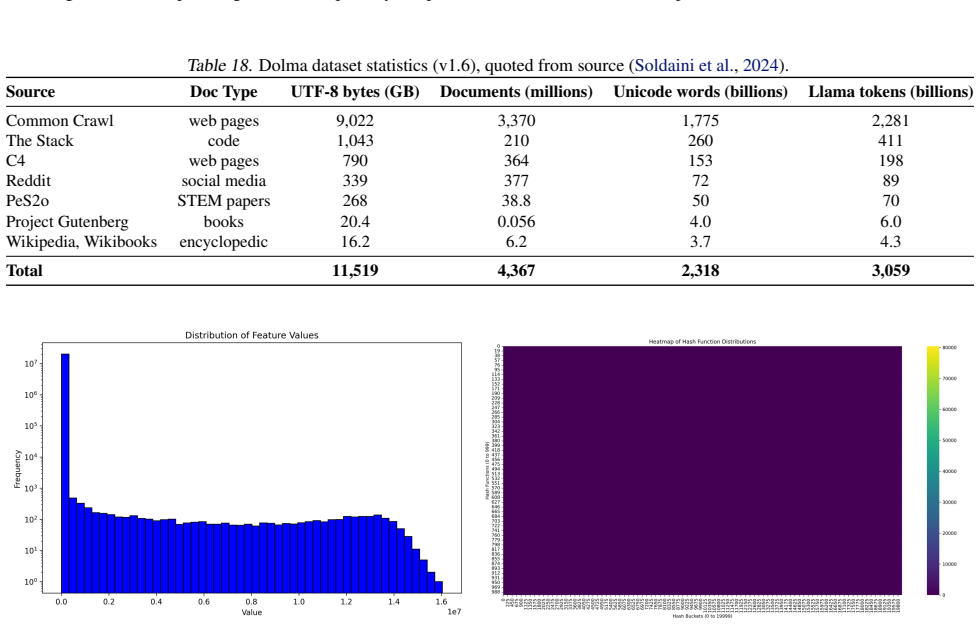
- [Figure 5] The histogram lacks axis labels and units; adding them and specifying whether counts are over token positions or sequences would help the reader interpret the U-shape claim.
- [Appendix G.3, Table 16] Task-level results and error bars are not reported, making it difficult to judge whether the two-generation gains (e.g., average 69.01 to 69.39) are meaningful.
Circularity Check
No significant circularity: the proof has hidden assumptions, but the derivation is not equivalent to its inputs by construction; self-citations are not load-bearing.
full rationale
The paper's central claims—non-iterative collapse from pure synthetic data and improvements from token editing—are supported by independent experiments on external benchmarks (Paloma, Pile, and the listed downstream tasks). The theoretical result is built on the standard linear-regression collapse framework of Dohmatob et al. and Gerstgrasser et al., not on the authors' own prior results. The self-citations to Cheng et al. and Zhu et al. appear only in experimental setup, dataset construction, and related-work context; they are not load-bearing for the collapse-avoidance theorem. The geometric-decay assumption ||M_i|| = ||M_{i-1}||η is stated as an explicit additional assumption in Theorem 2, and Appendix G.3 provides three-generation measurements (12.5%, 11.76%, 11.08%) as evidence; this is an assumption with empirical support, not a fitted parameter renamed as a prediction. The main proof does contain a serious hidden assumption: the step from Eq. (29) to Eq. (30) requires M_i P = M_i, and Eq. (16) asserts M_i M_j = 0 without derivation from the definition of M_i as a diagonal 0/1 matrix. These are unstated conditions that make the clean closed form hold; this is a correctness gap in the derivation, but it is not a circular reduction of the conclusion to the inputs. The advertised bound Eq. (6) is therefore unsupported as written, but that is a validity concern, not a circularity concern. No step in the claimed derivation chain is equivalent by construction to its own input.
Assumptions & free parameters
free parameters (3)
- resampling threshold p =
0.99
- top-k sampling size k =
8
- decay ratio η in ||M_i|| = ||M_{i-1}||η =
not estimated; assumed ∈ (0,1)
assumptions (5)
- domain assumption Data are generated by a linear model y = x·w* + ε with x ~ N(0,Σ) and ε ~ N(0,σ²).
- ad hoc to paper Edit masks M_i are diagonal 0/1 matrices that are idempotent, mutually orthogonal (M_iM_j=0 for i≠j), and commute with the hat matrix P (M_iP=M_i).
- ad hoc to paper The editing operation decays geometrically, ||M_i|| = ||M_{i-1}||η for η∈(0,1).
- standard math Inverse second moment of Gaussian design: E[(X⊤X)^{-1}] = Σ^{-1}/(T−d−1) for T≥d+2.
- domain assumption Token editing in LLMs corresponds to label editing in the linear model.
Cite this review
Pith. "Pith review of How to Synthesize Text Data without Model Collapse?." pith.science (2026). https://pith.science/paper/VMFX7YHV
@misc{pith2026241214689,
  author       = {Pith},
  title        = {Pith review of: How to Synthesize Text Data without Model Collapse?},
  year         = {2026},
  howpublished = {\url{https://pith.science/paper/VMFX7YHV}},
  note         = {Machine review of arXiv:2412.14689}
}
abstract
Model collapse in synthetic data indicates that iterative training on self-generated data leads to a gradual decline in performance. With the proliferation of AI models, synthetic data will fundamentally reshape the web data ecosystem. Future GPT-$\{n\}$ models will inevitably be trained on a blend of synthetic and human-produced data. In this paper, we focus on two questions: what is the impact of synthetic data on language model training, and how to synthesize data without model collapse? We first pre-train language models across different proportions of synthetic data, revealing a negative correlation between the proportion of synthetic data and model performance. We further conduct statistical analysis on synthetic data to uncover distributional shift phenomenon and over-concentration of n-gram features. Inspired by the above findings, we propose token editing on human-produced data to obtain semi-synthetic data. As a proof of concept, we theoretically demonstrate that token-level editing can prevent model collapse, as the test error is constrained by a finite upper bound. We conduct extensive experiments on pre-training from scratch, continual pre-training, and supervised fine-tuning. The results validate our theoretical proof that token-level editing improves model performance.
Figures


Figures from the paper (10 more)


Forward citations
Cited by 6 Pith papers
-
The Fairness Collapse Phenomenon: Bias Amplification in Language Models Trained on Synthetic Data
Fairness collapse: gender-occupation bias worsens in the first iterations of recursive synthetic-data training, ahead of visible model-collapse indicators.
-
What Matters in LLM-generated Data: Diversity and Its Effect on Model Fine-Tuning
Moderately diverse LLM-generated data can improve fine-tuned model performance in low-data settings when distribution shift is minimal, while high diversity or large distribution shift hurts.
-
Reformulation for Pretraining Data Augmentation
MGA reformulates existing high-quality text into diverse genre-audience variants, producing a 770B-token corpus that improves LLM pretraining under data-constrained, high-repetition conditions.
-
Hermes 4 Technical Report
Hermes 4 releases three open-weight reasoning models (14B, 70B, 405B) trained with synthetic data and a length-control SFT stage, evaluated on mathematics, code, knowledge, and alignment benchmarks.
-
Data Curation Matters: Model Collapse and Spurious Shift Performance Prediction from Training on Uncurated Text Embeddings
Training on LLM text embeddings can cause tabular classifiers to collapse to single-class predictions, which spuriously inflates Accuracy-on-the-Line correlations.
-
Theoretical Proof that Auto-regressive Language Models Collapse when Real-world Data is a Finite Set
The paper's proof of inevitable language-model collapse reduces to a definitional identity, since the error terms whose accumulation drives the result are chosen to fit the model outputs rather than derived from train...
Reference graph
Works this paper leans on
-
[1]
Qwen2 technical report. 2024
2024
-
[2]
L., Almeida, D., Altenschmidt, J., Altman, S., Anadkat, S., et al
Achiam, J., Adler, S., Agarwal, S., Ahmad, L., Akkaya, I., Aleman, F. L., Almeida, D., Altenschmidt, J., Altman, S., Anadkat, S., et al. Gpt-4 technical report. arXiv preprint arXiv:2303.08774, 2023
arXiv 2023
-
[3]
Llama 3 model card
AI@Meta. Llama 3 model card. 2024. URL https://github.com/meta-llama/llama3/blob/main/MODEL_CARD.md
2024
-
[4]
M., Longpre, S., Lambert, N., Wang, X., Muennighoff, N., Hou, B., Pan, L., Jeong, H., et al
Albalak, A., Elazar, Y., Xie, S. M., Longpre, S., Lambert, N., Wang, X., Muennighoff, N., Hou, B., Pan, L., Jeong, H., et al. A survey on data selection for language models. arXiv preprint arXiv:2402.16827, 2024
arXiv 2024
-
[5]
I., Babaei, H., LeJeune, D., Siahkoohi, A., and Baraniuk, R
Alemohammad, S., Casco-Rodriguez, J., Luzi, L., Humayun, A. I., Babaei, H., LeJeune, D., Siahkoohi, A., and Baraniuk, R. G. Self-consuming generative models go mad. arXiv preprint arXiv:2307.01850, 4: 0 14, 2023
arXiv 2023
-
[6]
Ankner, Z., Blakeney, C., Sreenivasan, K., Marion, M., Leavitt, M. L., and Paul, M. Perplexed by perplexity: Perplexity-based data pruning with small reference models. arXiv preprint arXiv:2405.20541, 2024
arXiv 2024
-
[7]
Picor: Multi-task deep reinforcement learning with policy correction
Bai, F., Zhang, H., Tao, T., Wu, Z., Wang, Y., and Xu, B. Picor: Multi-task deep reinforcement learning with policy correction. Proceedings of the AAAI Conference on Artificial Intelligence, 37 0 (6): 0 6728--6736, Jun. 2023
work page 2023
-
[8]
Efficient model-agnostic alignment via bayesian persuasion
Bai, F., Wang, M., Zhang, Z., Chen, B., Xu, Y., Wen, Y., and Yang, Y. Efficient model-agnostic alignment via bayesian persuasion. arXiv preprint arXiv:2405.18718, 2024
arXiv 2024
Show all 70 references
-
[9]
Rat: Adversarial attacks on deep reinforcement agents for targeted behaviors
Bai, F., Liu, R., Du, Y., Wen, Y., and Yang, Y. Rat: Adversarial attacks on deep reinforcement agents for targeted behaviors. In Proceedings of the AAAI Conference on Artificial Intelligence, volume 39, pp.\ 15453--15461, 2025
2025
-
[10]
Stable lm 2 1.6 b technical report
Bellagente, M., Tow, J., Mahan, D., Phung, D., Zhuravinskyi, M., Adithyan, R., Baicoianu, J., Brooks, B., Cooper, N., Datta, A., et al. Stable lm 2 1.6 b technical report. arXiv preprint arXiv:2402.17834, 2024
2024 arXiv
-
[11]
Cosmopedia, 2024
Ben Allal, L., Lozhkov, A., Penedo, G., Wolf, T., and von Werra, L. Cosmopedia, 2024. URL https://huggingface.co/datasets/HuggingFaceTB/cosmopedia
2024
-
[12]
J., Duplessis, A., Jiralerspong, M., and Gidel, G
Bertrand, Q., Bose, A. J., Duplessis, A., Jiralerspong, M., and Gidel, G. On the stability of iterative retraining of generative models on their own data. arXiv preprint arXiv:2310.00429, 2023
2023 arXiv
-
[13]
Large language models suffer from their own output: An analysis of the self-consuming training loop
Briesch, M., Sobania, D., and Rothlauf, F. Large language models suffer from their own output: An analysis of the self-consuming training loop. arXiv preprint arXiv:2311.16822, 2023
2023 arXiv
-
[14]
Instruction pre-training: Language models are supervised multitask learners
Cheng, D., Gu, Y., Huang, S., Bi, J., Huang, M., and Wei, F. Instruction pre-training: Language models are supervised multitask learners. In Conference on Empirical Methods in Natural Language Processing, 2024 a . URL https://api.semanticscholar.org/CorpusID:270620509
2024
-
[15]
Adapting large language models via reading comprehension
Cheng, D., Huang, S., and Wei, F. Adapting large language models via reading comprehension. In The Twelfth International Conference on Learning Representations, 2024 b . URL https://openreview.net/forum?id=y886UXPEZ0
2024
-
[16]
X., Luan, Z., Dai, B., and Zhang, Z
Cheng, D., Huang, S., Zhu, Z., Zhang, X., Zhao, W. X., Luan, Z., Dai, B., and Zhang, Z. On domain-specific post-training for multimodal large language models. arXiv preprint arXiv:2411.19930, 2024 c
2024 arXiv
-
[17]
Model collapse demystified: The case of regression
Dohmatob, E., Feng, Y., and Kempe, J. Model collapse demystified: The case of regression. arXiv preprint arXiv:2402.07712, 2024 a
2024 arXiv
-
[18]
Strong model collapse
Dohmatob, E., Feng, Y., Subramonian, A., and Kempe, J. Strong model collapse. arXiv preprint arXiv:2410.04840, 2024 b
2024 arXiv
-
[19]
A tale of tails: Model collapse as a change of scaling laws
Dohmatob, E., Feng, Y., Yang, P., Charton, F., and Kempe, J. A tale of tails: Model collapse as a change of scaling laws. arXiv preprint arXiv:2402.07043, 2024 c
2024 arXiv
-
[20]
and Li, Y
Eldan, R. and Li, Y. Tinystories: How small can language models be and still speak coherent english? arXiv preprint arXiv:2305.07759, 2023
2023 arXiv
-
[21]
Beyond model collapse: Scaling up with syn-thesized data requires verification
Feng, Y., Dohmatob, E., Yang, P., Charton, F., Kempe, J., and Meta, F. Beyond model collapse: Scaling up with syn-thesized data requires verification. arXiv preprint arXiv:2406.07515, 2024
2024 arXiv
-
[22]
J., and Gidel, G
Ferbach, D., Bertrand, Q., Bose, A. J., and Gidel, G. Self-consuming generative models with curated data provably optimize human preferences. arXiv preprint arXiv:2407.09499, 2024
2024 arXiv
-
[24]
The pile: An 800gb dataset of diverse text for language modeling
Gao, L., Biderman, S., Black, S., Golding, L., Hoppe, T., Foster, C., Phang, J., He, H., Thite, A., Nabeshima, N., et al. The pile: An 800gb dataset of diverse text for language modeling. arXiv preprint arXiv:2101.00027, 2020 b
2020 arXiv
-
[25]
A framework for few-shot language model evaluation, 07 2024
Gao, L., Tow, J., Abbasi, B., Biderman, S., Black, S., DiPofi, A., Foster, C., Golding, L., Hsu, J., Le Noac'h, A., Li, H., McDonell, K., Muennighoff, N., Ociepa, C., Phang, J., Reynolds, L., Schoelkopf, H., Skowron, A., Sutawika, L., Tang, E., Thite, A., Wang, B., Wang, K., a...
2024
-
[26]
Is model collapse inevitable? breaking the curse of recursion by accumulating real and synthetic data
Gerstgrasser, M., Schaeffer, R., Dey, A., Rafailov, R., Sleight, H., Hughes, J., Korbak, T., Agrawal, R., Pai, D., Gromov, A., et al. Is model collapse inevitable? breaking the curse of recursion by accumulating real and synthetic data. arXiv preprint arXiv:2404.01413, 2024
2024 arXiv
-
[27]
R., Cohan, A., Dumas, J., Elazar, Y., Gu, Y., Hessel, J., Khot, T., Merrill, W., Morrison, J
Groeneveld, D., Beltagy, I., Walsh, P., Bhagia, A., Kinney, R., Tafjord, O., Jha, A., Ivison, H., Magnusson, I., Wang, Y., Arora, S., Atkinson, D., Authur, R., Chandu, K. R., Cohan, A., Dumas, J., Elazar, Y., Gu, Y., Hessel, J., Khot, T., Merrill, W., Morrison, J. D., Muennigh...
2024
-
[28]
L., Srinivasan, S., Konyushkova, K., Weerts, L., Sharma, A., Siddhant, A., Ahern, A., Wang, M., Gu, C., et al
Gulcehre, C., Paine, T. L., Srinivasan, S., Konyushkova, K., Weerts, L., Sharma, A., Siddhant, A., Ahern, A., Wang, M., Gu, C., et al. Reinforced self-training (rest) for language modeling. arXiv preprint arXiv:2308.08998, 2023
2023 arXiv
-
[29]
Gunasekar, S., Zhang, Y., Aneja, J., Mendes, C. C. T., Del Giorno, A., Gopi, S., Javaheripi, M., Kauffmann, P., de Rosa, G., Saarikivi, O., et al. Textbooks are all you need. arXiv preprint arXiv:2306.11644, 2023
2023 arXiv
-
[30]
J., Shen, Y., Wallis, P., Allen-Zhu, Z., Li, Y., Wang, S., Wang, L., and Chen, W
Hu, E. J., Shen, Y., Wallis, P., Allen-Zhu, Z., Li, Y., Wang, S., Wang, L., and Chen, W. Lora: Low-rank adaptation of large language models. arXiv preprint arXiv:2106.09685, 2021
2021 arXiv
-
[31]
Bench2drive: Towards multi-ability benchmarking of closed-loop end-to-end autonomous driving
Jia, X., Yang, Z., Li, Q., Zhang, Z., and Yan, J. Bench2drive: Towards multi-ability benchmarking of closed-loop end-to-end autonomous driving. arXiv preprint arXiv:2406.03877, 2024
2024 arXiv
-
[32]
Q., Sablayrolles, A., Roux, A., Mensch, A., Savary, B., Bamford, C., Chaplot, D
Jiang, A. Q., Sablayrolles, A., Roux, A., Mensch, A., Savary, B., Bamford, C., Chaplot, D. S., Casas, D. d. l., Hanna, E. B., Bressand, F., et al. Mixtral of experts. arXiv preprint arXiv:2401.04088, 2024
2024 arXiv
-
[33]
L., and Koyejo, S
Kazdan, J., Schaeffer, R., Dey, A., Gerstgrasser, M., Rafailov, R., Donoho, D. L., and Koyejo, S. Collapse or thrive? perils and promises of synthetic data in a self-generating world, 2025. URL https://openreview.net/forum?id=Xr5iINA3zU
2025
-
[34]
R., Stevens, K., Barhoum, A., Duc, N
Kopf, A., Kilcher, Y., von Rutte, D., Anagnostidis, S., Tam, Z. R., Stevens, K., Barhoum, A., Duc, N. M., Stanley, O., Nagyfi, R., Shahul, E., Suri, S., Glushkov, D., Dantuluri, A., Maguire, A., Schuhmann, C., Nguyen, H., and Mattick, A. Openassistant conversations - democrati...
2023 arXiv
-
[35]
H., Gonzalez, J
Kwon, W., Li, Z., Zhuang, S., Sheng, Y., Zheng, L., Yu, C. H., Gonzalez, J. E., Zhang, H., and Stoica, I. Efficient memory management for large language model serving with pagedattention. In Proceedings of the ACM SIGOPS 29th Symposium on Operating Systems Principles, 2023
2023
-
[36]
Normalization enhances generalization in visual reinforcement learning
Li, L., Lyu, J., Ma, G., Wang, Z., Yang, Z., Li, X., and Li, Z. Normalization enhances generalization in visual reinforcement learning. arXiv preprint arXiv:2306.00656, 2023
2023 arXiv
-
[37]
Think2drive: Efficient reinforcement learning by thinking in latent world model for quasi-realistic autonomous driving (in carla-v2)
Li, Q., Jia, X., Wang, S., and Yan, J. Think2drive: Efficient reinforcement learning by thinking in latent world model for quasi-realistic autonomous driving (in carla-v2). arXiv preprint arXiv:2402.16720, 2024
2024 arXiv
-
[38]
Face detection based on receptive field enhanced multi-task cascaded convolutional neural networks
Li, X., Yang, Z., and Wu, H. Face detection based on receptive field enhanced multi-task cascaded convolutional neural networks. IEEE access, 8: 0 174922--174930, 2020
2020
-
[39]
Rho-1: Not all tokens are what you need
Lin, Z., Gou, Z., Gong, Y., Liu, X., Shen, Y., Xu, R., Lin, C., Yang, Y., Jiao, J., Duan, N., et al. Rho-1: Not all tokens are what you need. arXiv preprint arXiv:2404.07965, 2024
2024 arXiv
-
[40]
Best practices and lessons learned on synthetic data for language models
Liu, R., Wei, J., Liu, F., Si, C., Zhang, Y., Rao, J., Zheng, S., Peng, D., Yang, D., Zhou, D., et al. Best practices and lessons learned on synthetic data for language models. arXiv preprint arXiv:2404.07503, 2024
2024 arXiv
-
[41]
J., and Liu, J
Liu, T., Zhao, Y., Joshi, R., Khalman, M., Saleh, M., Liu, P. J., and Liu, J. Statistical rejection sampling improves preference optimization. ArXiv, abs/2309.06657, 2023. URL https://api.semanticscholar.org/CorpusID:261705578
2023 arXiv
-
[42]
W., Tay, Y., Zhou, D., Le, Q
Longpre, S., Hou, L., Vu, T., Webson, A., Chung, H. W., Tay, Y., Zhou, D., Le, Q. V., Zoph, B., Wei, J., et al. The flan collection: Designing data and methods for effective instruction tuning. arXiv preprint arXiv:2301.13688, 2023
2023 arXiv
-
[43]
A., Richardson, K., and Dodge, J
Magnusson, I., Bhagia, A., Hofmann, V., Soldaini, L., Jha, A., Tafjord, O., Schwenk, D., Walsh, P., Elazar, Y., Lo, K., Groeneveld, D., Beltagy, I., Hajishirzi, H., Smith, N. A., Richardson, K., and Dodge, J. Paloma: A benchmark for evaluating language model fit. ArXiv, abs/23...
2023 arXiv
-
[44]
H., Grangier, D., Zhang, Y., and Jaitly, N
Maini, P., Seto, S., Bai, R. H., Grangier, D., Zhang, Y., and Jaitly, N. Rephrasing the web: A recipe for compute and data-efficient language modeling. In Annual Meeting of the Association for Computational Linguistics, 2024. URL https://api.semanticscholar.org/CorpusID:267312030
2024
-
[45]
A., Juarez, M., and Sarkar, R
Mart \' nez, G., Watson, L., Reviriego, P., Hern \'a ndez, J. A., Juarez, M., and Sarkar, R. Towards understanding the interplay of generative artificial intelligence and the internet. In International Workshop on Epistemic Uncertainty in Artificial Intelligence, pp.\ 59--73. ...
2023
-
[46]
M., Razzak, M
Mindermann, S., Brauner, J. M., Razzak, M. T., Sharma, M., Kirsch, A., Xu, W., H \"o ltgen, B., Gomez, A. N., Morisot, A., Farquhar, S., et al. Prioritized training on points that are learnable, worth learning, and not yet learnt. In International Conference on Machine Learnin...
2022
-
[47]
Self-distillation amplifies regularization in hilbert space
Mobahi, H., Farajtabar, M., and Bartlett, P. Self-distillation amplifies regularization in hilbert space. Advances in Neural Information Processing Systems, 33: 0 3351--3361, 2020
2020
-
[48]
Lightzero: A unified benchmark for monte carlo tree search in general sequential decision scenarios
Niu, Y., Pu, Y., Yang, Z., Li, X., Zhou, T., Ren, J., Hu, S., Li, H., and Liu, Y. Lightzero: A unified benchmark for monte carlo tree search in general sequential decision scenarios. Advances in Neural Information Processing Systems, 36, 2024
2024
-
[49]
Unizero: Generalized and efficient planning with scalable latent world models
Pu, Y., Niu, Y., Yang, Z., Ren, J., Li, H., and Liu, Y. Unizero: Generalized and efficient planning with scalable latent world models. arXiv preprint arXiv:2406.10667, 2024
2024 arXiv
-
[50]
Language models are unsupervised multitask learners
Radford, A., Wu, J., Child, R., Luan, D., Amodei, D., and Sutskever, I. Language models are unsupervised multitask learners. 2019
2019
-
[51]
High-resolution image synthesis with latent diffusion models, 2021
Rombach, R., Blattmann, A., Lorenz, D., Esser, P., and Ommer, B. High-resolution image synthesis with latent diffusion models, 2021
2021
-
[52]
Principles of Mathematical Analysis
Rudin, W. Principles of Mathematical Analysis. McGraw-Hill, New York, 3rd edition, 1976
1976
-
[53]
Seddik, M. E. A., Chen, S.-W., Hayou, S., Youssef, P., and Debbah, M. How bad is training on synthetic data? a statistical analysis of language model collapse. arXiv preprint arXiv:2404.05090, 2024
2024 arXiv
-
[54]
Ai models collapse when trained on recursively generated data
Shumailov, I., Shumaylov, Z., Zhao, Y., Papernot, N., Anderson, R., and Gal, Y. Ai models collapse when trained on recursively generated data. Nature, 631 0 (8022): 0 755--759, 2024
2024
-
[55]
D., Agarwal, R., Anand, A., Patil, P., Garcia, X., Liu, P
Singh, A., Co-Reyes, J. D., Agarwal, R., Anand, A., Patil, P., Garcia, X., Liu, P. J., Harrison, J., Lee, J., Xu, K., et al. Beyond human data: Scaling self-training for problem-solving with language models. arXiv preprint arXiv:2312.06585, 2023
2023 arXiv
-
[56]
H., Kumar, S., Lucy, L., Lyu, X., Lambert, N., Magnusson, I., Morrison, J., Muennighoff, N., Naik, A., Nam, C., Peters, M
Soldaini, L., Kinney, R., Bhagia, A., Schwenk, D., Atkinson, D., Authur, R., Bogin, B., Chandu, K., Dumas, J., Elazar, Y., Hofmann, V., Jha, A. H., Kumar, S., Lucy, L., Lyu, X., Lambert, N., Magnusson, I., Morrison, J., Muennighoff, N., Naik, A., Nam, C., Peters, M. E., Ravich...
2024 arXiv
-
[57]
Large language models for data annotation and synthesis: A survey
Tan, Z., Li, D., Wang, S., Beigi, A., Jiang, B., Bhattacharjee, A., Karami, M., Li, J., Cheng, L., and Liu, H. Large language models for data annotation and synthesis: A survey. In Al-Onaizan, Y., Bansal, M., and Chen, Y.-N. (eds.), Proceedings of the 2024 Conference on Empiri...
2024 doi
-
[58]
Solving olympiad geometry without human demonstrations
Trinh, T., Wu, Y., Le, Q., He, H., and Luong, T. Solving olympiad geometry without human demonstrations. Nature, 2024. doi:10.1038/s41586-023-06747-5
2024 doi
-
[59]
Bootstrapping llm-based task-oriented dialogue agents via self-talk
Ulmer, D., Mansimov, E., Lin, K., Sun, J., Gao, X., and Zhang, Y. Bootstrapping llm-based task-oriented dialogue agents via self-talk. arXiv preprint arXiv:2401.05033, 2024
2024 arXiv
-
[60]
A., Khashabi, D., and Hajishirzi, H
Wang, Y., Kordi, Y., Mishra, S., Liu, A., Smith, N. A., Khashabi, D., and Hajishirzi, H. Self-instruct: Aligning language models with self-generated instructions. arXiv preprint arXiv:2212.10560, 2022
2022 arXiv
-
[61]
H., Xia, F., Le, Q., and Zhou, D
Wei, J., Wang, X., Schuurmans, D., Bosma, M., hsin Chi, E. H., Xia, F., Le, Q., and Zhou, D. Chain of thought prompting elicits reasoning in large language models. ArXiv, abs/2201.11903, 2022. URL https://api.semanticscholar.org/CorpusID:246411621
2022 arXiv
-
[62]
Less: Selecting influential data for targeted instruction tuning
Xia, M., Malladi, S., Gururangan, S., Arora, S., and Chen, D. Less: Selecting influential data for targeted instruction tuning. ArXiv, abs/2402.04333, 2024. URL https://api.semanticscholar.org/CorpusID:267522839
2024 arXiv
-
[63]
M., Santurkar, S., Ma, T., and Liang, P
Xie, S. M., Santurkar, S., Ma, T., and Liang, P. S. Data selection for language models via importance resampling. Advances in Neural Information Processing Systems, 36: 0 34201--34227, 2023
2023
-
[64]
Llm4drive: A survey of large language models for autonomous driving
Yang, Z., Jia, X., Li, H., and Yan, J. Llm4drive: A survey of large language models for autonomous driving. arXiv e-prints, pp.\ arXiv--2311, 2023
2023
-
[65]
Ultramedical: Building specialized generalists in biomedicine
Zhang, K., Zeng, S., Hua, E., Ding, N., Chen, Z.-R., Ma, Z., Li, H., Cui, G., Qi, B., Zhu, X., et al. Ultramedical: Building specialized generalists in biomedicine. arXiv preprint arXiv:2406.03949, 2024
2024 arXiv
-
[66]
Gobigger: A scalable platform for cooperative-competitive multi-agent interactive simulation
Zhang, M., Zhang, S., Yang, Z., Chen, L., Zheng, J., Yang, C., Li, C., Zhou, H., Niu, Y., and Liu, Y. Gobigger: A scalable platform for cooperative-competitive multi-agent interactive simulation. In The Eleventh International Conference on Learning Representations, 2023
2023
-
[67]
Llamafactory: Unified efficient fine-tuning of 100+ language models
Zheng, Y., Zhang, R., Zhang, J., Ye, Y., Luo, Z., Feng, Z., and Ma, Y. Llamafactory: Unified efficient fine-tuning of 100+ language models. In Proceedings of the 62nd Annual Meeting of the Association for Computational Linguistics (Volume 3: System Demonstrations), Bangkok, Th...
2024 arXiv
-
[68]
Storytrans: Non-parallel story author-style transfer with discourse representations and content enhancing
Zhu, X., Guan, J., Huang, M., and Liu, J. Storytrans: Non-parallel story author-style transfer with discourse representations and content enhancing. arXiv preprint arXiv:2208.13423, 2022
2022 arXiv
-
[69]
Critical data size of language models from a grokking perspective
Zhu, X., Fu, Y., Zhou, B., and Lin, Z. Critical data size of language models from a grokking perspective. arXiv preprint arXiv:2401.10463, 2024 a
2024 arXiv
-
[70]
P a D : Program-aided distillation can teach small models reasoning better than chain-of-thought fine-tuning
Zhu, X., Qi, B., Zhang, K., Long, X., Lin, Z., and Zhou, B. P a D : Program-aided distillation can teach small models reasoning better than chain-of-thought fine-tuning. In Duh, K., Gomez, H., and Bethard, S. (eds.), Proceedings of the 2024 Conference of the North American Cha...
2024 doi
-
[71]
write newline
" write newline "" before.all 'output.state := FUNCTION n.dashify 't := "" t empty not t #1 #1 substring "-" = t #1 #2 substring "--" = not "--" * t #2 global.max substring 't := t #1 #1 substring "-" = "-" * t #2 global.max substring 't := while if t #1 #1 substring * t #2 gl...
Reviewed August 11, 2026 · model on record in the stance chip above.
Discussion (0). Continue with ORCID to comment.