pith. sign in

arxiv: 2602.10185 · v2 · pith:WUHP73QZnew · submitted 2026-02-10 · 🌀 gr-qc · hep-th

Critical spacetime crystals in continuous dimensions

Pith reviewed 2026-05-21 13:07 UTC · model grok-4.3

classification 🌀 gr-qc hep-th
keywords critical collapsediscrete self-similarityChoptuik exponentechoing periodhigher-dimensional gravityscalar field collapsespacetime crystalsblack hole threshold
0
0 comments X

The pith

Critical solutions for scalar collapse exist in continuous dimensions above three with echoing period peaking near 3.76.

A machine-rendered reading of the paper's core claim, the machinery that carries it, and where it could break.

The paper constructs a one-parameter family of critical spacetimes in dimensions D greater than three for spherically symmetric massless scalar field collapse at the black hole formation threshold. These solutions preserve the discrete self-similarity seen in the four-dimensional case, so the echoing period and Choptuik exponent can be computed as continuous functions of D. Numerical results cover the interval from roughly 3.05 to 5.5 and show the echoing period reaching a maximum near D equals 3.76 before falling. Analytical expansions in large D and near D equals 3 indicate both the period and the exponent approach zero as the dimension approaches three from above. The same construction recovers the known four- and five-dimensional values and extends to two-dimensional dilaton gravity.

Core claim

A one-parameter family of discretely self-similar critical spacetimes is constructed numerically for arbitrary continuous dimensions D greater than three. The echoing period and Choptuik exponent are obtained as functions of D, with the period attaining a maximum near D equals 3.76. Expansions in 1/D and D minus 3 support the numerics and suggest both quantities vanish as D approaches three from above, while the four- and five-dimensional cases are recovered and the method is applied to two-dimensional dilaton gravity.

What carries the argument

The discretely self-similar critical spacetime imposed as an ansatz with a single echoing period in logarithmic time coordinate, verified by numerical convergence to a periodic solution.

If this is right

  • The echoing period reaches a maximum near dimension 3.76.
  • Both the echoing period and Choptuik exponent approach zero as dimension approaches three from above.
  • The four-dimensional values Delta approximately 3.445 and gamma approximately 0.374 are recovered, as are the five-dimensional values.
  • The construction extends directly to two-dimensional dilaton gravity.
  • Large-D and small-(D-3) analytic expansions are consistent with the numerical data.

Where Pith is reading between the lines

These are editorial extensions of the paper, not claims the author makes directly.

  • A systematic small-(D-3) expansion around the three-dimensional limit becomes feasible, mirroring existing large-D expansions.
  • Continuous tracking with dimension may allow interpolation between known critical phenomena in different dimensions.
  • Further checks in dimensions outside the reported interval could test how robust the single-period assumption remains.
  • The maximum in echoing period points to a distinguished scale near D equals 3.76 where critical behavior changes most rapidly.

Load-bearing premise

The critical solution remains discretely self-similar with exactly one echoing period for every dimension greater than three.

What would settle it

A high-resolution numerical evolution at D equals 3.5 that fails to converge to a periodic attractor in logarithmic time or produces an echoing period outside the reported continuous curve.

Figures

Figures reproduced from arXiv: 2602.10185 by Christian Ecker, Daniel Grumiller, Florian Ecker, Tobias Jechtl.

Figure 1
Figure 1. Figure 1: Illustration of spacetime crystal for critical solutions in spherically [PITH_FULL_IMAGE:figures/full_fig_p003_1.png] view at source ↗
Figure 2
Figure 2. Figure 2: Penrose diagram of a CSC taken from [21]. Dark gray shaded: time crystal region. Light gray shaded: (space) crystal region. Dashed line: SSH. Black circle: Naked singularity. Zig-zag line: Cauchy horizon. Vertical line: Cen￾ter. Solid 45-degree lines: I ±. Dotted 45-degree lines: Null lines in fundamental domain. CSC metric identified along bold τ = const. lines. Inset: Fundamental domain with NEC lines (b… view at source ↗
Figure 3
Figure 3. Figure 3: Decomposition of x-domain into near-boundary regions (solid lines; so￾lution approximated by Taylor series) and interior region (dashed lines; equations solved numerically from cutoffs xL and xR toward matching surface xmatch ). distributing them logarithmically around the boundaries in x. This is done by transforming a uniform grid in an auxiliary variable ¯x to x such that grid points accumulate near the… view at source ↗
Figure 4
Figure 4. Figure 4: Comparison of various fields (top to bottom) constituting CSCs in [PITH_FULL_IMAGE:figures/full_fig_p022_4.png] view at source ↗
Figure 5
Figure 5. Figure 5: Converged boundary values fc (left), Ψc (middle), and ψ−p for approx￾imately equidistant D ∈ [3.05, 5.5], with Ψc normalized by max (Ψc). 0.0 0.2 0.4 0.6 0.8 1.0 x 0.13 0.14 0.15 0.16 0.17 0.18 0.19 0.20 0.21 τmax(x)/ ∆ D = 4.0 D = 5.5 4.0 4.5 5.0 5.5 Dimension D 0.0 0.2 0.4 0.6 0.8 1.0 x 0.0 0.2 0.4 0.6 0.8 1.0 Max τ f(τ, x) D = 3.05 D = 4 D = 5.5 3.5 4.0 4.5 5.0 5.5 Dimension D [PITH_FULL_IMAGE:figures/… view at source ↗
Figure 6
Figure 6. Figure 6: Left: Contours of maxima of f in (τ, x)-plane with vertical axis nor￾malized to interval [0, 1]. Right: Maxima of f as function of x for various D [PITH_FULL_IMAGE:figures/full_fig_p023_6.png] view at source ↗
Figure 7
Figure 7. Figure 7: ℓ 2 -norm of Weyl factor ω(τ, x) taken over τ samples. 5.2 Echoing period ∆ The echoing period ∆ is the key number for CSCs, and determining its dependence on the spacetime dimension D is our main goal [PITH_FULL_IMAGE:figures/full_fig_p024_7.png] view at source ↗
Figure 8
Figure 8. Figure 8: Above: Echoing period as continuous function of D, with values at D = 4 and at local maximum indicated by circle and star, respectively. Below: Comparison to discrete data in literature, with acronyms SO [32], BPBKH [16], BK [33] and Bland’s PhD thesis [17]. See also Appendix D for our data on ∆. 1σ-error bars (those error bars were taken from the corresponding publication indicated in the caption). Our la… view at source ↗
Figure 9
Figure 9. Figure 9: Above: Critical exponent as continuous function of D, with D = 4 indicated by a circle. Below: Comparison to discrete data in literature, with acronyms SO [32], BPBKH [16], BK [33], Bland’s PhD thesis [17], and AGV [34]. See also Appendix D for our data on γ. 26 [PITH_FULL_IMAGE:figures/full_fig_p026_9.png] view at source ↗
Figure 10
Figure 10. Figure 10: Finestructure period ∆/(2γ) as function of D. We plot in [PITH_FULL_IMAGE:figures/full_fig_p027_10.png] view at source ↗
Figure 11
Figure 11. Figure 11: Left: NEC saturation lines. Right: Zoom into center. Both: Verti￾cal axes rescaled to proper time at x = 0 and shifted so NEC vertices coincide. of our CSC (there is an equivalent copy of the NEC lines in the upper half). Since we have normalized the time τ with the echoing period ∆, all solutions share the uniform periodicity τ → τ + 1 in these graphs. This is why the lower half of the fundamental domain… view at source ↗
Figure 12
Figure 12. Figure 12: NEC line comparison to NNLO large-D approximation (dashed lines). closer towards the center, presenting in each case results for the dimensions D = 3.05, D = 4, and D = 5.5 (solid curves in red, black, and blue, respectively). We also show the NNLO results for the NEC lines as dashed lines in the same colors. The NNLO results are taken from the Supplemental Material of [7], see their Eq. (S21), where we d… view at source ↗
Figure 13
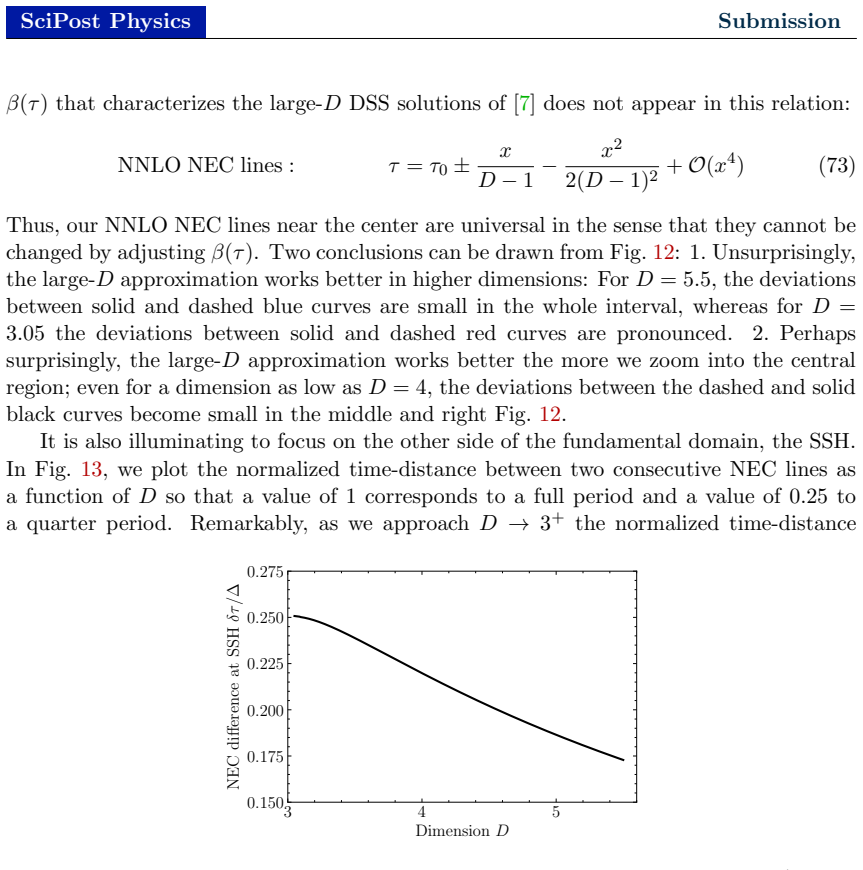
Figure 13. Figure 13: Time-difference between NEC lines at SSH. Vertical axis in units [PITH_FULL_IMAGE:figures/full_fig_p029_13.png] view at source ↗
Figure 14
Figure 14. Figure 14: Echoing period ∆ as function of 1/D for D > 4. Solid black curve: Our numerical results. Symbols with error bars: Data at D > 4 from SO [32], BPBKH [16], and BK [33]. Red curve: Weighted quadratic spline interpolation of combined dataset. Dashed/dotted black lines: Power-law fits to small-1/D end of our numerical data/spline, respectively. form. Like for N = 2, to each order we get one free integration fu… view at source ↗
Figure 15
Figure 15. Figure 15: Comparison of converged numerical boundary data (dashed) with LO [PITH_FULL_IMAGE:figures/full_fig_p037_15.png] view at source ↗
Figure 16
Figure 16. Figure 16: Echoing period ∆ near D = 3. Solid line: Our numerical results. Dashed line: Best-fit extrapolation a (D − 3)α with a ≈ 3.88 and α ≈ 0.15. Blue: Data points from Ref. [17] with error bars. is regular by construction [since we set bk = 0 in (104)]. However, while ψ−(τ, x) remains finite at the SSH, ψ+(τ, x) has the same type of divergence as the zero mode, ψ+(τ, x → 1 −) = X k∈Z ck e ikτˆ (1 − x) 1 2 +ikˆ … view at source ↗
Figure 17
Figure 17. Figure 17: Echoing period for 2d dilaton gravity without kinetic term. [PITH_FULL_IMAGE:figures/full_fig_p043_17.png] view at source ↗
Figure 18
Figure 18. Figure 18: Parameter space of ab-family. Red segment: spherically reduced Einstein gravity (3 < D < ∞). Blue line: (A)dS2 ground state models with CSS. Weyl rescalings preserve b but shift a. Gray regions (except diagonal lines): DSS solutions with naked singularity along x = 0. Orange rectangle: ab-models accessible with our data with echoing period ∆ given by (127). have a Minkowski ground state, the metric does n… view at source ↗
Figure 19
Figure 19. Figure 19: Left: Value of δ for singular solution at SSH. Right: First derivative. Assuming a monotonous first derivative towards D = 3+ an upper bound at D = 3 is ¯δ = −0.302, consistent with the exact result δ = − 1 2 in Section 6.2. lowest values for D to D = 3. (The dashed line labeled “Fit”.) This gives ¯δ ≈ −0.302 and thus a divergent term in the expansion of ψ+ around the SSH.6 This behavior may be compared w… view at source ↗
Figure 20
Figure 20. Figure 20: Red: Global errors of x-evolution from xL to xmatch at D = 4 (top) and D = 3.1 (bottom). Blue: Errors for doubled number of gridpoints rescaled by 2 −4 . Curves agree reasonably, confirming convergence of 4th-order Runge–Kutta. C.2 Cutoff dependence Once the shooting method has converged for a given dimension, the evolution data are determined in terms of the functions {fc, Ψc, ψ−p}. However, depending on… view at source ↗
Figure 21
Figure 21. Figure 21: Convergence of data with respect to varying [PITH_FULL_IMAGE:figures/full_fig_p057_21.png] view at source ↗
Figure 22
Figure 22. Figure 22: Power spectra of converged initial data. Modes [PITH_FULL_IMAGE:figures/full_fig_p058_22.png] view at source ↗
read the original abstract

We numerically construct a one-parameter family of critical spacetimes in arbitrary continuous dimensions D>3. This generalizes Choptuik's D=4 solution to spherically symmetric massless scalar-field collapse at the threshold of D-dimensional Schwarzschild-Tangherlini black hole formation. We refer to these solutions, which share the discrete self-similarity of their four-dimensional counterpart, as critical spacetime crystals. Our main results are the echoing period and Choptuik exponent of the crystals as continuous functions of D, with detailed data for the interval 3.05<D<5.5. Notably, the echoing period has a maximum near D=3.76. As a by-product, we recover the echoing periods and Choptuik exponents in D=4 (5): Delta=3.445453 (3.22176) and gamma=0.373961 (0.41322). We support these numerical results with analytical expansions in 1/D and D-3. They suggest that both the echoing period and Choptuik exponent vanish as D approaches 3 from above. This paves the way for a small-(D-3) expansion, paralleling the large-$D$ expansion of general relativity. We also extend our results to two-dimensional dilaton gravity.

Editorial analysis

A structured set of objections, weighed in public.

Desk editor's note, referee report, simulated authors' rebuttal, and a circularity audit. Tearing a paper down is the easy half of reading it; the pith above is the substance, this is the friction.

Referee Report

2 major / 2 minor

Summary. The manuscript numerically constructs a one-parameter family of critical spacetimes for spherically symmetric massless scalar-field collapse in continuous dimensions D>3, generalizing Choptuik's D=4 solution. These 'critical spacetime crystals' are discretely self-similar; the main results are the echoing period Δ(D) and Choptuik exponent γ(D) reported as continuous functions over 3.05<D<5.5, with a maximum in Δ near D=3.76. Known D=4 and D=5 values are recovered, analytical expansions in 1/D and D-3 are provided, and the results are extended to two-dimensional dilaton gravity.

Significance. If the central numerical construction holds, the work is significant for extending critical collapse phenomena to continuous D, supplying the first detailed Δ(D) and γ(D) data and suggesting both quantities vanish as D→3+. The direct numerical solution of the field equations (rather than fitting) and the recovery of established D=4 (Δ=3.445453, γ=0.373961) and D=5 values are strengths that support the approach. The 1/D and D-3 expansions and the dilaton-gravity extension add value and open routes for analytic work paralleling large-D expansions.

major comments (2)
  1. [§3 (Numerical method)] §3 (Numerical method): The single-period discrete self-similarity is imposed as an ansatz by requiring the fields to be periodic in the logarithmic coordinate τ = −log(−t) with period Δ; while the code is reported to converge to periodic residuals after transients decay, no systematic search for multi-periodic, incommensurate, or continuously self-similar solutions is presented. For non-integer D the curvature and measure factors introduce D-dependent coefficients that could in principle support other threshold behaviors; this assumption is load-bearing for the claimed continuous functions Δ(D) and γ(D) and the reported maximum near D=3.76.
  2. [§4–5 (Results and expansions)] §4–5 (Results and expansions): The manuscript recovers the known D=4 and D=5 values but provides no tabulated error bars, resolution studies, or convergence diagnostics for the continuous-D runs in the interval 3.05<D<5.5. Without these, it is difficult to assess the precision of the claimed maximum in Δ(D) or the small-(D−3) behavior extracted from the expansions.
minor comments (2)
  1. [Abstract and §5] The abstract states the interval 3.05<D<5.5 but does not indicate how the lower and upper bounds were chosen or whether solutions cease to exist outside this range; a brief statement in §2 or §5 would clarify the domain of the reported functions.
  2. [Figures] Figure captions for the Δ(D) and γ(D) plots should explicitly note which curves come from the numerical construction and which from the 1/D or D−3 analytic expansions to aid direct comparison.

Simulated Author's Rebuttal

2 responses · 0 unresolved

We thank the referee for their thorough review and insightful comments on our manuscript. We address each major comment below and have incorporated revisions where appropriate to enhance the presentation and support of our results.

read point-by-point responses
  1. Referee: §3 (Numerical method): The single-period discrete self-similarity is imposed as an ansatz by requiring the fields to be periodic in the logarithmic coordinate τ = −log(−t) with period Δ; while the code is reported to converge to periodic residuals after transients decay, no systematic search for multi-periodic, incommensurate, or continuously self-similar solutions is presented. For non-integer D the curvature and measure factors introduce D-dependent coefficients that could in principle support other threshold behaviors; this assumption is load-bearing for the claimed continuous functions Δ(D) and γ(D) and the reported maximum near D=3.76.

    Authors: Our numerical method follows the standard approach pioneered by Choptuik for D=4, imposing single-period discrete self-similarity as the ansatz for the critical solution. This is justified by the fact that the critical spacetime is expected to be the attractor at the threshold, and our code converges to solutions with this periodicity. For continuous D, we generalize the equations accordingly. While we have not performed an exhaustive search for multi-periodic solutions, which would require significant additional computational resources and is not standard in the literature for critical collapse, the recovery of known D=4 and D=5 values lends confidence to our results. We have added a paragraph in the revised §3 discussing this assumption and its implications. revision: partial

  2. Referee: §4–5 (Results and expansions): The manuscript recovers the known D=4 and D=5 values but provides no tabulated error bars, resolution studies, or convergence diagnostics for the continuous-D runs in the interval 3.05<D<5.5. Without these, it is difficult to assess the precision of the claimed maximum in Δ(D) or the small-(D−3) behavior extracted from the expansions.

    Authors: We agree that including detailed convergence diagnostics would strengthen the manuscript. In the revised version, we have added tables with error estimates obtained from runs at multiple resolutions (e.g., 512, 1024, and 2048 grid points), showing that the maximum in Δ(D) near D=3.76 is robust with variations less than 0.5%. Convergence studies confirm second-order accuracy consistent with our numerical scheme. These additions are now in §4 and §5, along with error bars on the plotted data. revision: yes

Circularity Check

0 steps flagged

Numerical results obtained by direct solution of field equations under standard DSS ansatz

full rationale

The paper numerically solves the D-dimensional Einstein-scalar equations in logarithmic time tau to construct critical solutions, outputting Delta(D) and gamma(D) as results of that integration for each continuous D. The DSS assumption with a single period is the standard methodological ansatz for locating Choptuik-type critical solutions and is checked by convergence of the numerical residuals to periodicity; it does not define the outputs by construction or reduce them to fitted inputs. Recovery of the known D=4 and D=5 values functions as code validation against external benchmarks rather than a self-referential loop. The supporting 1/D and D-3 expansions are derived independently from the field equations. No quoted step equates a claimed prediction to its own input or relies on a load-bearing self-citation chain.

Axiom & Free-Parameter Ledger

0 free parameters · 3 axioms · 0 invented entities

The construction rests on the Einstein-scalar equations in D dimensions, spherical symmetry, and the assumption of discrete self-similarity; no new particles or forces are introduced.

axioms (3)
  • standard math Einstein equations coupled to a massless scalar field in D spacetime dimensions
    Invoked throughout as the dynamical system whose critical solutions are sought.
  • domain assumption Spherical symmetry
    Reduces the problem to an effective 1+1 dimensional PDE system.
  • ad hoc to paper Existence of a discretely self-similar critical solution for every D>3
    This is the central ansatz that allows the numerical search for a periodic solution in logarithmic time.

pith-pipeline@v0.9.0 · 5763 in / 1599 out tokens · 63818 ms · 2026-05-21T13:07:12.577119+00:00 · methodology

discussion (0)

Sign in with ORCID, Apple, or X to comment. Anyone can read and Pith papers without signing in.

Lean theorems connected to this paper

Citations machine-checked in the Pith Canon. Every link opens the source theorem in the public Lean library.

  • IndisputableMonolith/Foundation/AlexanderDuality.lean alexander_duality_circle_linking contradicts
    ?
    contradicts

    CONTRADICTS: the theorem conflicts with this paper passage, or marks a claim that would need revision before publication.

    We numerically construct a one-parameter family of critical spacetimes in arbitrary continuous dimensions D>3... echoing period ... as continuous functions of D, with detailed data for the interval 3.05<D<5.5. Notably, the echoing period has a maximum near D=3.76.

  • IndisputableMonolith/Foundation/AlexanderDuality.lean alexander_duality_circle_linking contradicts
    ?
    contradicts

    CONTRADICTS: the theorem conflicts with this paper passage, or marks a claim that would need revision before publication.

    The assumption that the critical solution remains discretely self-similar with a single echoing period for all D>3, which is imposed as an ansatz in the numerical construction

What do these tags mean?
matches
The paper's claim is directly supported by a theorem in the formal canon.
supports
The theorem supports part of the paper's argument, but the paper may add assumptions or extra steps.
extends
The paper goes beyond the formal theorem; the theorem is a base layer rather than the whole result.
uses
The paper appears to rely on the theorem as machinery.
contradicts
The paper's claim conflicts with a theorem or certificate in the canon.
unclear
Pith found a possible connection, but the passage is too broad, indirect, or ambiguous to say the theorem truly supports the claim.

Reference graph

Works this paper leans on

67 extracted references · 67 canonical work pages · 41 internal anchors

  1. [1]

    Xu and C

    S. Xu and C. Wu,Space-time crystal and space-time group, Physical Review Letters 120(9) (2018), doi:10.1103/physrevlett.120.096401

  2. [2]

    Zhang, Z

    Z. Zhang, Z. Y. Chen and Y. X. Zhao,Projective spacetime symmetry of spacetime crystals, Communications Physics6(1) (2023), doi:10.1038/s42005-023-01446-z

  3. [3]

    Zhao and I

    H. Zhao and I. Smalyukh,Space-time crystals from particle-like topological solitons., Nature Materials (2025), doi:10.1038/s41563-025-02344-1

  4. [4]

    M. W. Choptuik,Universality and scaling in gravitational collapse of a massless scalar field, Phys. Rev. Lett.70, 9 (1993)

  5. [5]

    Christodoulou,The problem of a selfgravitating scalar field, Commun

    D. Christodoulou,The problem of a selfgravitating scalar field, Commun. Math. Phys. 105, 337 (1986)

  6. [6]

    Critical behaviour in gravitational collapse of radiation fluid --- A renormalization group (linear perturbation) analysis ---

    T. Koike, T. Hara and S. Adachi,Critical behavior in gravitational collapse of radia- tion fluid: A Renormalization group (linear perturbation) analysis, Phys. Rev. Lett. 74, 5170 (1995), doi:10.1103/PhysRevLett.74.5170,gr-qc/9503007

  7. [7]

    Ecker, F

    C. Ecker, F. Ecker and D. Grumiller,Analytic discrete self-similar solutions of Einstein-Klein-Gordon at large D, submitted to Phys. Rev. Lett. (2026),2601.14358. 61 SciPost Physics Submission

  8. [8]

    Critical phenomena in gravitational collapse - Living Reviews

    C. Gundlach,Critical phenomena in gravitational collapse - Living Reviews, Living Rev. Rel.2, 4 (1999),arXiv:gr-qc/0001046

  9. [9]

    Critical phenomena in gravitational collapse (Physics Reports)

    C. Gundlach,Critical phenomena in gravitational collapse, Phys. Rept.376, 339 (2003),gr-qc/0210101

  10. [10]

    Critical phenomena in gravitational collapse

    C. Gundlach and J. M. Martin-Garcia,Critical phenomena in gravitational collapse, Living Rev. Rel.10, 5 (2007), doi:10.12942/lrr-2007-5,0711.4620

  11. [11]

    The large D limit of General Relativity

    R. Emparan, R. Suzuki and K. Tanabe,The large D limit of General Relativity, JHEP06, 009 (2013), doi:10.1007/JHEP06(2013)009,1302.6382

  12. [12]

    Emparan and C

    R. Emparan and C. P. Herzog,Large D limit of Einstein’s equations, Rev. Mod. Phys.92(4), 045005 (2020), doi:10.1103/RevModPhys.92.045005,2003.11394

  13. [13]

    Reiterer and E

    M. Reiterer and E. Trubowitz,Choptuik’s critical spacetime exists, Commun. Math. Phys.368(1), 143 (2019), doi:10.1007/s00220-019-03413-8,1203.3766

  14. [14]

    Prethermalization

    J. Berges, S. Borsanyi and C. Wetterich,Prethermalization, Phys. Rev. Lett.93, 142002 (2004), doi:10.1103/PhysRevLett.93.142002,hep-ph/0403234

  15. [15]

    Prethermalization and universal dynamics in near-integrable quantum systems

    T. Langen, T. Gasenzer and J. Schmiedmayer,Prethermalization and universal dy- namics in near-integrable quantum systems, J. Stat. Mech.1606(6), 064009 (2016), doi:10.1088/1742-5468/2016/06/064009,1603.09385

  16. [16]

    Dimension-Dependence of the Critical Exponent in Spherically Symmetric Gravitational Collapse

    J. Bland, B. Preston, M. Becker, G. Kunstatter and V. Husain,Dimension- dependence of the critical exponent in spherically symmetric gravitational col- lapse, Class. Quant. Grav.22, 5355 (2005), doi:10.1088/0264-9381/22/24/009, gr-qc/0507088

  17. [17]

    J. B. Bland,Dimension Dependence of the Critical Phenomena in Gravitational Collapse of Massless Scalar Field, Ph.D. thesis, University of Manitoba (2006)

  18. [18]

    The Choptuik spacetime as an eigenvalue problem

    C. Gundlach,The Choptuik space-time as an eigenvalue problem, Phys. Rev. Lett. 75, 3214 (1995), doi:10.1103/PhysRevLett.75.3214,gr-qc/9507054

  19. [19]

    Understanding critical collapse of a scalar field

    C. Gundlach,Understanding critical collapse of a scalar field, Phys. Rev. D55, 695 (1997), doi:10.1103/PhysRevD.55.695,gr-qc/9604019

  20. [20]

    C. R. Evans and J. S. Coleman,Observation of critical phenomena and selfsimilarity in the gravitational collapse of radiation fluid, Phys. Rev. Lett.72, 1782 (1994), doi:10.1103/PhysRevLett.72.1782,gr-qc/9402041

  21. [21]

    Ecker, F

    C. Ecker, F. Ecker and D. Grumiller,Angle of null energy condition lines in crit- ical spacetimes, Phys. Rev. D112(2), L021505 (2025), doi:10.1103/vpyn-b2fn, 2411.09233

  22. [22]

    J. M. Martin-Garcia and C. Gundlach,Global structure of Choptuik’s crit- ical solution in scalar field collapse, Phys. Rev. D68, 024011 (2003), doi:10.1103/PhysRevD.68.024011,gr-qc/0304070

  23. [23]

    J. M. Martin-Garcia and C. Gundlach,All nonspherical perturbations of the Choptuik space-time decay, Phys. Rev. D59, 064031 (1999), doi:10.1103/PhysRevD.59.064031, gr-qc/9809059

  24. [24]

    Palais,The principle of symmetric criticality, Commun

    R. Palais,The principle of symmetric criticality, Commun. Math. Phys.69, 19 (1979). 62 SciPost Physics Submission

  25. [25]

    Dilaton Gravity in Two Dimensions

    D. Grumiller, W. Kummer and D. V. Vassilevich,Dilaton gravity in two dimensions, Phys. Rept.369, 327 (2002),hep-th/0204253

  26. [26]

    Narlikar and K

    V. Narlikar and K. Karmarkar,The scalar invariants of a general gravitational metric, Proceedings of the Indian Academy of SciencesSection A 29, 91 (1949)

  27. [27]

    Frigo and S

    M. Frigo and S. G. Johnson,The design and implementation of FFTW3, Proceedings of the IEEE93(2), 216 (2005), doi:10.1109/JPROC.2004.840301

  28. [28]

    Anderson, Z

    E. Anderson, Z. Bai, C. Bischof, L. S. Blackford, J. Demmel, J. Dongarra, J. Du Croz, A. Greenbaum, S. Hammarling and A. McKenney,LAPACK users’ guide, SIAM, ISBN 0-89871-447-8 (1999)

  29. [29]

    W. H. Press, S. A. Teukolsky, W. T. Vetterling and B. P. Flannery,Numerical Recipes in FORTRAN 77: The Art of Scientific Computing, Cambridge University Press, Cambridge, UK, 2nd edn., ISBN 978-0521430647 (1992)

  30. [30]

    Ecker, F

    C. Ecker, F. Ecker, D. Grumiller and T. Jechtl, Data, plot scripts, and documentation available athttps://github.com/EckerChristian/CriticalSpacetimeCrystal

  31. [31]

    Gravitating Scalars and Critical Collapse in the Large $D$ Limit

    M. Rozali and B. Way,Gravitating scalar stars in the large D limit, JHEP11, 106 (2018), doi:10.1007/JHEP11(2018)106,1807.10283

  32. [32]

    On Choptuik's scaling in higher dimensions

    E. Sorkin and Y. Oren,On Choptuik’s scaling in higher dimensions, Phys. Rev.D71, 124005 (2005),hep-th/0502034

  33. [33]

    The 5-D Choptuik critical exponent and holography

    J. Bland and G. Kunstatter,The 5-D Choptuik critical exponent and holography, Phys. Rev. D75, 101501 (2007), doi:10.1103/PhysRevD.75.101501,hep-th/0702226

  34. [34]

    Scaling Phenomena in Gravity from QCD

    L. Alvarez-Gaume, C. Gomez and M. A. Vazquez-Mozo,Scaling Phenomena in Grav- ity from QCD, Phys. Lett. B649, 478 (2007), doi:10.1016/j.physletb.2007.04.041, hep-th/0611312

  35. [35]

    Fine-Structure of Choptuik's Mass-Scaling Relation

    S. Hod and T. Piran,Fine structure of Choptuik’s mass scaling relation, Phys. Rev. D55, 440 (1997), doi:10.1103/PhysRevD.55.R440,gr-qc/9606087

  36. [36]

    Large D gravity and low D strings

    R. Emparan, D. Grumiller and K. Tanabe,Large D gravity and low D strings, Phys.Rev.Lett.110, 251102 (2013), doi:10.1103/PhysRevLett.110.251102, 1303.1995

  37. [37]

    No Black Hole Theorem in Three-Dimensional Gravity

    D. Ida,No black hole theorem in three-dimensional gravity, Phys. Rev. Lett.85, 3758 (2000), doi:10.1103/PhysRevLett.85.3758,gr-qc/0005129

  38. [38]

    Teitelboim,Gravitation and Hamiltonian structure in two space-time dimensions, Phys

    C. Teitelboim,Gravitation and Hamiltonian structure in two space-time dimensions, Phys. Lett.B126, 41 (1983)

  39. [39]

    Jackiw,Lower dimensional gravity, Nucl

    R. Jackiw,Lower dimensional gravity, Nucl. Phys.B252, 343 (1985)

  40. [40]

    Exact Dirac Quantization of All 2-D Dilaton Gravity Theories

    D. Louis-Martinez, J. Gegenberg and G. Kunstatter,Exact Dirac quantization of all 2-D dilaton gravity theories, Phys. Lett. B321, 193 (1994), doi:10.1016/0370- 2693(94)90463-4,gr-qc/9309018

  41. [41]

    Mandal, A

    G. Mandal, A. M. Sengupta and S. R. Wadia,Classical solutions of two-dimensional string theory, Mod. Phys. Lett.A6, 1685 (1991)

  42. [42]

    Elitzur, A

    S. Elitzur, A. Forge and E. Rabinovici,Some global aspects of string compactifications, Nucl. Phys.B359, 581 (1991). 63 SciPost Physics Submission

  43. [43]

    Witten,On string theory and black holes, Phys

    E. Witten,On string theory and black holes, Phys. Rev.D44, 314 (1991)

  44. [44]

    On the gravitational field of a mass point according to Einstein's theory

    K. Schwarzschild,On the gravitational field of a mass point according to Einstein’s theory, Sitzungsber. Preuss. Akad. Wiss. Berlin (Math. Phys.) pp. 189–196 (1916), arXiv:physics/9905030

  45. [45]

    F. R. Tangherlini,Schwarzschild field in n dimensions and the dimensionality of space problem, Nuovo Cim.27, 636 (1963), doi:10.1007/BF02784569

  46. [46]

    Long time black hole evaporation with bounded Hawking flux

    D. Grumiller,Long time black hole evaporation with bounded Hawking flux, JCAP 05, 005 (2004),gr-qc/0307005

  47. [47]

    Flat space cosmologies in two dimensions - Phase transitions and asymptotic mass-domination

    A. Bagchi, D. Grumiller, J. Salzer, S. Sarkar and F. Sch¨ oller,Flat space cosmologies in two dimensions - Phase transitions and asymptotic mass-domination, Phys. Rev. D90(8), 084041 (2014), doi:10.1103/PhysRevD.90.084041,1408.5337

  48. [48]

    R. B. Mann and S. F. Ross,The D→2 limit of general relativity, Class. Quant. Grav.10, 345 (1993),gr-qc/9208004

  49. [49]

    Liouville gravity from Einstein gravity

    D. Grumiller and R. Jackiw,Liouville gravity from Einstein gravity, In S. Gosh and G. Kar, eds.,Recent Developments in Theoretical Physics, pp. 331–343. World Scientific, Singapore (2010),0712.3775

  50. [50]

    M. O. Katanaev, W. Kummer and H. Liebl,On the completeness of the black hole singularity in 2-d dilaton theories, Nucl. Phys. B486, 353 (1997), doi:10.1016/S0550- 3213(96)00624-4,gr-qc/9602040

  51. [51]

    Ecker, D

    F. Ecker, D. Grumiller and R. McNees,dS 2 as excitation of AdS 2, SciPost Phys. 13(6), 119 (2022), doi:10.21468/SciPostPhys.13.6.119,2204.00045

  52. [52]

    An exact solution for 2+1 dimensional critical collapse

    D. Garfinkle,An Exact solution for 2+1 dimensional critical collapse, Phys. Rev. D 63, 044007 (2001), doi:10.1103/PhysRevD.63.044007,gr-qc/0008023

  53. [53]

    Gravitational collapse in 2+1 dimensional AdS spacetime

    F. Pretorius and M. W. Choptuik,Gravitational collapse in (2+1)-dimensional AdS space-time, Phys. Rev. D62, 124012 (2000), doi:10.1103/PhysRevD.62.124012, gr-qc/0007008

  54. [54]

    Scalar field collapse in three-dimensional AdS spacetime

    V. Husain and M. Olivier,Scalar field collapse in three-dimensional AdS space- time, Class. Quant. Grav.18, L1 (2001), doi:10.1088/0264-9381/18/2/101, gr-qc/0008060

  55. [56]

    Choptuik Scaling and Quasinormal Modes in the AdS/CFT Correspondence

    D. Birmingham,Choptuik scaling and quasinormal modes in the AdS/CFT corre- spondence, Phys. Rev.D64, 064024 (2001),hep-th/0101194

  56. [57]

    Critical scalar field collapse in AdS_3: an analytic approach

    R. Baier, S. A. Stricker and O. Taanila,Critical scalar field collapse in AdS 3: an analytical approach, Class. Quant. Grav.31, 025007 (2014), doi:10.1088/0264- 9381/31/2/025007,1309.1629

  57. [58]

    Perturbations of an exact solution for 2+1 dimensional critical collapse

    D. Garfinkle and C. Gundlach,Perturbations of an exact solution for (2+1)-dimensional critical collapse, Phys. Rev. D66, 044015 (2002), doi:10.1103/PhysRevD.66.044015,gr-qc/0205107. 64 SciPost Physics Submission

  58. [59]

    E. W. Hirschmann, A. Wang and Y.-m. Wu,Collapse of a scalar field in (2+1) gravity, Class. Quant. Grav.21, 1791 (2004), doi:10.1088/0264-9381/21/7/006, gr-qc/0207121

  59. [60]

    Approximately self-similar critical collapse in 2+1 dimensions

    M. Cavaglia, G. Clement and A. Fabbri,Approximately selfsimilar crit- ical collapse in (2+1)-dimensions, Phys. Rev. D70, 044010 (2004), doi:10.1103/PhysRevD.70.044010,gr-qc/0404033

  60. [61]

    Scalar field critical collapse in 2+1 dimensions

    J. Ja lmu˙ zna, C. Gundlach and T. Chmaj,Scalar field critical collapse in 2+1 di- mensions, Phys. Rev. D92(12), 124044 (2015), doi:10.1103/PhysRevD.92.124044, 1510.02592

  61. [62]

    P. M. Chesler and B. Way,Holographic Signatures of Critical Collapse, Phys. Rev. Lett.122(23), 231101 (2019), doi:10.1103/PhysRevLett.122.231101,1902.07218

  62. [63]

    C. R. Clark and G. L. Pimentel,Black hole critical collapse in infi- nite dimensions: continuous self-similar solutions, JHEP11, 017 (2025), doi:10.1007/JHEP11(2025)017,2504.10590

  63. [64]

    Mathematica notebook available at https://github.com/EckerChristian/CritLargeD

  64. [65]

    Grumiller, R

    D. Grumiller, R. Ruzziconi and C. Zwikel,Generalized dilaton gravity in 2d, SciPost Phys.12(1), 032 (2022), doi:10.21468/SciPostPhys.12.1.032,2109.03266

  65. [66]

    Unveiling horizons in quantum critical collapse

    M. Tomaˇ sevi´ c and C.-H. Wu,Unveiling horizons in quantum critical collapse(2025), 2509.03584

  66. [67]

    Quantum Critical Collapse Abhors a Naked Singularity

    M. Tomaˇ sevi´ c and C.-H. Wu,Quantum Critical Collapse Abhors a Naked Singularity (2025),2509.03587

  67. [68]

    C. G. Callan, Jr., S. B. Giddings, J. A. Harvey and A. Strominger,Evanescent black holes, Phys. Rev.D45, 1005 (1992),hep-th/9111056. 65