REVIEW 3 minor 31 references
Nonlinear Dynamics of Rapidly Driven Systems
T0 review · 0 major / 3 minor · reviewed 2026-06-29 · grok-4.3
Pith's one-line read A high-frequency expansion shows many nonlinear driven systems share the exact stability boundaries of the linear Mathieu equation.
desk verdict High-order effective Lagrangian for rapidly driven nonlinear systems maps their linear stability to the Mathieu equation. read the letter →
The pith
A machine-rendered reading of the paper's core claim, the machinery that carries it, and where it could break.
The reading
What carries the argument
The high-frequency expansion of the effective Lagrangian, which reduces the driven system to an equivalent slow dynamics whose stability boundaries match the Mathieu equation.
What would settle it
A concrete counter-example would be a nonlinear oscillator with rapid periodic driving whose measured stability boundaries deviate from the Mathieu curves at the order predicted by the effective Lagrangian.
Extended reading notes
Core claim
The general structure of the high-frequency expansion reveals a broad class of nonlinear systems whose transition curves are identical to those of the linear Mathieu equation, which enables a fully nonperturbative stability analysis in the case of strong driving and nonlinearity. The explicit effective Lagrangian is obtained up to order 1/ω^6.
Load-bearing premise
The driving force must oscillate rapidly enough that the expansion in inverse frequency can be truncated at finite order while still describing the large-scale nonlinear motion.
Editorial extensions
If this is right
- Stability boundaries for a wide range of driven nonlinear systems can be read directly from known Mathieu charts without further approximation.
- The same expansion supplies an effective action valid for systems with velocity-dependent forces and constraints.
- Nonperturbative stability predictions become available for strong driving amplitudes where ordinary perturbation theory fails.
- The method yields concrete applications such as the trapping of charged particles in time-varying magnetic fields.
Reading between the lines
- The reduction to Mathieu dynamics suggests that certain nonlinear resonance phenomena in driven systems may be classified once and for all by the Mathieu parameter diagram.
- Experimental tests could focus on whether the predicted higher-order corrections in 1/ω alter observable thresholds in laboratory trapped-particle setups.
Signed reviews
Editorial analysis
A structured set of objections, weighed in public.
Referee Report
Summary. The manuscript develops a systematic high-frequency expansion for the effective Lagrangian of nonlinear systems subject to rapidly oscillating forces, providing explicit expressions through O(1/ω^6). It identifies a structural feature of the expansion such that, for a broad class of nonlinear systems, the linear stability boundaries (transition curves) coincide exactly with those of the Mathieu equation, permitting a nonperturbative (in drive amplitude) stability analysis. The formalism is extended to velocity-dependent forces and to configuration spaces with curvature (e.g., constrained systems), and several applications, including dynamical magnetic trapping of charges, are treated in detail.
Significance. If the central derivation is correct, the result is significant: it supplies a controlled, order-by-order effective description for a wide range of driven nonlinear systems and, crucially, reduces the linear stability problem to the well-studied Mathieu equation independently of the nonlinear terms. Explicit terms to O(1/ω^6) and the generalizations to velocity-dependent forces and curved manifolds constitute concrete technical advances that could be useful in plasma physics, trapped-particle dynamics, and related fields.
minor comments (3)
- [§3] §3 (effective Lagrangian derivation): the ordering of the 1/ω expansion is stated but the explicit cancellation of secular terms at each order is only sketched; a short appendix tabulating the intermediate steps through O(1/ω^4) would improve verifiability.
- [§4] The statement that the mapping to Mathieu form holds for 'a broad class of nonlinear systems' is illustrated with examples but lacks a precise characterization (e.g., a theorem stating the necessary conditions on the potential or force terms).
- [Figure 2] Figure 2 (stability diagram): the axes labels and the overlay of the effective Mathieu boundaries versus the full numerical boundaries are clear, but the caption should explicitly note the value of ω used for the numerical comparison.
Simulated Author's Rebuttal
We thank the referee for the positive summary, significance assessment, and recommendation of minor revision. No specific major comments were provided in the report.
Circularity Check
No circularity: direct high-frequency expansion with explicit order-by-order derivation
full rationale
The paper constructs the effective Lagrangian for rapidly driven nonlinear systems via a systematic expansion in inverse powers of the driving frequency ω, providing explicit terms through O(1/ω^6). The claimed equivalence of transition curves to the Mathieu equation applies only to the linearized effective equation obtained after this averaging procedure, which is independent of the nonlinear terms and follows directly from the structure of the derived effective dynamics. No step reduces a prediction to a fitted input, self-definition, or load-bearing self-citation; the derivation is self-contained and controlled for large ω, consistent with standard multiple-scale or averaging methods. The generalization to velocity-dependent forces and curved manifolds is presented as a straightforward extension of the same procedure.
Assumptions & free parameters
Cite this review
Pith. "Pith review of Nonlinear Dynamics of Rapidly Driven Systems." pith.science (2026). https://pith.science/paper/YX3E366E
@misc{pith2026260528996,
  author       = {Pith},
  title        = {Pith review of: Nonlinear Dynamics of Rapidly Driven Systems},
  year         = {2026},
  howpublished = {\url{https://pith.science/paper/YX3E366E}},
  note         = {Machine review of arXiv:2605.28996}
}
abstract
We consider systems characterized by the presence of a rapidly oscillating force. A general method is presented for the construction of the effective action governing the large-scale nonlinear dynamics of such systems order by order in inverse powers of the oscillation frequency $\omega$. The explicit expression for the effective Lagrangian is derived up to ${\cal O}(1/\omega^6)$ next-to-next-to-leading approximation. The general structure of the high-frequency expansion reveals a broad class of nonlinear systems whose transition curves are identical to those of the linear Mathieu equation, which enables a fully nonperturbative stability analysis in the case of strong driving and nonlinearity. The method is generalized to velocity-dependent forces and configuration space with curvature, characteristic to systems with constraints. Several applications are discussed in detail, including the dynamical magnetic trapping of electric charges.
Figures
Figures from the paper (3 more)
Reference graph
Works this paper leans on
-
[1]
flat direction
for a review) or homotopy analysis [22] beyond the perturbation theory for arbitrary finite values ofδandϵ. In general, for the nonlinear systems the corresponding transition curves are obviously different. Moreover, the high-order contributions to the effective potential depend on the high-order derivatives of the functionsgandf, which makes it more and ...
-
[2]
P. L. Kapitza, Zh. Eksp. Teor. Fiz.21, 588 (1951). 6 The analysis of the high-frequency effective theory quantization can be found in [16, 17]
1951
-
[3]
Moon and G.-X
F.C. Moon and G.-X. Li, Phys. Rev. Lett.55, 1439 (1985)
1985
-
[4]
Friedman, A
N. Friedman, A. Kaplan, D. Carasso, and N. Davidson Phys. Rev. Lett.86, 1518 (2001)
2001
-
[5]
Blatt, D
R. Blatt, D. Wineland, Nature453, 1008 (2008)
2008
-
[6]
Monroe, W
C. Monroe, W. C. Campbell, L.-M. Duan, Z.-X. Gong, 9 A. V. Gorshkov, P. W. Hess, R. Islam, K. Kim, N. M. Linke, G. Pagano, P. Richerme, C. Senko, and N. Y. Yao, Rev. Mod. Phys.93, 025001 (2021)
2021
-
[7]
Oka and S
T. Oka and S. Kitamura, Annual Review of Condensed Matter Physics,10, 387 (2019)
2019
-
[8]
Wintersperger, C
K. Wintersperger, C. Braun, F. N. ¨Unal, A. Eckardt, M. D. Liberto, N. Goldman, I. Bloch, and M. Aidels- burger, Nature Phys.16, no.10, 1058-1063 (2020)
2020
Show all 31 references
-
[9]
Paul, Rev
W. Paul, Rev. Mod. Phys.62, 531 (1990)
1990
-
[10]
E. A. Cornell, C. Monroe, and C. E. Wieman, Phys. Rev. Lett.67, 2439 (1991)
1991
-
[11]
Jiang, E
J. Jiang, E. Bernhart, M. R¨ ohrle, J. Benary, M. Beck, C. Baals, and H. Ott, Phys. Rev. Lett.131, 033401 (2023)
2023
-
[12]
Rahav, I
S. Rahav, I. Gilary, and S. Fishman, Phys. Rev. Lett.91, 110404 (2003)
2003
-
[13]
Rahav, I
S. Rahav, I. Gilary, and S. Fishman, Phys. Rev. A68, 013820 (2003)
2003
-
[14]
Maggia, S
M. Maggia, S. A. Eisa, and Haithem E. Taha, Nonlinear Dyn.99, 813 (2020)
2020
-
[15]
Venkatraman, X
J. Venkatraman, X. Xiao, R. G. Corti˜ nas, A. Eickbusch, and M. H. Devoret, Phys. Rev. Lett.129, 100601 (2022)
2022
-
[16]
Beneke, M
M. Beneke, M. K¨ onig, and M. Link, Phys. Scripta99, 065240 (2024)
2024
-
[17]
A. A. Penin and A. Su, Phys. Rev. Lett.132, 051601 (2024)
2024
-
[18]
Besharat and A
A. Besharat and A. A. Penin, Phys. Rev. A113, 023107 (2026)
2026
-
[19]
A. H. Nayfeh,Perturbation Methods, John Wiley & Sons, New York, 2008
2008
-
[20]
N. M. Krylov and N. N. Bogoliubov,Introduction to Non-Linear Mechanics, Annals of Mathematics Studies, Princeton University Press, Princeton, 1949
1949
-
[21]
N. N. Bogoliubov and Y. A. Mitropolski,Asymptotic Methods in the Theory of Non-Linear Oscillations, Gor- don and Breach, New York, 1961
1961
-
[22]
Kovacic, R
I. Kovacic, R. Rand, and S. M. Sah, Appl. Mech. Rev. 70, 020802 (2018)
2018
-
[23]
Desai and A
J. Desai and A. Marathe, Int. J. Appl. Comput. Math9, 4 (2023)
2023
-
[24]
F. M. Arscott,Periodic Differential Equations: An In- troduction to Mathieu, Lam´ e and Allied Functions, Perg- amon Press, Oxford, England, 1964
1964
-
[25]
Ince, Proc
E. Ince, Proc. R. Soc. Edinburgh,46, 20 (1927)
1927
-
[26]
H. W. Broer, I. Hoveijn, M. V. Noort, J. Dyn. Diff. Equat.16, 897 (2004)
2004
-
[27]
D. E. Pritchard, Phys. Rev. Lett.51, 1336 (1983)
1983
-
[28]
Petrich, M
W. Petrich, M. H. Anderson, J. R. Ensher, and E. A. Cor- nell, Phys. Rev. Lett.74, 3352 (1995)
1995
-
[29]
K. B. Davis, M.-O. Mewes, M. R. Andrews, N. J. van Druten, D. S. Durfee, D. M. Kurn, and W. Ketterle Phys. Rev. Lett.75,3969 (1995)
1995
-
[30]
J. Walz, S. B. Ross, C. Zimmermann, L. Ricci, M. Prevedelli, and T. W. H¨ ansch, Phys. Rev. Lett. 75, 3257 (1995)
1995
-
[31]
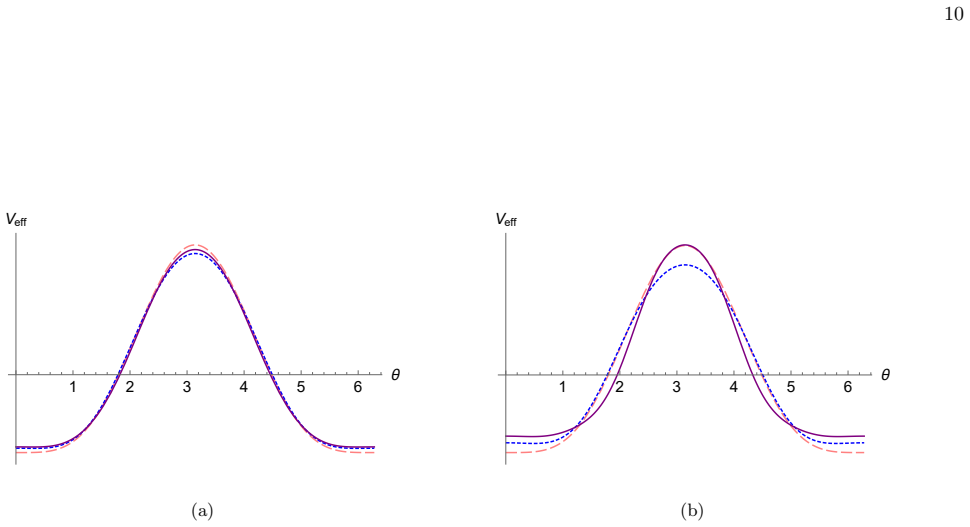
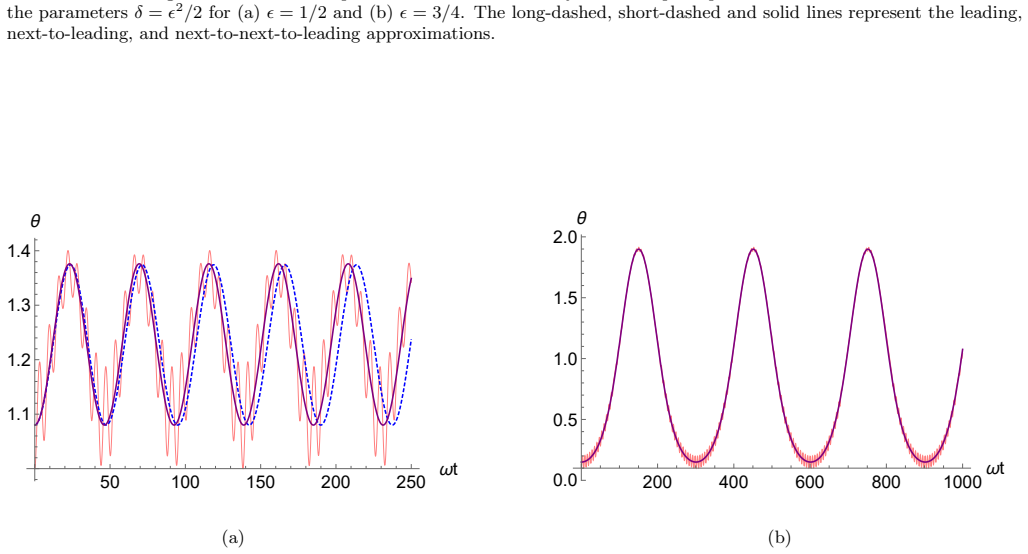
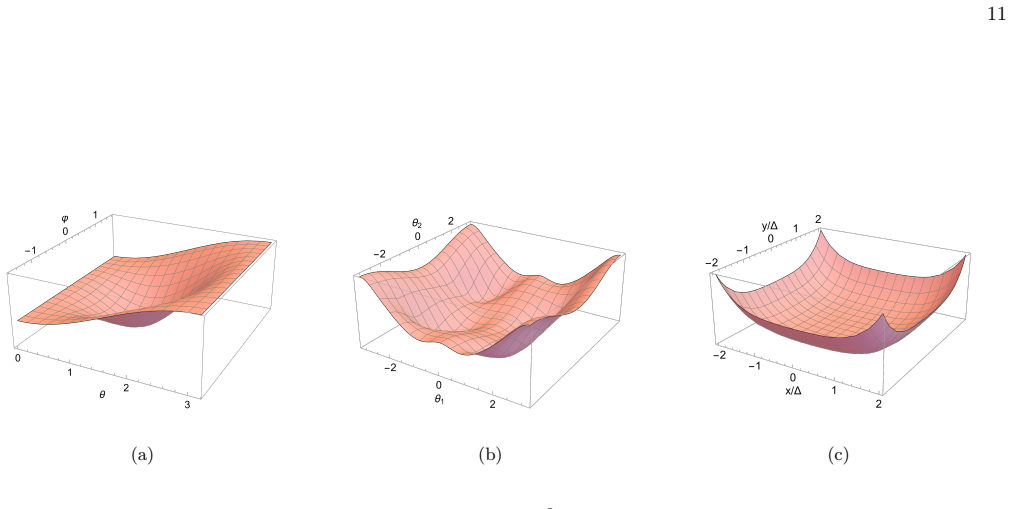
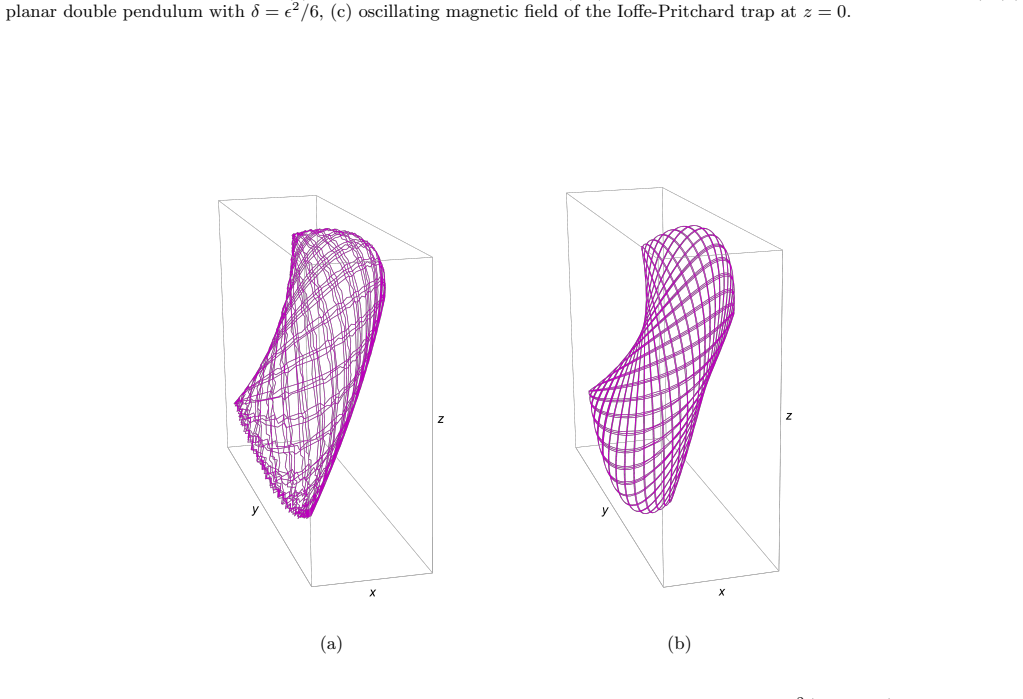
G. B. Andresenet al., Nature468, 673 (2010). 10 1 2 3 4 5 6 θ Veff 1 2 3 4 5 6 θ Veff (a) (b) FIG. 1. The convergence of the effective potential for the horizontally driven Kapitza pendulum for the near-critical value of the parametersδ=ϵ 2/2 for (a)ϵ= 1/2 and (b)ϵ= 3/4. The l...
2010
Reviewed June 29, 2026 · model on record in the stance chip above.
Discussion (0). Continue with ORCID to comment.