Analysis of PDEs · arXiv:2505.07506 v4 · submitted 12 May 2025 · 48 references
The formation of gradient-driven singular structures of codimension one and two in two-dimensions: The case study of ferronematics. Part I: Energy estimates and compactness results
The paper says
“We study a two-dimensional variational model for ferronematics – composite materials formed by dispersing magnetic nanoparticles into a liquid crystal matrix.”
more of the abstract
The model features two coupled order parameters: a Landau-de Gennes $\Q$-tensor for the liquid crystal component and a magnetisation vector field $\M$, both of them governed by a Ginzburg-Landau-type energy. The energy, the largest part of which is carried by the $\Q$-component, includes a singular coupling term favouring alignment between $\Q$ and $\M$. In this article and in the companion paper i̧teCDS2, we analyse the asymptotic behaviour of (not necessarily minimizing) critical points as a small parameter $\eps$ tends to zero. In this paper, we prove that the (rescaled) energy density for the $\Q$-component, concentrates, to leading order, on a finite number of singular points. Moreover, we prove energy estimates and compactness results that will be crucially used in i̧teCDS2 to determine the structure of the energy concentration set for the $\M$-component as well as the relationship between the two singular sets.
from the abstract
Pith says
Machine review · deepseek-v4-flash · 15 Aug 2026 · what was read was not recorded · not checked by a person
It can be wrong. Challenge this review or reply to it.
The passes disagreed. Reader: holds up. Skeptic: agrees with the reader. Referee: major revision.
A serious, carefully executed structure theory for critical points of a coupled ferronematic model, conditional on a potential-energy bound that is genuinely assumed rather than derived for general critical points. This line is wrong
2 major objections · 3 minor
How often objections from reviews like this one are right: not yet measured
Not checked: figures, code, what the 48 references say.
The paper says, at Introduction, Assumption (10), Remarks 1-2
The review did not quote this passage.
Pith says: Objection 1 of 2 · major
The abstract and the introduction describe the paper as an analysis of 'not necessarily minimizing' critical points, but Theorem A and all subsequent structure theorems are conditional on the uniform bound (10) for the rescaled potential energy. Remark 2 shows that under mixed boundary conditions (8)-(9) there are explicit critical-point sequences for which (10) fails, and the manuscript does not …
more of objection 1
… establish any PDE-level mechanism enforcing (10) for non-minimizing solutions in the mixed-boundary regime; only the minimizer case is covered by Lemma 6.6. This is not an internal inconsistency, and the Dirichlet case is non-vacuous for star-shaped domains by the Pohozaev identity, but the advertised scope in the abstract is broader than the class actually treated. Please qualify the statements of the main results in the abstract and introduction so that they explicitly mention the conditional nature of (10), and add a short discussion of whether non-minimizing critical-point sequences satisfying (10) exist under mixed boundary conditions, or whether the mixed-boundary part of Theorems A-C is effectively limited to minimizers.
The paper says, at Section 5.8, Theorem C; Section 5.6, Theorem 5.23
The review did not quote this passage.
Pith says: Objection 2 of 2 · major
The fine structural conclusions are obtained by importing results from [14] with assertions that proofs carry over 'with no modifications' (e.g., the proof of Theorem C following [14, Theorem 2], and the balance law in Theorem 5.23 'along the lines of [14, Theorem 3]').
more of objection 2
The hypotheses of these abstract results are not stated precisely, nor is it verified in the text that all conditions hold here, in particular the modified Cauchy-Riemann equation (5.57) away from spt mu_star, the stationarity of V_star in Omega \ spt mu_star, the positive lower and upper bounds for the density v_star, and the absence of atoms of zeta_star at spt mu_star. Since Theorems B and C are central claims, please either state the imported theorems as precise lemmas and check their hypotheses step by step, or provide self-contained proofs of the steps that are not literally identical to [14]. This is a load-bearing point because the asserted structure is substantially stronger than generic rectifiability.
3 minor objections
The paper says, at Introduction, 'Structure of the proofs'; Remark 3.6
Pith says: minor objection 1 of 3
The text refers to 'Proposition 5.98' and 'Proposition 2.42', which appear to be incorrect cross-references; the intended statements are likely Proposition 5.18/5.19 in the first instance and Proposition 2.6 in the second. Please correct the cross-referencing throughout.
The paper says, at Theorem D statement
Pith says: minor objection 2 of 3
Theorem D is stated in the introduction with the condition that the boundary datum Q_bd 'satisfies (7)', but (7) also prescribes an accompanying M_bd. Please specify explicitly that the boundary condition for M is the homogeneous Neumann condition (8)-(9), and clarify the sense in which Q_bd satisfies (7) when only a Q-type boundary datum is prescribed.
show 1 more
The paper says, at Notation, Lemma 5.1 and Lemma 5.2
Pith says: minor objection 3 of 3
In the proof of Lemma 5.1 the constants kappa_star and chi_epsilon are used without recalling their definitions; since these quantities appear in delicate cancellations, a one-line reminder of (1.15) and (1.19) near Lemma 5.1 would improve readability.
What would settle it
A decisive check: numerically or analytically follow branches of (4)-(5) with mixed boundary conditions (8)-(9) starting from the explicit (Q_epsilon,0) solution of Remark 2 and adding a small nonzero M perturbation, then measure epsilon^{-2} integral f_epsilon. If a nonzero branch with unbounded potential energy exists, it confirms that criticality plus boundary alignment does not enforce (10); if every such branch satisfies (10), the assumption is automatically true for connected nonzero families, which would strengthen the paper. In either case, recompute Theorem A's conclusions for that branch: if the potential-energy bound diverges, mu_epsilon and nu_epsilon need not be tight, so no concentration statement follows for that family.
from the skeptic's reading
How the review went
4 readings by deepseek-v4-flash · 15 Aug 2026
- Reader holds up
- Skeptic agrees
- Editor wrote the verdict above
- Referee major revision: 2 major objections, 3 minor
Not run on this paper: the simulated authors' defence.
Pith did not check this review's objections against the paper.
The review in full
The review in brief, machine-written
The paper does what it says and more: it extends the analysis of non-minimizing critical points for a coupled Q-tensor/magnetization model beyond minimizers, and the balance law (24)-(25) connecting point and line singularities is genuinely new. The adaptation of the vectorial Allen-Cahn machinery to moving wells is substantial, not a cosmetic re-run. The proof is admirably detailed: Hodge decomposition, clearing-out arguments, and tracking of coupling terms are done with explicit constants. The paper is also honest—Remark 2 gives a concrete family of mixed-boundary critical points where the key assumption (10) fails. That honesty is not a fault, but it sets the actual scope.
The stress-test concern is on target. Assumption (10) is load-bearing for every major step: the L1 bounds, clearing-out, compactness, and thus Theorems A-D. For star-shaped domains with pure Dirichlet data it follows from a Pohozaev identity; for mixed boundary conditions it doesn't, and the (Q_epsilon,0) example shows the conclusions genuinely fail without it. So the framing 'not necessarily minimizing critical points' should really be 'critical points with uniformly bounded rescaled potential energy.' Importantly, minimizers do satisfy (10), so the results are not vacuous, but the gap between the introduction's promise and the actual theorems is real. The paper states (10) explicitly, so there is no internal contradiction, but a reader skimming the abstract could easily overstate the scope.
The main technical soft spot is the reliance on [14] for star-level arguments, often with 'carries over without changes.' That is acceptable in a Part I of a series, but it means a referee must trust a significant body of imported results. I saw no internal contradictions or circular steps. The theorems are derived from the Euler-Lagrange equations, and the compactness tools are independent of the conclusions.
This is a paper for PDE/calculus of variations researchers working on Ginzburg-Landau, Allen-Cahn systems, liquid crystals, or varifold structure theory. It deserves a serious referee: the length and technical density justify scrutiny, and a careful referee can check both the imported steps and the precise scope of (10). I would send it to peer review, and I would cite it if I worked on these coupled models.
The strongest objection
The proof of Theorem A and all subsequent structure theorems uses (10) as the sole source of uniform control on the potential energy: it enters Proposition 2.1, Proposition 2.9, the L^1 bounds on mu_epsilon and nu_epsilon, the clearing-out lemmas, and hence Theorems 5.4, 5.8, and 5.23. The manuscript itself, in Remark 2, supplies a concrete family of critical points under mixed boundary conditions (8)-(9), namely (Q_epsilon,0) with Q_epsilon a Ginzburg-Landau critical point, for which epsilon^{-2} integral f_epsilon(Q_epsilon,0) = O(1/epsilon), so (10) fails and the mu_epsilon/nu_epsilon compactness used in the main theorems is not available. Thus the central claim is not that every critical-point sequence converges, but only those with uniformly bounded rescaled potential energy; for mixed boundary conditions no PDE-level mechanism enforcing (10) is proved except for minimizers (Lemma 6.6). I do not see an internal inconsistency: the theorems state (10) explicitly. The weak point is the gap between the paper's 'general critical points' framing in the introduction and the class actually covered; if nontrivial non-minimizing branches satisfying (10) do not exist, the mixed-boundary part of Theorems A-D is vacuous outside minimizers.
The reader's weakest assumption, (10), is exactly the load-bearing point I identify. The paper is honest about this: Remark 1 shows (10) holds for minimizers, and Remark 2 shows it fails for a natural mixed-boundary family, namely (Q_epsilon,0). This means the theorem is not internally inconsistent; it is a conditional statement with a clearly stated hypothesis. My stress-test looked for additional gaps in the transfer of the Allen-Cahn framework from [14], the clearing-out arguments, and the balance law, but the manuscript addresses the moving-well perturbation and the vanishing of coupling terms away from spt mu_star, and I found no concrete error that would overturn the proof. The only substantive concern is scope: the abstract and introduction emphasize 'not necessarily minimizing' critical points, and for mixed boundary conditions the theorem's assumption (10) is not automatic for general critical points. If there are no non-minimizing mixed-boundary branches satisfying (10), then Theorem A's mixed-boundary part is only about minimizers, which would make the 'general critical points' framing misleading. This is a limitation of applicability, not a defect in the conditional proof. Since the paper explicitly flags the limitation in Remark 2 and the reader already accounted for it, I recommend no change to the ACCEPT verdict. The suggested concrete test would settle whether the mixed-boundary scope is genuinely nonempty beyond minimizers, but it does not identify a mathematical error in the stated theorems.
The referee's report
If correct, the paper significantly extends the asymptotic analysis of ferronematic models from minimizers, as in [25], to non-minimizing critical points satisfying a natural uniform potential-energy bound. The balance law between the first variation of the limiting M-varifold and the gradients of the renormalized Q-energy at the point singularities is a new structural result, and the compactness framework is likely to be essential for the companion paper. The proofs are unusually detailed for this area, with explicit tracking of constants, perturbation terms, and boundary contributions, and the manuscript is honest about the role of assumption (10), including a concrete counterexample family in Remark 2. The main caveats concern the precise scope of the advertised class of critical points and the transparency of the imported star-level arguments from [14]; these are addressable without changing the core methods.
Pith's reading of the paper (a machine's summary, not the authors')
This paper studies a two-dimensional ferronematic model, in which a liquid-crystal order parameter (a Q-tensor) is coupled to a magnetisation vector. The authors aim to prove that for any sequence of critical points of the energy—not just minimisers—with uniformly bounded rescaled potential energy, the Q-component energy concentrates on a finite set of points while the M-component energy concentrates on a one-dimensional rectifiable set. The central discovery is a balance law: the first variation of the limiting line-defect varifold equals, up to sign, the gradient of the renormalised interaction energy of the point defects. This shows that the two kinds of singular structures are locked together by an explicit variational condition, and it provides the compactness and energy estimates needed by the companion paper to describe the M-energy concentration set.
What carries the argument. The central object is the limiting potential measure $\zeta_*$, obtained as the weak-* limit of the densities $(1/\varepsilon)V(M_\varepsilon)$, where $V$ is the well potential built from the coupling term. The main technical engine is a modified Cauchy-Riemann equation $\partial\omega_*/\partial\bar z = 2\partial\zeta_*/\partial z$ for the limiting Hopf differential $\omega_*$ of the two order parameters; it yields a monotonicity formula for $r\mapsto(1/r)\zeta_*(B(x_0,r))$, from which the density $v_*$ and the absolute continuity of $\zeta_*$ with respect to $H^1$ on $S_*$ follow. The balance law is then obtained by combining this monotonicity with the stationarity of the varifold $V_*$ away from the point singularities.
Core claim. The paper establishes convergence and structural results for sequences of critical points $(Q_\varepsilon,M_\varepsilon)$ of the ferronematic energy $F_\varepsilon$, under the assumption that $\varepsilon^{-2}\int_\Omega f_\varepsilon(Q_\varepsilon,M_\varepsilon)$ is bounded independently of $\varepsilon$. In the limit, $Q_\varepsilon$ converges strongly in $W^{1,p}$ ($p<2$) to a limiting map $Q_*$ with $|Q_*|=1$, and $M_\varepsilon$ converges in $L^p$ to $M_*$ with $|M_*|=(\sqrt{2\beta+1})^{1/2}$, with $Q_*$ aligned along $M_*$. The rescaled Q-energy measure $\mu_\varepsilon$ converges to a finite sum of point masses, and the rescaled M-energy measure $\nu_\varepsilon$ converges to a measure whose support is countably 1-rectifiable and locally finite away from those points. The limiting potential measure $\zeta_*$ takes the form $v_* H^1$ on $S_* = \operatorname{spt}\nu_*\setminus\operatorname{spt}\mu_*$, and the varifold $V_* = v(S_*,v_*)$ satisfies $\delta V_*(X)=\sum_j z_j\cdot X(a_j)$ with $z_j=-\tfrac12\nabla_{a_j}W_*(a_1,\dots,a_{n_*})$. The upshot is that the curvature of the line-defect set is exactly the force exerted by the point singularities through their mutual renormalised energy.
The premise it rests on. The load-bearing assumption is that the rescaled potential energy $\varepsilon^{-2}\int_\Omega f_\varepsilon(Q_\varepsilon,M_\varepsilon)$ stays bounded independently of $\varepsilon$; for general critical points with mixed boundary conditions this can fail—for instance the pair $(Q_\varepsilon,0)$ with $Q_\varepsilon$ a Ginzburg-Landau critical point has potential energy of order $1/\varepsilon$—and then the energy concentration conclusions do not hold.
If the paper is right (Pith's inferences, not the authors')
If the balance law holds, the line-defect set must terminate at the point singularities or at the boundary, and the segments meet the singularities at angles dictated by the gradient of the renormalised energy.
Away from $\operatorname{spt}\mu_*$, $Q_\varepsilon$ converges strongly in $W^{1,p}$ for every $p<\infty$ and $M_\varepsilon$ converges locally uniformly, so the only obstructions to full convergence are the point and line singular sets.
For minimisers under the mixed boundary conditions, $\operatorname{spt}\mu_*$ contains exactly $2|d|$ points and $\operatorname{spt}\nu_*$ is a minimal connection among them, so the macroscopic pattern is determined by the degree of the boundary datum.
The balance law gives a variational principle for the joint singular set: it is a critical point of $W_* + \tfrac{2\sqrt{2}}{3}(\sqrt{2\beta+1})^{3/2} L_\Omega$, the sum of renormalised point energy and minimal connection length.
An extension the authors leave implicit: the same balance-law mechanism should apply to higher-dimensional analogues, with the Q-component concentrating on a codimension-two set and the M-component on a hypersurface, whenever the analogous potential bound holds.
The balance law suggests a gradient-flow interpretation: under slow dynamics the line-defect set should move with normal velocity given by the first variation computed here, linking the static theory to coarsening of ferronematic patterns.
A testable numerical prediction follows: finite-element solutions of the full Euler-Lagrange system with boundary datum of degree $d$ should show energy concentrations whose limiting first variation matches $-\tfrac12\nabla_{a_j}W_*$, up to discretisation error.
Check this review
Pith stored no record of this review's passes and took no fingerprint of it. Reviews made by code from 13 Nov 2026 on carry both.
How often reviews like this one are right
Reviews like this one: written by deepseek-v4-flash, where what was read was not recorded.
How often objections from reviews like this one are right: not yet measured
Reviews by people
This review was written by a machine. No person has reviewed this paper on Pith yet. A scientist listed on Pith can review it for a fee, and their review is published here whatever it concludes.
The paper
Abstract
We study a two-dimensional variational model for ferronematics – composite materials formed by dispersing magnetic nanoparticles into a liquid crystal matrix. The model features two coupled order parameters: a Landau-de Gennes $\Q$-tensor for the liquid crystal component and a magnetisation vector field $\M$, both of them governed by a Ginzburg-Landau-type energy. The energy, the largest part of which is carried by the $\Q$-component, includes a singular coupling term favouring alignment between $\Q$ and $\M$. In this article and in the companion paper i̧teCDS2, we analyse the asymptotic behaviour of (not necessarily minimizing) critical points as a small parameter $\eps$ tends to zero. In this paper, we prove that the (rescaled) energy density for the $\Q$-component, concentrates, to leading order, on a finite number of singular points. Moreover, we prove energy estimates and compactness results that will be crucially used in i̧teCDS2 to determine the structure of the energy concentration set for the $\M$-component as well as the relationship between the two singular sets.
The paper's own sentences, arranged, kept beside the review and separate from it. Each label is drawn from a closed vocabulary; the number beside it is the probability the classifier gave that label. No sentence in this record was written by a model.
abstract compiled · 2026-09-23
The authors' main claim, as the classifier picked it out 1.00
“In this paper, we prove that the (rescaled) energy density for the $\Q$-component, concentrates, to leading order, on a finite number of singular points.”
How the main claim is stated: asserted 1.00
What the abstract itself states, as probabilities: claims first 0.04 · states limitation 0.38 · human participants 0.01 · controlled comparison 0.02 · randomized assignment 0.01 · states quantitative result 0.20 · compares with prior results 0.07 · mentions code or data availability 0.01
The abstract, sentence by sentence
This table labels the abstract only (arXiv listing abstract v4). The number is the probability the classifier gave the label.
| Sentence | Role | The authors' own work | States the main conclusion | Strength |
|---|---|---|---|---|
| We study a two-dimensional variational model for ferronematics -- composite materials formed by dispersing magnetic nanoparticles into a liquid crystal matrix. | background 0.53 | 0.62 | 0.03 | asserted 0.98 |
| The model features two coupled order parameters: a Landau-de Gennes~$\Q$-tensor for the liquid crystal component and a magnetisation vector field~$\M$, both of them governed by a Ginzburg-Landau-type energy. | method 0.68 | 0.27 | 0.03 | asserted 1.00 |
| The energy, the largest part of which is carried by the $\Q$-component, includes a singular coupling term favouring alignment between~$\Q$ and~$\M$. | method 0.51 | 0.27 | 0.03 | asserted 1.00 |
| In this article and in the companion paper~\cite{CDS2}, we analyse the asymptotic behaviour of (not necessarily minimizing) critical points as a small parameter~$\eps$ tends to zero. | contribution 0.70 | 0.69 | 0.04 | asserted 0.96 |
| In this paper, we prove that the (rescaled) energy density for the $\Q$-component, concentrates, to leading order, on a finite number of singular points. | result 0.99 | 0.97 | 0.75 | asserted 1.00 |
| Moreover, we prove energy estimates and compactness results that will be crucially used in~\cite{CDS2} to determine the structure of the energy concentration set for the $\M$-component as well as the relationship between the two singular sets. | contribution 0.33 | 0.91 | 0.14 | asserted 1.00 |
What kind of paper the classifier reports this is: theoretical result 1.00 · evidence from proof or derivation 1.00
What was examined, and what was not
Sources read
- arXiv listing abstract v4
Not examined
- full text
- figures and tables
- references and citing sentences
- relations to other papers
Levels run
- P abstract
Not run
- S sections
- T body sentences
- C citations
- R cross-paper relations
How the labels were made
Compiled by classifier-1.13.0 via TypeSafe API, question bank abstract-p1-20260923, 2026-09-23: 1 request, 5,170 input tokens.
Every quoted sentence on this record is the authors'. Every label is from Pith's closed vocabulary, with the probability shown beside it. This record as JSON
Figures (1)
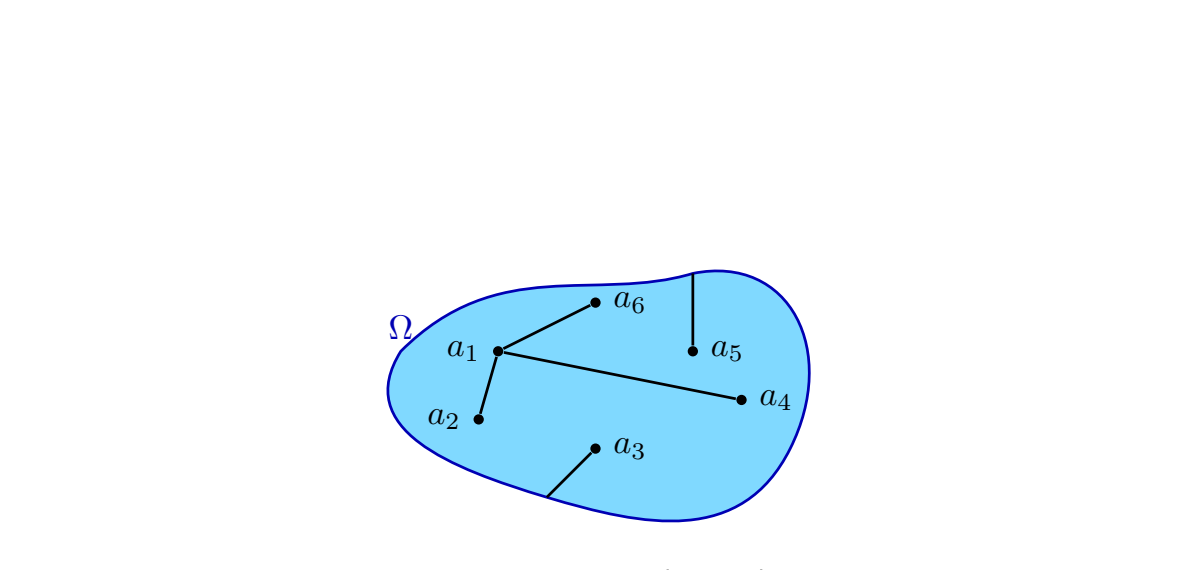
Figures are the authors', reproduced from the paper.
References (48)
- [14] Fabrice Bethuel. Asymptotics for two-dimensional vectorial Allen-Cahn systems.Acta Math., 234(2):189–314, 2025 on Pith
- [25] Giacomo Canevari, Apala Majumdar, Bianca Stroffolini, and Yiwei Wang. Two-dimensional ferronematics, canonical harmonic maps and minimal connections.Arch. Ration. Mech. Anal., 247(6):Paper No. 110, 61, 2023 on Pith
- [1] G. Alberti, S. Baldo, and G. Orlandi. Variational convergence for functionals of Ginzburg- Landau type.Indiana Univ. Math. J., 54(5):1411–1472, 2005 on Pith
- [2] Giovanni Alberti. Distributional Jacobian and singularities of Sobolev maps.Ricerche Mat., 54(2):375–394 (2006), 2005 on Pith
- [3] R. Alicandro and M. Ponsiglione. Ginzburg-Landau functionals and renormalized energy: a revisedΓ-convergence approach.J. Funct. Anal., 266(8):4890–4907, 2014 on Pith
- [4] W. K. Allard and F. J. Almgren, Jr. The structure of stationary one dimensional varifolds with positive density.Invent. Math., 34(2):83–97, 1976 on Pith
- [5] L. Ambrosio, V. Caselles, S. Masnou, and J.-M. Morel. Connected components of sets of finite perimeter and applications to image processing.J. Eur. Math. Soc., 3(1):39–92, 2001 on Pith
- [6] L. Ambrosio, N. Fusco, and D. Pallara.Functions of bounded variation and free discontinu- ity problems. Oxford Mathematical Monographs. The Clarendon Press, Oxford University Press, New York, 2000. 137 on Pith
- [7] Sisto Baldo. Minimal interface criterion for phase transitions in mixtures of Cahn-Hilliard fluids.Ann. Inst. H. Poincaré C Anal. Non Linéaire, 7(2):67–90, 1990 on Pith
- [8] J. Ball and A. Zarnescu. Orientability and energy minimization in liquid crystal models. Arch. Ration. Mech. Anal., 202(2):493–535, 2011 on Pith
- [9] Lisa Beck.Elliptic regularity theory, volume 19 ofLecture Notes of the Unione Matematica Italiana. Springer, Cham; Unione Matematica Italiana, Bologna, 2016. A first course on Pith
- [10] F. Bethuel, H. Brezis, and F. Hélein. Asymptotics for the minimization of a Ginzburg- Landau functional.Cal. Var. Partial Differential Equations, 1(2):123–148, 1993 on Pith
- [11] F. Bethuel, H. Brezis, and F. Hélein.Ginzburg-Landau vortices, volume 13 ofProgress in Nonlinear Differential Equations and their Applications. Birkhäuser Boston, Inc., Boston, MA, 1994 on Pith
- [12] F. Bethuel, H. Brezis, and G. Orlandi. Asymptotics for the Ginzburg-Landau equation in arbitrary dimensions.J. Funct. Anal., 186(2):432–520, 2001 on Pith
- [13] F. Bethuel and D. Chiron. Some questions related to the lifting problem in Sobolev spaces. InPerspectives in nonlinear partial differential equations, volume 446 ofContemp. Math., pages 125–152. Amer. Math. Soc., Providence, RI, 2007 on Pith
- [15] Fabrice Bethuel, Giandomenico Orlandi, and Didier Smets. Improved estimates for the Ginzburg-Landau equation: the elliptic case.Ann. Sc. Norm. Super. Pisa Cl. Sci. (5), 4(2):319–355, 2005 on Pith
- [16] Konark Bisht, Varsha Banerjee, Paul Milewski, and Apala Majumdar. Magnetic nanopar- ticles in a nematic channel: A one-dimensional study.Physical Review E, 100(1):012703, 2019 on Pith
- [17] B. Bollobas.Modern Graph Theory. Springer-Verlag New York, 1998 on Pith
- [18] H. Brezis, J.-M. Coron, and E. H. Lieb. Harmonic maps with defects.Comm. Math. Phys., 107(4):649–705, 1986 on Pith
- [19] Haïm Brezis and Petru Mironescu.Sobolev maps to the circle—from the perspective of analysis, geometry, and topology, volume 96 ofProgress in Nonlinear Differential Equations and their Applications. Birkhäuser/Springer, New York, [2021]©2021 on Pith
show 28 more
- [20] F Brochard and PG De Gennes. Theory of magnetic suspensions in liquid crystals.Journal de Physique, 31(7):691–708, 1970 on Pith
- [21] J. W. Cahn. On spinodal decomposition.Acta Met., 9:795–801, 1961. 138 on Pith
- [22] J. W. Cahn and J. E. Hilliard. Spinodal decomposition: a reprise.Acta Met., 19:151–161, 1971 on Pith
- [23] M. C. Calderer, A. DeSimone, D. Golovaty, and A. Panchenko. An effective model for nematic liquid crystal composites with ferromagnetic inclusions.SIAM Journal on Applied Mathematics, 74(2):237–262, 2014 on Pith
- [24] G. Canevari and G. Orlandi. Topological singular set of vector-valued maps, I: Applica- tions to manifold-constrained Sobolev and BV spaces.Calculus of Variations and Partial Differential Equations, 58(2):72, Mar 2019 on Pith
- [26] M. del Pino and P. L. Felmer. Local minimizers for the Ginzburg-Landau energy.Math. Z., 225(4):671–684, 1997 on Pith
- [27] Federico Dipasquale, Vincent Millot, and Adriano Pisante. Torus-like solutions for the Landau–de Gennes model. Part I: The Lyuksyutov regime.Arch. Ration. Mech. Anal., 239(2):599–678, 2021 on Pith
- [28] K. J. Falconer.The geometry of fractal sets, volume 85 ofCambridge Tracts in Mathematics. Cambridge University Press, Cambridge, 1986 on Pith
- [29] Herbert Federer.Geometric measure theory. Die Grundlehren der mathematischen Wis- senschaften, Band 153. Springer-Verlag New York, Inc., New York, 1969 on Pith
- [30] Irene Fonseca and Luc Tartar. The gradient theory of phase transitions for systems with two potential wells.Proc. Roy. Soc. Edinburgh Sect. A, 111(1-2):89–102, 1989 on Pith
- [31] Mariano Giaquinta and Luca Martinazzi.An introduction to the regularity theory for el- liptic systems, harmonic maps and minimal graphs, volume 11 ofAppunti. Scuola Normale Superiore di Pisa (Nuova Serie) [Lecture Notes. Scuola Normale Superiore di Pisa (New Series)]. Edizioni... on Pith
- [32] D. Gilbarg and N. S. Trudinger.Elliptic partial differential equations of second order. Springer-Verlag, 2001. Reprint of the 1998 edition on Pith
- [33] Morton E. Gurtin and Hiroshi Matano. On the structure of equilibrium phase transitions within the gradient theory of fluids.Quart. Appl. Math., 46(2):301–317, 1988 on Pith
- [34] Frédéric Hélein.Constant mean curvature surfaces, harmonic maps and integrable systems. Lectures in Mathematics ETH Zürich. Birkhäuser Verlag, Basel, 2001. Notes taken by Roger Moser on Pith
- [35] John E. Hutchinson and Yoshihiro Tonegawa. Convergence of phase interfaces in the van der Waals-Cahn-Hilliard theory.Calc. Var. Partial Differential Equations, 10(1):49–84, 2000. 139 on Pith
- [36] Robert L. Jerrard. Lower bounds for generalized Ginzburg-Landau functionals.SIAM J. Math. Anal., 30(4):721–746, 1999 on Pith
- [37] Fang Hua Lin. Some dynamical properties of Ginzburg-Landau vortices.Comm. Pure Appl. Math., 49(4):323–359, 1996 on Pith
- [38] Fang Hua Lin. Vortex dynamics for the nonlinear wave equation.Comm. Pure Appl. Math., 52(6):737–761, 1999 on Pith
- [39] A. Mertelj, D. Lisjak, M. Drofenik, and M. Copic. Ferromagnetism in suspensions of mag- netic platelets in liquid crystal.Nature, 504:237–241, 2013 on Pith
- [40] L. Modica and S. Mortola. Un esempio diΓ−-convergenza.Boll. Un. Mat. Ital. B (5), 14(1):285–299, 1977 on Pith
- [41] Luciano Modica. A gradient bound and a Liouville theorem for nonlinear poisson equations. Communications on Pure and Applied Mathematics, 38(5):679–684, 1985 on Pith
- [42] M. R. Pakzad and T. Rivière. Weak density of smooth maps for the Dirichlet energy between manifolds.Geom. Funct. Anal., 13(1):223–257, 2003 on Pith
- [43] Etienne Sandier. Lower bounds for the energy of unit vector fields and applications.J. Funct. Anal., 152(2):379–403, 1998 on Pith
- [44] R. Schoen and K. Uhlenbeck. Boundary regularity and the Dirichlet problem for harmonic maps.J. Differential Geom., 18(2):253–268, 1983 on Pith
- [45] L. Simon.Lectures in Geometric Measure Theory. Centre for Mathematical Analysis, Australian National University, Canberra, 1984 on Pith
- [46] Didier Smets, Fabrice Bethuel, and Giandomenico Orlandi. Quantization and motion law for Ginzburg-Landau vortices.Arch. Ration. Mech. Anal., 183(2):315–370, 2007 on Pith
- [47] Panayotis Smyrnelis. Gradient estimates for semilinear elliptic systems and other related results.Proc. Roy. Soc. Edinburgh Sect. A, 145(6):1313–1330, 2015 on Pith
- [48] Peter Sternberg. The effect of a singular perturbation on nonconvex variational problems. Arch. Rational Mech. Anal., 101(3):209–260, 1988. Giacomo Canevari Università di Verona Strada Le Grazie 15, 37134 Verona, Italy E-mail address:giacomo.canevari@univr.it Federico Luigi Di... on Pith
Cited by 4 Pith papers
Reviewed papers on Pith that cite this one. The full citation record
- The formation of gradient-driven singular structures of codimension one and two in two-dimensions: The case study of ferronematics. Part~{II}: Refined structure of the energy-concentration set math.AP · Jun 2026
- Existence of homeomorphic minimizers via mappings of finite distortion in compressible magnetoelasticity math.AP · Aug 2026
- A variational approach to ferronematics with a dimension reduction math.AP · May 2026
- A study of ferronematic thin films including a stray field energy math.AP · Sep 2025
How the literature uses it
2 arXiv papers cite this in 32 sentences
Papers citing it · 25 sentences without a confident label
Builds on it 1 paper
-
In this paper, we continue our study, started in [ref] , of the asymptotic behaviour of critical points of the energy functional $_$, defined in [ref] below, that has been proposed in the physical literature [ref] as a simplified model for two-dimensional ferronematics.
The formation of gradient-driven singular structures of codimension one and two in two-dimensions: The case study of ferronematics. Part~{II}: Refined structure of the energy-concentration set · Introduction · 0.86
Uses its method or tool 1 paper
-
To deal with this issue, we adapt the energy methods developed in [ref] and we combine them with the refined energy estimates and convergence results for the $$-component obtained in [ref] .
The formation of gradient-driven singular structures of codimension one and two in two-dimensions: The case study of ferronematics. Part~{II}: Refined structure of the energy-concentration set · Main results · 0.99
Challenges and discussion
Disagree with the review, or know something it missed? Leave a comment, or challenge this review formally: a challenge becomes a permanent entry in this paper's record, and its decision is published here.
Come back by email
A short list of the week's newly reviewed papers. Nothing is sent until you confirm from your inbox, and every email has a link that stops it. No account.
No comments yet.
Sign in to comment