REVIEW 4 major objections 3 minor 6 cited by
SPLENDOR: a novel detector platform to search for light dark matter with narrow-gap semiconductors
T0 review · 4 major / 3 minor · reviewed 2026-08-06 · deepseek-v4-flash
Pith's one-line read The paper claims that a detector built on the 60 meV-gap semiconductor Eu5In2Sb6 with cryo-HEMT readout can directly probe sub-MeV dark matter, ultimately reaching the freeze-in relic-density target.
desk verdict A solid, honest detector R&D proposal for sub-MeV dark matter whose reach projections hinge on a 60 meV band gap that is not yet spectroscopically confirmed; treat the curves as a roadmap, not a result. read the letter →
The pith
A machine-rendered reading of the paper's core claim, the machinery that carries it, and where it could break.
The reading
What carries the argument
The central object is the Zintl-phase semiconductor Eu5In2Sb6, chosen for a roughly 60 meV transport band gap (DFT gives about 20 meV indirect and 80 meV direct after a 40 meV scissor shift of the conduction bands), a strongly anisotropic orthorhombic structure, and low expected dark currents from valence-precise stoichiometry. The signal mechanism is dark-matter-induced excitation of electron-hole pairs, whose rate is controlled by the dielectric loss function $-\text{Im}[1/\epsilon(\omega,q)]$; the paper computes this from a Green's-function spectral representation of the electric susceptibility. The second half of the machinery is the charge readout: a two-stage cryoHEMT amplifier with a 10 mK buffer stage and 4 K gain stage integrated into the detector housing to minimize parasitic capacitance, with planned upgrades to active reset, parallel amplification, and cavity-embedded Cooper-pair transistors for sub-electron resolution.
What would settle it
A calibration run in the dilution refrigerator that illuminates the Eu5In2Sb6 prototype with a tunable near- and mid-infrared source at photon energies from 10 to 200 meV, counts ionization pulses with the calibrated amplifier, and extracts the charge yield per photon as a function of photon energy would settle the central claim: if the yield does not turn on near 60 meV and instead appears only above about 600 meV, the sensitivity projections collapse.
Extended reading notes
Core claim
On its own terms, the central claim is that a detector using Eu5In2Sb6's roughly 60 meV transport gap and DFT-derived dielectric loss function can convert sub-MeV dark matter scattering and dark-photon absorption into countable ionization events, and that the crystal's orthorhombic anisotropy produces a 23–36% daily modulation of the rate usable to subtract static backgrounds. The projected 90% C.L. reach curves show that a 1 g-year exposure with single-electron sensitivity in a background-free idealized run already beats proposed phonon-readout schemes at low masses; in the more realistic staged scenarios, cryoHEMT readout at 5e−, 3e−, and 2e− reaches into the 0.01–0.5 MeV range only when combined with the modulation analysis, while 0.1e− cCPT readout is presented as the route to the freeze-in relic target.
Load-bearing premise
The projections assume the true band gap of Eu5In2Sb6 at 10 mK is about 60 meV and that the scissor-corrected DFT dielectric response accurately gives the low-energy loss function; the paper's own M-EELS data show an onset near 600 meV and the FTIR data cannot resolve the gap below 25 meV.
Editorial extensions
If this is right
- If the 60 meV gap is real at operating temperature, SPLENDOR's threshold is one to two orders of magnitude below existing semiconductor detectors, opening the 0.01–0.5 MeV mass window to direct detection.
- The predicted 23–36% daily modulation converts the detector into a background-subtracting instrument: static dark counts and Compton events can be removed by day/night binning without knowing their detailed shape.
- The measured 20 ± 7 electron resolution in silicon, with predicted 2–5 electron cryoHEMT versions and 0.1 electron cCPT versions, defines a staged path from first science runs to the freeze-in relic-density target.
- The same dielectric tensor gives competitive sensitivity to dark-photon absorption in the sub-eV to tens-of-eV mass range, extending the platform beyond scattering-based searches.
Reading between the lines
- The reach depends sharply on the true low-temperature gap: if the M-EELS onset near 600 meV reflects the actual gap rather than a surface artifact, the signal rate would fall by orders of magnitude, so a direct sub-gap calibration is the decisive near-term test.
- The same platform logic—anisotropic narrow-gap crystal plus low-noise charge readout—should transfer to other Zintl and f-electron compounds, meaning the detector's science reach is tied to materials discovery as much as to sensor development.
- The daily-modulation analysis assumes backgrounds are time-independent at sidereal periods; muon and cosmogenic activation backgrounds with diurnal or solar correlations could mimic or dilute the signal, so the modulation phase and amplitude should be fitted against measured time-dependent background data.
- A testable extension is to measure the charge yield per photon at several wavelengths straddling 60–600 meV, mapping the ionization yield model and Fano factor directly rather than relying on the heuristic one-third-energy-to-ionization assumption used in the projections.
Editorial analysis
A structured set of objections, weighed in public.
Referee Report
Summary. This paper presents the design, prototype status, and sensitivity projections of SPLENDOR, a modular detector platform for sub-MeV dark matter using narrow-gap semiconductor targets and low-noise cryogenic charge readout. The manuscript reports the synthesis and characterization of Eu5In2Sb6 single crystals, including transport, Hall, photoresponse, M-EELS, FTIR, and radioassay measurements; the calibration of a two-stage cryoHEMT amplifier on a Si test sample with a measured charge resolution of 20 +/- 7 electrons; first-principles DFT calculations of the dielectric response; and projected sensitivities to dark photon absorption and freeze-in dark matter-electron scattering under several background and readout upgrade scenarios. The central claim is that this platform can reach unexplored sub-MeV dark matter parameter space and eventually the freeze-in relic-density target, enabled by a 60 meV gap and anisotropic response of Eu5In2Sb6.
Significance. If the material assumptions hold, SPLENDOR would offer a distinctive combination of sub-eV electronic thresholds and directional sensitivity through daily modulation, with a modular architecture that can incorporate different target crystals and readout technologies. The paper documents genuine technical progress: optimized growth of high-quality crystals, a working two-stage cryoHEMT readout chain with open-source DAQ, a detailed anisotropic rate formalism with explicit predictions for the modulation amplitude, and a staged upgrade path from surface to deep-underground operation. These are concrete, useful contributions to the sub-GeV dark matter detector portfolio. The physics significance of the sensitivity projections, however, is conditional on the assumed 60 meV band gap and the accuracy of the computed low-energy loss function, neither of which is established by the currently presented measurements.
major comments (4)
- [Sec. II / Appx. A.2 / Fig. 3] The assumed 60 meV band gap is inferred from transport above 20 K, and Appx. A.2 explicitly assumes that the sub-K antiferromagnetic gap equals the paramagnetic-phase value. The only M-EELS data (Appx. A.5, Fig. 18) show an onset near 600 meV that is attributed to the rough cleave but not independently ruled out, and the FTIR data (Appx. A.6, Fig. 19) cannot separate a low-energy electronic gap from phonon peaks below ~25 meV and the tail of the 600 meV interband onset. Because the dark matter scattering and absorption rates in Appx. C are proportional to the loss function, a true gap of a few hundred meV or a factor-of-several error in the low-energy Im[-1/epsilon] would shift the projected reach in Figs. 9, 10, and 13 by orders of magnitude. The paper should either provide direct low-energy spectroscopic confirmation of the gap and loss function, or explicitly label the projections as conditional on this unverified assumption and quantify the effect of alternative gap values.
- [Appx. B.1 / Appx. B.2, Eq. (B1), Fig. 24] The DFT-based dielectric response used for the rate predictions is not an independent input: a 40 meV scissor shift is applied to match the transport gap, so the calculated response is anchored to the same 60 meV value that is under question. Additionally, Appx. B.2 and Fig. 24 report an unexplained discrepancy between the DFT and FTIR-derived Im epsilon in the 20-400 meV range, with the text stating that it is not clear whether the temperature-dependent suppression can fully account for the difference. Since the rate calculations in Sec. IV use the scissor-corrected response, the central physics input to the projected reach is unvalidated in exactly the energy range of interest. A quantitative study of how the reach in Figs. 9 and 13 changes under the DFT/FTIR discrepancy, or an independent validation of the low-energy loss function, is needed before the projected sensitivities can be regarded as robust.
- [Sec. III / Table I] The measured charge resolution is 20 +/- 7 electrons (Sec. III, Fig. 6), not the 5 electrons assumed for scenario 1 in Table I. The paper attributes the factor-of-four difference to non-ideal charge collection in the silicon test sample, but this has not been demonstrated on Eu5In2Sb6 or at the target operating temperature. The baseline sensitivity projections should either use the demonstrated resolution or provide a concrete calibration path showing that 5 electrons is achievable in the deployed configuration. The abstract's statement that the measured resolution is 'consistent with predicted performance' also understates the discrepancy and should be reworded.
- [Sec. IV C / p_ne(omega)] The conversion from deposited energy to electron count relies on the heuristic p_ne(omega) with average yield <n_eh> = (1/3) omega/Egap and a Fano factor F = 0.15 adopted from silicon-like behavior. This conversion directly determines the ne distributions used in the binned log-likelihood analysis and hence the reach estimates in Fig. 13. For a strongly correlated, narrow-gap f-electron material, neither the 1/3 ionization fraction nor the Fano factor is validated. The authors should state the sensitivity of the projected reach to these parameters and, if possible, calibrate the yield model with the Eu5In2Sb6 prototype rather than assuming silicon-like values.
minor comments (3)
- [Appx. B.2] In the discussion of the intermediate frequency range, the text writes 'omega ~ (20-400) eV', but the surrounding discussion and Fig. 24 clearly concern meV energies; this should be corrected to meV.
- [Sec. III, Eq. (1)] The symbols NV, epsilon_CCE, and tau_BW in Eq. (1) are not defined in the main text; a sentence defining them (or pointing to Ref. [37]) would improve reproducibility.
- [Table I / Fig. 13] The table header 'single-e- dark rate' and the repeated use of 'e-' in quoted units are awkward; clarifying that the dark rate is per electron-equivalent charge bin would make the background model easier to follow.
Circularity Check
No significant circularity: the sensitivity projections are conditional model estimates built on measured and flagged material parameters, not reductions of inputs to outputs.
full rationale
The derivation chain is linear and externally anchored: transport and photoresponse measurements motivate Egap ≈ 60 meV (Sec. II, Appx. A.2–A.4); a DFT calculation with an explicit 40 meV scissor shift is calibrated to that transport gap (Appx. B.1); the resulting dielectric loss function and susceptibility feed standard DM-electron scattering/absorption formulas (Sec. IV, Appx. C). No step fits a quantity to DM data and then re-predicts that same quantity: the DM rates and reach curves are downstream consequences of a material model, and the paper repeatedly labels them as idealized or scenario-dependent projections (e.g., "While these sensitivity projections are unrealistic..."). The key vulnerabilities are stated in the text rather than hidden: Appx. A.2 says "we work under the assumption that the bandgap ... in the sub-K antiferromagnetic phase is not significantly different from its counterpart in the paramagnetic phase above 14 K"; Appx. A.5 reports M-EELS would suggest a gap "closer to 600 meV" and attributes this to surface roughness; Appx. A.6 states phonon peaks below 25 meV precluded a direct gap determination; and Appx. B.2 (Fig. 24) admits it is "not clear whether this suppression can fully account for the discrepancy in intensity between theory and experiment" in the 20–400 meV range. These are correctness risks, not circularity. Self-citations to prior collaboration work ([37], [40], [73], [141]) supply methods, synthesis, and software, but none is a uniqueness theorem or an unverified premise that forces the reach; the amplifier resolution is measured in this paper, and the DFT response is compared to FTIR data here. The heuristic ionization yield p_ne(ω) with F = 0.15 is explicitly a simplified model borrowed from silicon, again an assumption rather than a circular step. Accordingly, no load-bearing argument reduces to its own input, and the appropriate circularity finding is none.
Assumptions & free parameters
free parameters (3)
- Scissor shift Delta =
40 meV
- Fano factor F =
0.15
- Ionization yield factor (1/3) =
1/3
assumptions (4)
- domain assumption DFT-PBE with a scissor correction provides a reliable low-energy dielectric response for Eu5In2Sb6.
- ad hoc to paper The band gap of Eu5In2Sb6 is approximately 60 meV and remains similar at mK temperatures in the antiferromagnetic phase.
- domain assumption The standard halo model with v0=220 km/s and vesc=550 km/s describes the local dark matter velocity distribution.
- domain assumption Backgrounds (dark current, Compton scattering, amplifier noise) do not modulate on a sidereal day, allowing the daily modulation analysis to subtract them.
Cite this review
Pith. "Pith review of SPLENDOR: a novel detector platform to search for light dark matter with narrow-gap semiconductors." pith.science (2026). https://pith.science/paper/IHMXQCPM
@misc{pith2026250717782,
  author       = {Pith},
  title        = {Pith review of: SPLENDOR: a novel detector platform to search for light dark matter with narrow-gap semiconductors},
  year         = {2026},
  howpublished = {\url{https://pith.science/paper/IHMXQCPM}},
  note         = {Machine review of arXiv:2507.17782}
}
abstract
We present the design and current status of SPLENDOR, a novel detector platform that combines narrow-gap semiconductor targets with low-noise charge readout to achieve sensitivity to dark matter energy deposits well below the eV scale. SPLENDOR is designed to be a modular and scalable system able to accommodate different target materials and signal readout technologies. SPLENDOR's present strategy entails: (i) the use of strongly correlated f-electron semiconductors with anisotropic electronic structures to enable not only sub-eV energy thresholds, but also directional sensitivity to the incoming dark matter flux, allowing for signal-background discrimination via daily modulation, and (ii) custom charge readout based on cryogenic high-electron-mobility transistor (cryoHEMT) amplifiers approaching single-electron resolution. We report on the selection and characterization of Eu$_5$In$_2$Sb$_6$ as the target material for SPLENDOR's first prototype detector, as well as the development and calibration of the prototype amplifier chain, achieving a measured charge resolution of 20$\pm$7 electrons in silicon test samples, consistent with predicted performance. This provides a demonstration of the detector architecture, which is now ready for deployment in a dark matter search campaign to deliver SPLENDOR's first science results. Finally, we present estimates of sensitivity reach in the parameter space of athermally produced relic dark matter under high- and low-background environments, and for various amplifier technology upgrades with increasing performance, including planned quantum sensing upgrades in order to achieve our ultimate goal of sub-electron resolution in optimized systems. SPLENDOR provides a novel approach to dark matter direct detection, combining quantum sensing with material's design to open new avenues of exploration in the sub-MeV mass range of dark matter parameter space.
Figures


Figures from the paper (21 more)




Forward citations
Cited by 6 Pith papers
-
Ubiquitous Corotation of Dark Matter Halos: Implications for Direct Detection
Dark matter in simulated Milky Way analogues preferentially corotates with the baryonic disk, suppressing predicted direct-detection rates for light WIMPs, reducing directional modulation, and producing a 21% astrophy...
-
Dark Matter Weather: Probing Sub-GeV Interactions with Earth-Shielding Modulation
Daily Earth-shielding modulation of sub-GeV dark matter can separate dark-matter–electron from dark-matter–nucleon scattering, and the isoangle shape statistic provides a new validation handle for liquid-noble detectors.
-
Direct Detection of Leptophobic Dark Matter with Electronic Collective Excitations
Leptophobic dark matter can excite plasmons in silicon through hadronic loops, and SENSEI data now constrain its nucleon cross section down to ~1e-31 cm^2 in the sub-MeV mass range.
-
Electronic Direct Detection of Light Dark Matter with Intermediate-Mass Mediators
For sub-GeV dark matter, the light and heavy mediator mass limits in direct detection are separated by up to three orders of magnitude in mediator mass, enabling precise sensitivity calculations for Si, Ge, and DAMIC-...
-
Dive deeper with SUBMARINE: SUB-Mev dArk matter diRect detectIon using bilayer grapheNE
Bilayer graphene enables sub-MeV dark matter detection via electronic excitations with small exposure and sidereal modulation signatures.
-
Engineering a Correlated Narrow-Gap Semiconductor: Effects of Ga Substitution in EuZn$_2$P$_2$
Gallium substitution in EuZn2P2 lowers resistivity by roughly two orders of magnitude, reduces the activation gap to about 63 meV, and preserves a ~90% negative magnetoresistance at 45 K.
Reference graph
Works this paper leans on
-
[1]
S.Navas et al.(ParticleDataGroup),ReviewofParticle Physics, Phys. Rev. D110, 030001 (2024)
2024
-
[2]
M. Battaglieri, A. Belloni, A. Chou, P. Cushman, B. Echenard, et al., US Cosmic Visions: New Ideas in Dark Matter 2017: Community Report (2017), arXiv:1707.04591 [hep-ph]
arXiv 2017
-
[3]
G. Angloher et al. (CRESST), Results on MeV-scale dark matter from a gram-scale cryogenic calorimeter op- erated above ground, Eur. Phys. J. C77, 637 (2017), arXiv:1707.06749 [astro-ph.CO]
arXiv 2017
-
[4]
A. H. Abdelhameedet al.(CRESST), First results from the CRESST-III low-mass dark matter program, Phys. Rev. D 100, 102002 (2019), arXiv:1904.00498 [astro- ph.CO]
arXiv 2019
-
[5]
I. Alkhatib et al. (SuperCDMS), Light Dark Matter Search with a High-Resolution Athermal Phonon De- tector Operated Above Ground, Phys. Rev. Lett.127, 061801 (2021), arXiv:2007.14289 [hep-ex]
arXiv 2021
-
[6]
R. Renet al., Design and characterization of a phonon- mediated cryogenic particle detector with an eV-scale threshold and 100 keV-scale dynamic range, Phys. Rev. D 104, 032010 (2021), arXiv:2012.12430 [physics.ins- det]
arXiv 2021
-
[7]
C. W. Fink et al. (CPD), Performance of a large area photon detector for rare event search applications, Appl. Phys. Lett.118, 022601 (2021), arXiv:2009.14302 [physics.ins-det]
arXiv 2021
-
[8]
D. W. Amaral et al. (SuperCDMS), Constraints on low-mass, relic dark matter candidates from a surface- operated SuperCDMS single-charge sensitive detector, Phys. Rev. D 102, 091101 (2020), arXiv:2005.14067 [hep-ex]
arXiv 2020
Show all 161 references
-
[9]
Barak et al
L. Barak et al. (SENSEI), SENSEI: Direct-Detection Results on sub-GeV Dark Matter from a New Skipper-CCD, Phys. Rev. Lett. 125, 171802 (2020), arXiv:2004.11378 [astro-ph.CO]
2020 arXiv
-
[10]
Arnquistet al
I. Arnquistet al. (DAMIC-M), First Constraints from DAMIC-M on Sub-GeV Dark-Matter Particles Interact- ing with Electrons, Phys. Rev. Lett.130, 171003 (2023), arXiv:2302.02372 [hep-ex]
2023 arXiv
-
[11]
Aguilar-Arevaloet al.(Oscura), The Oscura Exper- iment (2022), arXiv:2202.10518 [astro-ph.IM]
A. Aguilar-Arevaloet al.(Oscura), The Oscura Exper- iment (2022), arXiv:2202.10518 [astro-ph.IM]
2022 arXiv
-
[12]
C. L. Chang et al. (TESSERACT), First Limits on Light Dark Matter Interactions in a Low Threshold Two Channel Athermal Phonon Detector from the TESSER- ACT Collaboration (2025), arXiv:2503.03683 [hep-ex]
2025 arXiv
-
[13]
S. A. Hertel, A. Biekert, J. Lin, V. Velan, and D. N. McKinsey, Direct detection of sub-GeV dark matter us- ing a superfluid 4He target, Phys. Rev. D100, 092007 (2019), arXiv:1810.06283 [physics.ins-det]
2019 arXiv
-
[14]
Anthony-Petersenet al.(SPICE/HeRALD), Demon- stration of the HeRALD superfluid helium detec- tor concept, Phys
R. Anthony-Petersenet al.(SPICE/HeRALD), Demon- stration of the HeRALD superfluid helium detec- tor concept, Phys. Rev. D 110, 072006 (2024), arXiv:2307.11877 [physics.ins-det]
2024 arXiv
-
[15]
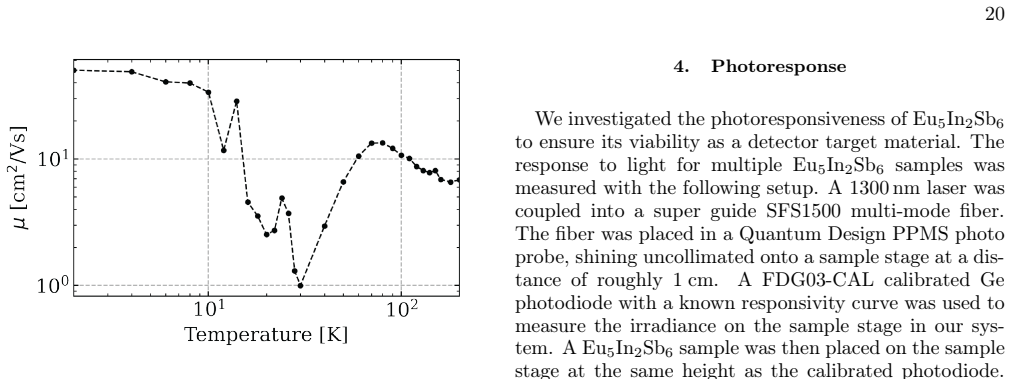
Knapen, T
S. Knapen, T. Lin, M. Pyle, and K. M. Zurek, De- tection of Light Dark Matter With Optical Phonons in Polar Materials, Phys. Lett. B 785, 386 (2018), arXiv:1712.06598 [hep-ph]
2018 arXiv
-
[16]
Griffin, S
S. Griffin, S. Knapen, T. Lin, and K. M. Zurek, Direc- tional Detection of Light Dark Matter with Polar Mate- rials, Phys. Rev. D98, 115034 (2018), arXiv:1807.10291 [hep-ph]
2018 arXiv
-
[17]
S. M. Griffin, Y. Hochberg, K. Inzani, N. Kurinsky, T. Lin, and T. Chin, Silicon carbide detectors for sub- GeV dark matter, Phys. Rev. D 103, 075002 (2021), arXiv:2008.08560 [hep-ph]
2021 arXiv
-
[18]
N. A. Kurinsky, T. C. Yu, Y. Hochberg, and B. Cabr- era, Diamond Detectors for Direct Detection of Sub- GeV Dark Matter, Phys. Rev. D 99, 123005 (2019), arXiv:1901.07569 [hep-ex]
2019 arXiv
-
[19]
M. C. Marshall, M. J. Turner, M. J. H. Ku, D. F. Phillips, and R. L. Walsworth, Directional detection of dark matter with diamond, Quantum Sci. Technol.6, 024011 (2021), arXiv:2009.01028 [physics.ins-det]
2021 arXiv
-
[20]
Hochberg, Y
Y. Hochberg, Y. Kahn, M. Lisanti, K. M. Zurek, A. G. Grushin, R. Ilan, S. M. Griffin, Z.-F. Liu, S. F. Weber, and J. B. Neaton, Detection of sub-MeV Dark Matter with Three-Dimensional Dirac Materials, Phys. Rev. D 15 97, 015004 (2018), arXiv:1708.08929 [hep-ph]
2018 arXiv
-
[21]
R. M. Geilhufe, F. Kahlhoefer, and M. W. Winkler, Dirac Materials for Sub-MeV Dark Matter Detection: New Targets and Improved Formalism, Phys. Rev. D 101, 055005 (2020), arXiv:1910.02091 [hep-ph]
2020 arXiv
-
[22]
Hochberg, Y
Y. Hochberg, Y. Zhao, and K. M. Zurek, Superconduct- ing Detectors for Superlight Dark Matter, Phys. Rev. Lett. 116, 011301 (2016), arXiv:1504.07237 [hep-ph]
2016 arXiv
-
[23]
Kim, S.-J
Y.-H. Kim, S.-J. Lee, and B. Yang, Superconducting detectors for rare event searches in experimental as- troparticle physics, Supercond. Sci. Technol.35, 063001 (2022), arXiv:2111.08875 [physics.ins-det]
2022
-
[24]
A. Das, N. Kurinsky, and R. K. Leane, Dark Matter Induced Power in Quantum Devices, Phys. Rev. Lett. 132, 121801 (2024), arXiv:2210.09313 [hep-ph]
2024 arXiv
-
[25]
Hochberg, I
Y. Hochberg, I. Charaev, S.-W. Nam, V. Verma, M. Colangelo, and K. K. Berggren, Detecting Sub-GeV Dark Matter with Superconducting Nanowires, Phys. Rev. Lett. 123, 151802 (2019), arXiv:1903.05101 [hep- ph]
2019 arXiv
-
[26]
Chileset al., New Constraints on Dark Photon Dark Matter with Superconducting Nanowire Detectors in an OpticalHaloscope,Phys.Rev.Lett
J. Chileset al., New Constraints on Dark Photon Dark Matter with Superconducting Nanowire Detectors in an OpticalHaloscope,Phys.Rev.Lett. 128,231802(2022), arXiv:2110.01582 [hep-ex]
2022 arXiv
-
[27]
M. D. Shaw, J. Bueno, P. Day, C. M. Bradford, and P. M. Echternach, Quantum capacitance detector: A pair-breaking radiation detector based on the single Cooper-pair box, Phys. Rev. B 79, 144511 (2009), arXiv:0902.4194 [cond-mat.mes-hall]
2009 arXiv
-
[28]
P. M. Echternach, B. J. Pepper, T. Reck, and C. M. Bradford, Single photon detection of 1.5 THz radiation with the quantum capacitance detector, Nat. Astron.2, 90 (2018)
2018
-
[29]
C. W. Fink, C. P. Salemi, B. A. Young, D. I. Schuster, and N. A. Kurinsky, The Superconducting Quasiparticle-Amplifying Transmon: A Qubit-Based Sensor for meV Scale Phonons and Single THz Photons, Phys. Rev. Appl. 22, 054009 (2024), arXiv:2310.01345 [physics.ins-det]
2024 arXiv
-
[30]
Hochberg, M
Y. Hochberg, M. Pyle, Y. Zhao, and K. M. Zurek, De- tecting Superlight Dark Matter with Fermi-Degenerate Materials, J. High Energy Phys. 08, 057 (2016), arXiv:1512.04533 [hep-ph]
2016 arXiv
-
[31]
Trickle, Z
T. Trickle, Z. Zhang, and K. M. Zurek, Detecting Light Dark Matter with Magnons, Phys. Rev. Lett. 124, 201801 (2020), arXiv:1905.13744 [hep-ph]
2020 arXiv
-
[32]
Coskuner, A
A. Coskuner, A. Mitridate, A. Olivares, and K. M. Zurek, Directional Dark Matter Detection in Anisotropic Dirac Materials, Phys. Rev. D 103, 016006 (2021), arXiv:1909.09170 [hep-ph]
2021 arXiv
-
[33]
C. Boyd, Y. Hochberg, Y. Kahn, E. D. Kramer, N. Kurinsky, B. V. Lehmann, and T. C. Yu, Direc- tional detection of dark matter with anisotropic re- sponse functions, Phys. Rev. D 108, 015015 (2023), arXiv:2212.04505 [hep-ph]
2023 arXiv
-
[34]
D. N. Spergel, Motion of the Earth and the detection of weakly interacting massive particles, Phys. Rev. D37, 1353 (1988)
1988
-
[35]
Gondolo, Recoil momentum spectrum in directional dark matter detectors, Phys
P. Gondolo, Recoil momentum spectrum in directional dark matter detectors, Phys. Rev. D66, 103513 (2002), arXiv:hep-ph/0209110
2002 arXiv
-
[36]
Ahlen et al., The case for a directional dark mat- ter detector and the status of current experimental ef- forts,Int.J.Mod.Phys.A 25,1(2010),arXiv:0911.0323 [astro-ph.CO]
S. Ahlen et al., The case for a directional dark mat- ter detector and the status of current experimental ef- forts,Int.J.Mod.Phys.A 25,1(2010),arXiv:0911.0323 [astro-ph.CO]
2010 arXiv
-
[37]
Anczarski et al., Two-Stage Cryogenic HEMT- Based Amplifier for Low-Temperature Detectors, J
J. Anczarski et al., Two-Stage Cryogenic HEMT- Based Amplifier for Low-Temperature Detectors, J. Low Temp. Phys. 214, 256 (2024), arXiv:2311.02229 [physics.ins-det]
2024 arXiv
-
[38]
Phipps, A
A. Phipps, A. Juillard, B. Sadoulet, B. Serfass, and Y. Jin, A HEMT-Based Cryogenic Charge Amplifier with sub-100 eVee Ionization Resolution for Massive Semiconductor Dark Matter Detectors, Nucl. Instrum. Meth. A940, 181 (2019), arXiv:1611.09712 [physics.ins- det]
2019 arXiv
-
[39]
Augier et al
C. Augier et al. (Ricochet), First demonstration of 30 eVee ionization energy resolution with Ricochet germa- nium cryogenic bolometers, Eur. Phys. J. C 84, 186 (2024), arXiv:2306.00166 [astro-ph.IM]
2024 arXiv
-
[40]
P. Rosa, Y. Xu, M. Rahn, J. Souza, S. Kushwaha, L. Veiga, A. Bombardi, S. Thomas, M. Janoschek, E. Bauer, et al., Colossal magnetoresistance in a non- symmorphic antiferromagnetic insulator, npj Quantum Mater. 5, 52 (2020), arXiv:2007.06556 [cond-mat.str-el]
2020 arXiv
-
[41]
Gopalakrishna, A
S. Gopalakrishna, A. de Gouvea, and W. Porod, Right-handed sneutrinos as nonthermal dark matter, J. Cosmol. Astropart. Phys.05 (2006), 005, arXiv:hep- ph/0602027
2006
-
[42]
L. J. Hall, K. Jedamzik, J. March-Russell, and S. M. West, Freeze-In Production of FIMP Dark Matter, J. High Energy Phys. 03, 080 (2010), arXiv:0911.1120 [hep-ph]
2010 arXiv
-
[43]
Bernal, M
N. Bernal, M. Heikinheimo, T. Tenkanen, K. Tuominen, and V. Vaskonen, The Dawn of FIMP Dark Matter: A Review of Models and Constraints, Int. J. Mod. Phys. A 32, 1730023 (2017), arXiv:1706.07442 [hep-ph]
2017 arXiv
-
[44]
Dvorkin, T
C. Dvorkin, T. Lin, and K. Schutz, Making dark matter out of light: freeze-in from plasma effects, Phys. Rev. D 99, 115009 (2019), [Erratum: Phys. Rev. D 105, 119901 (2022)], arXiv:1902.08623 [hep-ph]
2019 arXiv
-
[45]
Rogalski and J
A. Rogalski and J. Piotrowski, Intrinsic infrared detec- tors, Prog. Quantum Electron.12, 87 (1988)
1988
-
[47]
J. E. L. Hollis, S. C. Choo, and E. L. Heasell, Recombi- nation Centers in InSb, J. Appl. Phys.38, 1626 (1967)
1967
-
[48]
Chu and A
J. Chu and A. Sher, Impurities and Defects, inDevice Physics of Narrow Gap Semiconductors(Springer New York, New York, NY, 2010) pp. 5–124
2010
-
[49]
Abautret, J
J. Abautret, J. P. Perez, A. Evirgen, J. Rothman, A.Cordat,andP.Christol,Characterizationofmidwave infrared InSb avalanche photodiode, J. Appl. Phys.117, 244502 (2015)
2015
-
[50]
B. Xu, L. X. Zhao, P. Marsik, E. Sheveleva, F. Lyzwa, Y. M. Dai, G. F. Chen, X. G. Qiu, and C. Bernhard, Temperature-Driven Topological Phase Transition and Intermediate Dirac Semimetal Phase in ZrTe5, Phys. Rev. Lett.121, 187401 (2018), arXiv:1811.00772 [cond- mat.mtrl-sci]
2018 arXiv
-
[51]
Lawson, S
W. Lawson, S. Nielsen, E. Putley, and A. Young, Prepa- ration and properties of HgTe and mixed crystals of HgTe-CdTe, J. Phys. Chem. Solids9, 325 (1959)
1959
-
[52]
Rogalski, HgCdTe infrared detector material: his- tory, status and outlook, Rep
A. Rogalski, HgCdTe infrared detector material: his- tory, status and outlook, Rep. Prog. Phys. 68, 2267 (2005)
2005
-
[53]
Nemirovsky, D
Y. Nemirovsky, D. Rosenfeld, R. Adar, and A. Kornfeld, Tunneling and dark currents in HgCdTe photodiodes, J. 16 Vac. Sci. Technol. A7, 528 (1989)
1989
-
[54]
S. M. Kauzlarich, Zintl Phases: From Curiosities to Im- pactful Materials, Chem. Mater.35, 7355 (2023)
2023
-
[55]
Varnava, T
N. Varnava, T. Berry, T. M. McQueen, and D. Van- derbilt, Engineering magnetic topological insulators Eu5M2X6 in Zintl compounds, Phys. Rev. B 105, 235128 (2022), arXiv:2203.06212 [cond-mat.mtrl-sci]
2022 arXiv
-
[56]
M. M. Piva, M. C. Rahn, S. M. Thomas, B. L. Scott, P. G. Pagliuso, J. D. Thompson, L. M. Schoop, F. Ronning, and P. F. S. Rosa, Robust Narrow-Gap Semiconducting Behavior in Square-Net La 3Cd2As6, Chem. Mater.33, 4122 (2021), arXiv:2108.08006 [cond- mat.mtrl-sci]
2021 arXiv
-
[57]
C. S. Kengle, N. Schnitzer, E. A. Peterson, C. Guo, L. Zhang, M. S. Cook, J.-X. Zhu, S. M. Thomas, P. J. W. Moll, F. Ronning,et al., Putative excitonic in- sulating state in narrow-gap semiconductor La3Cd2As6 (2025), arXiv:2506.09235 [cond-mat.str-el]
2025 arXiv
-
[58]
M. M. Piva, L. Xiang, J. D. Thompson, S. L. Bud’ko, R. A. Ribeiro, P. C. Canfield, and P. F. S. Rosa, Ef- fects of external pressure on the narrow-gap semicon- ductor Ce3Cd2As6, Phys. Rev. B 105, 094443 (2022), arXiv:2203.10049 [cond-mat.str-el]
2022 arXiv
-
[59]
M. S. Cook, E. A. Peterson, C. Girod, A. Weiland, J.- X. Zhu, J. D. Thompson, S. M. Thomas, and P. F. S. Rosa, Structural transition and anisotropic magnetism in disorderedZintlphase Eu7Ga6Sb8, Phys. Rev.Mater. 7, 094601 (2023)
2023
-
[60]
Berry, V
T. Berry, V. J. Stewart, B. W. Y. Redemann, C. Ly- gouras, N. Varnava, D. Vanderbilt, and T. M. McQueen, A-type antiferromagnetic order in the Zintl-phase in- sulator EuZn2P2, Phys. Rev. B 106, 054420 (2022), arXiv:2203.12739 [cond-mat.str-el]
2022 arXiv
-
[61]
Krebber, M
S. Krebber, M. Kopp, C. Garg, K. Kummer, J. Sichelschmidt, S. Schulz, G. Poelchen, M. Mende, A. V. Virovets, K. Warawa, M. D. Thomson, A. V. Tarasov, D. Y. Usachov, D. V. Vyalikh, H. G. Roskos, J. Müller, C. Krellner, and K. Kliemt, Colossal mag- netoresistance in EuZn2P2 and ...
2023 arXiv
-
[62]
M. S. Cook, E. A. Peterson, C. S. Kengle, E. R. Kennedy, J. Sheeran, C. Girod, G. S. Freitas, S. M. Greer, P. Abbamonte, P. G. Pagliuso, J. D. Thompson, S. M. Thomas, and P. F. S. Rosa, Magnetic polaron formation in EuZn2P2 (2025), arXiv:2504.05494 [cond- mat.str-el]
2025 arXiv
-
[63]
Wang, S.-Q
J. Wang, S.-Q. Xia, X.-T. Tao, M. C. Schäfer, and S. Bobev, New ternary phosphides and arsenides. Syntheses, crystal structures, physical properties of Eu2ZnP2, Eu 2Zn2P3 and Eu2Cd2As3, J. Solid State Chem. 205, 116 (2013)
2013
-
[64]
P. F. S. Rosa and Z. Fisk, Flux methods for growth of intermetallic single crystals, inCrystal Growth of Inter- metallics, edited by P. Gille and Y. Grin (De Gruyter, Berlin, Boston, 2019) pp. 49–60
2019
-
[65]
A. L. Efros and B. I. Shklovskii, Coulomb gap and low temperature conductivity of disordered systems, Jour- nal of Physics C: Solid State Physics8, L49 (1975)
1975
-
[66]
Huang, Y
Y. Huang, Y. He, B. Skinner, and B. I. Shklovskii, Con- ductivity of two-dimensional narrow gap semiconduc- tors subjected to strong Coulomb disorder, Phys. Rev. B 105, 054206 (2022)
2022
-
[67]
B. I. Shklovskii, Half-century of Efros–Shklovskii Coulomb gap: Romance with Coulomb interac- tion and disorder, Low Temperature Physics 50, 1101 (2024), https://pubs.aip.org/aip/ltp/article- pdf/50/12/1101/20288715/1101_1_10.0034343.pdf
2024
-
[68]
B. I. Shklovskii and A. L. Efros,Electronic Properties of Doped Semiconductors, 1st ed., Springer Series in Solid- State Sciences (Springer Berlin, Heidelberg, 2012)
2012
-
[69]
M. V. A. Crivillero, S. Rößler, P. F. S. Rosa, J. Müller, U.K.Rößler,andS.Wirth,Surfaceandelectronicstruc- ture at atomic length scales of the nonsymmorphic an- tiferromagnet Eu5In2Sb6, Phys. Rev. B 106, 035124 (2022), arXiv:2204.07001 [cond-mat.mes-hall]
2022 arXiv
-
[70]
Juillard, J
A. Juillard, J. Billard, D. Chaize, J.-B. Filippini, D. Misiak, L. Vagneron, A. Cavanna, Q. Dong, Y. Jin, C. Ulysse,et al., Low-noise HEMTs for Coherent Elastic Neutrino Scattering and Low-Mass Dark Matter Cryo- genic Semiconductor Detectors, J. Low Temp. Phys. 199, 798 (2019)...
2019 arXiv
-
[71]
Gatti and P
E. Gatti and P. F. Manfredi, Processing the Signals From Solid State Detectors in Elementary Particle Physics, Riv. Nuovo Cim.9N1, 1 (1986)
1986
-
[72]
S. R. Golwala,Exclusion limits on the WIMP nucleon elastic scattering cross-section from the Cryogenic Dark Matter Search, Ph.D. thesis, University of California, Berkeley (2000)
2000
-
[73]
S. L. Watkins, SPLENDAQ: A Detector-Agnostic Data Acquisition System for Small-Scale Physics Ex- periments, J. Low Temp. Phys. 214, 133 (2024), arXiv:2310.01279 [physics.ins-det]
2024 arXiv
-
[74]
Liquid Instruments, Moku Hardware Platforms (2025), https://www.liquidinstruments.com/
2025
-
[75]
Brock, J
B. Brock, J. Li, S. Kanhirathingal, B. Thyagarajan, W. F. Braasch, M. Blencowe, and A. Rimberg, Non- linear Charge- and Flux-Tunable Cavity Derived From an Embedded Cooper-Pair Transistor, Phys. Rev. Appl. 15, 044009 (2021), arXiv:2011.06298 [cond-mat.mes- hall]
2021 arXiv
-
[76]
Y.KahnandT.Lin,Searchesforlightdarkmatterusing condensed matter systems, Rep. Prog. Phys.85, 066901 (2022), arXiv:2108.03239 [hep-ph]
2022 arXiv
-
[77]
Knapen, J
S. Knapen, J. Kozaczuk, and T. Lin, Dark matter- electron scattering in dielectrics, Phys. Rev. D 104, 015031 (2021), arXiv:2101.08275 [hep-ph]
2021 arXiv
-
[78]
P. N. Bhattiprolu, R. McGehee, E. Petrosky, and A. Pierce, Sub-MeV dark sink dark matter, Phys. Rev. D 111, 035027 (2025), arXiv:2408.07744 [hep-ph]
2025 arXiv
-
[79]
Essig, T
R. Essig, T. Volansky, and T.-T. Yu, New Constraints and Prospects for sub-GeV Dark Matter Scattering off Electrons in Xenon, Phys. Rev. D96, 043017 (2017), arXiv:1703.00910 [hep-ph]
2017 arXiv
-
[80]
Arnaud et al
Q. Arnaud et al. (EDELWEISS), First germanium- based constraints on sub-MeV Dark Matter with the EDELWEISS experiment, Phys. Rev. Lett.125, 141301 (2020), arXiv:2003.01046 [astro-ph.GA]
2020 arXiv
-
[81]
Aguilar-Arevalo et al
A. Aguilar-Arevalo et al. (DAMIC), Constraints on Light Dark Matter Particles Interacting with Elec- trons from DAMIC at SNOLAB, Phys. Rev. Lett.123, 181802 (2019), arXiv:1907.12628 [astro-ph.CO]
2019 arXiv
-
[82]
Adariet al.(SENSEI), First Direct-Detection Results on Sub-GeV Dark Matter Using the SENSEI Detec- tor at SNOLAB, Phys
P. Adariet al.(SENSEI), First Direct-Detection Results on Sub-GeV Dark Matter Using the SENSEI Detec- tor at SNOLAB, Phys. Rev. Lett.134, 011804 (2025), arXiv:2312.13342 [astro-ph.CO]. 17
2025 arXiv
-
[83]
M. F. Albakryet al.(SuperCDMS), Light dark matter constraints from SuperCDMS HVeV detectors operated underground with an anticoincidence event selection, Phys. Rev. D 111, 012006 (2025), arXiv:2407.08085 [hep-ex]
2025 arXiv
-
[84]
Aggarwal et al
K. Aggarwal et al. (DAMIC-M), Probing Benchmark Models of Hidden-Sector Dark Matter with DAMIC-M (2025), arXiv:2503.14617 [hep-ex]
2025 arXiv
-
[85]
Davidson, S
S. Davidson, S. Hannestad, and G. Raffelt, Updated bounds on millicharged particles, J. High Energy Phys. 05, 003 (2000), arXiv:hep-ph/0001179
2000 arXiv
-
[86]
J. L. Feng, M. Kaplinghat, and H.-B. Yu, Halo Shape and Relic Density Exclusions of Sommerfeld-Enhanced Dark Matter Explanations of Cosmic Ray Excesses, Phys. Rev. Lett. 104, 151301 (2010), arXiv:0911.0422 [hep-ph]
2010 arXiv
-
[87]
H.VogelandJ.Redondo,DarkRadiationconstraintson minicharged particles in models with a hidden photon, JCAP 02, 029, arXiv:1311.2600 [hep-ph]
-
[88]
Essig, M
R. Essig, M. Fernandez-Serra, J. Mardon, A. Soto, T. Volansky, and T.-T. Yu, Direct Detection of sub-GeV Dark Matter with Semiconductor Targets, J. High En- ergy Phys. 05, 046 (2016), arXiv:1509.01598 [hep-ph]
2016 arXiv
-
[89]
H. An, M. Pospelov, J. Pradler, and A. Ritz, New limits on dark photons from solar emission and keV scale dark matter, Phys. Rev. D 102, 115022 (2020), arXiv:2006.13929 [hep-ph]
2020 arXiv
-
[90]
Blaha, K
P. Blaha, K. Schwarz, P. Sorantin, and S. Trickey, Full- potential, linearized augmented plane wave programs for crystalline systems, Comput. Phys. Commun. 59, 399 (1990)
1990
-
[91]
J. P. Perdew, K. Burke, and M. Ernzerhof, Generalized Gradient Approximation Made Simple, Phys. Rev. Lett. 77, 3865 (1996)
1996
-
[92]
H. An, M. Pospelov, J. Pradler, and A. Ritz, Direct Detection Constraints on Dark Photon Dark Matter, Phys. Lett. B 747, 331 (2015), arXiv:1412.8378 [hep- ph]
2015 arXiv
-
[93]
I. M. Bloch, R. Essig, K. Tobioka, T. Volansky, and T.-T. Yu, Searching for Dark Absorption with Direct Detection Experiments, J. High Energy Phys.06, 087 (2017), arXiv:1608.02123 [hep-ph]
2017 arXiv
-
[94]
A. E. Nelson and J. Scholtz, Dark Light, Dark Matter and the Misalignment Mechanism, Phys. Rev. D 84, 103501 (2011), arXiv:1105.2812 [hep-ph]
2011 arXiv
-
[95]
Fabbrichesi, E
M. Fabbrichesi, E. Gabrielli, and G. Lanfranchi,The Physics of the Dark Photon(SpringerBriefs in Physics,
-
[96]
P. N. Bhattiprolu, R. McGehee, and A. Pierce, Dark sink enhances the direct detection of freeze- in dark matter, Phys. Rev. D 110, L031702 (2024), arXiv:2312.14152 [hep-ph]
2024 arXiv
-
[97]
P. Du, D. Egana-Ugrinovic, R. Essig, and M. Shola- purkar, Sources of Low-Energy Events in Low- Threshold Dark-Matter and Neutrino Detectors, Phys. Rev. X 12, 011009 (2022), arXiv:2011.13939 [hep-ph]
2022 arXiv
-
[98]
I. M. Bloch et al. (SENSEI), SENSEI at SNO- LAB: Single-Electron Event Rate and Implications for Dark Matter, Phys. Rev. Lett. 134, 161002 (2025), arXiv:2410.18716 [astro-ph.CO]
2025
-
[99]
Essig, Y
R. Essig, Y. Hochberg, Y. Shoji, A. Singal, and G. Suczewski, Low-energy Compton scattering in materials, Phys. Rev. D 109, 116011 (2024), arXiv:2310.02316 [hep-ph]
2024 arXiv
-
[100]
Ramanathan and N
K. Ramanathan and N. Kurinsky, Ionization yield in silicon for eV-scale electron-recoil processes, Phys. Rev. D 102, 063026 (2020), arXiv:2004.10709 [astro-ph.IM]
2020 arXiv
-
[101]
Mancuso, A
M. Mancuso, A. Bento, N. Ferreiro Iachellini, D. Hauff, F. Petricca, F. Pröbst, J. Rothe, and R. Strauss, A method to define the energy threshold depending on noise level for rare event searches, Nucl. Instrum. Meth. A 940, 492 (2019), arXiv:1711.11459 [physics.ins-det]
2019 arXiv
-
[102]
Prihtiadiet al.(COSINE-100), Measurement of the cosmic muon annual and diurnal flux variation with the COSINE-100 detector, J
H. Prihtiadiet al.(COSINE-100), Measurement of the cosmic muon annual and diurnal flux variation with the COSINE-100 detector, J. Cosmol. Astropart. Phys.02 (2021), 013, arXiv:2005.13672 [physics.ins-det]
2021 arXiv
-
[103]
Ambrosio et al
M. Ambrosio et al. (MACRO), The Search for the sidereal and solar diurnal modulations in the total MACRO muon data set, Phys. Rev. D 67, 042002 (2003), arXiv:astro-ph/0211119
2003 arXiv
-
[104]
Cowan,Statistical Data Analysis(Clarendon Press, 1998)
G. Cowan,Statistical Data Analysis(Clarendon Press, 1998)
1998
-
[105]
Subbarao, S
U. Subbarao, S. Sarkar, B. Joseph, and S. C. Pe- ter, Magnetic and X-ray absorption studies on the RE5X2Sb6 (RE=Eu, Yb; X=Al, Ga, In) compounds, J. Alloys Compd.658, 395 (2016)
2016
-
[106]
R. Egerton, Electron Energy-Loss Spectroscopy in the Electron Microscope, 3rd ed., The language of science Electron energy-loss spectroscopy in the electron micro- scope (Springer US, New York, NY, 2011)
2011
-
[107]
F. Roth, A. König, J. Fink, B. Büchner, and M.Knupfer,Electronenergy-lossspectroscopy: Aversa- tile tool for the investigations of plasmonic excitations, J. Electron Spectrosc. Relat. Phenom.195, 85 (2014), arXiv:1405.3369 [cond-mat.mtrl-sci]
2014 arXiv
-
[108]
Hochberg, Y
Y. Hochberg, Y. Kahn, N. Kurinsky, B. V. Lehmann, T. C. Yu, and K. K. Berggren, Determining Dark- Matter–Electron Scattering Rates from the Dielec- tric Function, Phys. Rev. Lett. 127, 151802 (2021), arXiv:2101.08263 [hep-ph]
2021 arXiv
-
[109]
Schuster, J
R. Schuster, J. Trinckauf, C. Habenicht, M. Knupfer, and B. Büchner, Anisotropic Particle-Hole Excitations in Black Phosphorus, Phys. Rev. Lett. 115, 026404 (2015), arXiv:1503.02549 [cond-mat.mes-hall]
2015 arXiv
-
[110]
L. I. Roest, S. E. van Heijst, L. Maduro, J. Rojo, and S. Conesa-Boj, Charting the low-loss region in Elec- tron Energy Loss Spectroscopy with machine learning, Ultramicroscopy 222, 113202 (2021), arXiv:2009.05050 [cond-mat.mtrl-sci]
2021 arXiv
-
[111]
Ibach, Electron Spectroscopy for Surface Analysis, Topics in Current Physics, 0342-6793 (Springer Berlin Heidelberg, Berlin, Heidelberg, 1977)
H. Ibach, Electron Spectroscopy for Surface Analysis, Topics in Current Physics, 0342-6793 (Springer Berlin Heidelberg, Berlin, Heidelberg, 1977)
1977
-
[112]
Ibach and D
H. Ibach and D. L. Mills, Electron energy loss spec- troscopy and surface vibrations(Academic Press, New York, 1982)
1982
-
[113]
Ibach, M
H. Ibach, M. Balden, and S. Lehwald, Recent advances in electron energy loss spectroscopy of surface vibra- tions, J. Chem. Soc., Faraday Trans.92, 4771 (1996)
1996
-
[114]
T. D. Veal, I. Mahboob, and C. F. McConville, Nega- tive Band Gaps in DiluteInNxSb1−x Alloys, Phys. Rev. Lett. 92, 136801 (2004)
2004
-
[115]
Pfau and K
A. Pfau and K. Schierbaum, The electronic structure of stoichiometric and reduced CeO2 surfaces: an XPS, UPS and HREELS study, Surf. Sci.321, 71 (1994)
1994
-
[116]
Bronner, S
C. Bronner, S. Stremlau, M. Gille, F. Brauße, A. Haase, S. Hecht, and P. Tegeder, Aligning the Band Gap of Graphene Nanoribbons by Monomer Doping, Angew. Chem. Int. Ed.52, 4422 (2013). 18
2013
-
[117]
S. Vig, A. Kogar, M. Mitrano, A. A. Husain, V. Mishra, M. S. Rak, L. Venema, P. D. Johnson, G. D. Gu, E. Fradkin, M. R. Norman, and P. Abbamonte, Mea- surement of the dynamic charge response of materials using low-energy, momentum-resolved electron energy- loss spectroscopy (M...
2017 arXiv
-
[118]
D. L. Mills, The scattering of low energy electrons by electric field fluctuations near crystal surfaces, Surf. Sci. 48, 59 (1975)
1975
-
[119]
A. A. Lucas and J. P. Vigneron, Theory of electron en- ergy loss spectroscopy from surfaces of anisotropic ma- terials, Solid State Commun.49, 327 (1984)
1984
-
[120]
Y. Chen, J. C. Barnard, R. E. Palmer, M. O. Watanabe, and T. Sasaki, Indirect Band Gap of Light-Emitting BC2N, Phys. Rev. Lett.83, 2406 (1999)
1999
-
[121]
C.C.Homes, M.Reedyk, D.A.Cradles,andT.Timusk, Technique for measuring the reflectance of irregu- lar, submillimeter-sized samples, Appl. Opt. 32, 2976 (1993)
1993
-
[122]
Aguilar-Arevaloet al.(DAMIC), Characterization of thebackgroundspectruminDAMICatSNOLAB,Phys
A. Aguilar-Arevaloet al.(DAMIC), Characterization of thebackgroundspectruminDAMICatSNOLAB,Phys. Rev. D 105, 062003 (2022), arXiv:2110.13133 [hep-ex]
2022 arXiv
-
[123]
E. W. Hoppe, C. E. Aalseth, O. T. Farmer, T. W. Hoss- bach, M. Liezers, H. S. Miley, N. R. Overman, and J. H. Reeves, Reduction of radioactive backgrounds in elec- troformed copper for ultra-sensitive radiation detectors, Nucl. Instrum. Meth. A764, 116 (2014)
2014
-
[124]
Abgrall et al
N. Abgrall et al. (Majorana), The Majorana Demonstrator radioassay program, Nucl. Instrum. Meth. A 828, 22 (2016), arXiv:1601.03779 [physics.ins- det]
2016 arXiv
-
[125]
Allisonet al., Recent developments inGeant4, Nucl
J. Allisonet al., Recent developments inGeant4, Nucl. Instrum. Meth. A835, 186 (2016)
2016
-
[126]
Pfeiffer, A
L. Pfeiffer, A. P. Mills, E. A. Chandross, and T. Kovacs, Beta spectrum of115In, Phys. Rev. C19, 1035 (1979)
1979
-
[127]
C. M. Cattadori, M. De Deo, M. Laubenstein, L. Pan- dola, and V. I. Tretyak, Observation of beta decay of In-115 to the first excited level of Sn-115, Nucl. Phys. A 748, 333 (2005), arXiv:nucl-ex/0407016
2005 arXiv
-
[128]
J. C. Souza, S. M. Thomas, E. D. Bauer, J. D. Thomp- son, F. Ronning, P. G. Pagliuso, and P. F. S. Rosa, Microscopic probe of magnetic polarons in antiferro- magnetic Eu5In2Sb6, Phys. Rev. B105, 035135 (2022), arXiv:2201.04464 [cond-mat.str-el]
2022 arXiv
-
[129]
Blaha, K
P. Blaha, K. Schwarz, G. Madsen, D. Kvasnicka, J. Luitz, R. Laskowsk, F. Tran, L. Marks, and L. Marks, WIEN2k: An Augmented Plane Wave Plus Local Orbitals Program for Calculating Crystal Proper- ties (Techn. Universitat, 2019)
2019
-
[130]
Blaha, K
P. Blaha, K. Schwarz, F. Tran, R. Laskowski, G. K. Madsen, and L. D. Marks, WIEN2k: An APW+lo pro- gram for calculating the properties of solids, J. Chem. Phys. 152, 074101 (2020)
2020
-
[131]
R. M. Dreizler and E. K. Gross,Density functional the- ory: an approach to the quantum many-body problem (Springer Science & Business Media, 2012)
2012
-
[132]
Himmetoglu, A
B. Himmetoglu, A. Floris, S. de Gironcoli, and M. Co- coccioni, Hubbard-corrected DFT energy functionals: The LDA+U description of correlated systems, Int. J. QuantumChem. 114,14(2014),arXiv:1309.3355[cond- mat.mtrl-sci]
2014 arXiv
-
[133]
Garrick, A
R. Garrick, A. Natan, T. Gould, and L. Kronik, Exact GeneralizedKohn-ShamTheoryforHybridFunctionals, Phys. Rev. X10, 021040 (2020)
2020
-
[134]
Pokharel, C
K. Pokharel, C. Lane, J. W. Furness, R. Zhang, J. Ning, B. Barbiellini, R. S. Markiewicz, Y. Zhang, A. Ban- sil, and J. Sun, Sensitivity of the electronic and mag- netic structures of cuprate superconductors to density functional approximations, npj Comput. Mater. 8, 31 (2022)...
2022
-
[135]
Onida, L
G. Onida, L. Reining, and A. Rubio, Electronic exci- tations: density-functional versus many-body Green’s- function approaches, Rev. Mod. Phys.74, 601 (2002)
2002
-
[136]
Di Valentin, S
C. Di Valentin, S. Botti, and M. Cococcioni,First prin- ciples approaches to spectroscopic properties of complex materials, Vol. 347 (Springer, 2014)
2014
-
[137]
Kuneš, R
J. Kuneš, R. Arita, P. Wissgott, A. Toschi, H. Ikeda, and K. Held, Wien2wannier: From linearized aug- mented plane waves to maximally localized Wannier functions, Comput. Phys. Commun.181, 1888 (2010), arXiv:1004.3934 [cond-mat.mtrl-sci]
2010 arXiv
-
[138]
Dressel and G
M. Dressel and G. Grüner,Electrodynamics of solids: optical properties of electrons in matter (Cambridge University Press, 2002)
2002
-
[139]
Zhu,Bogoliubov-de Gennes method and its appli- cations, Vol
J.-X. Zhu,Bogoliubov-de Gennes method and its appli- cations, Vol. 924 (Springer, 2016)
2016
-
[140]
I. M. Ruzin and B. I. Shklovskii, Theory of hopping con- ductivity due to long-wavelength excitation, Sov. Phys. Semicond. 23, 1164 (1989)
1989
-
[141]
C. Lane, R. Zhang, B. Barbiellini, R. S. Markiewicz, A. Bansil, J. Sun, and J.-X. Zhu, Competing incom- mensurate spin fluctuations and magnetic excitations in infinite-layer nickelate superconductors, Commun. Phys. 6, 90 (2023), arXiv:2208.08375 [cond-mat.str-el]
2023 arXiv
-
[142]
Mayetet al., A review of the discovery reach of direc- tional Dark Matter detection, Phys
F. Mayetet al., A review of the discovery reach of direc- tional Dark Matter detection, Phys. Rep.627, 1 (2016), arXiv:1602.03781 [astro-ph.CO]
2016 arXiv
-
[143]
Blanco, Y
C. Blanco, Y. Kahn, B. Lillard, and S. D. McDer- mott, Dark Matter Daily Modulation With Anisotropic Organic Crystals, Phys. Rev. D 104, 036011 (2021), arXiv:2103.08601 [hep-ph]
2021 arXiv
-
[144]
J. I. Collar and F. T. Avignone III, Diurnal modulation effects in cold dark matter experiments, Phys. Lett. B 275, 181 (1992)
1992
-
[145]
J. I. Collar and F. T. Avignone III, The Effect of elastic scatteringintheEarthoncolddarkmatterexperiments, Phys. Rev. D47, 5238 (1993)
1993
-
[146]
Hasenbalg, D
F. Hasenbalg, D. Abriola, F. T. Avignone III, J. I. Collar, D. E. Di Gregorio, A. O. Gattone, H. Huck, D. Tomasi, and I. Urteaga, Cold dark matter identifi- cation: Diurnal modulation revisited, Phys. Rev. D55, 7350 (1997), arXiv:astro-ph/9702165
1997 arXiv
-
[147]
Kouvaris and I
C. Kouvaris and I. M. Shoemaker, Daily modulation as a smoking gun of dark matter with significant stopping rate, Phys. Rev. D90, 095011 (2014), arXiv:1405.1729 [hep-ph]
2014 arXiv
-
[148]
Kouvaris and N
C. Kouvaris and N. G. Nielsen, Daily modulation and gravitational focusing in direct dark matter search experiments, Phys. Rev. D 92, 075016 (2015), arXiv:1505.02615 [hep-ph]
2015 arXiv
-
[149]
Emken, R
T. Emken, R. Essig, C. Kouvaris, and M. Sholapurkar, Direct Detection of Strongly Interacting Sub-GeV Dark Matter via Electron Recoils, J. Cosmol. Astropart. Phys. 09 (2019), 070, arXiv:1905.06348 [hep-ph]
2019 arXiv
-
[150]
Ávaloset al., Skipper CCDs for the search of a daily modulation of Dark Matter signal in the DMSQUARE experiment, J
N. Ávaloset al., Skipper CCDs for the search of a daily modulation of Dark Matter signal in the DMSQUARE experiment, J. Phys. Conf. Ser.2156, 012074 (2021). 19
2021
-
[151]
Arnquistet al
I. Arnquistet al. (DAMIC-M), Search for Daily Mod- ulation of MeV Dark Matter Signals with DAMIC-M, Phys. Rev. Lett.132, 101006 (2024), arXiv:2307.07251 [hep-ex]
2024 arXiv
-
[152]
Bertou, A
X. Bertou, A. Desai, T. Emken, R. Essig, T. Volansky, and T.-T. Yu, Earth-Scattering Induced Modulation in Low-Threshold Dark Matter Experiments (2025), arXiv:2507.00344 [hep-ph]. Appendix A: Synthesis and Characterization of Eu 5In2Sb6
2025
-
[154]
Synthesis and Growth Optimization To reveal the intrinsic properties of semiconductors and certify their readiness for applications, the synthe- sis of high-quality single crystals is indispensable. For instance, the precise synthesis of single-crystalline sili- con achieved d...
2016
-
[155]
Bandgap Extraction from Electrical Resistance Measurements At temperatures of ∼20 K and above, the electrical resistance of our Eu 5In2Sb6 samples is dominated by thermal excitation of electrons across the bandgap, and, therefore, a reliable inference of a thermally activated ...
-
[156]
AC Hall Measurements To characterize the narrow-gap transport properties of Eu5In2Sb6, we measured the temperature dependence of the carrier mobility and concentration using the AC Hall effect. This method was chosen over the traditional DC Hall effect as the offset voltage fr...
-
[157]
The response to light for multiple Eu 5In2Sb6 samples was measured with the following setup
Photoresponse We investigated the photoresponsiveness of Eu5In2Sb6 to ensure its viability as a detector target material. The response to light for multiple Eu 5In2Sb6 samples was measured with the following setup. A1300 nmlaser was coupled into a super guide SFS1500 multi-mod...
-
[158]
Electron Energy Loss Spectroscopy The interaction of dark matter with solid-state tar- gets is hypothesized to occur via conventional particle scattering, which has a rich history in condensed mat- ter physics. In the simplest case in which dark mat- ter interactions with elec...
-
[159]
F ourier T ransform Infrared Spectroscopy Optical conductivity measurements are a complemen- tary probe of the electronic structure and can there- fore help elucidate the results found from the M-EELS measurement. We performed Fourier transform infrared (FTIR) spectroscopy on ...
-
[160]
Natural elements like uranium and tho- rium are common sources of radioactivity in most mate- rials [123]
Radiological Impurities Radiological impurities are a significant concern of experiments searching for dark matter and other rare events [122]. Natural elements like uranium and tho- rium are common sources of radioactivity in most mate- rials [123]. These radioactive backgrou...
1949
-
[161]
scissor correction
Band Structure To obtain the electronic band structure of Eu5In2Sb6, DFT calculations were performed using the full po- tential linearized augmented plane-wave+local orbitals (L/APW+lo) method [90, 129] as implemented in the WIEN2k code [130]. Exchange-correlation effects were...
-
[162]
51YY/6IeqRIXZ36xK9Njbkeg4Q4=
Response F unctions To facilitate the evaluation of the response functions over a dense k-point grid in the Brillouin zone, we employed a real-space tight-binding model Hamiltonian (obtained via the Wien2Wannier interface [137]) to in- terpolate the ab initio electronic band s...
-
[2020]
arXiv:2005.01515 [hep-ph]
2005 arXiv
Reviewed August 6, 2026 · model on record in the stance chip above.
Discussion (0). Sign in to comment.