Pith. sign in

REVIEW 3 major objections 2 minor 174 references

Constrained integrability and anyonic chains

T0 review · 3 major / 2 minor · reviewed 2026-07-12 · grok-4.5

Pith's one-line read A modified boost-operator method finds new integrable anyonic spin chains from fusion categories, including spin-3/2 su(2)_k models and several product and Tambara–Yamagami families.

desk verdict Package still has the wrong full text (black-hole QNMs instead of anyonic chains), so the new Temperley-Lieb criterion and boost-operator models cannot be checked. read the letter →

arxiv 2605.28946 v2 pith:2GFT4IZE submitted 2026-05-27 hep-th cond-mat.stat-mechcond-mat.str-elmath-phmath.MPnlin.SI

classification hep-thcond-mat.stat-mechcond-mat.str-elmath-phmath.MPnlin.SI
keywords Yang-BaxterintegrabilityanyonicchainsfusioncategoriesTemperley-Liebalgebrasboostoperatorsu(2)_kTambara-YamagamiHaagerup-Izumi
verification ladder T0 review T1 audit T2 compute T3 formal

The pith

A machine-rendered reading of the paper's core claim, the machinery that carries it, and where it could break.

The reading

The paper studies Yang–Baxter integrability for spin chains whose Hilbert spaces are constrained, with the main focus on anyonic chains whose local constraints come from fusion rules of fusion categories. It reviews how Temperley–Lieb algebras appear in this setting and states a new classification of which anyonic chains admit them. Building on known integrable examples, the authors extend the catalogue to fusion categories of rank up to 7. With a modified boost-operator formalism they construct several previously unreported integrable models—spin-3/2 chains for su(2)_k, chains based on Tambara–Yamagami categories TY(Z_n), and product categories Fib×Fib and Fib×Ising—and discuss basic properties of these models. They also review recent work on Haagerup–Izumi HI(Z_3) chains and give preliminary numerics for an HI(Z_5) model. The practical claim is that constrained anyonic systems form a systematic source of new integrable Hamiltonians once the boost-operator machinery is adapted to the fusion-constrained Hilbert space.

What carries the argument

A modified boost-operator formalism adapted to Hilbert spaces with fusion-rule (or Rydberg-type) constraints; it is used to generate candidate conserved charges and identify integrable anyonic Hamiltonians, with Temperley–Lieb algebra emergence serving as a structural diagnostic for a subclass of these chains.

What would settle it

For any of the claimed new models (e.g. a spin-3/2 su(2)_k or Fib×Fib chain), an explicit check that the candidate R-matrix fails the Yang–Baxter equation, or that the boost-generated charges do not commute with the Hamiltonian or among themselves, would falsify the integrability claim for that family.

Watch

Extended reading notes

Core claim

Using a modification of the boost-operator formalism on fusion-category constrained Hilbert spaces, the authors obtain several new Yang–Baxter integrable anyonic chains (spin-3/2 su(2)_k models, TY(Z_n) chains, and the product categories Fib×Fib and Fib×Ising), together with a new result on which anyonic chains realize Temperley–Lieb algebras, and they extend the known catalogue of integrable anyonic chains up to rank 7.

Load-bearing premise

That the modified boost-operator procedure on fusion-constrained spaces is enough to establish full Yang–Baxter integrability, rather than only producing candidate charges or partial algebraic structure.

Editorial extensions

If this is right

  • Constrained anyonic chains become a systematic generator of new integrable Hamiltonians once the boost method is adapted to fusion rules.
  • Temperley–Lieb structure can be predicted a priori for certain fusion categories rather than discovered case by case.
  • Spin-3/2 su(2)_k, TY(Z_n), Fib×Fib and Fib×Ising chains join the list of solvable models available for exact spectra and correlation functions.
  • Haagerup–Izumi HI(Z_5) chains are now open to the same numerical and algebraic pipeline already applied to HI(Z_3).

Reading between the lines

Editorial extensions of the paper, not claims the author makes directly.

  • If the modified boost method is fully reliable, it should apply equally to other constrained platforms (e.g. Rydberg-blockade arrays engineered to mimic fusion rules), not only abstract anyonic chains.
  • The rank-7 catalogue suggests a natural next step: a complete classification of integrable anyonic chains for all fusion categories of small rank, rather than isolated examples.
  • Failure of the boost method on a given category would still leave open whether integrability exists by another construction, so negative results would mainly limit this particular search tool.
Share X Bluesky LinkedIn Reddit HN

Editorial analysis

A structured set of objections, weighed in public.

Desk editor's note, referee report, and a circularity audit.

Referee Report

3 major / 2 minor

Summary. The abstract of arXiv:2605.28946 claims a review of Yang–Baxter integrability for constrained spin chains (especially anyonic chains from fusion categories), a new criterion for when Temperley–Lieb algebras appear, an extension of known integrable anyonic chains to fusion categories up to rank 7, and several new integrable models obtained via a modified boost-operator formalism (spin-3/2 su(2)_k, TY(Z_n), Fib×Fib, Fib×Ising), plus a review of HI(Z_3) and preliminary numerics for HI(Z_5). The full manuscript text supplied in the review package is not this paper: it is an unrelated gr-qc manuscript on purely imaginary quasinormal modes of linear-mass Vaidya / Schwarzschild–Rindler black holes (arXiv:2605.28951). Consequently no derivations, R-matrices, transfer matrices, boost-operator equations, spectra, or numerics supporting the anyonic-chain claims could be inspected.

Significance. If the abstract’s claims hold—especially a systematic modified boost-operator construction that yields genuine Yang–Baxter integrability on fusion-constrained Hilbert spaces, a clean Temperley–Lieb criterion, and new integrable models for su(2)_k spin-3/2, Tambara–Yamagami, and product Fibonacci/Ising categories—the work would be a useful consolidation and extension of constrained integrability in anyonic chains, with potential interest for topological phases and constrained quantum many-body systems. That significance cannot be assessed from the supplied materials, because the load-bearing technical content is absent.

major comments (3)
  1. The review package does not contain the manuscript of arXiv:2605.28946. The FULL MANUSCRIPT TEXT block is the unrelated black-hole QNM paper arXiv:2605.28951. Without the methods, Hamiltonians, R-matrices, transfer-matrix constructions, or boost-operator equations of the anyonic-chains paper, none of the central claims (new integrable chains; Temperley–Lieb criterion; extension to rank 7) can be verified. This is a complete block on scientific assessment.
  2. Abstract claim that a “modification of the boost operator formalism” establishes new integrable anyonic chains is load-bearing. On fusion-constrained Hilbert spaces, boost-generated charges alone need not imply full Yang–Baxter integrability (as opposed to candidate conserved charges or partial algebraic structure). The missing methods section is required to check whether the authors supply explicit R-matrices, spectral-parameter-dependent transfer matrices, or equivalent YB checks for the listed models (spin-3/2 su(2)_k, TY(Z_n), Fib×Fib, Fib×Ising).
  3. The claimed “new result on which types of anyonic chains exhibit” Temperley–Lieb algebras cannot be evaluated: no statement of the criterion, no proof sketch, and no counter-examples or classification table appear in the supplied text. This is a primary advertised contribution and must be present for review.
minor comments (2)
  1. Paper ID / title / abstract in the cacheable header correctly identify arXiv:2605.28946 (hep-th, anyonic chains), but the body text is arXiv:2605.28951 (gr-qc). The package should be corrected before any scientific referee report can be completed.
  2. Once the correct manuscript is supplied, standard checks will include: explicit local Hamiltonians for each new model; verification that constraints are preserved by the dynamics; comparison with known integrable anyonic chains; and clarity of the HI(Z_5) numerics (what is measured, system sizes, finite-size scaling).

Circularity Check

0 steps flagged · score 0.0 of 10

No significant circularity: PI-mode existence is independently derived (Heun quantization + hyperboloidal spectrum) and cross-checked in the time domain, not forced by definition or self-citation.

full rationale

The manuscript’s central claim—that linear-mass Vaidya / Schwarzschild–Rindler backgrounds support a family of purely imaginary (Rindler) QNMs in addition to light-ring modes—is obtained by three independent routes that do not reduce to one another by construction. (1) The radial master equation is mapped exactly onto a Heun equation; connection formulae from external CFT/gauge-theory work supply a quantization condition that is then expanded in the mass-evolution parameter, yielding explicit PI frequencies (e.g. ω ≈ −i(n+1)|μ′| at leading order). (2) The same spectrum is recovered numerically as eigenvalues of a hyperboloidal first-order operator discretized by Chebyshev collocation, without seed values and with an explicit convergence filter that rejects spurious modes. (3) Time-domain method-of-lines evolutions exhibit late-time exponential tails whose slopes match the PI frequencies, and the Schwarzschild limit of those tails reconstructs the known power-law Price tail. Self-citation of the authors’ earlier LMV formalism supplies only the background master equation and the light-ring sector; the PI branch itself was missed by that earlier continued-fraction scan and is not presupposed by any definition. No fitted parameter is re-labeled as a prediction, no uniqueness theorem is imported from the same authors to forbid alternatives, and the “Rindler mode” nomenclature is an analogy, not a renaming of a pre-existing empirical law. Consequently the derivation chain is self-contained against external benchmarks and exhibits no circular reduction.

Assumptions & free parameters 0 free parameters · 3 assumptions · 0 invented entities

Abstract-only review. Load-bearing background is standard Yang-Baxter integrability, fusion-category fusion rules as Hilbert-space constraints, and the boost-operator approach to finding integrable deformations. Free parameters and invented entities cannot be enumerated from the abstract; none are named there beyond the standard fusion-category constructions.

assumptions (3)
  • domain assumption Yang-Baxter integrability remains the correct notion of integrability for spin chains whose Hilbert spaces are constrained by fusion rules or blockade-type projectors.
    Stated as the review framing in the abstract; not derived there.
  • domain assumption Constraints of anyonic chains arise from fusion rules of the underlying fusion categories and define the allowed local Hilbert spaces.
    Core modeling assumption of anyonic chains as used in the abstract.
  • ad hoc to paper A modification of the boost operator formalism can systematically produce new integrable anyonic Hamiltonians.
    The abstract presents this modified formalism as the tool that yields the new models; its validity is not checkable from the abstract alone.

how reviews work

0 comments
Cite this review

Pith. "Pith review of Constrained integrability and anyonic chains." pith.science (2026). https://pith.science/paper/2GFT4IZE

@misc{pith2026260528946,
  author       = {Pith},
  title        = {Pith review of: Constrained integrability and anyonic chains},
  year         = {2026},
  howpublished = {\url{https://pith.science/paper/2GFT4IZE}},
  note         = {Machine review of arXiv:2605.28946}
}
abstract

We review the notion of Yang-Baxter integrability for spin chains that have Hilbert spaces with constraints, such as a Rydberg blockade. We focus on anyonic chains, whose constraints arise from the fusion rules of the fusion categories on which they are based. We discuss the emergence of Temperley-Lieb algebras and present a new result on which types of anyonic chains exhibit them. We then give an overview of known results for integrable anyonic chains and extend them to several fusion categories up to rank $7$. Using a modification of the boost operator formalism, we find several new integrable anyonic chains and discuss some of their properties. These include spin-$\frac32$ models for $\mathfrak{su}(2)_k$ fusion categories, anyonic chains based on the Tambara-Yamagami fusion categories TY$(\mathbb{Z}_n)$, and product fusion categories Fib$\times$Fib and Fib$\times$Ising. We review recent results for spin chains based on the Haagerup-Izumi fusion category HI$(\mathbb{Z}_3)$, and present preliminary numerics for a HI$(\mathbb{Z}_5)$ model.

Figures

Figures reproduced from arXiv: 2605.28946 by the authors.

Figure 1
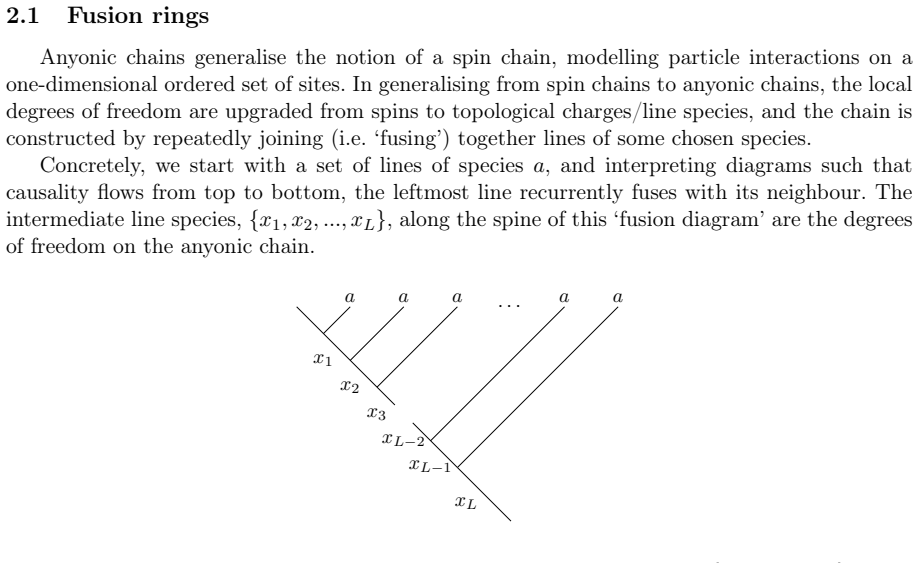
Figure 1. An anyonic chain fusion diagram with the degrees of freedom, [PITH_FULL_IMAGE:figures/full_fig_p005_1.png] view at source ↗
Figure 2
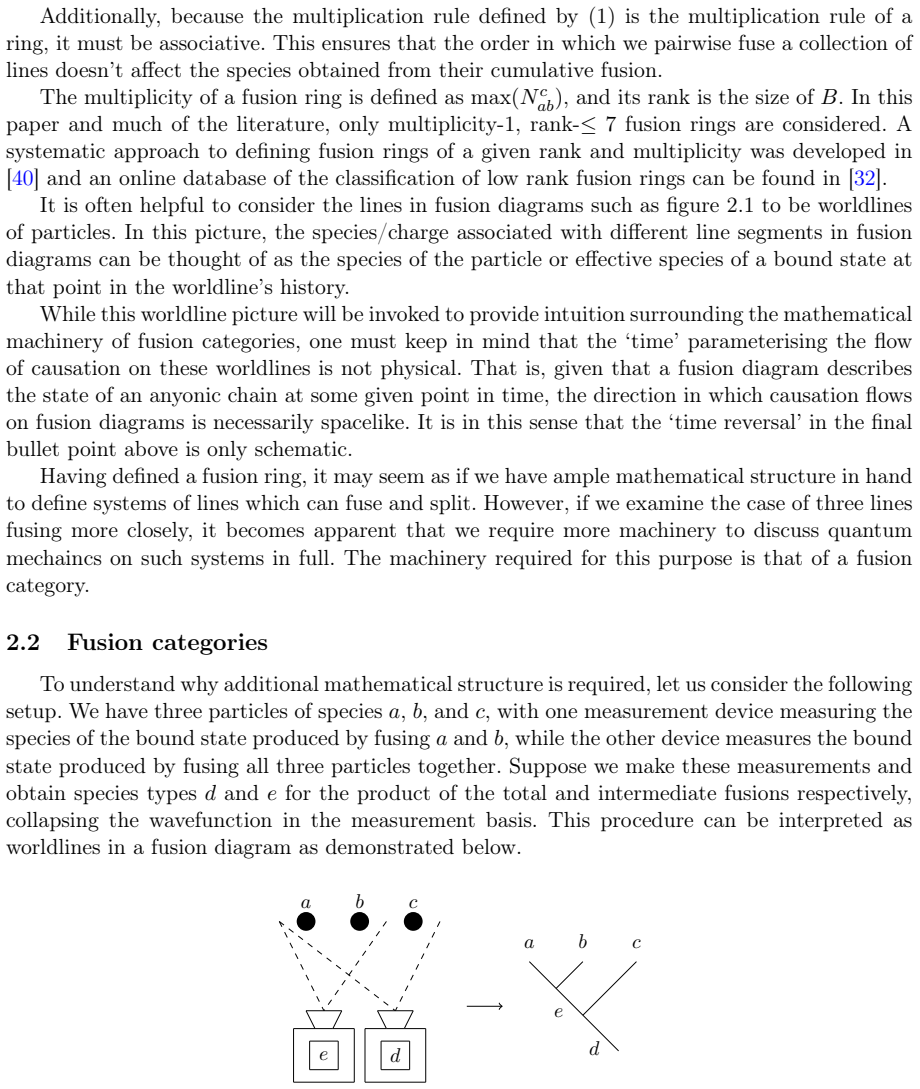
Figure 2. A pair of measurements on three particles, and the corresponding eigenstate in the [PITH_FULL_IMAGE:figures/full_fig_p006_2.png] view at source ↗
Figure 3
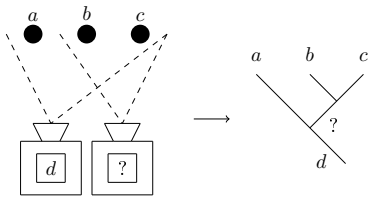
Figure 3. A different measurement basis for the fusion of the same three particles. [PITH_FULL_IMAGE:figures/full_fig_p007_3.png] view at source ↗
Figures from the paper (21 more)
Figure 4
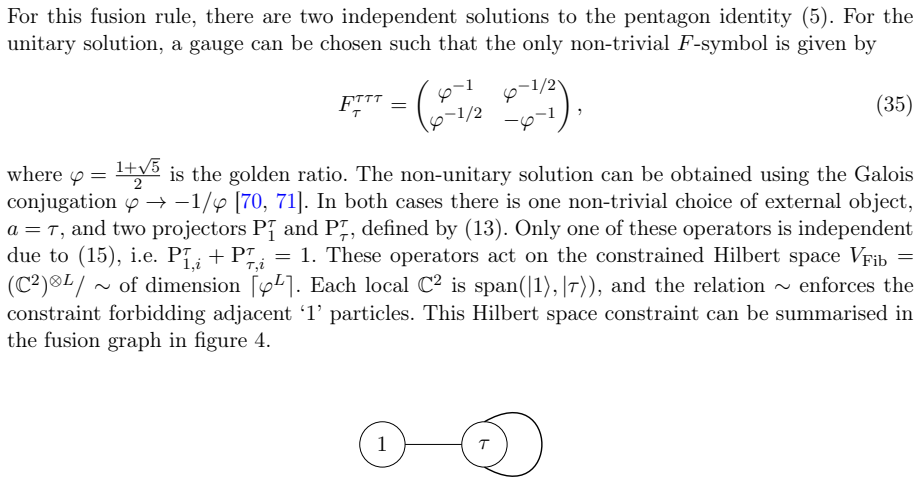
Figure 4. Figure 4: Adjacency rules for the Fibonacci Hilbert space. Nodes represent simple objects. If [PITH_FULL_IMAGE:figures/full_fig_p020_4.png]
Figure 5
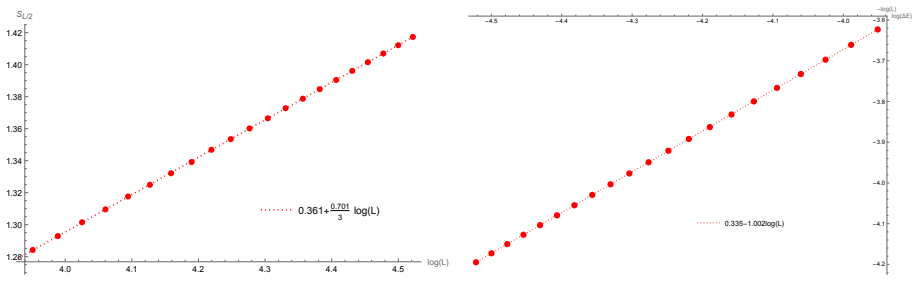
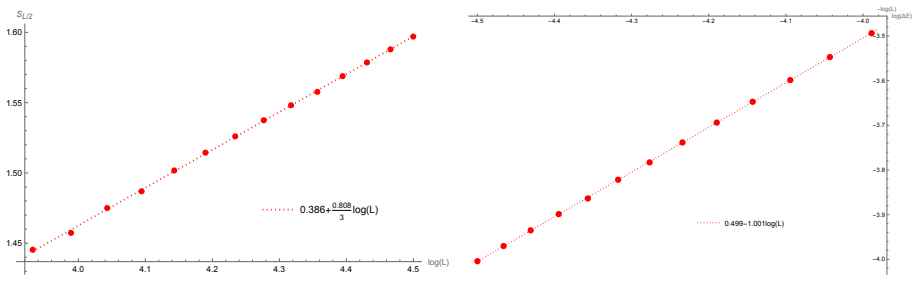
Figure 5. Figure 5: Half-chain entanglement entropy and gap for the anti-ferromagnetic case [PITH_FULL_IMAGE:figures/full_fig_p023_5.png]
Figure 6
Figure 6. Figure 6: Half-chain entanglement entropy and gap for the ferromagnetic case [PITH_FULL_IMAGE:figures/full_fig_p024_6.png]
Figure 7
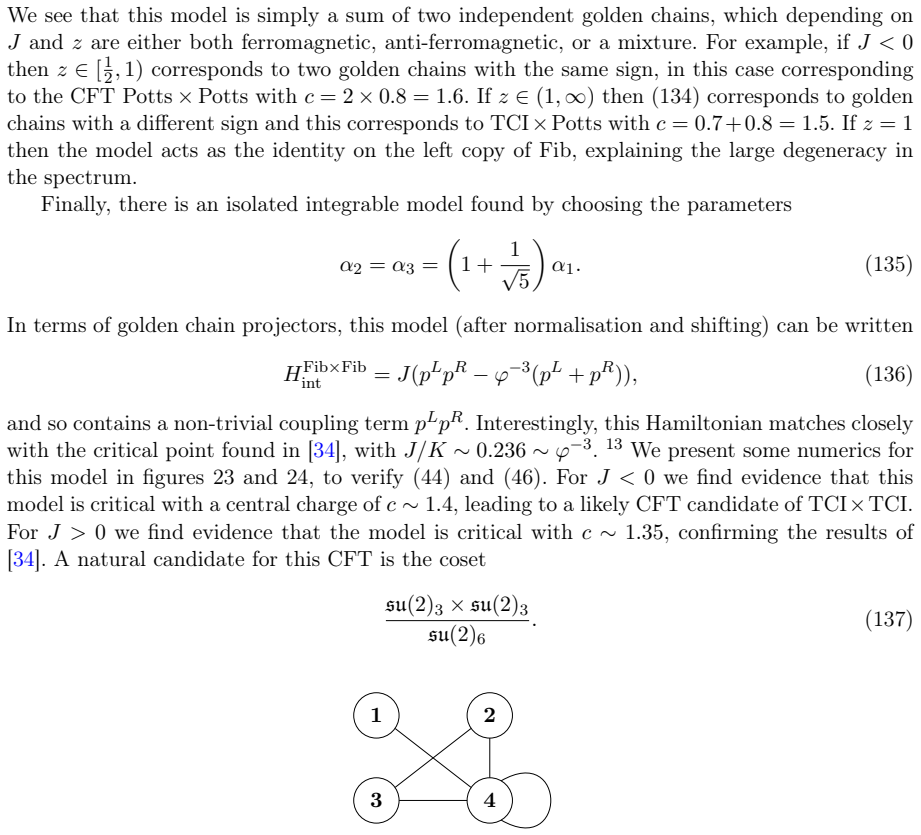
Figure 7. Figure 7: Adjacency graph for the Ising fusion category with external object [PITH_FULL_IMAGE:figures/full_fig_p032_7.png]
Figure 8
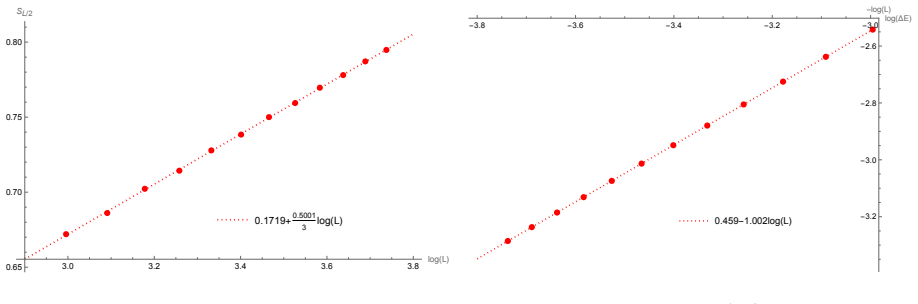
Figure 8. Figure 8: Half-chain entanglement entropy and gap for Ising anyonic chain ( [PITH_FULL_IMAGE:figures/full_fig_p033_8.png]
Figure 9
Figure 9. Figure 9: Adjacency graph for the su(2)3 fusion category with external object 1 2 . 0 1 1 2 3 2 [PITH_FULL_IMAGE:figures/full_fig_p034_9.png]
Figure 10
Figure 10. Figure 10: Adjacency graph for the su(2)3 fusion category with external object 1. 6.3 su(2)4 ⊗ 0 1 2 1 3 2 2 0 0 1 2 1 3 2 2 1 2 1 2 0 ⊕ 1 1 2 ⊕ 3 2 1 ⊕ 2 3 2 1 1 1 2 ⊕ 3 2 0 ⊕ 1 ⊕ 2 1 2 ⊕ 3 2 1 3 2 3 2 1 ⊕ 2 1 2 ⊕ 3 2 0 ⊕ 1 1 2 2 2 3 2 1 1 2 0 [PITH_FULL_IMAGE:figures/full_fig…
Figure 11
Figure 11. Figure 11: Adjacency graph for the su(2)4 fusion category with external object 1 2 . a = 1. This choice of external object leads to a constrained Hilbert space described by the adjacency graph in figure 12. We note that there are two connected components, and so the Hilbert spac…
Figure 12
Figure 12. Figure 12: Adjacency graph for the su(2)4 fusion category with external object 1. 6.4 su(2)5 = Z2 × psu(2)5 Due to the decomposition su(2)5 = Z2 × psu(2)5, it suffices to consider the integer sector psu(2)5 = {0, 1, 2}, whose fusion rules are shown in table 2. In this case there…
Figure 13
Figure 13. Figure 13: Adjacency graph for the psu(2)5 fusion category with external object 1. 6.5 su(2)6 The case k = 6 contains seven objects 0, 1 2 , 1, 3 2 , 2, 5 2 , 6, whose quantum dimensions are given by (d0, d1/2, d1, d3/2, d2, d5/2, d6) =  1, 1 + √ 2, q 2 + √ 2, q 4 + 2√ 2, q 2 +…
Figure 14
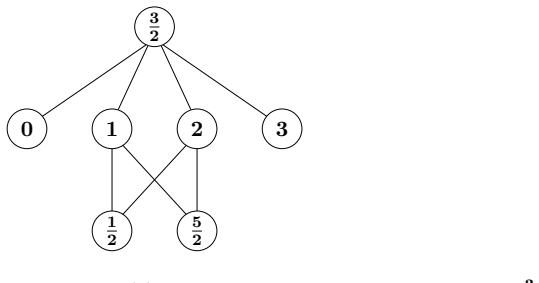
Figure 14. Figure 14: Adjacency graph for the su(2)6 fusion category with external object 3 2 . 6.6 su(2)7 = Z2 × psu(2)7 In this case we can consider psu(2)7 = {0, 1, 2, 3}, where the quantum dimensions are (d0, d1, d2, d3) =  1, 1 + 2 cos 2π 9 , 1 + 2 cos π 9 , 2 cos π 9  ∼ (1, 1.88, 2…
Figure 15
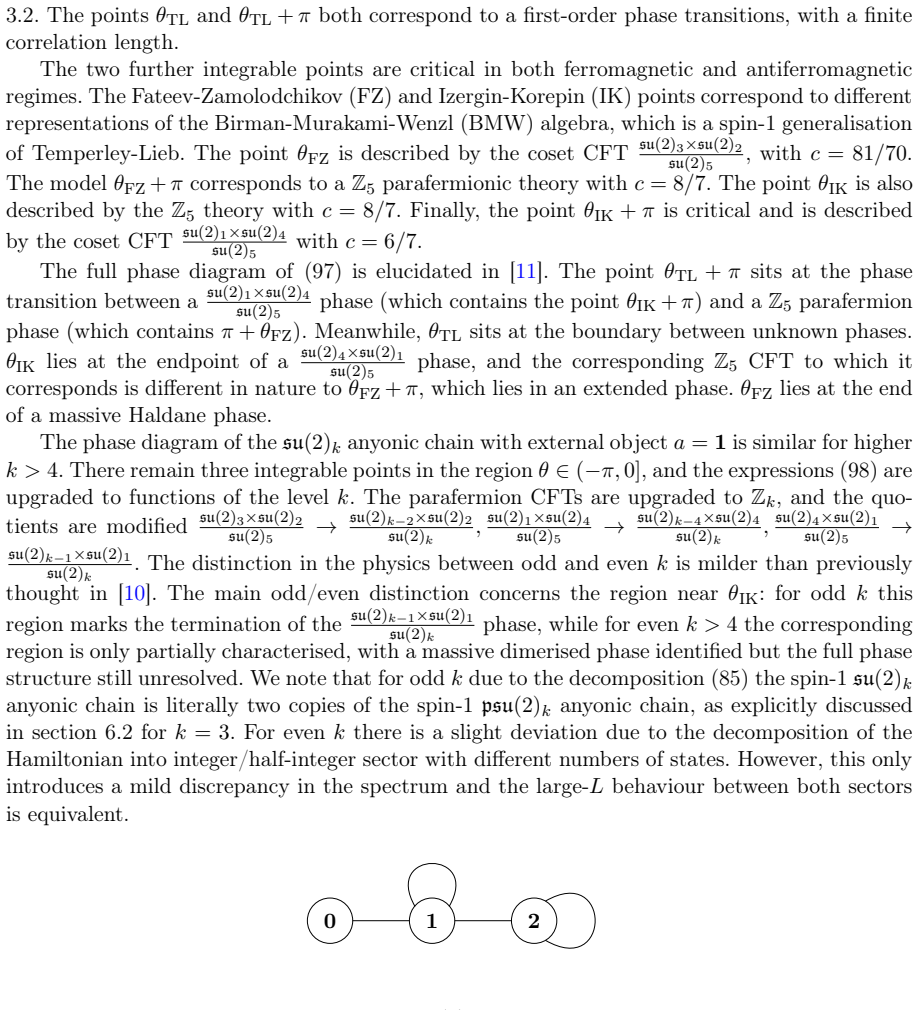
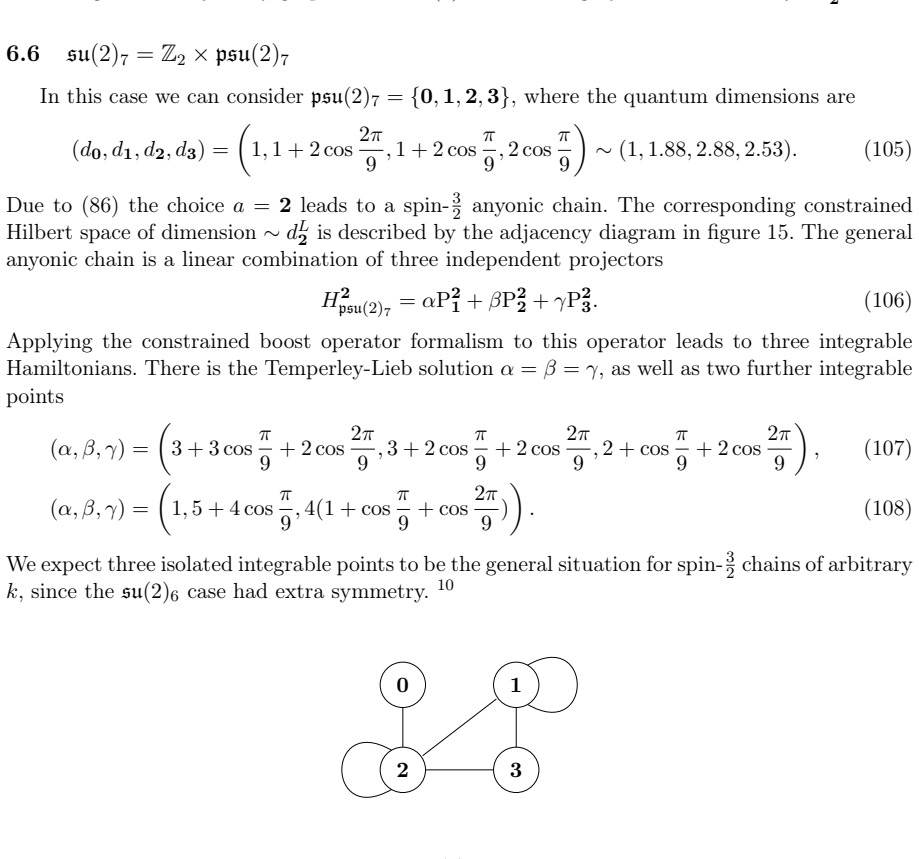
Figure 15. Figure 15: Adjacency graph for the psu(2)7 fusion category with external object 2. 7 Other fusion categories In this section we continue our review of anyonic chains beyond the su(2)k case. 10We find three isolated points numerically in the psu(2)8 and psu(2)9 spin- 3 2 case. 39…
Figure 16
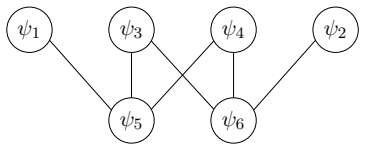
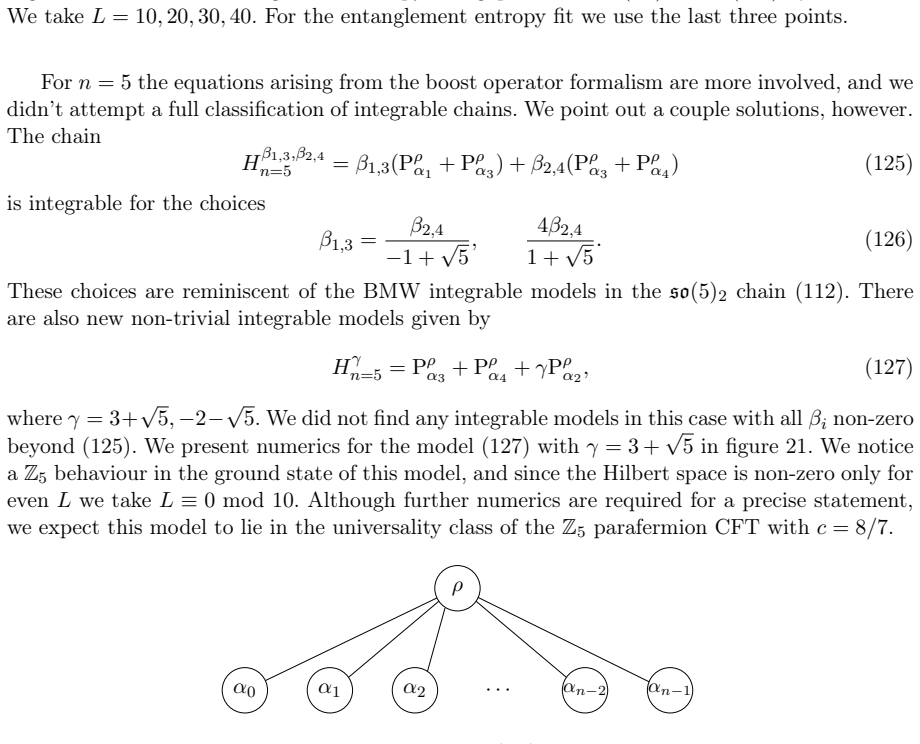
Figure 16. Figure 16: Adjacency graph for the so(5)2 fusion category with external object ψ5. 7.2 HI(Zn) A large class of fusion rings labelled by a finite group G was introduced by Izumi [105, 106, 107], dubbed Haagerup-Izumi fusion rings HI(G). In recent years there has been a surge of i…
Figure 17
Figure 17. Figure 17: Adjacency rules for the Haagerup Hilbert space. [PITH_FULL_IMAGE:figures/full_fig_p042_17.png]
Figure 18
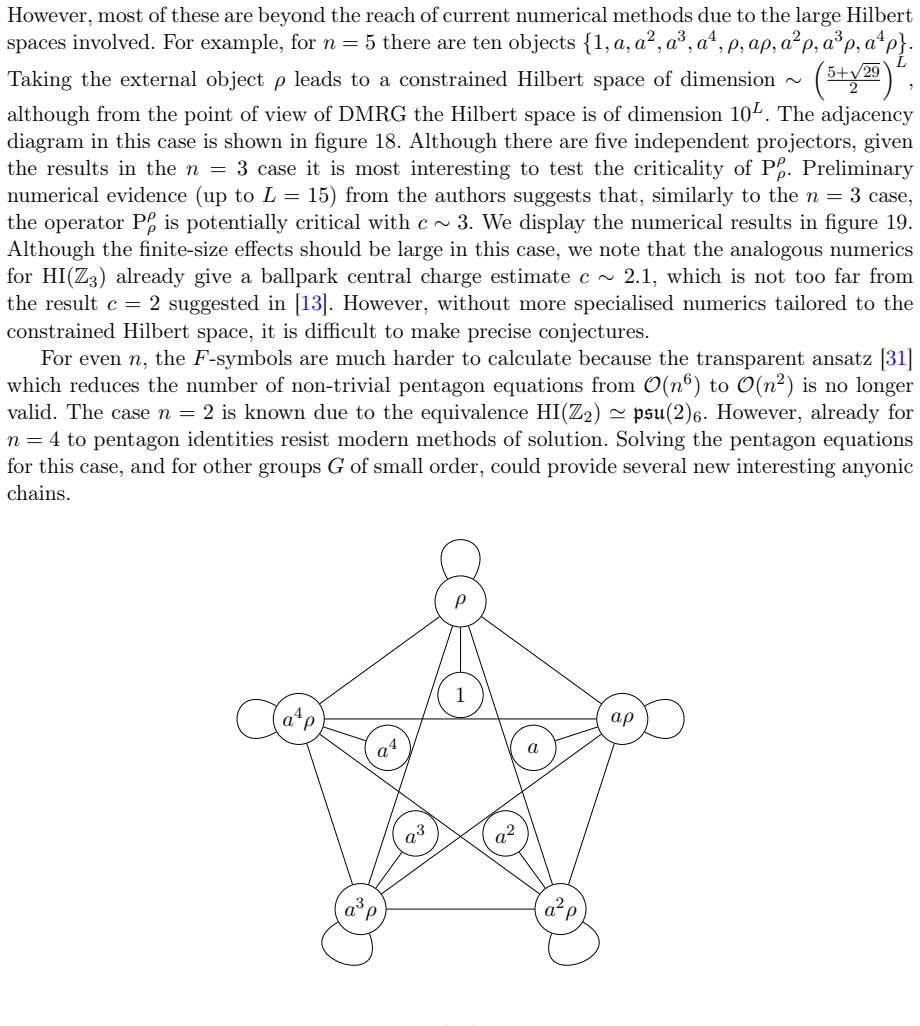
Figure 18. Figure 18: Adjacency rules for the HI(Z5) Hilbert space with external object ρ. 7.3 TY(Zn) The Tambara-Yamagami fusion category over Zn consists of a non-invertible object ρ, to￾gether with n invertible objects α0, . . . αn−1 [114]. The objects αi form a Zn subalgebra: αi ⊗ αj =…
Figure 19
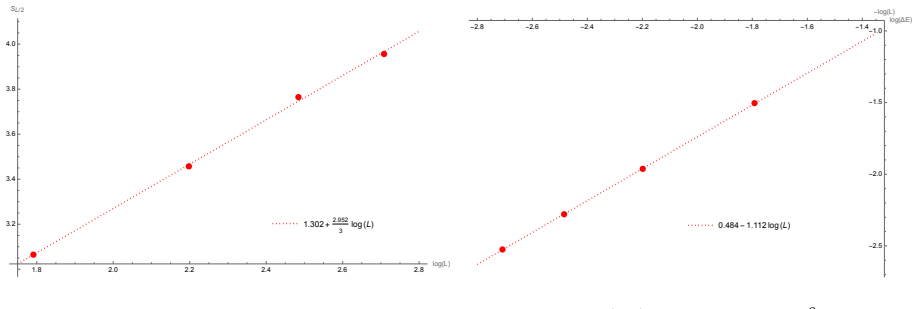
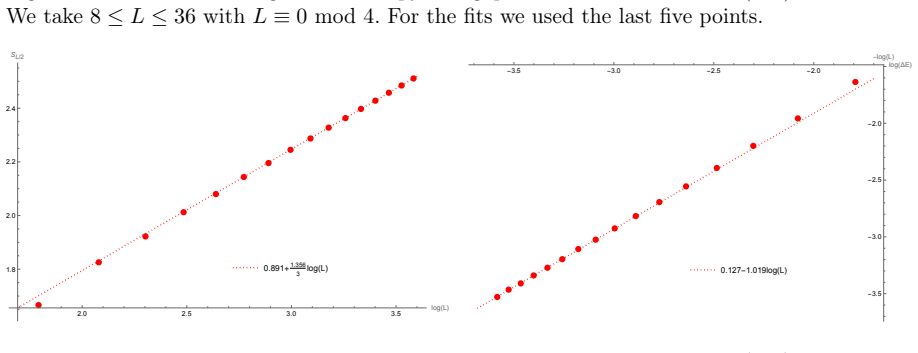
Figure 19. Figure 19: Half-chain entanglement entropy and gap for the HI [PITH_FULL_IMAGE:figures/full_fig_p044_19.png]
Figure 21
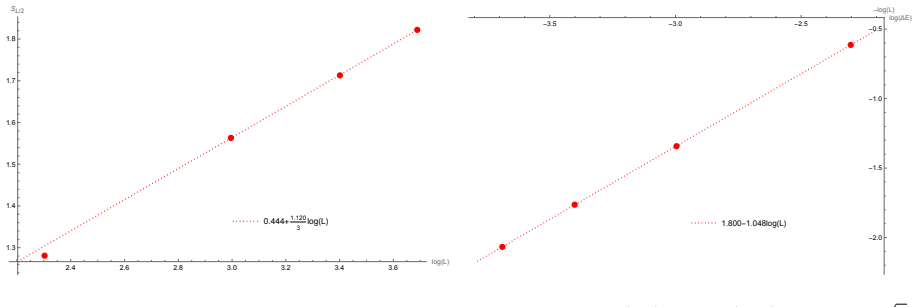
Figure 21. Figure 21: Half-chain entanglement entropy and gap for the TY [PITH_FULL_IMAGE:figures/full_fig_p045_21.png]
Figure 20
Figure 20. Figure 20: Adjacency graph for TY(Zn) with external object ρ. 7.4 Fib × Fib Recently there has been interest in models constructed by considering products of Fusion categories. One of the simplest examples is the choice Fib×Fib [34, 26, 117]. In this fusion category the objects …
Figure 22
Figure 22. Figure 22: Adjacency graph for Fib × Fib with external object 4. 7.5 Fib × Ising As a final example, we briefly consider the Fib × Ising fusion category, dubbed in Anyonwiki as TriCritIsing [32]. In this case there are six objects {1 × 1, 1 × ψ, 1 × σ, τ × 1, τ × ψ, τ × σ} := {1…
Figure 23
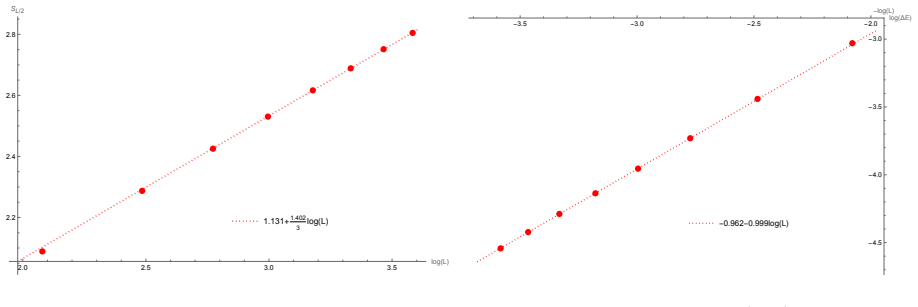
Figure 23. Figure 23: Half-chain entanglement entropy and gap for the Fib [PITH_FULL_IMAGE:figures/full_fig_p048_23.png]
Figure 24
Figure 24. Figure 24: Half-chain entanglement entropy and gap for the Fib [PITH_FULL_IMAGE:figures/full_fig_p048_24.png]

Discussion (0). Continue with ORCID to comment.

Reference graph

Works this paper leans on

174 extracted references

  1. [1]

    So let us introduce a parameter��� A �� H such that���as�� ′� �����

    Nearly-extremal limit of the SR metric Thenearlyextremallimitcorrespondstothecasewhen the two horizons are very close to each other, that is, when�� ′� �����but� � �� �. So let us introduce a parameter��� A �� H such that���as�� ′� �����. Then in the nearly extremal limit, we can rewrite Eq. (8) as ���� � � � �������� �� � � �� � ������ � � ��� � S� (A1) ...

  2. [2]

    (20) and Eq

    Analytic solution As pointed out in Sec II, gravitational axial and scalar QNMs in the Nariai regime are typically affected by in- stabilities, respectively in the mass-accreting and mass- radiating case, once the physical perturbation frequency is reconstructed via Eq. (20) and Eq. (21). With this in mind, we will however focus here on the static QNM fre...

  3. [3]

    Weak Accretion/Radiation Limit As explained in section IV, in the small ��� ′��limit the QNMs are computed as a series in ��� ′�� �� � � k≥� �� �k���� ′��k �(E1) Here we show the first few terms in the series: �� ��� ��������� ��� �� ��� ���� ��������� ����� � ��� � � �� ��� �� �� �� � ���� � �� � �������� � ��� � � �� � ��� �� ���� � ����������� ����� � ...

  4. [4]

    (87) with the hyperboloidal coordinates providing a way to in- corporate the boundary conditions in a geometric man- ner

    Strong Accretion/Radiation Limit In a similar fashion, in appendix A2 we explained how in the ��� ′�� �����limit the QNMs are computed as a series in�� � ������� ′� �� � � k≥� �� �k��k�(E3) 30 Here we show the first terms of the series: �� ��� ��� � � � �� � � � � � � � ����� ����� �� �� ��� ��� � � ����� ���� � � � � ����� ����� � � �� ��� �� �� � �� � �...

  5. [5]

    We also mentioned that we had adopted a method to filter spurious eigenvalues and estimate the accuracy of the re- sults

    Frequency domain In Section VC, we presented the numerical results of our computation of the QNMs in the hyperboloidal framework using the Chebyshev spectral method. We also mentioned that we had adopted a method to filter spurious eigenvalues and estimate the accuracy of the re- sults. However, in order to establish the exponential con- vergence of the Q...

  6. [6]

    We set�� ′�� ����and consider the grav- itational quadrupole case

    Time domain To verify the numerical accuracy of our time-domain solver, we performed a convergence test using four dif- ferent resolutions, i.e.�,���,���and���, with � � ����. We set�� ′�� ����and consider the grav- itational quadrupole case. For each resolution, we ex- tract the waveform at a fixed observer location. We FIG. 17.Convergence test for the t...

  7. [7]

    GWTC-3: Compact Binary Coales- cences Observed by LIGO and Virgo during the Second PartoftheThirdObservingRun,

    R. Abbottet al., “GWTC-3: Compact Binary Coales- cences Observed by LIGO and Virgo during the Second PartoftheThirdObservingRun,”Phys. Rev. X,vol.13, no. 4, p. 041039, 2023

  8. [8]

    Tests of General Relativity with GWTC-3,

    R. Abbottet al., “Tests of General Relativity with GWTC-3,”Phys. Rev. D, vol. 112, no. 8, p. 084080, 2025

Show all 174 references
  1. [9]

    Stability of a Schwarzschild singularity,

    T. Regge and J. A. Wheeler, “Stability of a Schwarzschild singularity,”Phys. Rev., vol. 108, pp. 1063–1069, 1957

  2. [10]

    Effective potential for even parity Regge- Wheeler gravitational perturbation equations,

    F. J. Zerilli, “Effective potential for even parity Regge- Wheeler gravitational perturbation equations,”Phys. Rev. Lett., vol. 24, pp. 737–738, 1970

  3. [11]

    Scattering of Gravitational Radi- ation by a Schwarzschild Black-hole,

    C. V. Vishveshwara, “Scattering of Gravitational Radi- ation by a Schwarzschild Black-hole,”Nature (London), vol. 227, pp. 936–938, Aug. 1970

  4. [12]

    The quasi-normal modes of the Schwarzschild black hole,

    S. Chandrasekhar and S. Detweiler, “The quasi-normal modes of the Schwarzschild black hole,”Proceedings of the Royal Society of London. Series A, Mathematical and Physical Sciences, vol. 344, no. 1639, pp. 441–452, 1975

  5. [13]

    Collision of two black holes,

    P. Anninos, D. Hobill, E. Seidel, L. Smarr, and W.-M. Suen, “Collision of two black holes,”Physical Review Letters, vol. 71, p. 2851–2854, Nov. 1993

  6. [14]

    TOPICAL REVIEW: Quasinormal modes: the characteristic ‘sound’ of black holes and neutron stars,

    H.-P. Nollert, “TOPICAL REVIEW: Quasinormal modes: the characteristic ‘sound’ of black holes and neutron stars,”Class. Quant. Grav., vol. 16, pp. R159– R216, 1999

  7. [15]

    Quasinormal modes of stars and black holes,

    K. D. Kokkotas and B. G. Schmidt, “Quasinormal modes of stars and black holes,”Living Rev. Rel., vol. 2, p. 2, 1999

  8. [16]

    Quasinormal modes of black holes and black branes,

    E.Berti, V.Cardoso, andA.O.Starinets, “Quasinormal modes of black holes and black branes,”Class. Quant. Grav., vol. 26, p. 163001, 2009

  9. [17]

    Quasinormal modes of black holes: From astrophysics to string theory,

    R. A. Konoplya and A. Zhidenko, “Quasinormal modes of black holes: From astrophysics to string theory,”Re- views of Modern Physics, vol. 83, p. 793–836, July 2011

  10. [18]

    Black hole spectroscopy: from theory to experiment,

    E. Bertiet al., “Black hole spectroscopy: from theory to experiment,”arXiv, 5 2025

  11. [19]

    Cardoso, S

    V. Cardoso, S. Biswas, and S. Sarkar,The Physics of Black Holes and Their Environments: Consequences for Gravitational Wave Science. arXiv, 11 2025

  12. [20]

    Nonspherical perturbations of relativistic gravitational collapse. i. scalar and gravitational per- turbations,

    R. H. Price, “Nonspherical perturbations of relativistic gravitational collapse. i. scalar and gravitational per- turbations,”Phys. Rev. D, vol. 5, pp. 2419–2438, May 1972

  13. [21]

    Radiation damping in a gravitational field,

    B. S. DeWitt and R. W. Brehme, “Radiation damping in a gravitational field,”Annals Phys., vol. 9, pp. 220– 259, 1960

  14. [22]

    Merging black holes with Cauchy-characteristic matching: Computa- tion of late-time tails,

    S. Ma, M. A. Scheel, J. Moxon, K. C. Nelli, N. Deppe, L. E. Kidder, W. Throwe, and N. L. Vu, “Merging black holes with Cauchy-characteristic matching: Computa- tion of late-time tails,”arXiv, 12 2024

  15. [23]

    Late-time tails in nonlinear evo- lutions of merging black holes,

    M. De Amiciset al., “Late-time tails in nonlinear evo- lutions of merging black holes,”arXiv, 12 2024

  16. [24]

    On choosing the start time of binary black hole ringdowns,

    S. Bhagwat, M. Okounkova, S. W. Ballmer, D. A. Brown, M. Giesler, M. A. Scheel, and S. A. Teukol- sky, “On choosing the start time of binary black hole ringdowns,”Phys. Rev. D, vol. 97, no. 10, p. 104065, 2018

  17. [25]

    Revisiting non-linearity in binary black hole mergers,

    M. Okounkova, “Revisiting non-linearity in binary black hole mergers,”arXiv, 4 2020

  18. [26]

    Quasinormal-mode filters: A new approach to ana- lyze the gravitational-wave ringdown of binary black- hole mergers,

    S. Ma, K. Mitman, L. Sun, N. Deppe, F. Hébert, L. E. Kidder, J. Moxon, W. Throwe, N. L. Vu, and Y. Chen, “Quasinormal-mode filters: A new approach to ana- lyze the gravitational-wave ringdown of binary black- hole mergers,”Phys. Rev. D, vol. 106, no. 8, p. 084036, 2022

  19. [27]

    Modelingring- down: Beyond the fundamental quasinormal modes,

    L.London, D.Shoemaker, andJ.Healy, “Modelingring- down: Beyond the fundamental quasinormal modes,” Phys. Rev. D, vol. 90, no. 12, p. 124032, 2014. [Erra- tum: Phys.Rev.D 94, 069902 (2016)]

  20. [28]

    Nonlinear Effects in Black Hole Ringdown,

    M. H.-Y. Cheunget al., “Nonlinear Effects in Black Hole Ringdown,”Phys. Rev. Lett., vol. 130, no. 8, p. 081401, 2023

  21. [29]

    Nonlinearities in Black Hole Ring- downs,

    K. Mitmanet al., “Nonlinearities in Black Hole Ring- downs,”Phys. Rev. Lett., vol. 130, no. 8, p. 081402, 2023

  22. [30]

    Nonlinear Ringdown at the Black Hole Horizon,

    N. Khera, A. Ribes Metidieri, B. Bonga, X. Jiménez Forteza, B. Krishnan, E. Poisson, D. Pook- Kolb, E. Schnetter, and H. Yang, “Nonlinear Ringdown at the Black Hole Horizon,”Phys. Rev. Lett., vol. 131, no. 23, p. 231401, 2023

  23. [31]

    Nonlinear Effects In Black Hole Ring- down From Scattering Experiments I: spin and initial data dependence of quadratic mode coupling,

    H. Zhuet al., “Nonlinear Effects In Black Hole Ring- down From Scattering Experiments I: spin and initial data dependence of quadratic mode coupling,”arXiv, 1 2024

  24. [32]

    Spin dependence of black hole ring- down nonlinearities,

    J. Redondo-Yuste, G. Carullo, J. L. Ripley, E. Berti, and V. Cardoso, “Spin dependence of black hole ring- down nonlinearities,”arXiv, 8 2023

  25. [33]

    Nonlinear quasi-normal modes: uniform approxima- tion,

    B. Bucciotti, A. Kuntz, F. Serra, and E. Trincherini, “Nonlinear quasi-normal modes: uniform approxima- tion,”JHEP, vol. 12, p. 048, 2023

  26. [34]

    Amplitudes and polarizations of quadratic quasi- normal modes for a Schwarzschild black hole,

    B. Bucciotti, L. Juliano, A. Kuntz, and E. Trincherini, “Amplitudes and polarizations of quadratic quasi- normal modes for a Schwarzschild black hole,”JHEP, vol. 09, p. 119, 2024

  27. [35]

    Quadratic quasinormal modes of a Schwarzschild black hole,

    B. Bucciotti, L. Juliano, A. Kuntz, and E. Trincherini, “Quadratic quasinormal modes of a Schwarzschild black hole,”Phys. Rev. D, vol. 110, no. 10, p. 104048, 2024. 34

  28. [36]

    Ringdown nonlinearities in the eikonal regime,

    B. Bucciotti, V. Cardoso, A. Kuntz, D. Pereñiguez, and J. Redondo-Yuste, “Ringdown nonlinearities in the eikonal regime,”arXiv, 1 2025

  29. [37]

    Excitation of quadratic quasinor- mal modes for Kerr black holes,

    S. Ma and H. Yang, “Excitation of quadratic quasinor- mal modes for Kerr black holes,”Phys. Rev. D, vol. 109, no. 10, p. 104070, 2024

  30. [38]

    Quadratic Mode Cou- plings in Rotating Black Holes and Their Detectability,

    N. Khera, S. Ma, and H. Yang, “Quadratic Mode Cou- plings in Rotating Black Holes and Their Detectability,” arXiv, 10 2024

  31. [39]

    Newtonian time in general relativity,

    P. C. Vaidya, “Newtonian time in general relativity,” Nature, vol. 171, no. 4348, pp. 260–261, 1953

  32. [40]

    The external field of a radiating star in general relativity,

    P. C. Vaidya, “The external field of a radiating star in general relativity,”Current Science, vol. 12, pp. 183– 184, 1943

  33. [41]

    The gravitational field of a radiating star,

    P. C. Vaidya, “The gravitational field of a radiating star,”Proceedings of the Indian Academy of Sciences, Section A, vol. 33, no. 5, pp. 264–276, 1951

  34. [42]

    The external field of a radiating star in general relativity,

    P. C. Vaidya, “The external field of a radiating star in general relativity,”General Relativity and Gravitation, vol. 31, no. 1, pp. 119–120, 1999. Reprint of the 1943 Current Science paper

  35. [43]

    The gravitational field of a radiating star,

    P. C. Vaidya, “The gravitational field of a radiating star,”General Relativity and Gravitation, vol. 31, no. 1, pp. 119–135, 1999. Reprint of the 1951 paper

  36. [44]

    Nonstatic solutions of einstein’s field equations for spheres of fluids radiating energy,

    P. C. Vaidya, “Nonstatic solutions of einstein’s field equations for spheres of fluids radiating energy,”Phys. Rev., vol. 83, pp. 10–17, Jul 1951

  37. [45]

    Vaidya’s radiating Schwarzschild metric,

    R. W. Lindquist, R. A. Schwartz, and C. W. Misner, “Vaidya’s radiating Schwarzschild metric,”Phys. Rev., vol. 137, pp. B1364–B1368, Mar 1965

  38. [46]

    Generating dynamical black hole solutions,

    D. Kothawala and S. G. Ghosh, “Generating dynamical black hole solutions,”Phys. Rev. D, vol. 70, p. 104010, 2004

  39. [47]

    Accretion discs in astrophysics,

    J. E. Pringle, “Accretion discs in astrophysics,”Ann. Rev. Astron. Astrophys., vol. 19, pp. 137–160, 1981

  40. [48]

    Black hole explosions,

    S. W. Hawking, “Black hole explosions,”Nature, vol. 248, pp. 30–31, 1974

  41. [49]

    Particle Creation by Black Holes,

    S. W. Hawking, “Particle Creation by Black Holes,” Commun. Math. Phys., vol. 43, pp. 199–220, 1975. [Er- ratum: Commun.Math.Phys. 46, 206 (1976)]

  42. [50]

    Particle Emission Rates from a Black Hole: Massless Particles from an Uncharged, Nonrotat- ing Hole,

    D. N. Page, “Particle Emission Rates from a Black Hole: Massless Particles from an Uncharged, Nonrotat- ing Hole,”Phys. Rev. D, vol. 13, pp. 198–206, 1976

  43. [51]

    Superradiance: New Frontiers in Black Hole Physics,

    R. Brito, V. Cardoso, and P. Pani, “Superradiance: New Frontiers in Black Hole Physics,”Lect. Notes Phys., vol. 906, pp. pp.1–237, 2015

  44. [52]

    A bound on energy extraction (and hairiness) from super- radiance,

    C. A. R. Herdeiro, E. Radu, and N. M. Santos, “A bound on energy extraction (and hairiness) from super- radiance,”Phys. Lett. B, vol. 824, p. 136835, 2022

  45. [53]

    Extraction of rotational energy from a black hole,

    R. Penrose and R. M. Floyd, “Extraction of rotational energy from a black hole,”Nature, vol. 229, pp. 177–179, 1971

  46. [54]

    The Four laws of black hole mechanics,

    J. M. Bardeen, B. Carter, and S. W. Hawking, “The Four laws of black hole mechanics,”Commun. Math. Phys., vol. 31, pp. 161–170, 1973

  47. [55]

    Black holes and entropy,

    J. D. Bekenstein, “Black holes and entropy,”Phys. Rev. D, vol. 7, pp. 2333–2346, 1973

  48. [56]

    Gener- alized second law and phantom cosmology: Accreting black holes,

    J. A. de Freitas Pacheco and J. E. Horvath, “Gener- alized second law and phantom cosmology: Accreting black holes,”Class. Quant. Grav., vol. 24, pp. 5427– 5434, 2007

  49. [57]

    Radiating black hole solutions in arbitrary dimensions,

    S. G. Ghosh and D. Kothawala, “Radiating black hole solutions in arbitrary dimensions,”Gen. Rel. Grav., vol. 40, pp. 9–21, 2008

  50. [58]

    Phantom accretion by black holes and the generalized second law of thermodynamics,

    J. Lima, S. Pereira, J. Horvath, and D. C. Guariento, “Phantom accretion by black holes and the generalized second law of thermodynamics,”Astroparticle Physics, vol. 33, p. 292–295, June 2010

  51. [59]

    Ringdown of a dynamical spacetime,

    J. Redondo-Yuste, D. Pereñiguez, and V. Cardoso, “Ringdown of a dynamical spacetime,”Phys. Rev. D, vol. 109, no. 4, p. 044048, 2024

  52. [60]

    Nonlinear effects in the black hole ringdown: Absorption-induced mode excitation,

    L. Sberna, P. Bosch, W. E. East, S. R. Green, and L. Lehner, “Nonlinear effects in the black hole ringdown: Absorption-induced mode excitation,”Phys. Rev. D, vol. 105, p. 064046, Mar 2022

  53. [61]

    Ringdown of a dynamical spacetime,

    J. Redondo-Yuste, D. Pereñiguez, and V. Cardoso, “Ringdown of a dynamical spacetime,”Phys. Rev. D, vol. 109, p. 044048, Feb 2024

  54. [62]

    Perturba- tions of the Vaidya metric in the frequency domain: Quasinormal modes and tidal response,

    L. Capuano, L. Santoni, and E. Barausse, “Perturba- tions of the Vaidya metric in the frequency domain: Quasinormal modes and tidal response,”Phys. Rev. D, vol. 110, no. 8, p. 084081, 2024

  55. [63]

    Under- standing photon sphere and black hole shadow in dy- namically evolving spacetimes,

    A. K. Mishra, S. Chakraborty, and S. Sarkar, “Under- standing photon sphere and black hole shadow in dy- namically evolving spacetimes,”Phys. Rev. D, vol. 99, no. 10, p. 104080, 2019

  56. [64]

    Can we detect a supertranslated black hole?,

    S. Sarkar, S. Kumar, and S. Bhattacharjee, “Can we detect a supertranslated black hole?,”Phys. Rev. D, vol. 105, no. 8, p. 084001, 2022

  57. [65]

    Photon sphere and shadow of a time-dependent black hole described by a Vaidya metric,

    J. Solanki and V. Perlick, “Photon sphere and shadow of a time-dependent black hole described by a Vaidya metric,”Phys. Rev. D, vol. 105, no. 6, p. 064056, 2022

  58. [66]

    Dynamical photon sphere and time evolving shadow around black holes with temporal accretion,

    Y. Koga, N. Asaka, M. Kimura, and K. Okabayashi, “Dynamical photon sphere and time evolving shadow around black holes with temporal accretion,”Phys. Rev. D, vol. 105, no. 10, p. 104040, 2022

  59. [67]

    Geodesic stability, Lyapunov exponents and quasinormal modes,

    V. Cardoso, A. S. Miranda, E. Berti, H. Witek, and V. T. Zanchin, “Geodesic stability, Lyapunov exponents and quasinormal modes,”Phys. Rev. D, vol. 79, no. 6, p. 064016, 2009

  60. [68]

    Dila- ton gravity in two-dimensions,

    D.Grumiller, W.Kummer, andD.V.Vassilevich, “Dila- ton gravity in two-dimensions,”Phys. Rept., vol. 369, pp. 327–430, 2002

  61. [69]

    Model for gravity at large distances,

    D. Grumiller, “Model for gravity at large distances,” Phys. Rev. Lett., vol. 105, p. 211303, 2010. [Erratum: Phys.Rev.Lett. 106, 039901 (2011)]

  62. [70]

    Spacetime structure near generic horizons and soft hair,

    D. Grumiller, A. Pérez, M. M. Sheikh-Jabbari, R. Tron- coso, and C. Zwikel, “Spacetime structure near generic horizons and soft hair,”Phys. Rev. Lett., vol. 124, no. 4, p. 041601, 2020

  63. [71]

    Rindler-type geometry inside a black hole,

    H. Culetu, “Rindler-type geometry inside a black hole,” Phys. Lett. A, vol. 376, pp. 2817–2821, 2012

  64. [72]

    Conformal gravity holography in four dimen- sions,

    D. Grumiller, M. Irakleidou, I. Lovrekovic, and R. Mc- Nees, “Conformal gravity holography in four dimen- sions,”Phys. Rev. Lett., vol. 112, p. 111102, 2014

  65. [73]

    Overdamped modes in Schwarzschild-de Sitter and a Mathematica package for the numerical computationofquasinormalmodes,

    A. Jansen, “Overdamped modes in Schwarzschild-de Sitter and a Mathematica package for the numerical computationofquasinormalmodes,”Eur. Phys. J. Plus, vol. 132, no. 12, p. 546, 2017

  66. [74]

    Quasinormal modes and Strong Cosmic Censorship,

    V. Cardoso, J. L. Costa, K. Destounis, P. Hintz, and A. Jansen, “Quasinormal modes and Strong Cosmic Censorship,”Phys. Rev. Lett., vol. 120, no. 3, p. 031103, 2018

  67. [75]

    Nonoscillatory gravitational quasinormal modes and telling tails for Schwarzschild–de Sitter black holes,

    R. A. Konoplya and A. Zhidenko, “Nonoscillatory gravitational quasinormal modes and telling tails for Schwarzschild–de Sitter black holes,”Phys. Rev. D, vol. 106, no. 12, p. 124004, 2022

  68. [76]

    Quasinormal modes of 35 the near extremal Schwarzschild-de Sitter black hole,

    V. Cardoso and J. P. S. Lemos, “Quasinormal modes of 35 the near extremal Schwarzschild-de Sitter black hole,” Phys. Rev. D, vol. 67, p. 084020, 2003

  69. [77]

    Quasinormal modes of Schwarzschild de Sitter black holes,

    A. Zhidenko, “Quasinormal modes of Schwarzschild de Sitter black holes,”Class. Quant. Grav., vol. 21, pp. 273–280, 2004

  70. [78]

    Asymptotic quasinormal frequencies for black holes in nonasymp- totically flat space-times,

    V. Cardoso, J. Natario, and R. Schiappa, “Asymptotic quasinormal frequencies for black holes in nonasymp- totically flat space-times,”J. Math. Phys., vol. 45, pp. 4698–4713, 2004

  71. [79]

    Quasinormal modes of D- dimensional de Sitter spacetime,

    A. Lopez-Ortega, “Quasinormal modes of D- dimensional de Sitter spacetime,”Gen. Rel. Grav., vol. 38, pp. 1565–1591, 2006

  72. [80]

    On the quasinormal modes of the de Sitter spacetime,

    A. Lopez-Ortega, “On the quasinormal modes of the de Sitter spacetime,”Gen. Rel. Grav., vol. 44, pp. 2387– 2400, 2012

  73. [81]

    Price’s law from quasinor- mal modes,

    P. Arnaudo and B. Withers, “Price’s law from quasinor- mal modes,”arXiv, 11 2025

  74. [82]

    Spectral decomposition of the pertur- bation response of the Schwarzschild geometry,

    E. W. Leaver, “Spectral decomposition of the pertur- bation response of the Schwarzschild geometry,”Phys. Rev. D, vol. 34, pp. 384–408, 1986

  75. [83]

    The Branch Cut and Quasi-normal Modes at Large Imaginary Frequency in Schwarzschild Space-time,

    M. Casals and A. Ottewill, “The Branch Cut and Quasi-normal Modes at Large Imaginary Frequency in Schwarzschild Space-time,”Phys. Rev. D, vol. 86, p. 024021, 2012

  76. [84]

    Analytic Investigation of the Branch Cut of the Green Function in Schwarzschild Space-time,

    M. Casals and A. C. Ottewill, “Analytic Investigation of the Branch Cut of the Green Function in Schwarzschild Space-time,”Phys. Rev. D, vol. 87, no. 6, p. 064010, 2013

  77. [85]

    Decomposition of the Schwarzschild Green’s function,

    J. Su, N. Khera, M. Casals, S. Ma, A. Chowdhuri, and H. Yang, “Decomposition of the Schwarzschild Green’s function,”Phys. Rev. D, vol. 113, no. 10, p. 104013, 2026

  78. [86]

    Green functions of the Regge-Wheeler and Teukolsky equations in Schwarzschild spacetime,

    D. Q. Aruquipa and M. Casals, “Green functions of the Regge-Wheeler and Teukolsky equations in Schwarzschild spacetime,”arXiv, 3 2026

  79. [87]

    Beyond quasinormal modes: a complete mode decomposition of black hole perturbations,

    P. Arnaudo, J. Carballo, and B. Withers, “Beyond quasinormal modes: a complete mode decomposition of black hole perturbations,”arXiv, 10 2025

  80. [88]

    Green function of the Pöschl-Teller poten- tial,

    A. Kuntz, “Green function of the Pöschl-Teller poten- tial,”arXiv, 10 2025

  81. [89]

    Singular structures and causality of the Schwarzschild Green’s function in the frequency domain,

    R. F. Rosato, M. De Amicis, and P. Pani, “Singular structures and causality of the Schwarzschild Green’s function in the frequency domain,”arXiv, 3 2026

  82. [90]

    A Weyl law for black holes,

    J. L. Jaramillo, R. Panosso Macedo, O. Meneses-Rojas, B. Raffaelli, and L. A. Sheikh, “A Weyl law for black holes,”Phys. Rev. D, vol. 110, no. 10, p. 104008, 2024

  83. [91]

    Limiting geome- try and spectral instability in Schwarzschild–de Sitter spacetimes,

    Y. Zhou and R. Panosso Macedo, “Limiting geome- try and spectral instability in Schwarzschild–de Sitter spacetimes,”Phys. Rev. D, vol. 112, no. 8, p. 084063, 2025

  84. [92]

    Irregular Liouville Correlators and Connection For- mulae for Heun Functions,

    G. Bonelli, C. Iossa, D. Panea Lichtig, and A. Tanzini, “Irregular Liouville Correlators and Connection For- mulae for Heun Functions,”Commun. Math. Phys., vol. 397, no. 2, pp. 635–727, 2023

  85. [93]

    Black hole perturbation theory and mul- tiple polylogarithms,

    G. Aminov, P. Arnaudo, G. Bonelli, A. Grassi, and A. Tanzini, “Black hole perturbation theory and mul- tiple polylogarithms,”Journal of High Energy Physics, vol. 2023, Nov. 2023

  86. [94]

    An analytic representation for the quasi- normal modes of Kerr black holes,

    E. W. Leaver, “An analytic representation for the quasi- normal modes of Kerr black holes,”Proceedings of the Royal Society of London. Series A, Mathematical and Physical Sciences, vol. 402, no. 1823, pp. 285–298, 1985

  87. [95]

    Perturbing the perturbed: Stability of quasinormal modes in pres- ence of a positive cosmological constant,

    S.Sarkar, M.Rahman, andS.Chakraborty, “Perturbing the perturbed: Stability of quasinormal modes in pres- ence of a positive cosmological constant,”Phys. Rev. D, vol. 108, no. 10, p. 104002, 2023

  88. [96]

    A Geometric framework for black hole perturbations,

    A. Zenginoglu, “A Geometric framework for black hole perturbations,”Phys. Rev. D, vol. 83, p. 127502, 2011

  89. [97]

    Hyperboloidal slicing approach to quasi-normal mode expansions: the Reissner-Nordström case,

    R. Panosso Macedo, J. L. Jaramillo, and M. Ansorg, “Hyperboloidal slicing approach to quasi-normal mode expansions: the Reissner-Nordström case,”Phys. Rev. D, vol. 98, no. 12, p. 124005, 2018

  90. [98]

    Hyperboloidal approach to quasinormal modes,

    R. Panosso Macedo and A. Zenginoglu, “Hyperboloidal approach to quasinormal modes,”Front. in Phys., vol. 12, p. 1497601, 2024

  91. [99]

    Trefethen,Spectral Methods in MATLAB

    L. Trefethen,Spectral Methods in MATLAB. Software, Environments, and Tools, Society for Industrial and Ap- plied Mathematics (SIAM, 3600 Market Street, Floor 6, Philadelphia, PA 19104), 2000

  92. [100]

    Gyromagnetic factor of rotating disks of electrically charged dust in general relativity,

    Y.-C. Pynn, R. Panosso Macedo, M. Breithaupt, S. Pa- lenta, and R. Meinel, “Gyromagnetic factor of rotating disks of electrically charged dust in general relativity,” Phys. Rev. D, vol. 94, no. 10, p. 104035, 2016

  93. [101]

    Hyperboloidal method forfrequency-domainself-forcecalculations,

    R. Panosso Macedo, B. Leather, N. Warburton, B. Wardell, and A. Zenginoğlu, “Hyperboloidal method forfrequency-domainself-forcecalculations,”Phys. Rev. D, vol. 105, no. 10, p. 104033, 2022

  94. [102]

    Revisiting Vaidya horizons,

    A. B. Nielsen, “Revisiting Vaidya horizons,”Galaxies, vol. 2, no. 1, pp. 62–71, 2014

  95. [103]

    ConformalKillinghori- zons and their thermodynamics,

    A.B.NielsenandA.A.Shoom, “ConformalKillinghori- zons and their thermodynamics,”Class. Quant. Grav., vol. 35, no. 10, p. 105008, 2018

  96. [104]

    Slowlyevolvinghori- zons in Einstein gravity and beyond,

    A.TarafdarandS.Bhattacharjee, “Slowlyevolvinghori- zons in Einstein gravity and beyond,”Class. Quant. Grav., vol. 40, no. 20, p. 205017, 2023

  97. [105]

    Thermodynam- ics with conformal Killing vector in the charged Vaidya metric,

    S. Koh, M. Park, and A. M. Sherif, “Thermodynam- ics with conformal Killing vector in the charged Vaidya metric,”JHEP, vol. 24, p. 028, 2020

  98. [106]

    Homo- thetic Killing horizons in generic Vaidya spacetimes,

    R. Ghoshal, N. Kundu, and S. Bhattacharjee, “Homo- thetic Killing horizons in generic Vaidya spacetimes,” arXiv, 4 2026

  99. [107]

    Double-null coordinates for the vaidya metric,

    B. Waugh and K. Lake, “Double-null coordinates for the vaidya metric,”Phys. Rev. D, vol. 34, pp. 2978–2984, Nov 1986

  100. [108]

    Backscattered radiation in the vaidya metric near zero mass,

    B. Waugh and K. Lake, “Backscattered radiation in the vaidya metric near zero mass,”Physics Letters A, vol. 116, no. 4, pp. 154–156, 1986

  101. [109]

    OnmaximalanalyticalextensionoftheVaidyametric,

    V. A. Berezin, V. I. Dokuchaev, and Y. N. Eroshenko, “OnmaximalanalyticalextensionoftheVaidyametric,” Class. Quant. Grav., vol. 33, no. 14, p. 145003, 2016

  102. [110]

    Even perturbations of self-similar Vaidya space-time,

    B. C. Nolan and T. J. Waters, “Even perturbations of self-similar Vaidya space-time,”Phys. Rev. D, vol. 71, p. 104030, 2005

  103. [111]

    Odd-parity perturbations of self-similar Vaidya spacetime,

    B. C. Nolan, “Odd-parity perturbations of self-similar Vaidya spacetime,”Class. Quant. Grav., vol. 24, pp. 177–200, 2007

  104. [112]

    Quasinormal modes of small Schwarzschild–de Sitter black holes,

    P. Hintz and Y. Xie, “Quasinormal modes of small Schwarzschild–de Sitter black holes,”J. Math. Phys., vol. 63, no. 1, p. 011509, 2022

  105. [113]

    Nariai spacetime: Orbits, scalar self-force, and Poynting-Robertson-like external force,

    D. Bini and G. Esposito, “Nariai spacetime: Orbits, scalar self-force, and Poynting-Robertson-like external force,”Phys. Rev. D, vol. 111, no. 10, p. 104051, 2025

  106. [114]

    Adventures in de Sitter space,

    R. Bousso, “Adventures in de Sitter space,” inWorkshop on Conference on the Future of Theoretical Physics and Cosmology in Honor of Steven Hawking’s 60th Birthday, pp. 539–569, 5 2002

  107. [115]

    The Structure of the extreme Schwarzschild-de Sitter space-time,

    J. Podolsky, “The Structure of the extreme Schwarzschild-de Sitter space-time,”Gen. Rel. Grav., 36 vol. 31, pp. 1703–1725, 1999

  108. [116]

    Spectral decom- position of black-hole perturbations on hyperboloidal slices,

    M. Ansorg and R. Panosso Macedo, “Spectral decom- position of black-hole perturbations on hyperboloidal slices,”Phys. Rev. D, vol. 93, no. 12, p. 124016, 2016

  109. [117]

    Pseudospectrum and Black Hole Quasinormal Mode Instability,

    J. L. Jaramillo, R. Panosso Macedo, and L. Al Sheikh, “Pseudospectrum and Black Hole Quasinormal Mode Instability,”Phys. Rev. X,vol.11, no.3, p.031003, 2021

  110. [118]

    Gravitational Wave Signatures of Black Hole Quasinor- mal Mode Instability,

    J. L. Jaramillo, R. Panosso Macedo, and L. A. Sheikh, “Gravitational Wave Signatures of Black Hole Quasinor- mal Mode Instability,”Phys. Rev. Lett., vol. 128, no. 21, p. 211102, 2022

  111. [119]

    Computing the quasinormal modes and eigenfunctions for the Teukolsky equation using horizon penetrating, hyperboloidally compactified coordinates,

    J. L. Ripley, “Computing the quasinormal modes and eigenfunctions for the Teukolsky equation using horizon penetrating, hyperboloidally compactified coordinates,” Class. Quant. Grav., vol. 39, no. 14, p. 145009, 2022

  112. [120]

    Hyperboloidal foliations and scri- fixing,

    A. Zenginoglu, “Hyperboloidal foliations and scri- fixing,”Class. Quant. Grav., vol. 25, p. 145002, 2008

  113. [121]

    Hyperboloidal evolution with the Ein- steinequations,

    A. Zenginoglu, “Hyperboloidal evolution with the Ein- steinequations,”Class. Quant. Grav., vol.25, p.195025, 2008

  114. [122]

    Gravitational perturbations of Schwarzschild spacetime at null infin- ity and the hyperboloidal initial value problem,

    A. Zenginoglu, D. Nunez, and S. Husa, “Gravitational perturbations of Schwarzschild spacetime at null infin- ity and the hyperboloidal initial value problem,”Class. Quant. Grav., vol. 26, p. 035009, 2009

  115. [123]

    An Axisymmetric evolution code for the Ein- stein equations on hyperboloidal slices,

    O. Rinne, “An Axisymmetric evolution code for the Ein- stein equations on hyperboloidal slices,”Class. Quant. Grav., vol. 27, no. 3, p. 035014, 2010

  116. [124]

    Axisymmetric fully spectral code for hyperbolic equations,

    R. Panosso Macedo and M. Ansorg, “Axisymmetric fully spectral code for hyperbolic equations,”J. Com- put. Phys., vol. 276, pp. 357–379, 2014

  117. [125]

    Null infinity waveforms from extreme-mass-ratio inspirals in Kerr spacetime,

    A. Zenginoglu and G. Khanna, “Null infinity waveforms from extreme-mass-ratio inspirals in Kerr spacetime,” Phys. Rev. X, vol. 1, p. 021017, 2011

  118. [126]

    Gravitational Waves from Extreme-Mass-Ratio Systems in Astro- physical Environments,

    V. Cardoso, K. Destounis, F. Duque, R. Panosso Macedo, and A. Maselli, “Gravitational Waves from Extreme-Mass-Ratio Systems in Astro- physical Environments,”Phys. Rev. Lett., vol. 129, no. 24, p. 241103, 2022

  119. [127]

    Postadiabatic wave- forms from extreme mass ratio inspirals in the presence of dark matter,

    M. Rahman and T. Takahashi, “Postadiabatic wave- forms from extreme mass ratio inspirals in the presence of dark matter,”Phys. Rev. D, vol. 113, no. 4, p. 044033, 2026

  120. [128]

    On the existence of n-geodesically com- plete or future complete solutions of Einstein’s field equations with smooth asymptotic structure,

    H. Friedrich, “On the existence of n-geodesically com- plete or future complete solutions of Einstein’s field equations with smooth asymptotic structure,”Commu- nications in Mathematical Physics, vol. 107, pp. 587– 609, 1986

  121. [129]

    Ini- tial data for perturbed Kerr black holes on hyper- boloidal slices,

    D. Schinkel, M. Ansorg, and R. Panosso Macedo, “Ini- tial data for perturbed Kerr black holes on hyper- boloidal slices,”Class. Quant. Grav., vol. 31, p. 165001, 2014

  122. [130]

    3D evolution of a semilinear wave model for the Einstein field equations on compactified hyperboloidal slices,

    C. Peterson, S. Gautam, I. Rainho, A. Vañó-Viñuales, and D. Hilditch, “3D evolution of a semilinear wave model for the Einstein field equations on compactified hyperboloidal slices,”Phys. Rev. D, vol. 108, no. 2, p. 024067, 2023

  123. [131]

    Spherical evolution of the generalized har- monic gauge formulation of general relativity on com- pactified hyperboloidal slices,

    C. Peterson, S. Gautam, A. Vañó-Viñuales, and D. Hilditch, “Spherical evolution of the generalized har- monic gauge formulation of general relativity on com- pactified hyperboloidal slices,”Phys. Rev. D, vol. 110, no. 12, p. 124033, 2024

  124. [132]

    Strong hyperboloidal compactification for the spherical dual-foliation- generalized harmonic gauge formulation of GR,

    C. Peterson and D. Hilditch, “Strong hyperboloidal compactification for the spherical dual-foliation- generalized harmonic gauge formulation of GR,”Phys. Rev. D, vol. 112, no. 2, p. 024078, 2025

  125. [133]

    Charged scalar field at future null infinity via nonlinear hyperboloidal evolution,

    J. D. Álvares and A. Vañó-Viñuales, “Charged scalar field at future null infinity via nonlinear hyperboloidal evolution,”Phys. Rev. D, vol. 112, no. 10, p. 104053,

  126. [134]

    [Erratum: Phys.Rev.D 113, 049902 (2026)]

  127. [135]

    Black Hole Thermodynamics with Dynamical Lambda,

    R. Gregory, D. Kastor, and J. Traschen, “Black Hole Thermodynamics with Dynamical Lambda,”JHEP, vol. 10, p. 118, 2017

  128. [136]

    Evolving black holes in inflation,

    R. Gregory, D. Kastor, and J. Traschen, “Evolving black holes in inflation,”Class. Quant. Grav., vol. 35, no. 15, p. 155008, 2018

  129. [137]

    Horizons and correla- tion functions in 2D Schwarzschild-de Sitter spacetime,

    P. R. Anderson and J. Traschen, “Horizons and correla- tion functions in 2D Schwarzschild-de Sitter spacetime,” JHEP, vol. 01, p. 192, 2022

  130. [138]

    Linear growth of the two-point function for the Unruh state in 1 + 1 dimensional black holes,

    P. R. Anderson, Z. P. Scofield, and J. Traschen, “Linear growth of the two-point function for the Unruh state in 1 + 1 dimensional black holes,” in16th Marcel Gross- mann Meeting on Recent Developments in Theoretical and Experimental General Relativity, Astrophysics and Relati...

  131. [139]

    Edito- rial: Quasi-normalmodes, non-selfadjointoperatorsand pseudospectrum: an interdisciplinary approach,

    P. Bizoń, E. Gasperín, and J. L. Jaramillo, “Edito- rial: Quasi-normalmodes, non-selfadjointoperatorsand pseudospectrum: an interdisciplinary approach,”Fron- tiers in Physics, vol. Volume 13 - 2025, 2026

  132. [140]

    Topical Collection-Hyperboloidal Fo- liations in the Era of Gravitational-Wave Astronomy: From Mathematical Relativity to Astrophysics,

    D. Hilditch, R. Panosso Macedo, A. Vañó-Viñuales, and A. Zenginoğlu, “Topical Collection-Hyperboloidal Fo- liations in the Era of Gravitational-Wave Astronomy: From Mathematical Relativity to Astrophysics,”Gen. Rel. Grav., vol. 57, p. 131, 2025

  133. [141]

    Hyperboloidal approach for static spherically symmetric spacetimes: a didacti- cal introductionand applications in black-hole physics,

    R. Panosso Macedo, “Hyperboloidal approach for static spherically symmetric spacetimes: a didacti- cal introductionand applications in black-hole physics,” Phil. Trans. Roy. Soc. Lond. A, vol. 382, no. 2267, p. 20230046, 2024

  134. [142]

    On hyperboloidal foliations in the study of black hole quasinormal modes,

    S.-F. Shen, G.-R. Li, X.-M. Kuang, W.-L. Qian, R. G. Daghigh, J. C. Morey, M. D. Green, and R.-H. Yue, “On hyperboloidal foliations in the study of black hole quasinormal modes,”Eur. Phys. J. C, vol. 86, no. 1, p. 53, 2026

  135. [143]

    Limits of spacetimes,

    R. P. Geroch, “Limits of spacetimes,”Commun. Math. Phys., vol. 13, pp. 180–193, 1969

  136. [144]

    Classics Il- lustrated: Limits of Spacetimes,

    I. Bengtsson, S. Holst, and E. Jakobsson, “Classics Il- lustrated: Limits of Spacetimes,”Class. Quant. Grav., vol. 31, p. 205008, 2014

  137. [145]

    The�to zero limit of spacetimes and its physical interpretation,

    M. Bugden and C. Paganini, “The�to zero limit of spacetimes and its physical interpretation,”Class. Quant. Grav., vol. 36, no. 4, p. 045003, 2019

  138. [146]

    On limits of space-times: A Coordinate - free ap- proach,

    F. M. Paiva, M. J. Reboucas, and M. A. H. MacCal- lum, “On limits of space-times: A Coordinate - free ap- proach,”Class. Quant. Grav., vol. 10, pp. 1165–1178, 1993

  139. [147]

    Zur theorie der Riemann ’schen functionen zweiter ordnung mit vier verzweigungspunkten,

    K. Heun, “Zur theorie der Riemann ’schen functionen zweiter ordnung mit vier verzweigungspunkten,”Math- ematische Annalen, vol. 33, pp. 161–179, 1889

  140. [148]

    Heun’s differential equations,

    A. Ronveaux and F. M. Arscott, “Heun’s differential equations,” inHeun’s differential equations, 1995

  141. [149]

    Liou- ville correlation functions from four-dimensional gauge theories,

    L. F. Alday, D. Gaiotto, and Y. Tachikawa, “Liou- ville correlation functions from four-dimensional gauge theories,”Letters in Mathematical Physics, vol. 91, p. 167–197, Jan. 2010

  142. [150]

    A slow review of the AGT correspon- dence,

    B. Le Floch, “A slow review of the AGT correspon- dence,”Journal of Physics A: Mathematical and The- oretical, vol. 55, p. 353002, Aug. 2022

  143. [151]

    Lec- 37 tures on liouville theory and matrix models,

    A. B. Zamolodchikov and A. B. Zamolodchikov, “Lec- 37 tures on liouville theory and matrix models,” 1991. Lec- ture notes

  144. [152]

    Liouville theory revisited,

    J. Teschner, “Liouville theory revisited,”Classical and Quantum Gravity, vol. 18, p. R153–R222, Nov. 2001

  145. [153]

    Quantization of integrable systems and four dimensional gauge theo- ries,

    N. A. Nekrasov and S. L. Shatashvili, “Quantization of integrable systems and four dimensional gauge theo- ries,” inXVIth International Congress on Mathematical Physics, p. 265–289, World Scientific, Mar. 2010

  146. [154]

    An algorithm for the microscopic evaluation of the coefficients of the Seiberg–Witten prepotential,

    R. Flume and R. Poghossian, “An algorithm for the microscopic evaluation of the coefficients of the Seiberg–Witten prepotential,”International Journal of Modern Physics A, vol. 18, p. 2541–2563, June 2003

  147. [155]

    Instantons and recursion relations in N = 2 SUSY gauge theory,

    M. Matone, “Instantons and recursion relations in N = 2 SUSY gauge theory,”Physics Letters B, vol. 357, p. 342–348, Sept. 1995

  148. [156]

    Instability of ultracompact horizonless spacetimes,

    Z. Zhong, V. Cardoso, and E. Maggio, “Instability of ultracompact horizonless spacetimes,”Phys. Rev. D, vol. 107, no. 4, p. 044035, 2023

  149. [157]

    Wolfram language

    Wolfram Research, Inc., “Wolfram language.”�������� �������������������������, 2026. Version 14.1

  150. [158]

    Wolfram Research, Inc., Champaign, IL, USA,

    Wolfram Research, Inc.,Wolfram Language Documen- tation. Wolfram Research, Inc., Champaign, IL, USA,

  151. [159]

    Sarkar,A Descent into the Maelström: Probing the near-horizon structure of black holes using perturbative techniques

    S. Sarkar,A Descent into the Maelström: Probing the near-horizon structure of black holes using perturbative techniques. PhD thesis, Indian Institute of Informa- tion Technology, Allahabad, 2024.������������������ ����������������

  152. [160]

    Ac- celerating black holes: quasinormal modes and late-time tails,

    K. Destounis, R. D. B. Fontana, and F. C. Mena, “Ac- celerating black holes: quasinormal modes and late-time tails,”Phys. Rev. D, vol. 102, no. 4, p. 044005, 2020

  153. [161]

    Quasinormal modes of rotating accelerating black holes,

    W. Xiong and P.-C. Li, “Quasinormal modes of rotating accelerating black holes,”Phys. Rev. D, vol. 108, no. 4, p. 044064, 2023

  154. [162]

    Quasinormal modes of gravitational perturbation for uniformly accelerated black holes,

    T. Chen, R.-G. Cai, and B. Hu, “Quasinormal modes of gravitational perturbation for uniformly accelerated black holes,”Phys. Rev. D, vol. 109, no. 8, p. 084049, 2024

  155. [163]

    Quasinormal modes of acceler- ating spacetime,

    T. Zhou and P.-C. Li, “Quasinormal modes of acceler- ating spacetime,”Chin. Phys., vol. 49, no. 9, p. 095104, 2025

  156. [164]

    Bemerkungen zur Quanten- mechanik des anharmonischen Oszillators,

    G. Poschl and E. Teller, “Bemerkungen zur Quanten- mechanik des anharmonischen Oszillators,”Z. Phys., vol. 83, pp. 143–151, 1933

  157. [165]

    Bevington and D

    P. Bevington and D. Robinson,Data Reduction and Er- ror Analysis for the Physical Sciences. McGraw-Hill Ed- ucation, 2003

  158. [166]

    Pine,Introduction to Python for Science and Engi- neering

    D. Pine,Introduction to Python for Science and Engi- neering. Series in Computational Physics, CRC Press, 2019

  159. [167]

    Holographic quenches and anomalous transport,

    M. Ammon, S. Grieninger, A. Jimenez-Alba, R. P. Macedo, and L. Melgar, “Holographic quenches and anomalous transport,”JHEP, vol. 09, p. 131, 2016

  160. [168]

    F. S. Guzmán,Numerical Methods for Initial Value Problems in Physics. Cham: Springer, 2023

  161. [169]

    W. H. Press, S. A. Teukolsky, W. T. Vetterling, and B. P. Flannery,Numerical Recipes: The Art of Scien- tific Computing (Third Edition). Cambridge University Press, 2007

  162. [170]

    Quasinormal modes of C-metric from SCFTs,

    Y. Lei, H. Shu, K. Zhang, and R.-D. Zhu, “Quasinormal modes of C-metric from SCFTs,”JHEP, vol. 02, p. 140, 2024

  163. [171]

    Exact quasinormal modes in Grumiller spacetime,

    L.-Q. Mi and Z.-H. Li, “Exact quasinormal modes in Grumiller spacetime,”Mod. Phys. Lett. A, vol. 41, no. 02n03, p. 2550231, 2026

  164. [172]

    Hyperboloidal re- search network

    Hyperboloidal Research Network, “Hyperboloidal re- search network.”�����������������������, 2026. Ac- cessed: 2026-05-03

  165. [173]

    The future of gravitational-wave astronomy 2025

    International Centre for Theoretical Sciences, “The future of gravitational-wave astronomy 2025.”������ ����������������������������������������������,

  166. [174]

    Discussion meeting held at ICTS-TIFR, Ben- galuru, 27–31 October 2025

Pith tools

Reviewed July 12, 2026 · model on record in the stance chip above.