REVIEW 4 major objections 5 minor 30 references
A reproduction study finds that FairCLIP's Sinkhorn-distance fairness regularizer reduces group distance but does not improve CLIP's fairness or accuracy in zero-shot glaucoma classification.
Reviewed by Pith at T0; open to challenge. T0 means a machine referee read the full paper against a public rubric. the ladder, T0–T4 →
FairCLIP's claimed fairness and performance gains over CLIP do not reproduce on two datasets, and its official implementation diverges from the paper's own formulation.
T0 review reviewed 2026-08-04 challenge →
load-bearing objection A careful, honest reproduction study that documents real implementation divergences in FairCLIP; the negative result is consistent but underpowered, so treat it as a caution, not a refutation. the 4 major comments →
On the Reproducibility of "FairCLIP: Harnessing Fairness in Vision-Language Learning''
The pith
A machine-rendered reading of the paper's core claim, the machinery that carries it, and where it could break.
The reading
Core claim
The central claim under test is that fine-tuning CLIP with the FairCLIP objective improves both performance and fairness of zero-shot glaucoma classification. On both ViT-B/16 and ViT-L/14, the reproduced FairCLIP models generally underperform CLIP-FT on AUC and fairness metrics, often with standard deviations larger than the differences. The official implementation's deviations—normalizing group similarity scores, using diag(I T^T T I^T) instead of diag(I T^T), and selecting the best model on the test set—are identified and corrected in A-FairCLIP, but the aligned models also fail to show consistent improvements. A new multi-attribute variant, FairCLIP+, slightly improves on FairCLIP in som
What carries the argument
The load-bearing object is the FairCLIP regularizer L_Fair^A = sum_alpha d(D_batch, D_batch^a), where d is the Sinkhorn distance (an entropic optimal-transport cost) between the batch distribution of image-text similarity scores and the distribution for sensitive group alpha. The paper uses this regularizer to ask whether pulling subgroup similarity-score distributions toward the population distribution changes fairness metrics (DPD, DEOdds, ES-AUC) and accuracy (AUC). The reproduction also leans on the distinction between the published formula and the official implementation—normalized group scores, a different similarity matrix, and test-set model selection—with A-FairCLIP as the aligned v
Load-bearing premise
The reproduction protocol—validation-based model selection, aligned similarity scoring, 500-epoch linear probes, and hyperparameters taken from the original authors or tuned on gender alone—is a faithful test of FairCLIP's claimed gains; if the original gains depended on test-set selection or the unaligned scoring, the negative result indicts the original pipeline rather than the method.
What would settle it
Run the original FairCLIP code unchanged with model selection on the test set and 1000-epoch linear probes on Harvard-FairVLMed. If FairCLIP then matches or beats CLIP-FT on AUC and DPD as in the original paper, the negative result is caused by the protocol corrections rather than by the method; if it still fails, the method itself does not transfer.
If this is right
- FairCLIP and FairCLIP+ do not reliably improve AUC, DPD, DEOdds, or ES-AUC over plain fine-tuned CLIP on Harvard-FairVLMed zero-shot glaucoma classification.
- Minimizing Sinkhorn distances between group and population similarity-score distributions is not sufficient for fairness: distances drop while fairness metrics do not.
- Fine-tuning CLIP on one sensitive attribute does not consistently give the best fairness on that attribute, and can affect other attributes unpredictably.
- On FairFace, the multi-attribute FairCLIP+ objective yields no clear performance improvement and may slightly hurt already-weak age groups.
- The original reported gains may be tied to the official pipeline's test-set model selection and unaligned similarity computation, so those parameters should not be transferred to other settings.
Where Pith is reading between the lines
- If the original authors' test-set selection is what produced their best scores, then the correct interpretation is that the original evaluation protocol, not the FairCLIP method itself, drove the reported gains; rerunning with held-out selection would settle this.
- A stricter test of direction: measure per-group calibration or equalized odds on the exact similarity scores, not just threshold metrics, to see whether distribution matching changes decision boundaries even when AUC does not.
- The decoupling of Sinkhorn distance from group fairness may generalize: any regularizer that penalizes only first-order score-distribution overlap could leave rank-ordering biases intact, which matters for other optimal-transport fairness methods.
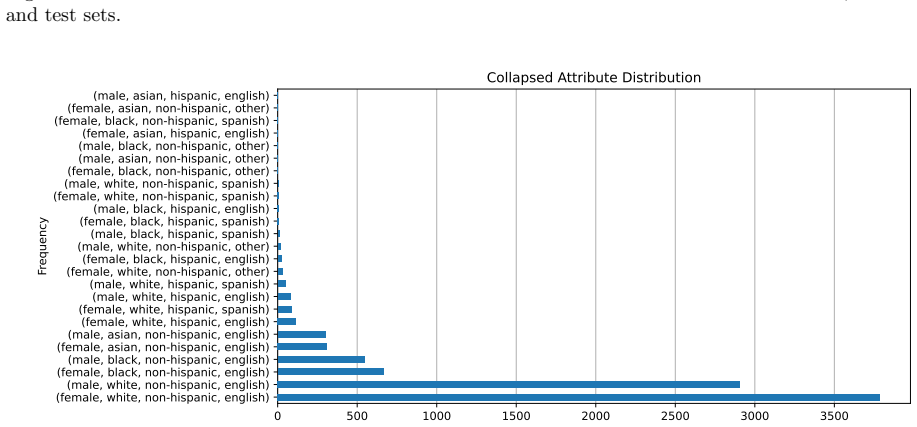
- On heavily imbalanced clinical attributes (ethnicity, language), sample sizes per minority group are tiny, so group-distance estimates are noisy; future reproductions should report uncertainty and consider stratified sampling.
Editorial analysis
A structured set of objections, weighed in public.
Referee Report
Summary. This paper reports a reproducibility study of FairCLIP (Luo et al., 2024), a method that fine-tunes CLIP with a Sinkhorn-distance regularizer to improve group fairness in zero-shot glaucoma classification. The authors document that the official FairCLIP implementation deviates from the model description in three ways: group similarity scores are normalized by their sum, the similarity matrix uses IT⊤T I⊤ rather than diag(IT⊤), and model selection is performed on the test set rather than the validation set. They introduce an aligned implementation (A-FairCLIP) and a multi-attribute extension (FairCLIP+), and evaluate on Harvard-FairVLMed (ViT-B/16 and ViT-L/14) and FairFace (RS50). Across these settings, they find that FairCLIP, A-FairCLIP, and FairCLIP+ generally do not improve AUC or fairness metrics over fine-tuned CLIP, even though the regularization objective reduces Sinkhorn distances. The paper concludes that Claim 2 of the original paper—that FairCLIP improves both performance and fairness—is not supported by their experiments, while Claim 1 (CLIP exhibits demographic biases) receives weak support.
Significance. If the negative result is robust, this would be an important caution for practitioners and would cast doubt on the original CVPR 2024 results. The paper's concrete documentation of the implementation–description mismatch is a genuine contribution, as is the distance-reduction-without-fairness finding. The authors also provide code and detailed computational cost accounting, which strengthens the reproducibility value. However, the central claim is an absence claim and is supported only by three seeds per condition with large standard deviations; many key comparisons are within one standard deviation. As reported, the evidence is too underpowered to definitively overturn the original claims, though it is a legitimate and useful negative result.
major comments (4)
- [3.3, 4.1.2, 5.1] The central negative claim is underpowered. All experiments use three seeds (Section 3.3), and Section 5.1 itself acknowledges that standard deviations are relatively high and could be stabilized by more runs. In Table 2, A-FairCLIPgender DPD is 1.57±2.13 vs CLIP-FT 2.97±3.08, and AUC is 70.00±1.94 vs 70.14±1.63; these differences are far smaller than the noise. Table 6 shows AUC differences of 0.1–1 point with standard deviations of 0.2–5. No confidence intervals, effect sizes, or power analysis is provided. Since “do not support Claim 2” is an absence claim, the current design cannot distinguish a true absence of improvement from a failure to detect a real gain.
- [3.4, Appendix B] Several protocol deviations make the comparison not fully apples-to-apples with the original study. Linear probes are trained for 500 instead of 1000 epochs; FairFace fine-tuning uses a random 11,000-sample subset, custom prompts, and the small RS50 architecture; and A-FairCLIP hyperparameters are tuned on the gender attribute only and then applied to all attributes. The inversion in Table 10 (FairCLIPgender DPD 5.69±1.23 vs the original 0.84±0.25) could be due to these choices rather than to the method itself. The authors should justify each deviation or provide a sensitivity analysis showing it does not drive the negative conclusion.
- [3.3, 5.1] Because the original implementation selected the best model on the test set, the paper’s corrected validation-based protocol is a modified version of FairCLIP. The conclusion that the experimental results do not support Claim 2 is therefore about the corrected protocol, not about the original published pipeline as actually implemented. The paper notes this in Section 5.1, but the abstract and Section 5.1 should be more explicit that the official-code reproduction also changed model selection; otherwise readers may over-interpret the negative result as directly refuting the original paper.
- [4.2.2, Tables 4-5] The claim that minimizing Sinkhorn distance does not imply improved fairness rests on a small number of runs and a single distance metric. Tables 4 and 5 show large reductions in distance, but the accompanying fairness metrics have high variability. A formal test of association between distance reduction and fairness improvement, or at least confidence intervals on the distances, would be needed to support the conclusion that the regularizer’s effect is purely on the Sinkhorn distance without downstream benefit.
minor comments (5)
- [3.1, Eq. (2)] Equation (2) writes d(DB,DB) but from the surrounding text and Equation (1) it should presumably be d(DB,DBa). Please correct the typo.
- [Appendix E, Table 14] In the Male row of the Gaussian MMD table (Table 13/14), the entry “3.55·104” appears to be a typo for “3.55·10−4”; as printed it is inconsistent with the neighboring values.
- [Appendix B] The sentence “since there were no significant differences between those parameters and the parameters found with gender” is self-referential; presumably one of the two mentions of ‘gender’ should be ‘ethnicity’ or another attribute.
- [3.4.2] Minor typo: “constrastive” should be “contrastive”.
- [3.4.3] Grammar: “The evaluations was done” should be “The evaluations were done”.
Circularity Check
No significant circularity: the paper is an empirical reproduction study whose conclusions are measurements, not derivations from fitted values or self-citations.
full rationale
The paper is an empirical reproduction study, not a derivation. The main chain is: §3 describes the reproduction protocol, including the official implementation and an 'aligned' implementation A-FairCLIP; §4 reports measurements on held-out test splits of Harvard-FairVLMed and on FairFace; §5 concludes that Claim 2 is not supported. No equation in the paper defines a claimed prediction in terms of the quantity being predicted. The only place resembling a fitted-input concern is Appendix B, where A-FairCLIP hyperparameters are selected on the validation set: 'The objective function evaluated the performance of the model on the validation set, measured by the AUC' and 'All parameters for the aligned models used the parameters found with the attribute gender.' This is ordinary model selection, and the headline negative result is based on the test set (Tables 2, 6), which was not used for that selection; moreover §4.2.1 explicitly attributes A-FairCLIP's gender improvement to this tuning ('improved performance on the attribute "gender", which can be explained by the hyperparameter optimization being performed on the attribute gender'), so the paper does not rename the fit as a prediction. The FairFace experiments reuse the FairVLMed hyperparameters (§3.4.3), which makes them a transfer test rather than a circular one. The manuscript flags its own limitations: §3.4 states 'Due to resource constraints we used 500 epochs only for the linear probes, while Luo et al. (2024) use 1000 epochs'; §5.1 concedes 'standard deviations are relatively high' and notes the original code's test-set selection 'may help explain why the parameters reported by Luo et al. (2024) outperformed the best parameters during our hyperparameter optimization phase.' These weaken the negative conclusion but do not make it reduce to its inputs. Appendix D compares with the original authors' external numbers; no load-bearing claim rests on a self-citation by the current authors. The three-seed/no-power-analysis concern is a statistical robustness issue, not circularity: differences in Table 2 are often within one standard deviation, so 'not found to improve' may be underpowered, but absence of evidence is not a definitional reduction. Score 0.
Axiom & Free-Parameter Ledger
free parameters (6)
- FairCLIP+ regularization rate lambda =
1e-5
- FairCLIP+ attribute weights w_A =
w_race = 1/2, w_gender = 1/2, others = 0
- A-FairCLIP learning rate =
1.49e-5
- A-FairCLIP fairness rate lambda =
0.07
- Linear probe training epochs =
500 (versus 1000 in original)
- FairFace fine-tuning subset size =
11,000 samples
axioms (5)
- domain assumption The Sinkhorn distance computed by Geomloss on batch similarity scores faithfully estimates the group-versus-population distribution discrepancy.
- domain assumption Zero-shot glaucoma classification by pairing SLO fundus images with the texts 'A photo of glaucoma' and 'A photo of non-glaucoma' is a valid operationalization of the task.
- domain assumption The custom FairFace prompts ('Image of a person that is [AGE] years old, their race is: [RACE] They are [GENDER]') provide a valid gender-prediction task for generalizability testing.
- domain assumption Three repeated runs with reported standard deviations are sufficient to compare methods whose score differences are often smaller than the standard deviations.
- domain assumption GPT-4 summarization of clinical notes does not systematically confound the fairness comparisons.
Cite this review
Pith. "Pith review of On the Reproducibility of "FairCLIP: Harnessing Fairness in Vision-Language Learning''." pith.science (2026). https://pith.science/paper/FIEWYAWA
@misc{pith2026250906535,
  author       = {Pith},
  title        = {Pith review of: On the Reproducibility of "FairCLIP: Harnessing Fairness in Vision-Language Learning''},
  year         = {2026},
  howpublished = {\url{https://pith.science/paper/FIEWYAWA}},
  note         = {Machine review of arXiv:2509.06535}
}
read the original abstract
We investigated the reproducibility of FairCLIP, proposed by Luo et al. (2024), for improving the group fairness of CLIP (Radford et al., 2021) by minimizing image-text similarity score disparities across sensitive groups using the Sinkhorn distance. The experimental setup of Luo et al. (2024) was reproduced to primarily investigate the research findings for FairCLIP. The model description by Luo et al. (2024) was found to differ from the original implementation. Therefore, a new implementation, A-FairCLIP, is introduced to examine specific design choices. Furthermore, FairCLIP+ is proposed to extend the FairCLIP objective to include multiple attributes. Additionally, the impact of the distance minimization on FairCLIP's fairness and performance was explored. In alignment with the original authors, CLIP was found to be biased towards certain demographics when applied to zero-shot glaucoma classification using medical scans and clinical notes from the Harvard-FairVLMed dataset. However, the experimental results on two datasets do not support their claim that FairCLIP improves the performance and fairness of CLIP. Although the regularization objective reduces Sinkhorn distances, both the official implementation and the aligned implementation, A-FairCLIP, were not found to improve performance nor fairness in zero-shot glaucoma classification.
Figures




Reference graph
Works this paper leans on
-
[1]
Optuna: A next-generation hyperparameter optimization framework
Takuya Akiba, Shotaro Sano, Toshihiko Yanase, Takeru Ohta, and Masanori Koyama. Optuna: A next-generation hyperparameter optimization framework. In Proceedings of the 25th ACM SIGKDD International Conference on Knowledge Discovery & Data Mining, KDD '19, pp.\ 2623–2631, New York, NY, USA, 2019. Association for Computing Machinery. ISBN 9781450362016. doi:...
arXiv 2019
-
[2]
A prompt array keeps the bias away: Debiasing vision-language models with adversarial learning
Hugo Berg, Siobhan Hall, Yash Bhalgat, Hannah Kirk, Aleksandar Shtedritski, and Max Bain. A prompt array keeps the bias away: Debiasing vision-language models with adversarial learning. In Yulan He, Heng Ji, Sujian Li, Yang Liu, and Chua-Hui Chang (eds.), Proceedings of the 2nd Conference of the Asia-Pacific Chapter of the Association for Computational Li...
work page 2022
-
[3]
Alex Beutel, Jilin Chen, Zhe Zhao, and Ed H. Chi. Data decisions and theoretical implications when adversarially learning fair representations, 2017. URL https://arxiv.org/abs/1707.00075
Pith/arXiv arXiv 2017
-
[4]
Fairness in machine learning: A survey
Simon Caton and Christian Haas. Fairness in machine learning: A survey. ACM Comput. Surv., 56 0 (7), April 2024. ISSN 0360-0300. doi:10.1145/3616865. URL https://doi.org/10.1145/3616865
doi:10.1145/3616865 2024
-
[5]
Sinkhorn distances: Lightspeed computation of optimal transport
Marco Cuturi. Sinkhorn distances: Lightspeed computation of optimal transport. In C.J. Burges, L. Bottou, M. Welling, Z. Ghahramani, and K.Q. Weinberger (eds.), Advances in Neural Information Processing Systems, volume 26. Curran Associates, Inc., 2013. URL https://proceedings.neurips.cc/paper_files/paper/2013/file/af21d0c97db2e27e13572cbf59eb343d-Paper.pdf
work page 2013
-
[6]
Interpolating between optimal transport and mmd using sinkhorn divergences
Jean Feydy, Thibault S\' e journ\' e , Fran c ois-Xavier Vialard, Shun-ichi Amari, Alain Trouve, and Gabriel Peyr\' e . Interpolating between optimal transport and mmd using sinkhorn divergences. In Kamalika Chaudhuri and Masashi Sugiyama (eds.), Proceedings of the Twenty-Second International Conference on Artificial Intelligence and Statistics, volume 89...
work page 2019
-
[7]
Kathleen Fraser and Svetlana Kiritchenko. Examining gender and racial bias in large vision -- language models using a novel dataset of parallel images. In Yvette Graham and Matthew Purver (eds.), Proceedings of the 18th Conference of the European Chapter of the Association for Computational Linguistics (Volume 1: Long Papers), pp.\ 690--713, St. Julian ' ...
work page 2024
-
[8]
Role of machine learning in medical research: A survey
Arunim Garg and Vijay Mago. Role of machine learning in medical research: A survey. Computer Science Review, 40: 0 100370, 2021. ISSN 1574-0137. doi:https://doi.org/10.1016/j.cosrev.2021.100370. URL https://www.sciencedirect.com/science/article/pii/S1574013721000101
-
[9]
Arthur Gretton, Karsten M. Borgwardt, Malte J. Rasch, Bernhard Sch \"o lkopf, and Alexander Smola. A kernel two-sample test. Journal of Machine Learning Research, 13 0 (25): 0 723--773, 2012. URL http://jmlr.org/papers/v13/gretton12a.html
work page 2012
-
[10]
Duurzaam in de e-infrastructuur
Kees Groeneveld. Duurzaam in de e-infrastructuur. pp.\ 65, 2017. URL https://www.surf.nl/files/2019-02/duurzaam-in-de-e-infrastructuur.pdf
work page 2017
-
[13]
Batch normalization: accelerating deep network training by reducing internal covariate shift
Sergey Ioffe and Christian Szegedy. Batch normalization: accelerating deep network training by reducing internal covariate shift. In Proceedings of the 32nd International Conference on International Conference on Machine Learning - Volume 37, ICML'15, pp.\ 448–456. JMLR.org, 2015. URL https://doi.org/10.1109/ICCV51070.2023.01863
arXiv 2015
-
[14]
Fairness-aware classifier with prejudice remover regularizer
Toshihiro Kamishima, Shotaro Akaho, Hideki Asoh, and Jun Sakuma. Fairness-aware classifier with prejudice remover regularizer. In Peter A. Flach, Tijl De Bie, and Nello Cristianini (eds.), Machine Learning and Knowledge Discovery in Databases, pp.\ 35--50, Berlin, Heidelberg, 2012. Springer Berlin Heidelberg. ISBN 978-3-642-33486-3. URL https://doi.org/10...
-
[15]
Kimmo Karkkainen and Jungseock Joo. Fairface: Face attribute dataset for balanced race, gender, and age for bias measurement and mitigation. In Proceedings of the IEEE/CVF Winter Conference on Applications of Computer Vision, pp.\ 1548--1558, 2021. URL https://doi.org/10.48550/arXiv.1908.04913
-
[16]
Diederik P. Kingma and Jimmy Ba. Adam: A method for stochastic optimization, 2017. URL https://arxiv.org/abs/1412.6980
Pith/arXiv arXiv 2017
-
[17]
Quantifying the carbon emissions of machine learning
Alexandre Lacoste, Alexandra Luccioni, Victor Schmidt, and Thomas Dandres. Quantifying the carbon emissions of machine learning. arXiv preprint arXiv:1910.09700, 2019. URL https://doi.org/10.48550/arXiv.1910.09700
-
[18]
Survey of Social Bias in Vision-Language Models
Nayeon Lee, Yejin Bang, Holy Lovenia, Samuel Cahyawijaya, Wenliang Dai, and Pascale Fung. Survey of social bias in vision-language models, 2023. URL https://arxiv.org/abs/2309.14381
work page internal anchor Pith review Pith/arXiv arXiv 2023
-
[19]
Dongxu Li, Junnan Li, Hung Le, Guangsen Wang, Silvio Savarese, and Steven C.H. Hoi. LAVIS : A one-stop library for language-vision intelligence. In Proceedings of the 61st Annual Meeting of the Association for Computational Linguistics (Volume 3: System Demonstrations), pp.\ 31--41, Toronto, Canada, July 2023 a . Association for Computational Linguistics....
work page 2023
-
[20]
Junnan Li, Dongxu Li, Silvio Savarese, and Steven Hoi. BLIP-2: bootstrapping language-image pre-training with frozen image encoders and large language models. In ICML, 2023 b . URL https://doi.org/10.48550/arXiv.2301.12597
-
[21]
Fairclip: Harnessing fairness in vision-language learning
Yan Luo, Min Shi, Muhammad Osama Khan, Muhammad Muneeb Afzal, Hao Huang, Shuaihang Yuan, Yu Tian, Luo Song, Ava Kouhana, Tobias Elze, Yi Fang, and Mengyu Wang. Fairclip: Harnessing fairness in vision-language learning. In 2024 IEEE/CVF Conference on Computer Vision and Pattern Recognition (CVPR), pp.\ 12289--12301, 2024. URL https://doi.org/10.48550/arXiv...
-
[22]
Methodiek co2 emissiefactoren elektriciteit
Milieu Centraal . Methodiek co2 emissiefactoren elektriciteit. 2024. URL www.co2emissiefactoren.nl/wp-content/uploads/2024/02/240214-Notitie-CO2emissiefactoren-elektriciteit-pdf.pdf
work page 2024
-
[23]
OpenAI. Gpt-4 technical report, 2024. URL https://arxiv.org/abs/2303.08774
Pith/arXiv arXiv 2024
-
[24]
Toward a better trade-off between performance and fairness with kernel-based distribution matching
Flavien Prost, Hai Qian, Qiuwen Chen, Ed H. Chi, Jilin Chen, and Alex Beutel. Toward a better trade-off between performance and fairness with kernel-based distribution matching, 2019. URL https://arxiv.org/abs/1910.11779
work page internal anchor Pith review Pith/arXiv arXiv 2019
-
[25]
Recycling privileged learning and distribution matching for fairness
Novi Quadrianto and Viktoriia Sharmanska. Recycling privileged learning and distribution matching for fairness. In I. Guyon, U. Von Luxburg, S. Bengio, H. Wallach, R. Fergus, S. Vishwanathan, and R. Garnett (eds.), Advances in Neural Information Processing Systems, volume 30. Curran Associates, Inc., 2017. URL https://proceedings.neurips.cc/paper_files/pa...
work page 2017
-
[26]
Learning transferable visual models from natural language supervision
Alec Radford, Jong Wook Kim, Chris Hallacy, Aditya Ramesh, Gabriel Goh, Sandhini Agarwal, Girish Sastry, Amanda Askell, Pamela Mishkin, Jack Clark, Gretchen Krueger, and Ilya Sutskever. Learning transferable visual models from natural language supervision. In Marina Meila and Tong Zhang (eds.), Proceedings of the 38th International Conference on Machine L...
work page 2021
-
[27]
DeAR: Debiasing Vision-Language Models with Additive Residuals
Ashish Seth, Mayur Hemani, and Chirag Agarwal. Dear: Debiasing vision-language models with additive residuals. In Proceedings of the IEEE/CVF Conference on Computer Vision and Pattern Recognition (CVPR), pp.\ 6820--6829, June 2023. URL https://doi.org/10.48550/arXiv.2303.10431
work page internal anchor Pith review Pith/arXiv arXiv doi:10.48550/arxiv.2303.10431 2023
-
[28]
Representation bias in data: A survey on identification and resolution techniques
Nima Shahbazi, Yin Lin, Abolfazl Asudeh, and HV Jagadish. Representation bias in data: A survey on identification and resolution techniques. ACM Computing Surveys, 55 0 (13s): 0 1--39, 2023. URL https://doi.org/10.1145/3588433
doi:10.1145/3588433 2023
-
[29]
Large batch training of convolutional networks, 2017
Yang You, Igor Gitman, and Boris Ginsburg. Large batch training of convolutional networks, 2017. URL https://arxiv.org/abs/1708.03888
Pith/arXiv arXiv 2017
-
[30]
Clip in medical imaging: A comprehensive survey, 2024
Zihao Zhao, Yuxiao Liu, Han Wu, Mei Wang, Yonghao Li, Sheng Wang, Lin Teng, Disheng Liu, Zhiming Cui, Qian Wang, and Dinggang Shen. Clip in medical imaging: A comprehensive survey, 2024. URL https://arxiv.org/abs/2312.07353
Pith/arXiv arXiv 2024
-
[31]
General facial representation learning in a visual-linguistic manner
Yinglin Zheng, Hao Yang, Ting Zhang, Jianmin Bao, Dongdong Chen, Yangyu Huang, Lu Yuan, Dong Chen, Ming Zeng, and Fang Wen. General facial representation learning in a visual-linguistic manner. In 2022 IEEE/CVF Conference on Computer Vision and Pattern Recognition (CVPR), pp.\ 18676--18688, 2022. URL https://doi.org/10.1109/CVPR52688.2022.01814
arXiv 2022
-
[32]
write newline
" write newline "" before.all 'output.state := FUNCTION n.dashify 't := "" t empty not t #1 #1 substring "-" = t #1 #2 substring "--" = not "--" * t #2 global.max substring 't := t #1 #1 substring "-" = "-" * t #2 global.max substring 't := while if t #1 #1 substring * t #2 global.max substring 't := if while FUNCTION format.date year duplicate empty "emp...
This paper was first reviewed by deepseek-v4-flash on August 4, 2026.
discussion (0)
Sign in with ORCID, Apple, or X to comment. Anyone can read and Pith papers without signing in.