Recognition: unknown
Introduction to transverse momentum imaging
Pith reviewed 2026-05-10 01:34 UTC · model grok-4.3
The pith
Transverse momentum dependent functions provide a framework for three-dimensional imaging of hadrons in QCD.
A machine-rendered reading of the paper's core claim, the machinery that carries it, and where it could break.
Core claim
These lecture notes establish the definitions, evolution equations, and phenomenological applications of transverse momentum dependent parton distributions, showing how they extend the standard parton model to include transverse momentum and thereby enable momentum-space imaging of hadrons.
What carries the argument
Transverse momentum dependent parton distribution functions (TMD PDFs), which describe the probability density for finding a parton with given longitudinal momentum fraction and transverse momentum inside a hadron.
If this is right
- Data from the electron-ion collider can be interpreted in terms of three-dimensional parton distributions rather than one-dimensional ones.
- Spin and orbital angular momentum contributions inside hadrons become accessible through TMD observables.
- Factorization theorems allow separation of hard scattering from soft transverse-momentum effects in high-energy processes.
Where Pith is reading between the lines
- The same TMD framework could be applied to other high-energy processes beyond the electron-ion collider, such as Drell-Yan at the LHC.
- Connections to generalized parton distributions might allow unified three-dimensional imaging in both momentum and position space.
- Phenomenological extractions of TMDs from existing data can serve as benchmarks before new collider runs begin.
Load-bearing premise
The reader already knows the basics of quantum chromodynamics and the collinear parton model.
What would settle it
A measurement at an electron-ion collider that shows transverse-momentum distributions inconsistent with the predicted evolution and factorization properties of TMD functions.
Figures
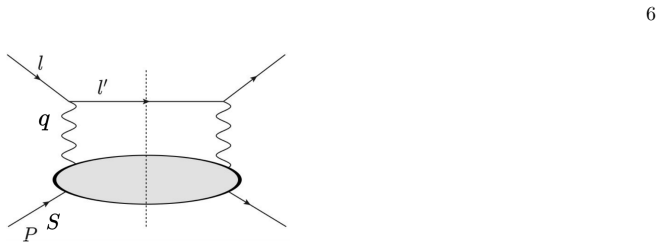


read the original abstract
This set of notes complements the lectures and recitation sessions discussed in the following graduate schools: HUGS at Jefferson Lab (years 2018, 2019, 2021), the International School and Workshop on Probing Hadron Structure at the Electron-Ion Collider at ICTS (2024), Frontiers in Nuclear and Hadronic Physics at GGI (2025), and the International Workshop and School on Hadron Structure and Strong Interactions at Nanjing University (2025).
Editorial analysis
A structured set of objections, weighed in public.
Referee Report
Summary. This manuscript is a set of lecture notes providing an introduction to transverse momentum dependent distributions and imaging in hadrons. It is explicitly designed to complement lectures and recitations at the HUGS graduate schools (2018, 2019, 2021), the ICTS school on probing hadron structure at the EIC (2024), the GGI school on nuclear and hadronic physics (2025), and the Nanjing workshop on hadron structure (2025). No new scientific results, derivations, or predictions are claimed.
Significance. These notes address a pedagogical need in the QCD and hadron-structure community, particularly as preparation for research at the Electron-Ion Collider. Well-structured lecture notes on TMDs can help graduate students master the parton-model extensions, factorization theorems, and experimental observables that are central to current and future programs; their value lies in clarity and accessibility rather than novelty.
minor comments (1)
- The abstract lists the supported schools but does not outline the specific topics or organization of the notes themselves; adding a brief table of contents or topic list would improve usability for readers who did not attend the lectures.
Simulated Author's Rebuttal
We thank the referee for their careful reading and positive evaluation of these lecture notes. We are pleased that the pedagogical focus and structure were recognized as addressing a clear need in the community, particularly in preparation for EIC-related research. We have no major comments to address, as none were raised.
Circularity Check
Lecture notes with no derivations or predictions
full rationale
This document is explicitly presented as lecture notes to accompany graduate-school sessions on transverse-momentum-dependent distributions. It advances no novel scientific claims, derivations, or results whose internal consistency can be examined for circularity. No equations, predictions, or load-bearing steps are offered that could reduce to fitted parameters, self-citations, or self-definitional constructs. The content assumes standard QCD and parton-model background and remains self-contained against external benchmarks.
Axiom & Free-Parameter Ledger
Reference graph
Works this paper leans on
-
[1]
(3.85) in those notes, derive the Dirac projections of the TMD correlator outlined in eqs
starting from eq. (3.85) in those notes, derive the Dirac projections of the TMD correlator outlined in eqs. (3.88) - (3.90)
-
[2]
compute the Sivers structure function (in particular its angular dependence) in SIDIS. notes. [Suggested steps: define the hadronic tensor in terms of TMD correlators, define the leptonic tensor, contract them, etc.]
-
[3]
parallel
do the same for other structure functions in SIDIS 6 https://feyncalc.github.io/ 7 https://www.sympy.org/ 24 Part IV The role of symmetries The symmetries of QCD play an essential role in the definition of the functions that describe hadron structure and hadronization in momentum space. These symmetries constrain the number of structures that can be used ...
-
[4]
Solve the parallel transport equation (115) to get the expression of a generic Wilson line used in Eq. (116)
-
[5]
X A for the case ofU [+] (see Eqs
Derive the expression of the gauge link in the case of Drell-YanU [−], following the steps outlined in Sec. X A for the case ofU [+] (see Eqs. (126) and (127))
-
[6]
Show that the staple gauge link [±] transforms into the [∓] one under time reversal transformations, whereas the parity transformation sends [±] in [±] (see Sec. X C)
-
[7]
(134), (135), (136) for the transformation of the gauge-invariant correlation function Φ [U](k, P, S), using the results discussed in Sec
Prove Eqs. (134), (135), (136) for the transformation of the gauge-invariant correlation function Φ [U](k, P, S), using the results discussed in Sec. IX and Sec. X C 34 Part V Phenomenology The way 3D hadron structure in momentum space is modified changing the relevant renormalization scales in the associated operators is referred to as TMD evolution. The...
2013
-
[8]
Derive the functional dependence of the saddle point for a TMD distribution as a function ofx,Q
-
[9]
Repeat the same calculation for a TMD fragmentation function
-
[10]
Next Generation EU
Find the matching coefficients for the helicity and transversity TMD PDFs,g 1(x, k2 T ) andh 1(x, k2 T ), in Ref. [96] and show that the perturbative calculations are not reliable at largeb T (as for the unpolarized distribution). 41 A. LIGHT-CONE COORDINA TES An introduction to light-cone coordinates is given in Ref. [13]. Given a Cartesian basis{ˆe 0,ˆe...
2022
-
[11]
R. L. Jaffe,Spin, twist and hadron structure in deep inelastic processes, inThe spin structure of the nucleon. Proceedings, International School of Nucleon Structure, 1st Course, Erice, Italy, August 3-10, 1995, pp. 42–129, 1996. hep-ph/9602236
work page Pith review arXiv 1995
-
[12]
P. J. Mulders,Transverse-momentum distributions and beyond: setting up the nucleon tomography. Unpublished lecture notes - hyperlink to file, 2015
2015
- [13]
-
[14]
Bacchetta,Transverse momentum distributions
A. Bacchetta,Transverse momentum distributions. Unpublished lecture notes - hyperlink to file, 2012
2012
-
[15]
Collins,Foundations of perturbative QCD
J. Collins,Foundations of perturbative QCD. Cambridge University Press, 2013
2013
-
[16]
Muta,Foundations of Quantum Chromodynamics: An Introduction to Perturbative Methods in Gauge Theories, (3rd ed.), vol
T. Muta,Foundations of Quantum Chromodynamics: An Introduction to Perturbative Methods in Gauge Theories, (3rd ed.), vol. 78 ofWorld scientific Lecture Notes in Physics. World Scientific, Hackensack, N.J., 2010
2010
-
[17]
M. E. Peskin and D. V. Schroeder,An Introduction to quantum field theory. 1995
1995
-
[18]
J. C. Collins and D. E. Soper,Parton Distribution and Decay Functions,Nucl. Phys.B194(1982) 445–492
1982
-
[19]
R. Boussarie et al.,TMD Handbook,2304.03302. [10]CTEQcollaboration, R. Brock et al.,Handbook of perturbative QCD: Version 1.0,Rev. Mod. Phys.67(1995) 157–248
-
[20]
Diehl,Introduction to GPDs and TMDs,Eur
M. Diehl,Introduction to GPDs and TMDs,Eur. Phys. J. A52(2016) 149, [1512.01328]
-
[21]
A. Bacchetta, U. D’Alesio, M. Diehl and C. A. Miller,Single-spin asymmetries: The Trento conventions,Phys. Rev. D 70(2004) 117504, [hep-ph/0410050]
-
[22]
J. C. Collins,Light cone variables, rapidity and all that,hep-ph/9705393
work page internal anchor Pith review arXiv
-
[23]
Parton fragmentation functions,
A. Metz and A. Vossen,Parton Fragmentation Functions,Prog. Part. Nucl. Phys.91(2016) 136–202, [1607.02521]
-
[24]
Scimemi,A short review on recent developments in TMD factorization and implementation,Adv
I. Scimemi,A short review on recent developments in TMD factorization and implementation,Adv. High Energy Phys. 2019(2019) 3142510, [1901.08398]
- [25]
-
[26]
T. Horn and C. D. Roberts,The pion: an enigma within the Standard Model,J. Phys. G43(2016) 073001, [1602.04016]
- [27]
-
[28]
Physics Opportunities with the 12 GeV Upgrade at Jefferson Lab
J. Dudek et al.,Physics Opportunities with the 12 GeV Upgrade at Jefferson Lab,Eur. Phys. J.A48(2012) 187, [1208.1244]
work page Pith review arXiv 2012
-
[29]
Electron Ion Collider: The Next QCD Frontier - Understanding the glue that binds us all
A. Accardi et al.,Electron Ion Collider: The Next QCD Frontier - Understanding the glue that binds us all,1212.1701
-
[30]
Science Requirements and Detector Concepts for the Electron-Ion Collider: EIC Yellow Report
R. Abdul Khalek et al.,Science Requirements and Detector Concepts for the Electron-Ion Collider: EIC Yellow Report, Nucl. Phys. A1026(2022) 122447, [2103.05419]
work page internal anchor Pith review arXiv 2022
- [31]
-
[32]
C. G. Callan, Jr. and D. J. Gross,High-energy electroproduction and the constitution of the electric current,Phys. Rev. Lett.22(1969) 156–159
1969
-
[33]
P. J. Mulders,Transverse momentum dependence in high-energy scattering processes. Unpublished lecture notes - hyperlink to file, 2016
2016
-
[34]
Bacchetta,Probing the Transverse Spin of Quarks in Deep Inelastic Scattering
A. Bacchetta,Probing the Transverse Spin of Quarks in Deep Inelastic Scattering. PhD thesis, Vrije U., Amsterdam, 2002.hep-ph/0212025
-
[35]
R. E. Cutkosky,Singularities and discontinuities of Feynman amplitudes,J. Math. Phys.1(1960) 429–433
1960
-
[36]
R. Zwicky,A brief Introduction to Dispersion Relations and Analyticity, inQuantum Field Theory at the Limits: from Strong Fields to Heavy Quarks, pp. 93–120, 2017.1610.06090. DOI
-
[37]
A. Bacchetta and P. J. Mulders,Deep inelastic leptoproduction of spin-one hadrons,Phys. Rev. D62(2000) 114004, [hep-ph/0007120]. 44
- [38]
-
[39]
Kumano,Parton distribution functions and fragmentation functions of spin-1 hadrons,Eur
S. Kumano,Parton distribution functions and fragmentation functions of spin-1 hadrons,Eur. Phys. J. A60(2024) 205, [2406.01180]
- [40]
-
[41]
Semi-inclusive deep inelastic scattering at small transverse momentum
A. Bacchetta, M. Diehl, K. Goeke, A. Metz, P. J. Mulders and M. Schlegel,Semi-inclusive deep inelastic scattering at small transverse momentum,JHEP02(2007) 093, [hep-ph/0611265]
work page Pith review arXiv 2007
-
[42]
P. J. Mulders and R. D. Tangerman,The Complete tree level result up to order 1/Q for polarized deep inelastic leptoproduction,Nucl. Phys. B461(1996) 197–237, [hep-ph/9510301]
work page Pith review arXiv 1996
-
[43]
M. Diehl and S. Sapeta,On the analysis of lepton scattering on longitudinally or transversely polarized protons,Eur. Phys. J. C41(2005) 515–533, [hep-ph/0503023]
-
[44]
A. Accardi and A. Bacchetta,Accessing the nucleon transverse structure in inclusive deep inelastic scattering,Phys. Lett. B773(2017) 632–638, [1706.02000]
-
[45]
Hoodbhoy, R
P. Hoodbhoy, R. L. Jaffe and A. Manohar,Novel Effects in Deep Inelastic Scattering from Spin 1 Hadrons,Nucl. Phys. B312(1989) 571–588
1989
- [46]
-
[47]
K. G. Wilson,Nonlagrangian models of current algebra,Phys. Rev.179(1969) 1499–1512
1969
-
[48]
K. G. Wilson and W. Zimmermann,Operator product expansions and composite field operators in the general framework of quantum field theory,Commun. Math. Phys.24(1972) 87–106
1972
-
[49]
Weinberg,The quantum theory of fields
S. Weinberg,The quantum theory of fields. Vol. 2: Modern applications. Cambridge University Press, 8, 2013, 10.1017/CBO9781139644174
-
[50]
M. G. A. Buffing,Color and TMD Universality in Hadronic Interactions. PhD thesis, NIKHEF, Amsterdam, 2015-09-02
2015
-
[51]
Zimmermann,Normal products and the short distance expansion in the perturbation theory of renormalizable interactions,Annals Phys.77(1973) 570–601
W. Zimmermann,Normal products and the short distance expansion in the perturbation theory of renormalizable interactions,Annals Phys.77(1973) 570–601
1973
-
[52]
M. Diehl and T. Gousset,Time ordering in off diagonal parton distributions,Phys. Lett. B428(1998) 359–370, [hep-ph/9801233]
-
[53]
D. J. Gross and S. B. Treiman,Light cone structure of current commutators in the gluon quark model,Phys. Rev. D4 (1971) 1059–1072
1971
-
[54]
A. Accardi and A. Signori,Quark fragmentation as a probe of dynamical mass generation,Phys. Lett. B798(2019) 134993, [1903.04458]
-
[55]
A. Accardi and A. Signori,On the connection between quark propagation and hadronization,Eur. Phys. J. C80(2020) 825, [2005.11310]
-
[56]
What can break the Wandzura--Wilczek relation?
A. Accardi, A. Bacchetta, W. Melnitchouk and M. Schlegel,What can break the Wandzura-Wilczek relation?,JHEP11 (2009) 093, [0907.2942]
work page Pith review arXiv 2009
- [57]
-
[58]
R. L. Jaffe,Parton Distribution Functions for Twist Four,Nucl. Phys. B229(1983) 205–230
1983
-
[59]
Boer,Azimuthal asymmetries in hard scattering processes
D. Boer,Azimuthal asymmetries in hard scattering processes. PhD thesis, Vrije U., Amsterdam, 1998
1998
-
[60]
Generalized Parton Distributions
M. Diehl,Generalized parton distributions,Phys. Rept.388(2003) 41–277, [hep-ph/0307382]
work page Pith review arXiv 2003
- [61]
- [62]
-
[63]
Time-reversal odd distribution functions in leptoproduction
D. Boer and P. J. Mulders,Time reversal odd distribution functions in leptoproduction,Phys. Rev. D57(1998) 5780–5786, [hep-ph/9711485]
work page Pith review arXiv 1998
-
[64]
J. P. Ralston and D. E. Soper,Production of Dimuons from High-Energy Polarized Proton Proton Collisions,Nucl. Phys. B152(1979) 109
1979
- [65]
-
[66]
A. Idilbi, X.-d. Ji, J.-P. Ma and F. Yuan,Collins-Soper equation for the energy evolution of transverse-momentum and spin dependent parton distributions,Phys. Rev. D70(2004) 074021, [hep-ph/0406302]
- [67]
-
[68]
S. Rodini and A. Vladimirov,Transverse momentum dependent factorization for SIDIS at next-to-leading power,Phys. Rev. D110(2024) 034009, [2306.09495]
-
[69]
M. Anselmino, M. Boglione, J. Hansson and F. Murgia,Polarized inclusive leptoproduction, lepton N –>h X, and the hadron helicity density matrix, rho(h): Possible measurements and predictions,Phys. Rev. D54(1996) 828–837, [hep-ph/9512379]
-
[70]
M. Anselmino, E. Leader and F. Murgia,Single spin asymmetries in DIS,Phys. Rev. D56(1997) 6021–6024, [hep-ph/9610407]
-
[71]
M. Anselmino, M. Boglione, U. D’Alesio, E. Leader, S. Melis and F. Murgia,The general partonic structure for hadronic spin asymmetries,Phys. Rev. D73(2006) 014020, [hep-ph/0509035]. 45
-
[72]
Boer,Angular dependences in inclusive two-hadron production at BELLE,Nucl
D. Boer,Angular dependences in inclusive two-hadron production at BELLE,Nucl. Phys.B806(2009) 23–67, [0804.2408]
- [73]
-
[74]
Relations between generalized and transverse momentum dependent parton distributions
S. Meissner, A. Metz and K. Goeke,Relations between generalized and transverse momentum dependent parton distributions,Phys. Rev. D76(2007) 034002, [hep-ph/0703176]
work page Pith review arXiv 2007
-
[75]
J. Levelt and P. J. Mulders,Quark correlation functions in deep inelastic semiinclusive processes,Phys. Rev. D49 (1994) 96–113, [hep-ph/9304232]
- [76]
- [77]
-
[78]
S. D. Drell, D. J. Levy and T.-M. Yan,A Theory of Deep Inelastic Lepton-Nucleon Scattering and Lepton Pair Annihilation Processes. 1.,Phys. Rev.187(1969) 2159–2171
1969
-
[79]
S. D. Drell, D. J. Levy and T.-M. Yan,A Theory of Deep Inelastic Lepton Nucleon Scattering and Lepton Pair Annihilation Processes. 2. Deep Inelastic electron Scattering,Phys. Rev. D1(1970) 1035–1068
1970
-
[80]
S. D. Drell, D. J. Levy and T.-M. Yan,A Theory of Deep Inelastic Lepton-Nucleon Scattering and Lepton Pair Annihilation Processes. 3. Deep Inelastic electron-Positron Annihilation,Phys. Rev. D1(1970) 1617–1639
1970
discussion (0)
Sign in with ORCID, Apple, or X to comment. Anyone can read and Pith papers without signing in.