Cryptography and Security · arXiv:2608.13390 v1 · submitted 13 Aug 2026 · 45 references
TeleGapper: On the (un)reliability of Privacy Policies in Telegram Mini apps
The paper says
“Telegram Mini Apps are Web applications embedded within the Telegram client, forming an ecosystem of third-party services within one of the world's most widely used messaging platforms.”
more of the abstract
Despite their growing adoption and access to Telegram-provided context, their privacy properties remain largely unexplored. Unlike ecosystems such as WeChat, which rely on tightly controlled, proprietary execution frameworks, Telegram adopts a different model: Mini Apps run inside a WebView, combining platform-provided context with standard Web capabilities and unrestricted outbound networking. This enables applications to transmit sensitive information to analytics, advertising, tracking, or other third parties through ordinary Web requests, often with limited visibility. Privacy disclosures are therefore critical for transparency. Telegram allows Mini Apps either to define an application-specific privacy policy or to rely on a platform-provided default policy. While the latter reduces the developer's disclosure burden, it may lead to generic statements that do not accurately capture actual data practices of individual Mini Apps. In this paper, we present TeleGapper, a black-box dynamic analysis framework to assess the privacy posture of Mini Apps by capturing runtime network traffic, identifying third-party communications, and comparing observed data flows against disclosed privacy information. We evaluate 278 working Mini Apps collected from tApps Center, a community-driven catalogue for discovering third-party applications in Telegram. We find that 59.4% contact at least one undisclosed third party, 78.8% rely exclusively on Telegram's default privacy policy, and none provides a consent or opt-out mechanism. These findings expose a substantial transparency and compliance gap in a widely used yet understudied ecosystem.
from the abstract
Pith says
Machine review · deepseek-v4-flash · 14 Aug 2026 · what was read was not recorded · not checked by a person
It can be wrong. Challenge this review or reply to it.
Holds up, with conditions. First real measurement of Telegram Mini App privacy-policy compliance, with an interpretation-dependent violation rate and a strong consent finding. This line is wrong
3 major objections · 5 minor
How often objections from reviews like this one are right: not yet measured
Not checked: figures, code, what the 45 references say.
The paper says, at Section 4, Table 1, and Sections 5.4 and 7.1
The review did not quote this passage.
Pith says: Objection 1 of 3 · major
The headline result (59.4%, Table 2) is defined in Section 5.4 as 'transmission of user data to a third-party domain that is not disclosed by the privacy policy.' For the 219 apps governed by the Standard Bot Privacy Policy, 'not disclosed' is operationalized in Section 4 as 'not identified in the applicable privacy policy,' and the policy never enumerates recipient domains.
more of objection 1
Consequently, any third-party contact carrying user-related data is automatically classified as undisclosed. This is an interpretive mapping, not a direct consequence of the policy text: a purpose-limited analytics or infrastructure provider could plausibly fall within the policy's allowance of processing 'only insofar as necessary for the designated features' or within an 'otherwise permitted' category. The authors do not validate their reading against Telegram or a supervisory authority, and Section 9.2 acknowledges interpretive discretion only for custom policies, not for the standard policy. If this mapping overstates what the policy prohibits, the RQ1 and RQ2 conclusions would overstate non-compliance. Please provide the full relevant policy language, or a legal-analysis/validation step, or a sensitivity analysis under more restrictive readings (for example, counting only contacts whose service category has no plausible functional justification).
The paper says, at Section 6.5 and Section 9.2
The review did not quote this passage.
Pith says: Objection 2 of 3 · major
The EXCLUDED_HOSTS set filters out hosts including fonts.googleapis.com and play.googleapis.com before third-party inspection. These hosts can be contacted by Mini App code itself (for example, a WebView page loading Google Fonts) rather than only by the Android operating system. The set was constructed by manually inspecting traffic from 100 randomly sampled apps, but the paper does not report how many of the 278 analyzed apps were affected by this filter or whether the excluded hosts appeared in application-level requests.
more of objection 2
Section 9.2 correctly notes the filter as a false-negative source, but the filter can also change per-app violation classification and therefore the denominator of Table 2. Please quantify the sensitivity to this exclusion, for instance by re-running the analysis with these hosts included and reporting the change in the number of violating apps and the violation rate.
The paper says, at Sections 5.5 and 9.2
The review did not quote this passage.
Pith says: Objection 3 of 3 · major
The review of custom privacy policies relies on a single reviewer applying a 'plausibly can be read as covering it' criterion. No inter-rater reliability measure is reported, and the per-app annotations are not released, as stated in the Data and code availability section.
more of objection 3
Because 33 of the 59 custom-policy apps are classified as violating at least partly on the basis of this judgment, the custom-policy result is not independently verifiable. The stated criterion is conservative and biases toward under-reporting, which is reassuring, but the magnitude of the interpretative discretion is not quantified. Please either release the annotations under a redaction scheme that avoids the personal-data concern they describe, or provide a second annotator and report agreement; if neither is feasible, the custom-policy violation counts should be reported with a confidence range reflecting annotator disagreement.
5 minor objections
The paper says, at Section 6.2
Pith says: minor objection 1 of 5
The 20-second initialization window and the 240-second exploration budget are presented as empirical choices without sensitivity analysis; a short paragraph reporting how results vary with, for example, a 10-second or 40-second initialization window would strengthen the timing claims in Section 7.3.
The paper says, at Section 6.4
Pith says: minor objection 2 of 5
The regular-expression extractor for initData requires values of at least 8 characters; very short identifiers or numeric-only user IDs could be missed, and the false-negative rate of the extractor suite is not evaluated. A brief discussion of this limitation would be useful.
show 3 more
The paper says, at Section 7.2
Pith says: minor objection 3 of 5
The RQ2 summary states that exposing a custom policy 'does not correspond to a statistically distinguishable improvement,' which is appropriate, but the abstract's phrasing 'custom policies show no statistically significant improvement' could be read as a claim of no effect; the power analysis in Section 7.2 itself shows the test is underpowered for the observed effect size, so the wording should be aligned with 'no significant difference was detected.'
The paper says, at Section 7.3 and Abstract
Pith says: minor objection 4 of 5
The abstract states that 'none provides a consent or opt-out mechanism,' but Section 9.1 limits this finding to the launch screen and the sessions observed during analysis. The abstract should carry the same qualification, for example 'none presented an observable consent mechanism at launch in our executions.'
The paper says, at Throughout
Pith says: minor objection 5 of 5
Minor presentation issues: 'FindiMini.app' is spelled inconsistently; the dataset name 'DtApps' is typeset with a formatting artifact in Section 7; and table headers such as 'T otal' have inconsistent capitalization.
What would settle it
Take the 100 most frequently appearing undeclared domains from the withheld per-app annotations and classify each by declared purpose (analytics, ad network, hosting/CDN, crash reporting, etc.). Re-label a Standard-policy app as non-violating when every undeclared contact is to a domain whose provider purpose falls inside a category that the Standard Bot Privacy Policy could plausibly permit under the necessity/purpose-limitation and 'not transferred unless authorized' clauses (e.g., service-operational analytics or content delivery). If the re-labelled violation rate drops materially below 59.4%, the headline number is an artifact of a strict interpretive mapping; if it stays above, the concern is mitigated.
from the skeptic's reading
How the review went
4 readings by deepseek-v4-flash · 14 Aug 2026
- Reader holds up, with conditions
- Skeptic agrees
- Editor wrote the verdict above
- Referee major revision: 3 major objections, 5 minor
Not run on this paper: the simulated authors' defence.
Pith did not check this review's objections against the paper.
The review in full
The review in brief, machine-written
This is the first systematic measurement I've seen of privacy-policy compliance in Telegram Mini Apps. The setup is a black-box dynamic analysis framework that launches each app, intercepts HTTPS traffic via a MITM proxy, separates page-load from interaction traffic, and compares contacted domains against whatever policy applies. They ran it on 278 working apps sampled from tApps Center. The headline result — 59.4% contact at least one undisclosed third party — is new and probably in the right direction, but the exact number depends on an interpretive call about Telegram's default policy, and that is the one place I'd push back.
What they do well: the methodology is coherent and honestly documented. The load/interaction split is a good design choice and produces a robust observation: 85.5% of violating apps already contact undisclosed third parties at page load, before any user interaction is possible. The absence of any observable consent or opt-out mechanism across all 278 apps is also striking, and the body is appropriately careful to scope it to the launch screen and observed sessions. The comparison between custom-policy and default-policy apps uses standard tests plus a power analysis, which is the right level of rigor. The related-work coverage is solid; the authors correctly distinguish their black-box runtime approach from the static taint-analysis methods used for WeChat mini-apps, and the self-citation to their PolicyGapper paper is on topic.
The soft spots. First, the load-bearing one: for the 219 apps under Telegram's Standard Bot Privacy Policy, a violation is defined as any user-data-bearing request to a domain not named in the policy. But the policy never names domains; it prohibits transferring private user info without user authorization or unless 'otherwise permitted by the policy,' and it permits processing 'necessary for the designated features.' A purpose-limited analytics or hosting provider could plausibly fall under that allowance. The authors flag the interpretive burden for custom policies, where they deliberately read recipients generously, but they do not apply the same generous reading to the default policy. If a contacted domain is covered by an allowed category, the 59.4% figure overstates non-compliance. I think this is a moderate concern, not fatal: the most frequent contacted domains are ad networks and tracking services (Google Tag Manager, Yandex Metrica, Adsgram), which are hard to justify as 'necessary' for most of these apps.
Second, the abstract overstates the consent finding: 'none provides a consent or opt-out mechanism' goes beyond the evidence, which is that none appeared on the launch screen in their runs. The body gets this right.
Third, raw traces and per-app annotations are not released. The authors explain that traces contain their own Telegram account data, which is fair, but it means the central measurements cannot be independently verified. The released scraper and catalog dataset are useful; per-app labels would be more so.
Net: this is a legitimate first measurement of an important ecosystem. It deserves peer review. The authors should engage the interpretive issue head-on — justify their reading of the default policy or add a sensitivity analysis under a more permissive reading — and should add confidence intervals to the headline rates. The consent finding is the most defensible contribution.
The strongest objection
The central claim is that 165/278 apps (59.4%) commit a privacy-policy violation by contacting a third-party domain not disclosed in the applicable policy. For the 219 apps governed by Telegram's Standard Bot Privacy Policy, this conclusion rests entirely on the authors' interpretation in Section 4 that the default policy's prohibition on disclosing private user information to third parties without explicit user authorization, combined with its requirement of necessity and purpose limitation, makes any outbound request carrying user-related data to a domain not listed in the policy a violation. But the policy is generic and never enumerates recipient domains, and a purpose-limited analytics or infrastructure provider could plausibly fall within 'processing only insofar as necessary for the designated features' or within categories that the policy allows without naming specific domains. The authors acknowledge this interpretive burden in Section 9.2 for custom policies but do not validate their reading of the Standard policy against Telegram or a competent authority. If a domain is covered by an allowed category (e.g., hosting, analytics necessary for functionality) rather than prohibited, the violation count could shrink substantially. The custom-policy finding that recipients described by category count as disclosed when a policy could 'plausibly be read as covering it' highlights the asymmetry: domains contacted under the Standard policy are not treated with the same generous reading.
The reader's weakest_assumption identifies exactly the same hinge: the operationalization of the Standard Bot Privacy Policy in Section 4/Table 1. I agree that this is the load-bearing point, and the proposed severity is CONDITIONAL. I considered whether the consent-zero finding could be a stronger concern, but the paper itself already scopes it carefully in Section 9.1 and frames it as absence of observable mechanisms rather than a legal conclusion, so the abstract's wording is the only overreach there. The policy-mapping concern is more central because it determines whether any violation exists at all for the majority of apps. The paper does provide independent support in the form of reproducible tooling and data release (Section Data availability), and the conservative manual-review criterion for custom policies genuinely biases toward under-reporting. However, that conservative criterion is applied only to the 59 custom-policy apps; for the 219 Standard-policy apps the authors apply their own interpretation without an equivalent conservative re-read. That asymmetry is the concrete soft spot. I therefore agree with the reader's CONDITIONAL verdict: the direction is plausible and worth publishing, but the central rate should be presented as dependent on an interpretive mapping and ideally validated. I would not REJECT because the concern is about the strength of a headline rate, not an internal contradiction.
The referee's report
If the results hold, this paper makes a valuable contribution: it is the first black-box dynamic analysis framework for Telegram Mini Apps, it is applied to a reasonably large sample, and it connects runtime network behavior to the applicable privacy policy, addressing a largely unexplored ecosystem. The authors should be credited for releasing the scraper and the 991-entry dataset, for documenting the pipeline in detail, and for explicitly acknowledging several threats to validity. The classification of third-party services via AppBrain and the reported statistical tests for RQ2 are also strengths. The main significance, however, rests on the interpretation that any contact with a domain not named in Telegram's generic Standard Bot Privacy Policy constitutes an undisclosed third-party communication; if that mapping is too broad, the headline violation rates would overstate non-compliance. The absence-of-consent finding is clearly scoped in Section 9.1 and is a useful empirical observation independent of the policy-interpretation issue.
Pith's reading of the paper (a machine's summary, not the authors')
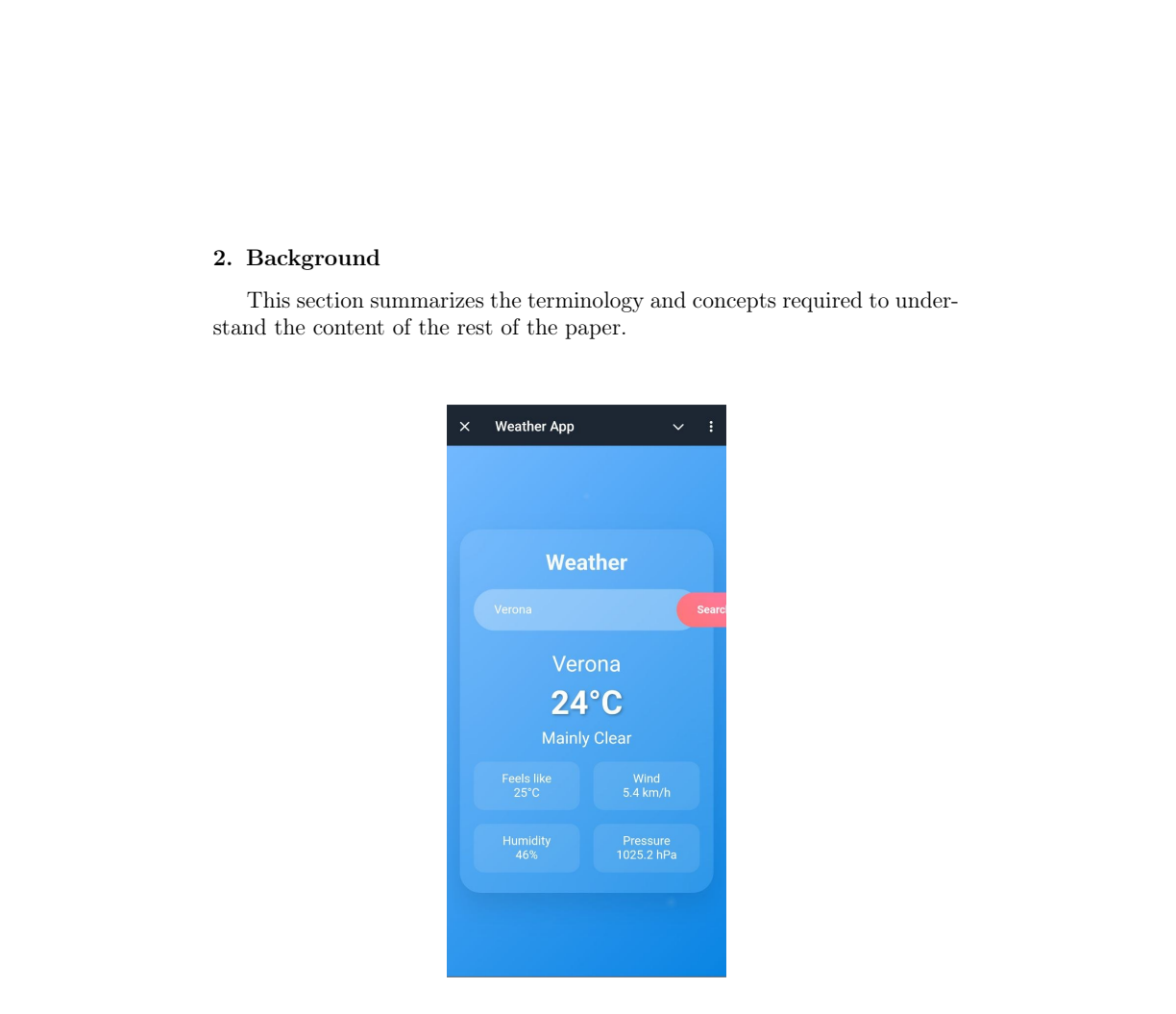
Telegram Mini Apps are ordinary web pages that run inside the Telegram client and receive a user's IP address and Telegram profile data automatically at launch, before the user has acted. This paper asks whether the privacy policies governing those apps say where that data actually goes. Using a black-box tool that launches 278 working Mini Apps, intercepts their HTTPS traffic, and compares each contacted domain with the applicable privacy policy, the authors report that 59.4% of the apps contact at least one third party their policy does not name, that 78.8% rely on Telegram's generic default policy, and that not one app shows a consent mechanism at launch. The result matters because the privacy policy is effectively the only transparency instrument users have in this ecosystem, and it appears largely decoupled from actual data flows.
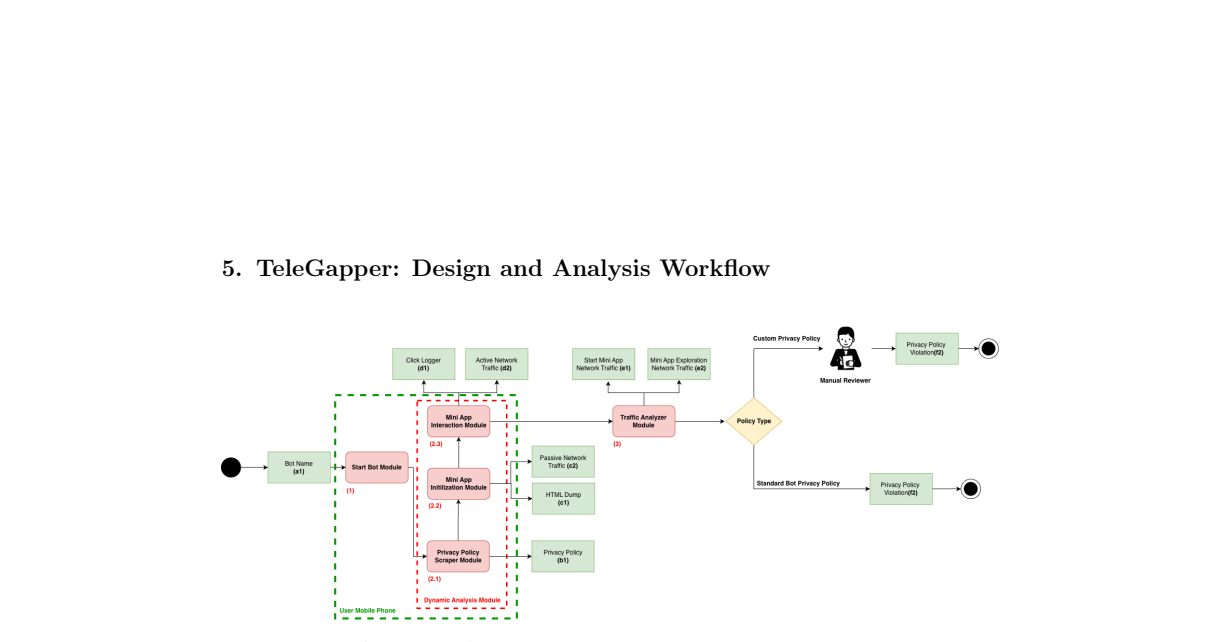
What carries the argument. The central mechanism is TeleGapper, a black-box dynamic analysis pipeline that takes only a bot name as input, launches the Mini App inside the Telegram client on a rooted device, intercepts outbound HTTPS traffic through a man-in-the-middle proxy, separates traffic produced at page load from traffic produced by randomized user-driven exploration, and filters out platform infrastructure hosts. On the policy side, the authors derive five violation classes from Telegram's Standard Bot Privacy Policy: undisclosed third-party communication, third-party transmission of user data, potential over-collection, pre-interaction third-party communication, and tracking or advertising communication. The verdict for each app comes from comparing the observed third-party domains with the recipients named in the applicable policy, where a custom policy counts as covering a recipient whenever it can plausibly be read to do so, and the default policy counts as covering only what it explicitly names.
Core claim. The paper's central claim is that privacy-policy compliance is the exception in the Telegram Mini App ecosystem. Across 278 randomly sampled working apps observed over five runs each, 59.4% (165) transmit user-related data to at least one third party not disclosed by the applicable privacy policy, with a mean of 2.78 undeclared recipients per violating app and a maximum of 14. The violations are front-loaded: 85.5% of violating apps contact undisclosed third parties during page load, before any meaningful in-app interaction, and none of the 278 apps presents an observable cookie banner, consent dialog, or opt-out control. The data flowing to these recipients is not limited to technical parameters: 95.2% of violating apps transmit device information, 38.2% transmit user and profile information such as the Telegram user ID and initData payload, and one in three transmits both. A further 78.8% of apps rely on Telegram's Standard Bot Privacy Policy, and apps with custom policies violate at a statistically indistinguishable rate (60.3% vs 55.9%, p = 0.55).
The premise it rests on. The load-bearing premise is the paper's own reading of Telegram's Standard Bot Privacy Policy as prohibiting any user-data transmission to domains the policy does not explicitly name; if Telegram or a supervisory authority interprets the policy's generic recipient language more broadly, the 59.4% violation rate would overstate actual non-compliance.
If the paper is right (Pith's inferences, not the authors')
If these rates generalize beyond the sampled catalogue, most Telegram Mini Apps cannot serve as transparent data processors: the privacy policy users are shown does not reveal the actual recipients of their data.
A platform-side runtime check modeled on TeleGapper would flag the majority of Mini Apps, since violations concentrate in a small set of recurring analytics and advertising services.
Because 85.5% of violating apps already phone home at page load and no consent mechanism is visible at launch, the default "continued use constitutes acceptance" model cannot plausibly ground these transfers.
Because Mini App content is served from developer-controlled URLs and can change without redistribution, any one-off compliance result is a point-in-time snapshot and cannot support a lasting claim of compliance.
The near-identical violation rates for custom and default policies suggest that publishing a privacy policy in this ecosystem is not a meaningful commitment to disclosed practices; a stronger test would correlate policy publication with other developer signals such as app age, update frequency, or responsiveness to disclosure requests.
Because the same small set of ad and analytics services recurs across unrelated apps, a platform-enforced allowlist of permitted recipient domains would likely eliminate most of the measured exposure; this is testable by simulating such an allowlist against the released dataset.
The black-box method transfers directly to other WebView-hosted mini-app ecosystems and to ordinary web applications with an implicitly authenticated session, so the transparency gap documented for Telegram probably is not unique to it.
Check this review
Pith stored no record of this review's passes and took no fingerprint of it. Reviews made by code from 13 Nov 2026 on carry both.
How often reviews like this one are right
Reviews like this one: written by deepseek-v4-flash, where what was read was not recorded.
How often objections from reviews like this one are right: not yet measured
Reviews by people
This review was written by a machine. No person has reviewed this paper on Pith yet. A scientist listed on Pith can review it for a fee, and their review is published here whatever it concludes.
The paper
Abstract
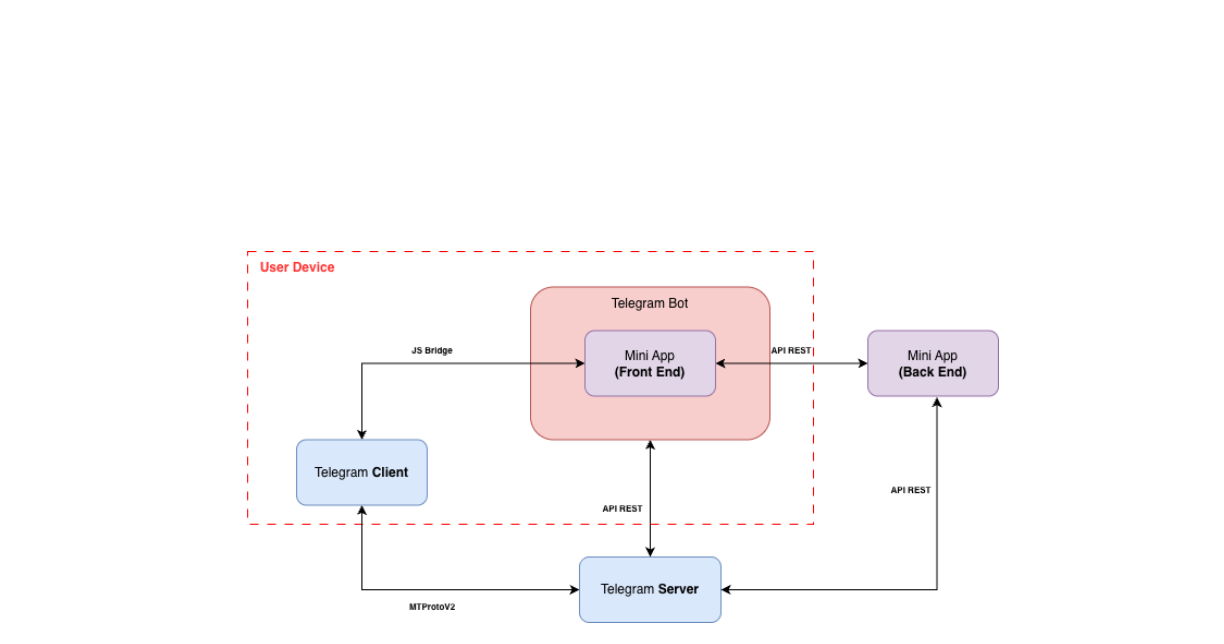
Telegram Mini Apps are Web applications embedded within the Telegram client, forming an ecosystem of third-party services within one of the world's most widely used messaging platforms. Despite their growing adoption and access to Telegram-provided context, their privacy properties remain largely unexplored. Unlike ecosystems such as WeChat, which rely on tightly controlled, proprietary execution frameworks, Telegram adopts a different model: Mini Apps run inside a WebView, combining platform-provided context with standard Web capabilities and unrestricted outbound networking. This enables applications to transmit sensitive information to analytics, advertising, tracking, or other third parties through ordinary Web requests, often with limited visibility. Privacy disclosures are therefore critical for transparency. Telegram allows Mini Apps either to define an application-specific privacy policy or to rely on a platform-provided default policy. While the latter reduces the developer's disclosure burden, it may lead to generic statements that do not accurately capture actual data practices of individual Mini Apps. In this paper, we present TeleGapper, a black-box dynamic analysis framework to assess the privacy posture of Mini Apps by capturing runtime network traffic, identifying third-party communications, and comparing observed data flows against disclosed privacy information. We evaluate 278 working Mini Apps collected from tApps Center, a community-driven catalogue for discovering third-party applications in Telegram. We find that 59.4% contact at least one undisclosed third party, 78.8% rely exclusively on Telegram's default privacy policy, and none provides a consent or opt-out mechanism. These findings expose a substantial transparency and compliance gap in a widely used yet understudied ecosystem.
The paper's own sentences, arranged, kept beside the review and separate from it. Each label is drawn from a closed vocabulary; the number beside it is the probability the classifier gave that label. No sentence in this record was written by a model.
abstract compiled · 2026-09-23
The authors' main claim, as the classifier picked it out 0.94
“These findings expose a substantial transparency and compliance gap in a widely used yet understudied ecosystem.”
How the main claim is stated: asserted 1.00
What the abstract itself states, as probabilities: claims first 0.09 · states limitation 0.16 · human participants 0.06 · controlled comparison 0.17 · randomized assignment 0.01 · states quantitative result 0.99 · compares with prior results 0.13 · mentions code or data availability 0.03
The abstract, sentence by sentence
This table labels the abstract only (arXiv listing abstract v1). The number is the probability the classifier gave the label.
| Sentence | Role | The authors' own work | States the main conclusion | Strength |
|---|---|---|---|---|
| Telegram Mini Apps are Web applications embedded within the Telegram client, forming an ecosystem of third-party services within one of the world's most widely used messaging platforms. | background 1.00 | 0.04 | 0.02 | asserted 1.00 |
| Despite their growing adoption and access to Telegram-provided context, their privacy properties remain largely unexplored. | gap 0.98 | 0.07 | 0.03 | asserted 0.99 |
| Unlike ecosystems such as WeChat, which rely on tightly controlled, proprietary execution frameworks, Telegram adopts a different model: Mini Apps run inside a WebView, combining platform-provided context with standard Web capabilities and unrestricted outbound networking. | background 1.00 | 0.06 | 0.02 | asserted 1.00 |
| This enables applications to transmit sensitive information to analytics, advertising, tracking, or other third parties through ordinary Web requests, often with limited visibility. | background 0.99 | 0.08 | 0.03 | asserted 0.85 |
| Privacy disclosures are therefore critical for transparency. | background 0.95 | 0.04 | 0.03 | asserted 0.98 |
| Telegram allows Mini Apps either to define an application-specific privacy policy or to rely on a platform-provided default policy. | background 1.00 | 0.05 | 0.02 | asserted 1.00 |
| While the latter reduces the developer's disclosure burden, it may lead to generic statements that do not accurately capture actual data practices of individual Mini Apps. | background 0.86 | 0.08 | 0.04 | hedged possibility 1.00 |
| In this paper, we present TeleGapper, a black-box dynamic analysis framework to assess the privacy posture of Mini Apps by capturing runtime network traffic, identifying third-party communications, and comparing observed data flows against disclosed privacy information. | method 0.55 | 0.95 | 0.06 | asserted 0.99 |
| We evaluate 278 working Mini Apps collected from tApps Center, a community-driven catalogue for discovering third-party applications in Telegram. | method 0.95 | 0.94 | 0.02 | asserted 0.99 |
| We find that 59.4% contact at least one undisclosed third party, 78.8% rely exclusively on Telegram's default privacy policy, and none provides a consent or opt-out mechanism. | result 1.00 | 0.98 | 0.66 | asserted 1.00 |
| These findings expose a substantial transparency and compliance gap in a widely used yet understudied ecosystem. | interpretation 1.00 | 0.60 | 0.80 | asserted 1.00 |
What kind of paper the classifier reports this is: empirical study 0.50 · evidence from observation or experiment 0.99
What was examined, and what was not
Sources read
- arXiv listing abstract v1
Not examined
- full text
- figures and tables
- references and citing sentences
- relations to other papers
Levels run
- P abstract
Not run
- S sections
- T body sentences
- C citations
- R cross-paper relations
How the labels were made
Compiled by classifier-1.13.0 via TypeSafe API, question bank abstract-p1-20260923, 2026-09-23: 1 request, 8,218 input tokens.
Every quoted sentence on this record is the authors'. Every label is from Pith's closed vocabulary, with the probability shown beside it. This record as JSON
Figures (3)
Figures are the authors', reproduced from the paper.
References (45)
- [1] Marco Alecci, Jordan Samhi, Marc Miltenberger, Steven Arzt, Tegawendé F Bissyandé, and Jacques Klein. Damflow: Preventing a flood of irrelevant data flows in android apps.ACM Transactions on Software Engineering and Methodology, 2025 on Pith
- [2] Marco Alecci, Jordan Samhi, Marc Miltenberger, Steven Arzt, Tegawendé F Bissyandé, and Jacques Klein. Taskflow: Llms for an- droid taint specification.ACM Transactions on Software Engineering and Methodology, 2026 on Pith
- [3] AppBrain. AppBrain: Android Ad Network statistics and market share.https://www.appbrain.com/stats/libraries/ad-networks/, accessed August 14, 2026 on Pith
- [4] Baidu. Baidu.https://www.baidu.com/, accessed August 14, 2026 on Pith
- [5] Sihem Bouhenniche, Pierre Laperdrix, and Walter Rudametkin. Exad- printer: Semi-exhaustive permissionless device fingerprinting within the android ecosystem. InPETS 2026-26th Privacy Enhancing Technologies Symposium, 2026. 41 on Pith
- [6] European Parliament and Council. Directive 2009/136/ec of the eu- ropean parliament and of the council of 25 november 2009 amending directive 2002/22/ec on universal service and users’ rights relating to electronic communications networks and services, directive 2002/58/ec con... on Pith
- [7] Luca Ferrari, Marco Alecci, Jordan Samhi, Tegawende’ F. Bissyande’, Jacques Klein, Mariano Ceccato, and Luca Verderame. Evaluating llms for obfuscation detection and classification in android apps, 2026 on Pith
- [8] Luca Ferrari, Billel Habbati, Meriem Guerar, Mariano Ceccato, and Luca Verderame. Policygapper: Automated detection of inconsistencies between google play data safety sections and privacy policies using llms, 2026 on Pith
- [9] FindMini.app. FindMini.app — your source of Telegram Mini Apps & Bots.https://www.findmini.app/, Accessed August 14, 2026 on Pith
- [10] Ronald A Fisher. On the interpretation ofχ2 from contingency tables, and the calculation of p.Journal of the royal statistical society, 85(1):87– 94, 1922 on Pith
- [11] GDPR. Art. 6 gdpr — lawfulness of processing.https://gdpr-info. eu/art-6-gdpr/. accessed August 14, 2026 on Pith
- [12] GDPR. Art. 7 gdpr — conditions for consent.https://gdpr-info. eu/art-7-gdpr/. accessed August 14, 2026 on Pith
- [13] GDPR. Art. 13 GDPRInformation to be provided where personal data are collected from the data subject.https://gdpr-info.eu/ art-13-gdpr/, accessed August 14, 2026 on Pith
- [14] GDPR. Art. 14 GDPRInformation to be provided where personal data have not been obtained from the data subject.https://gdpr-info. eu/art-14-gdpr/, accessed August 14, 2026. 42 on Pith
- [15] W3C Group. MiniApp Standardization White Paper version 2.https: //www.w3.org/TR/mini-app-white-paper/, 1 July 2022 on Pith
- [16] Wei Li, Borui Yang, Hangyu Ye, Liyao Xiang, Qingxiao Tao, Xinbing Wang, and Chenghu Zhou. Minitracker: Large-scale sensitive infor- mation tracking in mini apps.IEEE Transactions on Dependable and Secure Computing, 21(4):2099–2114, 2023 on Pith
- [17] Yi Liu, Jinhui Xie, Jianbo Yang, Shiyu Guo, Yuetang Deng, Shuqing Li, Yechang Wu, and Yepang Liu. Industry practice of javascript dy- namic analysis on wechat mini-programs. InProceedings of the 35th IEEE/ACM International Conference on Automated Software Engineer- ing, pages ... on Pith
- [18] Haoran Lu, Luyi Xing, Yue Xiao, Yifan Zhang, Xiaojing Liao, XiaoFeng Wang, and Xueqiang Wang. Demystifying resource management risks in emerging mobile app-in-app ecosystems. InProceedings of the 2020 ACM SIGSAC conference on computer and communications Security, pages 569–585, 2020 on Pith
- [19] Keyhan Mohammadi, Arman Moradi, and Reza Ebrahimi Atani. Secu- rity analysis of miniapps: Vulnerabilities, exploits, and a tailored miti- gation framework. In2025 15th International Conference on Computer and Knowledge Engineering (ICCKE), pages 1–8. IEEE, 2025 on Pith
- [20] Netlify. Netlify: Push your ideas to the web.https://www.netlify. com/, accessed August 14, 2026 on Pith
show 25 more
- [21] Ali Pay. Ali Pay.https://render.alipay.com/p/yuyan/ 180020040001212700/, accessed August 14, 2026 on Pith
- [22] Karl Pearson.On the Criterion that a Given System of Deviations from the Probable in the Case of a Correlated System of Variables is Such that it Can be Reasonably Supposed to have Arisen from Random Sampling, pages 11–28. Springer New York, New York, NY, 1992 on Pith
- [23] Propeller Ads Ltd. Propellerads tma report: The state of telegram mini app advertising in 2025.https://propellerads.com/blog/ adv-telegram-mini-app-advertising-report/, accessed August 14, 2026. 43 on Pith
- [24] React. React: The library for web and native user interfaces .https: //react.dev/, Accessed August 14, 2026 on Pith
- [25] Michael A Specter, Mihai Christodorescu, Abbie Farr, Bo Ma, Robin Lassonde, Xiaoyang Xu, Xiang Pan, Fengguo Wei, Saswat Anand, and Dave Kleidermacher. Fingerprinting sdks for mobile apps and where to find them: Understanding the market for device fingerprinting.arXiv preprint ... on PithPith's reviewarXiv
- [26] Svelte. Svelte•Web development for the rest of us .https://svelte. dev, Accessed August 14, 2026 on Pith
- [27] Telegram. Telegram | Creating New App .https://docs. telegram-mini-apps.com/platform/creating-new-app, 21 April 2025 on Pith
- [28] Telegram. Telegram | Telegram Bot Platform .https://telegram. org/blog/bot-revolution, 24 June 2015 on Pith
- [29] Telegram. Telegram Privacy Policy.https://telegram.org/privacy/ eu#1-2-terms-of-service, 29 Sept 2024 on Pith
- [30] Telegram. Standard Bot Privacy Policy.https://telegram.org/ privacy-tpa, Accessed August 14, 2026 on Pith
- [31] Telegram. tApps Center — Explore the World of Telegram Mini-Apps. https://tapps.center/, Accessed August 14, 2026 on Pith
- [32] Telegram. Terms of Service for Bots.https://telegram.org/tos/ bots, Accessed August 14, 2026 on Pith
- [33] Telegram. Terms of Service for Mini Apps.https://telegram.org/ tos/mini-apps, Accessed August 14, 2026 on Pith
- [34] Vercel. Vercel: Build and deploy on the AI Cloud.https://vercel. com/, accessed August 14, 2026 on Pith
- [35] Chao Wang, Ronny Ko, Yue Zhang, Yuqing Yang, and Zhiqiang Lin. Taintmini: Detecting flow of sensitive data in mini-programs with static taint analysis. In2023 IEEE/ACM 45th International Conference on Software Engineering (ICSE), pages 932–944. IEEE, 2023. 44 on Pith
- [36] Chao Wang, Yue Zhang, and Zhiqiang Lin. One size does not fit all: Un- covering and exploiting cross platform discrepant{APIs}in{WeChat}. In32nd USENIX Security Symposium (USENIX Security 23), pages 6629–6646, 2023 on Pith
- [37] Chao Wang, Yue Zhang, and Zhiqiang Lin. Uncovering and exploiting hidden apis in mobile super apps. InProceedings of the 2023 ACM SIGSAC Conference on Computer and Communications Security, pages 2471–2485, 2023 on Pith
- [38] Tao Wang, Qingxin Xu, Xiaoning Chang, Wensheng Dou, Jiaxin Zhu, Jinhui Xie, Yuetang Deng, Jianbo Yang, Jiaheng Yang, Jun Wei, et al. Characterizing and detecting bugs in wechat mini-programs. InPro- ceedings of the 44th International Conference on Software Engineering, pages 3... on Pith
- [39] Yin Wang, Ming Fan, Junfeng Liu, Junjie Tao, Wuxia Jin, Haijun Wang, Qi Xiong, and Ting Liu. Do as you say: Consistency detection of data practice in program code and privacy policy in mini-app.IEEE Trans- actions on Software Engineering, 50(12):3225–3248, 2024 on Pith
- [40] Yin Wang, Ming Fan, Hao Zhou, Haijun Wang, Wuxia Jin, Jiajia Li, Wenbo Chen, Shijie Li, Yu Zhang, Deqiang Han, et al. Minichecker: Detecting data privacy risk of abusive permission request behavior in mini-programs. InProceedings of the 39th IEEE/ACM International Conference o... on Pith
- [41] WeChat. WeChat - Connects with over 1 billion users Provides chats, calls, and more.https://www.wechat.com/en, accessed August 14, 2026 on Pith
- [42] Dongming Xiang, Lingfeng Jin, Shichao Wu, Wang Lin, and Zuohua Ding. Minieval: Automated detection of compliance violations and quantitative privacy risk assessment in miniapps.Information and Soft- ware Technology, page 108103, 2026 on Pith
- [43] Yuqing Yang, Yue Zhang, and Zhiqiang Lin. Cross miniapp request forgery: Root causes, attacks, and vulnerability detection. InProceed- ings of the 2022 ACM SIGSAC Conference on Computer and Commu- nications Security, pages 3079–3092, 2022. 45 on Pith
- [44] Yuqing Yang, Yue Zhang, and Zhiqiang Lin. Understanding miniapp malware: Identification, dissection, and characterization. 2025 on Pith
- [45] Lei Zhang, Zhibo Zhang, Ancong Liu, Yinzhi Cao, Xiaohan Zhang, Yanjun Chen, Yuan Zhang, Guangliang Yang, and Min Yang. Identity confusion in{WebView-based}mobile app-in-app ecosystems. In31st USENIX Security Symposium (USENIX Security 22), pages 1597–1613, 2022. 46 on Pith
Cited by 2 Pith papers
Reviewed papers on Pith that cite this one. The full citation record
How the literature uses it
What this paper does with the arXiv papers it cites
What it cites · 3 sentences without a confident label
Uses the method or tool of 1 paper
-
When a Mini App exposes a custom privacy policy, the reviewer follows an annotation protocol similar to [ref] .
PolicyGapper: Automated Detection of Inconsistencies Between Google Play Data Safety Sections and Privacy Policies Using LLMs · Repeated Observation and Review Protocol · 0.99
Challenges and discussion
Disagree with the review, or know something it missed? Leave a comment, or challenge this review formally: a challenge becomes a permanent entry in this paper's record, and its decision is published here.
Come back by email
A short list of the week's newly reviewed papers. Nothing is sent until you confirm from your inbox, and every email has a link that stops it. No account.
No comments yet.
Sign in to comment