REVIEW 1 major objections 1 cited by
Ghosts survive asymptotically in quantum field theory without decaying but admit no particle interpretation due to multi-particle interference.
Reviewed by Pith at T0; open to challenge. T0 means a machine referee read the full paper against a public rubric. the ladder, T0–T4 →
T0 review · grok-4.3
2026-06-26 23:17 UTC pith:UFV77GVN
load-bearing objection The paper distinguishes ghosts from unstable particles via Riemann-sheet pole locations in the dressed propagator, with ghosts masked asymptotically by interference, but the finite-time claims depend on an unspecified approximation whose robustness is unclear from the abstract. the 1 major comments →
Ghosts versus Unstable Particles in Quantum Field Theory
The pith
A machine-rendered reading of the paper's core claim, the machinery that carries it, and where it could break.
Core claim
In the asymptotic formulation, ghosts survive without decaying yet have no particle interpretation because interference with the multi-particle component masks the negative-norm one-particle state; this originates from the complex-conjugate poles of the dressed propagator lying in the first Riemann sheet rather than the second sheet as in the ordinary unstable-particle case. In the finite-time formulation, working within a suitable approximation for the dressed propagator, finite-time effects amplify differences in resonant behavior and produce new features such as higher peaks in ghost resonances, while distinct temporal regimes appear: an approximate free-particle description holds for tim
What carries the argument
The location of the complex-conjugate poles of the dressed propagator on the first versus second Riemann sheet, which controls whether a state decays or is masked by multi-particle interference.
Load-bearing premise
The analysis of finite-time effects relies on a suitable approximation for the dressed propagator.
What would settle it
A calculation of the time-dependent propagator in a finite interval that uses the exact dynamics rather than the stated approximation and finds neither amplified resonant differences nor higher peaks in the ghost case would falsify the claimed distinction.
If this is right
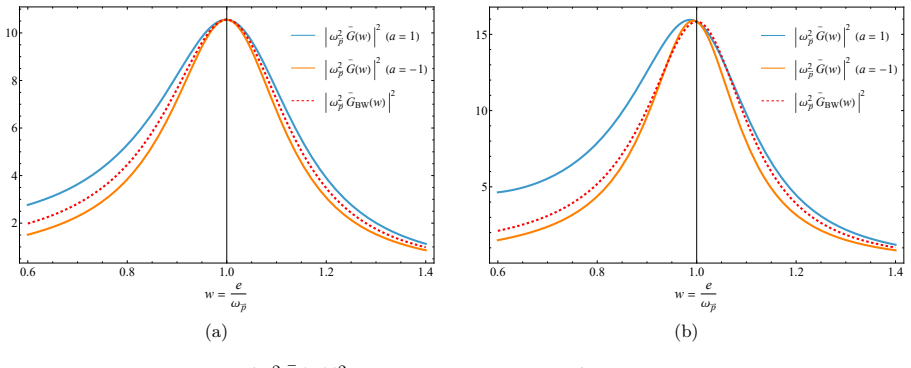
- Ghost resonances are narrower and exhibit weaker interference between positive- and negative-energy peaks than ordinary resonances.
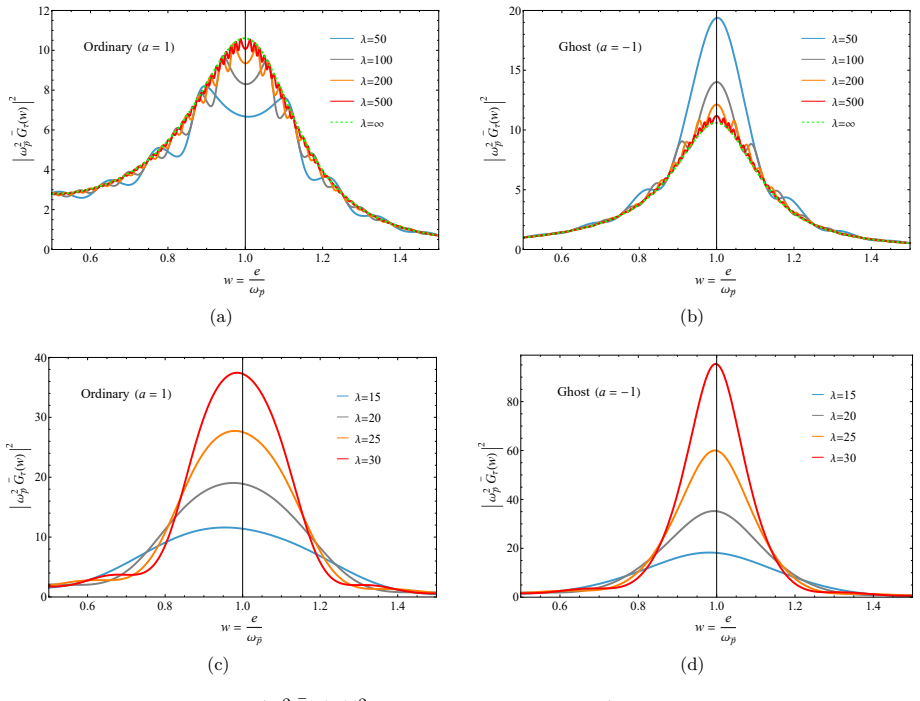
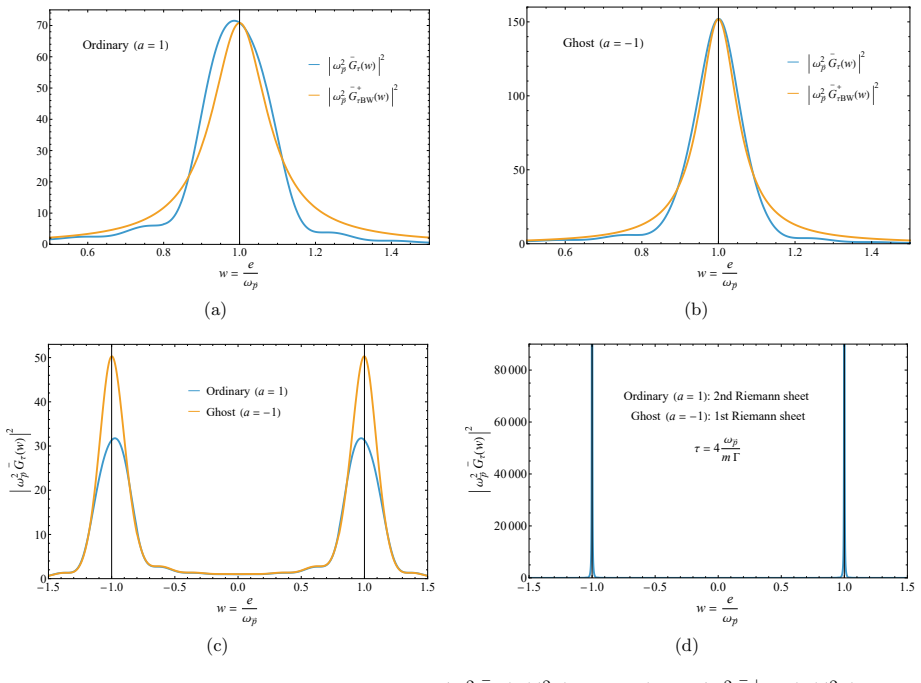
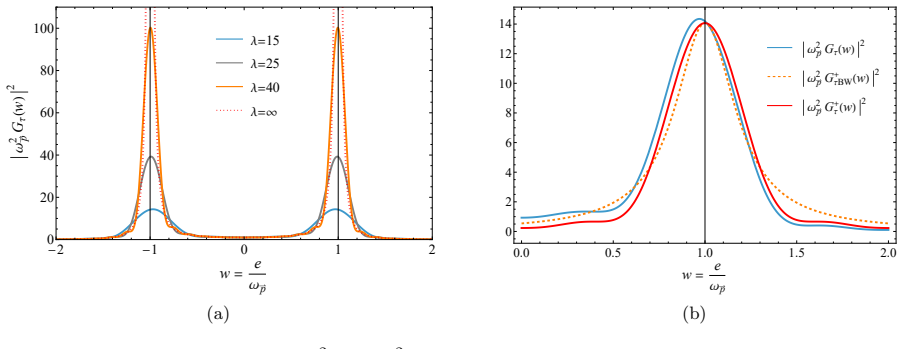
- Finite-time effects amplify resonant differences and give rise to higher peaks in ghost resonances.
- Distinct temporal regimes exist: short times allow an approximate free-particle description while later times are dominated by interactions and interference.
- Complex poles in the dressed propagator emerge only at late times and become complex-conjugate pairs asymptotically.
Where Pith is reading between the lines
- If the finite-time approximation is accurate, controlled-duration experiments or simulations could make ghost-like signatures more visible than asymptotic analyses alone suggest.
- The masking mechanism implies that the consistency of effective theories containing ghosts may be protected by multi-particle interference rather than by the complete removal of the states.
Editorial analysis
A structured set of objections, weighed in public.
Referee Report
Summary. The paper claims that ghosts in QFT lack a free-particle interpretation in the asymptotic limit due to multi-particle interference masking the negative-norm state, in contrast to unstable particles that decay; this follows from the distinct analytic structures of the dressed propagator (conjugate poles on the first vs. second Riemann sheet). It further formulates the theory on a finite time interval and, within a suitable approximation for the dressed propagator, reports amplified resonant differences, higher peaks for ghosts, and distinct temporal regimes where free-particle behavior holds only at early times before interference dominates. Complex poles emerge only at late times and form conjugate pairs asymptotically.
Significance. If the central analytic distinction holds and the finite-time approximation is valid, the work would clarify why ghosts do not propagate freely asymptotically while providing a time-dependent picture of resonance formation, with potential relevance to higher-derivative theories or models containing negative-norm states. No machine-checked proofs or reproducible code are reported.
major comments (1)
- [Abstract] Abstract and finite-time section: the claims of amplified differences, higher peaks, emergence of complex poles only at late times, and identification of temporal regimes all rest on an unspecified 'suitable approximation for the dressed propagator.' No explicit form, error estimate, or demonstration of its validity against non-perturbative or higher-order self-energy contributions is provided, so it is impossible to confirm that the reported late-time masking and absence of asymptotic free propagation follow.
Simulated Author's Rebuttal
We thank the referee for the careful reading of our manuscript and the constructive comment on the need for greater explicitness regarding the approximation employed in the finite-time analysis. We address this point below.
read point-by-point responses
-
Referee: [Abstract] Abstract and finite-time section: the claims of amplified differences, higher peaks, emergence of complex poles only at late times, and identification of temporal regimes all rest on an unspecified 'suitable approximation for the dressed propagator.' No explicit form, error estimate, or demonstration of its validity against non-perturbative or higher-order self-energy contributions is provided, so it is impossible to confirm that the reported late-time masking and absence of asymptotic free propagation follow.
Authors: We agree that the finite-time results rely on a specific approximation to the dressed propagator whose explicit form, error estimates, and range of validity should be stated more clearly. In the revised manuscript we will supply the explicit functional form of the approximation, a quantitative discussion of its error relative to higher-order self-energy contributions, and an assessment of its regime of applicability, including against non-perturbative effects where feasible. This will permit independent verification of the reported finite-time features such as amplified resonant differences, higher peaks, and the identified temporal regimes. We note, however, that the central asymptotic distinction—namely the absence of a free-particle interpretation for ghosts due to multi-particle interference and the contrasting Riemann-sheet locations of the propagator poles—is derived from the exact analytic structure of the dressed propagator and does not depend on the finite-time approximation. The late-time masking of the ghost state is likewise a consequence of this analytic structure rather than the approximation itself. revision: yes
Circularity Check
No significant circularity; derivation uses standard QFT analytic structures
full rationale
The paper's distinction between ghosts and unstable particles follows from the standard analytic properties of the dressed propagator (pole locations on Riemann sheets), which are external to the present work and not derived from its own inputs. The finite-time formulation invokes a 'suitable approximation' as a methodological step rather than a fitted parameter renamed as prediction. No self-citations are load-bearing, no ansatz is smuggled, and no equation reduces the asymptotic claim to a definitional equivalence or self-referential fit. The result is therefore self-contained against external QFT benchmarks.
Axiom & Free-Parameter Ledger
axioms (2)
- standard math Standard analytic properties of dressed propagators in QFT, including location of poles on Riemann sheets.
- ad hoc to paper Existence of a suitable approximation for the dressed propagator that captures finite-time dynamics.
read the original abstract
We elucidate the physical nature of ghosts above the multi-particle threshold by contrasting them with unstable particles in quantum field theory. We first consider the asymptotic formulation, where ordinary positive-norm one-particle states can be unstable and decay, whereas ghosts survive asymptotically without decaying, yet admit no particle interpretation due to interference with the multi-particle component which masks the negative-norm one-particle state. This distinction originates from two different analytic structures of the dressed propagator, whose complex conjugate poles lie in the first or second Riemann sheet in the ghost or ordinary case, respectively. Ghost resonances are, in principle, phenomenologically distinguishable from ordinary ones, being narrower and exhibiting weaker interference between positive- and negative-energy peaks. We then formulate the quantum field theory in a finite interval of time and, working within a suitable approximation for the dressed propagator, find that finite-time effects amplify differences in the resonant behavior and give rise to new features, such as higher peaks in ghost resonances. Distinct temporal regimes are also identified: for times shorter than the inverse width, an approximate free-particle description is valid, whereas at later times interactions and interference effects dominate, leading to decay or multi-particle masking. Complex poles in the dressed propagator emerge only at late times and become complex-conjugate pairs asymptotically, determining the asymptotic dynamics. This study supports the absence of freely propagating ghost particles in the asymptotic limit.
Figures
Forward citations
Cited by 1 Pith paper
-
Is there ghost and tachyon free bounce in UV complete gravity theory?
Ghost- and tachyon-free bounces in AID gravity require a negative cosmological constant; known positive-Λ solutions inevitably contain ghost radiation.
Reference graph
Works this paper leans on
-
[1]
L. S. Brown,Quantum field theory. Cambridge University Press, 7, 1994
1994
-
[2]
Unitarity and causality in a renormalizable field theory with unstable particles,
M. J. G. Veltman, “Unitarity and causality in a renormalizable field theory with unstable particles,”Physica29(1963) 186–207
1963
-
[3]
Negative Metric and the Unitarity of the S Matrix,
T. D. Lee and G. C. Wick, “Negative Metric and the Unitarity of the S Matrix,”Nucl. Phys. B9(1969) 209–243
1969
-
[4]
Finite Theory of Quantum Electrodynamics,
T. D. Lee and G. C. Wick, “Finite Theory of Quantum Electrodynamics,”Phys. Rev. D2 (1970) 1033–1048
1970
-
[5]
Relativistic complex pole model with indefinite metric,
T. D. Lee, “Relativistic complex pole model with indefinite metric,” inQuanta: Essays in Theoretical Physics Dedicated to G. Wentzel (Chicago Univ. Press), pp. 260–308. 1970
1970
-
[6]
A non-analytic S matrix,
R. E. Cutkosky, P. V. Landshoff, D. I. Olive, and J. C. Polkinghorne, “A non-analytic S matrix,”Nucl. Phys. B12(1969) 281–300
1969
-
[7]
Acausality,
S. Coleman, “Acausality,” in7th International School of Subnuclear Physics (Ettore Majorana): Subnuclear Phenomena. 1969
1969
-
[8]
Anti-Instability of Complex Ghost,
J. Kubo and T. Kugo, “Anti-Instability of Complex Ghost,”PTEP2024no. 5, (2024) 053B01,arXiv:2402.15956 [hep-th]
-
[9]
L. Buoninfante, “Remarks on ghost resonances,”JHEP02(2025) 186,arXiv:2501.04097 [hep-th]
-
[10]
Asymptotic Quantum Dynamics of Ghost Fields
L. Buoninfante, “Asymptotic Quantum Dynamics of Ghost Fields,”arXiv:2605.29047 [hep-th]
work page internal anchor Pith review Pith/arXiv arXiv
-
[11]
On Field theories with nonlocalized action,
A. Pais and G. E. Uhlenbeck, “On Field theories with nonlocalized action,”Phys. Rev.79 (1950) 145–165
1950
-
[12]
No-ghost theorem for the fourth-order derivative Pais-Uhlenbeck oscillator model
C. M. Bender and P. D. Mannheim, “No-ghost theorem for the fourth-order derivative Pais-Uhlenbeck oscillator model,”Phys. Rev. Lett.100(2008) 110402,arXiv:0706.0207 [hep-th]
work page internal anchor Pith review Pith/arXiv arXiv 2008
-
[13]
Quantum mechanics of 4-derivative theories
A. Salvio and A. Strumia, “Quantum mechanics of 4-derivative theories,”Eur. Phys. J. C 76no. 4, (2016) 227,arXiv:1512.01237 [hep-th]
work page internal anchor Pith review Pith/arXiv arXiv 2016
-
[14]
Running couplings and unitarity in a 4-derivative scalar field theory,
B. Holdom, “Running couplings and unitarity in a 4-derivative scalar field theory,”Phys. Lett. B843(2023) 138023,arXiv:2303.06723 [hep-th]
-
[15]
UV-complete 4-derivative scalar field theory,
B. Holdom, “UV-complete 4-derivative scalar field theory,”Nucl. Phys. B1000(2024) 116472,arXiv:2402.09223 [hep-th]. 36
-
[16]
Renormalization of Higher Derivative Quantum Gravity,
K. S. Stelle, “Renormalization of Higher Derivative Quantum Gravity,”Phys. Rev. D16 (1977) 953–969
1977
-
[17]
Renormalizability and Asymptotic Freedom in Quantum Gravity,
E. Tomboulis, “Renormalizability and Asymptotic Freedom in Quantum Gravity,”Phys. Lett. B97(1980) 77–80
1980
-
[18]
ASYMPTOTIC FREEDOM IN HIGHER DERIVATIVE QUANTUM GRAVITY,
I. G. Avramidi and A. O. Barvinsky, “ASYMPTOTIC FREEDOM IN HIGHER DERIVATIVE QUANTUM GRAVITY,”Phys. Lett. B159(1985) 269–274
1985
-
[19]
A. Salvio, “Quadratic Gravity,”Front. in Phys.6(2018) 77,arXiv:1804.09944 [hep-th]
work page internal anchor Pith review Pith/arXiv arXiv 2018
-
[20]
Quantum Gravity, Fakeons And Microcausality
D. Anselmi and M. Piva, “Quantum Gravity, Fakeons And Microcausality,”JHEP11 (2018) 021,arXiv:1806.03605 [hep-th]
work page internal anchor Pith review Pith/arXiv arXiv 2018
-
[21]
J. F. Donoghue and G. Menezes, “On quadratic gravity,”Nuovo Cim. C45no. 2, (2022) 26,arXiv:2112.01974 [hep-th]
-
[22]
Ultra-Planckian scattering from a QFT for gravity,
B. Holdom, “Ultra-Planckian scattering from a QFT for gravity,”Phys. Rev. D105no. 4, (2022) 046008,arXiv:2107.01727 [hep-th]
-
[23]
Massless and partially massless limits in Quadratic Gravity,
L. Buoninfante, “Massless and partially massless limits in Quadratic Gravity,”JHEP12 (2023) 111,arXiv:2308.11324 [hep-th]
-
[24]
Strict renormalizability as a paradigm for fundamental physics,
L. Buoninfante, “Strict renormalizability as a paradigm for fundamental physics,”JHEP 07(2025) 175,arXiv:2504.05900 [hep-th]
-
[25]
Unitarity through PT symmetry in quantum quadratic gravity,
J. Kuntz, “Unitarity through PT symmetry in quantum quadratic gravity,”Class. Quant. Grav.42no. 17, (2025) 175003,arXiv:2410.08278 [hep-th]
-
[26]
Manifestly covariant canonical formalism of quadratic gravity,
I. Oda, “Manifestly covariant canonical formalism of quadratic gravity,”JCAP08(2025) 079,arXiv:2505.09149 [hep-th]
-
[27]
Unitary Quadratic Quantum Gravity in 4D
K. S. Kumar and J. Marto, “Unitarity Quadratic Quantum Gravity in 4D,” arXiv:2604.19707 [hep-th]
work page internal anchor Pith review Pith/arXiv arXiv
-
[28]
Interpretation of quantum mechanics with indefinite norm,
A. Strumia, “Interpretation of quantum mechanics with indefinite norm,”MDPI Physics1 no. 1, (2019) 17–32,arXiv:1709.04925 [quant-ph]
-
[29]
Unitarity violation in field theories of Lee–Wick’s complex ghost,
J. Kubo and T. Kugo, “Unitarity violation in field theories of Lee–Wick’s complex ghost,” PTEP2023no. 12, (2023) 123B02,arXiv:2308.09006 [hep-th]
-
[30]
B. Holdom, “Making sense of ghosts,”Nucl. Phys. B1008(2024) 116696, arXiv:2408.04089 [hep-th]
-
[31]
Dressed propagators, fakeon self-energy and peak uncertainty,
D. Anselmi, “Dressed propagators, fakeon self-energy and peak uncertainty,”JHEP22 (2020) 058,arXiv:2201.00832 [hep-ph]. 37
-
[32]
DIAGRAMMAR,
G. ’t Hooft and M. J. G. Veltman, “DIAGRAMMAR,”NATO Sci. Ser. B4(1974) 177–322
1974
-
[33]
On the formulation of quantized field theories,
H. Lehmann, K. Symanzik, and W. Zimmermann, “On the formulation of quantized field theories,”Nuovo Cim.1(1955) 205–225
1955
-
[34]
D. Anselmi, “Quantum field theory of physical and purely virtual particles in a finite interval of time on a compact space manifold: diagrams, amplitudes and unitarity,”JHEP 07(2023) 209,arXiv:2304.07642 [hep-th]
-
[35]
Propagators and widths of physical and purely virtual particles in a finite interval of time,
D. Anselmi, “Propagators and widths of physical and purely virtual particles in a finite interval of time,”JHEP07(2023) 099,arXiv:2304.07643 [hep-ph]
-
[36]
Causality as an emergent macroscopic phenomenon: The Lee-Wick O(N) model
B. Grinstein, D. O’Connell, and M. B. Wise, “Causality as an emergent macroscopic phenomenon: The Lee-Wick O(N) model,”Phys. Rev. D79(2009) 105019, arXiv:0805.2156 [hep-th]
work page internal anchor Pith review Pith/arXiv arXiv 2009
-
[37]
New infra-red enhancements in 4-derivative gravity
A. Salvio, A. Strumia, and H. Veerm¨ ae, “New infra-red enhancements in 4-derivative gravity,”Eur. Phys. J. C78no. 10, (2018) 842,arXiv:1808.07883 [hep-th]
work page internal anchor Pith review Pith/arXiv arXiv 2018
-
[38]
Arrow of Causality and Quantum Gravity,
J. F. Donoghue and G. Menezes, “Arrow of Causality and Quantum Gravity,”Phys. Rev. Lett.123no. 17, (2019) 171601,arXiv:1908.04170 [hep-th]
-
[39]
Testing the arrow of time at the cosmo collider,
S. Aoki and A. Strumia, “Testing the arrow of time at the cosmo collider,”JCAP03 (2026) 067,arXiv:2510.05204 [hep-ph]
-
[40]
Fakeons, Microcausality And The Classical Limit Of Quantum Gravity
D. Anselmi, “Fakeons, Microcausality And The Classical Limit Of Quantum Gravity,” Class. Quant. Grav.36(2019) 065010,arXiv:1809.05037 [hep-th]
work page internal anchor Pith review Pith/arXiv arXiv 2019
-
[41]
D. Anselmi, “Fakeons And Lee-Wick Models,”JHEP02(2018) 141,arXiv:1801.00915 [hep-th]
work page internal anchor Pith review Pith/arXiv arXiv 2018
-
[42]
Diagrammar of physical and fake particles and spectral optical theorem,
D. Anselmi, “Diagrammar of physical and fake particles and spectral optical theorem,” JHEP11(2021) 030,arXiv:2109.06889 [hep-th]
-
[43]
A new approach to the LSZ reduction formula
J. Collins, “A new approach to the LSZ reduction formula,”arXiv:1904.10923 [hep-ph]
work page internal anchor Pith review Pith/arXiv arXiv 1904
-
[44]
Buoninfanteet al., Visions in quantum gravity, SciPost Phys
L. Buoninfanteet al., “Visions in quantum gravity,”SciPost Phys. Comm. Rep.(2025) 11, arXiv:2412.08696 [hep-th]
- [45]
discussion (0)
Sign in with ORCID, Apple, or X to comment. Anyone can read and Pith papers without signing in.