Recognition: no theorem link
Trajectory-Agnostic Asteroid Detection in TESS with Deep Learning
Pith reviewed 2026-05-13 03:23 UTC · model grok-4.3
The pith
A W-Net of stacked 3D U-Nets detects asteroids in TESS images without assumptions on speed or direction.
A machine-rendered reading of the paper's core claim, the machinery that carries it, and where it could break.
Core claim
We present a novel method for extracting moving objects from TESS data using machine learning. Our approach uses two stacked 3D U-Nets with skip connections, which we call a W-Net, to filter background and identify pixels containing moving objects in TESS image time-series data. By augmenting the training data through rotation of the image cubes, our method is robust to differences in speed and direction of asteroids, requiring no assumptions for either parameter range which are typically required in shift-and-stack type algorithms. We also developed a novel method for learned data scaling that we call Adaptive Normalization, which allows the neural network to learn the ideal range and scale
What carries the argument
W-Net: two stacked 3D U-Nets with skip connections, trained on rotation-augmented image cubes plus adaptive normalization to remove trajectory assumptions.
Load-bearing premise
The simulated training data with asteroid masks accurately represents real TESS observations so the trained W-Net generalizes to actual asteroid signals in unseen data.
What would settle it
Run the trained W-Net on real TESS image cubes that contain independently confirmed asteroids with measured trajectories and measure the fraction of missed detections or false positives.
Figures






read the original abstract
We present a novel method for extracting moving objects from TESS data using machine learning. Our approach uses two stacked 3D U-Nets with skip connections, which we call a W-Net, to filter background and identify pixels containing moving objects in TESS image time-series data. By augmenting the training data through rotation of the image cubes, our method is robust to differences in speed and direction of asteroids, requiring no assumptions for either parameter range which are typically required in "shift-and-stack" type algorithms. We also developed a novel method for learned data scaling that we call Adaptive Normalization, which allows the neural network to learn the ideal range and scaling distribution required for optimal data processing. We built a code for creating TESS training data with asteroid masks that served as the foundation of our effort (tess-asteroid-ml), which we publicly released for the benefit of the community. Our method is not limited to TESS, but applicable for implementation in other similar time-domain surveys, making it of particular interest for use with data from upcoming missions such as the Nancy Grace Roman Space Telescope and NEOSurveyor.
Editorial analysis
A structured set of objections, weighed in public.
Referee Report
Summary. The manuscript presents a deep learning method for asteroid detection in TESS full-frame image time-series using a W-Net architecture (two stacked 3D U-Nets with skip connections). The central claim is that rotational augmentation of training image cubes renders the detector robust to asteroid speed and direction without requiring the trajectory assumptions typical of shift-and-stack algorithms. The authors introduce Adaptive Normalization for learned data scaling, describe the open-source tess-asteroid-ml tool for generating simulated training data with asteroid masks, and suggest applicability to other time-domain surveys such as the Roman Space Telescope and NEOSurveyor.
Significance. If the generalization from simulated training data to real TESS observations holds, the work could meaningfully advance moving-object detection in large-scale surveys by eliminating trajectory priors and enabling recovery of objects with arbitrary motions. The public release of tess-asteroid-ml is a concrete community benefit that could support further development of ML-based pipelines. However, the absence of any quantitative validation currently limits the assessed significance to potential rather than demonstrated impact.
major comments (3)
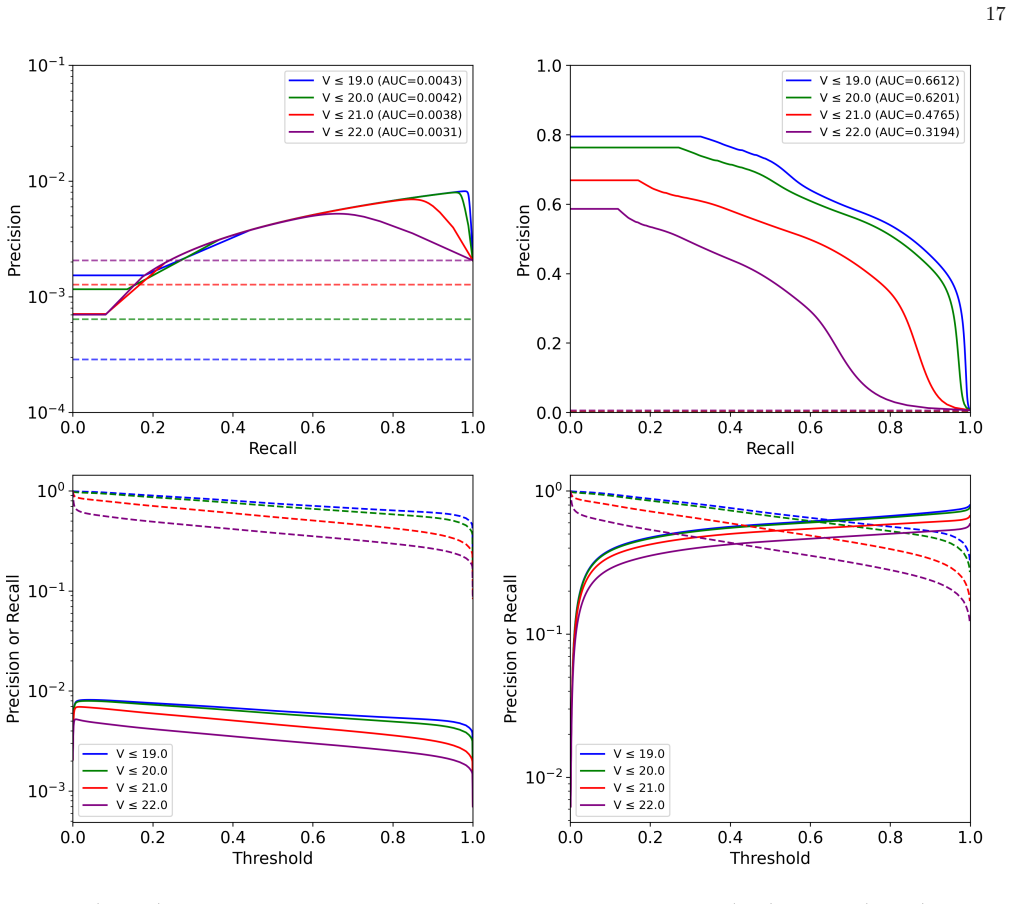
- [Abstract] Abstract: The claim that rotation augmentation yields a 'trajectory-agnostic' detector 'requiring no assumptions for either parameter range' is unsupported by any recovery statistics, false-positive rates, precision-recall curves, or comparisons against known asteroids in real TESS sectors; without these metrics the central robustness assertion cannot be evaluated.
- [Methods (training)] Training data and generalization: The method is trained exclusively on asteroid masks generated by tess-asteroid-ml simulations; the manuscript provides no experiments demonstrating transfer to actual TESS observations or quantifying degradation due to unmodeled effects such as variable PSF, residual background structure, cosmic-ray hits, or sector-specific artifacts.
- [Architecture] Architecture and ablations: While the W-Net and Adaptive Normalization are described, no ablation studies isolate the contribution of rotational augmentation versus a standard 3D U-Net baseline, nor do they quantify whether Adaptive Normalization measurably outperforms conventional normalization; this leaves the specific advantages of the proposed components unverified.
minor comments (2)
- [Abstract] The abstract states applicability to Roman and NEOSurveyor but does not discuss instrument-specific adaptations (e.g., different cadences or noise properties); a brief forward-looking paragraph would strengthen the broader relevance claim.
- Figure captions and axis labels should be expanded to include units, color scales, and explicit descriptions of what each panel shows, facilitating reproducibility of the qualitative examples.
Simulated Author's Rebuttal
We thank the referee for their constructive and detailed review of our manuscript. We address each major comment point by point below, providing the strongest honest defense of the work while acknowledging its current limitations. Revisions have been made where they strengthen the paper without misrepresenting the scope of the study.
read point-by-point responses
-
Referee: [Abstract] Abstract: The claim that rotation augmentation yields a 'trajectory-agnostic' detector 'requiring no assumptions for either parameter range' is unsupported by any recovery statistics, false-positive rates, precision-recall curves, or comparisons against known asteroids in real TESS sectors; without these metrics the central robustness assertion cannot be evaluated.
Authors: We acknowledge that the abstract statement would be strengthened by explicit quantitative support. The rotational augmentation is explicitly designed to expose the network to arbitrary orientations during training, thereby removing the need for trajectory-specific priors that shift-and-stack methods require. In the revised manuscript we have added precision-recall curves, recovery statistics, and false-positive rates evaluated on held-out simulated test sets that span a wide range of speeds and directions. We have also moderated the abstract wording to clarify that trajectory independence is demonstrated within the simulated training distribution. Direct comparisons against known real TESS asteroids are outside the scope of the present study but are identified as a natural next step. revision: partial
-
Referee: [Methods (training)] Training data and generalization: The method is trained exclusively on asteroid masks generated by tess-asteroid-ml simulations; the manuscript provides no experiments demonstrating transfer to actual TESS observations or quantifying degradation due to unmodeled effects such as variable PSF, residual background structure, cosmic-ray hits, or sector-specific artifacts.
Authors: The referee is correct that the current training and evaluation are performed entirely on simulations produced by the publicly released tess-asteroid-ml package. These simulations incorporate realistic TESS noise, background, and PSF models to enable controlled experiments with perfect ground-truth masks. We have expanded the methods and discussion sections to detail the simulation fidelity and to explicitly discuss potential degradation from unmodeled real-world effects. However, transfer experiments on actual TESS sectors were not part of this work, whose primary contribution is the development and simulation-based validation of the W-Net approach. We therefore cannot add such experiments at this stage. revision: no
-
Referee: [Architecture] Architecture and ablations: While the W-Net and Adaptive Normalization are described, no ablation studies isolate the contribution of rotational augmentation versus a standard 3D U-Net baseline, nor do they quantify whether Adaptive Normalization measurably outperforms conventional normalization; this leaves the specific advantages of the proposed components unverified.
Authors: We agree that ablation experiments would better isolate the value of each proposed element. In the revised manuscript we have added a dedicated ablation subsection. It compares the full W-Net trained with rotational augmentation against an otherwise identical 3D U-Net baseline without augmentation, reporting improved detection metrics across a range of asteroid velocities. We also compare Adaptive Normalization against standard min-max and z-score normalization, demonstrating faster convergence and higher final accuracy. These new results are presented with quantitative tables and are now referenced in the abstract and conclusions. revision: yes
- The absence of any quantitative validation or transfer experiments on actual TESS observations (as opposed to simulations).
Circularity Check
No circularity: supervised training on augmented simulations is self-contained
full rationale
The paper defines a W-Net (stacked 3D U-Nets) and Adaptive Normalization as new components, generates training cubes via the released tess-asteroid-ml simulator, and applies explicit rotation augmentation to achieve trajectory robustness. These steps are forward design choices in a standard supervised pipeline; the network output is not equivalent to the input masks or rotations by construction, nor does any claim reduce to a fitted parameter renamed as prediction. No self-citations appear as load-bearing justifications for uniqueness theorems or ansatzes, and the generalization claim to real TESS data is presented as an empirical transfer task rather than a definitional identity. The derivation chain therefore remains independent of its own outputs.
Axiom & Free-Parameter Ledger
free parameters (1)
- W-Net model parameters
axioms (1)
- domain assumption 3D U-Nets can effectively process spatio-temporal image data for segmentation tasks
invented entities (2)
-
W-Net
no independent evidence
-
Adaptive Normalization
no independent evidence
Reference graph
Works this paper leans on
-
[1]
KIC 2856960: the impossible triple star. , keywords =. doi:10.1093/mnras/stu1733 , archivePrefix =. 1409.0722 , primaryClass =
-
[2]
Eclipse timing variation analyses of eccentric binaries with close tertiaries in the Kepler field. , keywords =. doi:10.1093/mnras/stv015 , archivePrefix =. 1412.5759 , primaryClass =
-
[3]
2016, MNRAS, 455, 4136, doi: 10.1093/mnras/stv2530
A comprehensive study of the Kepler triples via eclipse timing. , keywords =. doi:10.1093/mnras/stv2530 , archivePrefix =. 1510.08272 , primaryClass =
-
[4]
The extraneous eclipses on binary light curves: KIC 5255552, KIC 10091110, and KIC 11495766. , keywords =. doi:10.1051/0004-6361/201630072 , archivePrefix =. 1710.10913 , primaryClass =
-
[5]
Kepler Eclipsing Binary Stars. I. Catalog and Principal Characterization of 1879 Eclipsing Binaries in the First Data Release. , keywords =. doi:10.1088/0004-6256/141/3/83 , archivePrefix =. 1006.2815 , primaryClass =
-
[6]
A transiting companion to the eclipsing binary KIC002856960. , keywords =. doi:10.1051/0004-6361/201219479 , archivePrefix =. 1208.3591 , primaryClass =
-
[7]
The Triply Eclipsing Hierarchical Triple Star KIC002856960. , keywords =. doi:10.1088/0004-637X/763/2/74 , archivePrefix =. 1211.2262 , primaryClass =
-
[8]
Stability of planetary, single M dwarf, and binary star companions to Kepler detached eclipsing binaries and a possible five-body system. , keywords =. doi:10.1093/mnras/staa2532 , archivePrefix =. 2008.07731 , primaryClass =
-
[9]
Kennedy, J. and Eberhart, R. , booktitle=. Particle swarm optimization , year=
-
[10]
REBOUND: an open-source multi-purpose N-body code for collisional dynamics. , keywords =. doi:10.1051/0004-6361/201118085 , archivePrefix =. 1110.4876 , primaryClass =
-
[11]
Shapely: manipulation and analysis of geometric objects , year =
Sean Gillies and others , organization =. Shapely: manipulation and analysis of geometric objects , year =
-
[12]
Lester James V. Miranda , title = ". Journal of Open Source Software , year =. doi:10.21105/joss.00433 , url =
-
[13]
EPIC 220204960: A Quadruple Star System Containing Two Strongly Interacting Eclipsing Binaries. , keywords =. doi:10.1093/mnras/stx143 , archivePrefix =. 1701.05281 , primaryClass =
-
[14]
The Discovery of Two Quadruple Star Systems with the Second and Third Shortest Outer Periods. , keywords =. doi:10.3847/1538-4357/adcece , archivePrefix =. 2504.12239 , primaryClass =
-
[15]
Mysterious Dust-emitting Object Orbiting TIC 400799224. , keywords =. doi:10.3847/1538-3881/ac2c81 , archivePrefix =. 2110.01019 , primaryClass =
-
[16]
Journal of Astronomical Telescopes, Instruments, and Systems , month = jan, number = 1, pages =. doi:10.1117/1.JATIS.1.1.014003 , eid =
work page internal anchor Pith review doi:10.1117/1.jatis.1.1.014003
-
[17]
TIC 278825952: a triply eclipsing hierarchical triple system with the most intrinsically circular outer orbit. , keywords =. doi:10.1093/mnras/staa2762 , archivePrefix =. 2009.03378 , primaryClass =
-
[18]
The compact triply eclipsing triple star TIC 209409435 discovered with TESS. , keywords =. doi:10.1093/mnras/staa1817 , archivePrefix =. 2006.10449 , primaryClass =
-
[19]
TIC 454140642: A Compact, Coplanar, Quadruple-lined Quadruple Star System Consisting of Two Eclipsing Binaries. , keywords =. doi:10.3847/1538-4357/ac04ad , archivePrefix =. 2105.12586 , primaryClass =
-
[20]
International Conference on Learning Representations (ICLR) , year=
Fast and Accurate Deep Network Learning by Exponential Linear Units (ELUs) , author=. International Conference on Learning Representations (ICLR) , year=
-
[21]
doi:10.17909/0cp4-2j79 , url =
TESS Calibrated Full Frame Images: All Sectors , publisher =. doi:10.17909/0cp4-2j79 , url =
-
[22]
Detecting Asteroids in TESS Full-frame Images Using a Gradient-based Iterative Algorithm. , keywords =. doi:10.3847/1538-3881/adea3c , adsurl =
-
[23]
Layer Normalization , author=. arXiv preprint arXiv:1607.06450 , year=
work page internal anchor Pith review Pith/arXiv arXiv
-
[24]
International Conference on Learning Representations (ICLR) , year=
Neural Machine Translation by Jointly Learning to Align and Translate , author=. International Conference on Learning Representations (ICLR) , year=
-
[25]
Effective Approaches to Attention-based Neural Machine Translation , author=. Proceedings of the 2015 Conference on Empirical Methods in Natural Language Processing (EMNLP) , pages=. 2015 , doi=
work page 2015
-
[26]
Advances in Neural Information Processing Systems (NeurIPS) , volume=
Attention Is All You Need , author=. Advances in Neural Information Processing Systems (NeurIPS) , volume=. 2017 , doi=
work page 2017
-
[27]
International Conference on Machine Learning (ICML) , pages=
Batch Normalization: Accelerating Deep Network Training by Reducing Internal Covariate Shift , author=. International Conference on Machine Learning (ICML) , pages=. 2015 , organization=
work page 2015
-
[28]
Prediscovery TESS Observations of Interstellar Object 3I/ATLAS. , keywords =. doi:10.3847/2041-8213/ae1f91 , archivePrefix =. 2508.02499 , primaryClass =
-
[29]
The Near-Earth Object Surveyor Mission. , keywords =. doi:10.3847/PSJ/ad0468 , archivePrefix =. 2310.12918 , primaryClass =
-
[30]
TIC 168789840: A Sextuply Eclipsing Sextuple Star System. , keywords =. doi:10.3847/1538-3881/abddb5 , archivePrefix =. 2101.03433 , primaryClass =
-
[31]
A Survey of Stellar Families: Multiplicity of Solar-type Stars. , keywords =. doi:10.1088/0067-0049/190/1/1 , archivePrefix =. 1007.0414 , primaryClass =
-
[32]
The Updated Multiple Star Catalog. , keywords =. doi:10.3847/1538-4365/aaa1a5 , archivePrefix =. 1712.04750 , primaryClass =
-
[33]
W-Net: Dense and diagnostic semantic segmentation of subcutaneous and breast tissue in ultrasound images by incorporating ultrasound RF waveform data , journal =. 2022 , issn =. doi:https://doi.org/10.1016/j.media.2021.102326 , url =
-
[34]
W-Net: Convolutional neural network for segmenting remote sensing images by dual path semantics , author=. PLOS ONE , volume=. 2023 , month=. doi:10.1371/journal.pone.0288311 , url=
-
[35]
101 eclipsing quadruple star candidates discovered in TESS full frame images. , keywords =. doi:10.1093/mnras/stad2947 , archivePrefix =. 2309.14200 , primaryClass =
-
[36]
Revista Mexicana de Astronomia y Astrofisica Conference Series , year = 2007, editor =
Precision Radial Velocities for the Kepler Era. Revista Mexicana de Astronomia y Astrofisica Conference Series , year = 2007, editor =
work page 2007
-
[37]
Journal of Global Optimization , year=
Differential Evolution – A Simple and Efficient Heuristic for global Optimization over Continuous Spaces , author=. Journal of Global Optimization , year=
-
[38]
Six new compact triply eclipsing triples found with TESS. , keywords =. doi:10.1093/mnras/stac957 , archivePrefix =. 2204.02539 , primaryClass =
-
[39]
Triply eclipsing triple stars in the northern TESS fields: TICs 193993801, 388459317, and 52041148. , keywords =. doi:10.1093/mnras/stab3397 , archivePrefix =. 2111.10074 , primaryClass =
-
[40]
Ninety-seven Eclipsing Quadruple Star Candidates Discovered in TESS Full-frame Images. , keywords =. doi:10.3847/1538-4365/ac5458 , archivePrefix =. 2202.05790 , primaryClass =
-
[41]
Multiply eclipsing candidates from the TESS satellite. arXiv e-prints , keywords =
-
[42]
Kepler Planet-Detection Mission: Introduction and First Results.Science2010,327, 977
Kepler Planet-Detection Mission: Introduction and First Results. Science , keywords =. doi:10.1126/science.1185402 , adsurl =
-
[43]
2016, ApJS, 222, 8, doi: 10.3847/0067-0049/222/1/8 Ekstr¨ om, S., Georgy, C., Eggenberger, P., et al
MESA Isochrones and Stellar Tracks (MIST) 0: Methods for the Construction of Stellar Isochrones. , keywords =. doi:10.3847/0067-0049/222/1/8 , archivePrefix =. 1601.05144 , primaryClass =
-
[44]
Mesa Isochrones and Stellar Tracks (MIST). I. Solar-scaled Models. , keywords =. doi:10.3847/0004-637X/823/2/102 , archivePrefix =. 1604.08592 , primaryClass =
work page internal anchor Pith review Pith/arXiv arXiv doi:10.3847/0004-637x/823/2/102
-
[45]
Nature Methods , year="2020", adsurl=
SciPy 1.0: Fundamental Algorithms for Scientific Computing in Python. Nature Methods , year="2020", adsurl=
work page 2020
-
[46]
Photodynamical analysis of the triply eclipsing hierarchical triple system EPIC 249432662. , keywords =. doi:10.1093/mnras/sty3157 , archivePrefix =. 1809.04366 , primaryClass =
-
[47]
TICs 167692429 and 220397947: the first compact hierarchical triple stars discovered with TESS. , keywords =. doi:10.1093/mnras/staa495 , archivePrefix =. 2002.06902 , primaryClass =
-
[48]
The Visual Survey Group: A Decade of Hunting Exoplanets and Unusual Stellar Events with Space-based Telescopes. , keywords =. doi:10.1088/1538-3873/ac6e06 , archivePrefix =. 2205.07832 , primaryClass =
-
[49]
The Revised TESS Input Catalog and Candidate Target List. , keywords =. doi:10.3847/1538-3881/ab3467 , archivePrefix =. 1905.10694 , primaryClass =
-
[50]
2021, Universe, 7, 369, doi: 10.3390/universe7100369
Space-Based Photometry of Binary Stars: From Voyager to TESS. Universe , keywords =. doi:10.3390/universe7100369 , archivePrefix =. 2110.03543 , primaryClass =
-
[51]
Eclipsing Binaries in Dynamically Interacting Close, Multiple Systems. Galaxies , keywords =. doi:10.3390/galaxies10010009 , archivePrefix =. 2201.01243 , primaryClass =
-
[52]
BG Ind: the nearest doubly eclipsing, compact hierarchical quadruple system. , keywords =. doi:10.1093/mnras/stab621 , archivePrefix =. 2103.00925 , primaryClass =
-
[53]
The Random Transiter - EPIC 249706694/HD 139139. , keywords =. doi:10.1093/mnras/stz1772 , archivePrefix =. 1906.11268 , primaryClass =
-
[54]
Research Notes of the American Astronomical Society , keywords =
Calibrated Full-frame Images for the TESS Quick Look Pipeline. Research Notes of the American Astronomical Society , keywords =. doi:10.3847/2515-5172/abd63a , adsurl =
-
[55]
eleanor: An Open-source Tool for Extracting Light Curves from the TESS Full-frame Images. , keywords =. doi:10.1088/1538-3873/ab291c , archivePrefix =. 1903.09152 , primaryClass =
-
[56]
Research Notes of the American Astronomical Society , keywords =
The NASA GSFC TESS Full Frame Image Light Curve Data Set. Research Notes of the American Astronomical Society , keywords =. doi:10.3847/2515-5172/ac74c4 , adsurl =
-
[57]
Architecture of Hierarchical Stellar Systems and Their Formation. Universe , keywords =. doi:10.3390/universe7090352 , archivePrefix =. 2109.09118 , primaryClass =
-
[58]
The compact multiple system HIP 41431. , keywords =. doi:10.1093/mnras/stz1510 , archivePrefix =. 1905.12051 , primaryClass =
-
[59]
The CoRoT satellite in flight: description and performance. , keywords =. doi:10.1051/0004-6361/200810860 , archivePrefix =. 0901.2206 , primaryClass =
-
[60]
Secular changes in the orbits of the quadruple system VW LMi. , keywords =. doi:10.1093/mnras/staa699 , archivePrefix =. 2003.08169 , primaryClass =
-
[61]
Parallax Systematics and Photocenter Motions of Benchmark Eclipsing Binaries in Gaia EDR3. , keywords =. doi:10.3847/2041-8213/abdaad , archivePrefix =. 2101.03425 , primaryClass =
-
[62]
2001, MNRAS, 322, 231, doi: 10.1046/j.1365-8711.2001.04022.x
Tidal interactions in star cluster simulations. , keywords =. doi:10.1046/j.1365-8711.2001.03974.x , adsurl =
-
[63]
PARSEC: stellar tracks and isochrones with the PAdova and TRieste Stellar Evolution Code. , keywords =. doi:10.1111/j.1365-2966.2012.21948.x , archivePrefix =. 1208.4498 , primaryClass =
-
[64]
Multiple Stars Across the H-R Diagram , year = 2008, editor =
Dynamics and Stability of Triple Stars. Multiple Stars Across the H-R Diagram , year = 2008, editor =. doi:10.1007/978-3-540-74745-1\_2 , adsurl =
- [65]
-
[66]
Matplotlib: A 2D graphics environment , volume =
Hunter, John D , journal =. Matplotlib: A 2D graphics environment , volume =
-
[67]
Harris, Charles R and Millman, K Jarrod and van der Walt, St. Nature , number =. 2020 , Bdsk-Url-1 =. doi:10.1038/s41586-020-2649-2 , issn =
-
[68]
Data Structures for Statistical Computing in Python , year =
Wes McKinney , booktitle =. Data Structures for Statistical Computing in Python , year =
-
[69]
Pedregosa, F. and Varoquaux, G. and Gramfort, A. and Michel, V. and Thirion, B. and Grisel, O. and Blondel, M. and Prettenhofer, P. and Weiss, R. and Dubourg, V. and Vanderplas, J. and Passos, A. and Cournapeau, D. and Brucher, M. and Perrot, M. and Duchesnay, E. , journal =
- [70]
-
[71]
ascl , author =:1812.013 , howpublished =
-
[72]
ascl , author =:2003.001 , howpublished =
work page 2003
-
[73]
ascl , author =:1905.007 , keywords =
work page 1905
-
[74]
P\'erez, Fernando and Granger, Brian E. , doi =. Computing in Science and Engineering , month = may, number =
-
[75]
Research Notes of the AAS , abstract =
Hedges, Christina and Martínez-Palomera, Jorge and Tuson, Amy and Pritchard, Tyler and Hounsell, Rebekah and Schanche, Nicole and Kostov, Veselin and Giles, Daniel , title =. Research Notes of the AAS , abstract =. 2025 , month =. doi:10.3847/2515-5172/adef3a , url =
-
[76]
doi:10.1051/0004-6361/201322068 , Eid =. arXiv , Author =:1307.6212 , Journal =
-
[77]
The Astronomical Journal , author =
The Astropy Project: Building an Open-science Project and Status of the v2.0 Core Package. , keywords =. doi:10.3847/1538-3881/aabc4f , archivePrefix =. 1801.02634 , primaryClass =
-
[78]
The Astropy Project: Sustaining and Growing a Community-oriented Open-source Project and the Latest Major Release (v5.0) of the Core Package. , keywords =. doi:10.3847/1538-4357/ac7c74 , archivePrefix =. 2206.14220 , primaryClass =
work page internal anchor Pith review Pith/arXiv arXiv doi:10.3847/1538-4357/ac7c74
-
[79]
Kotikalapudi, Raghavendra and contributors , howpublished =. keras-vis , year =
-
[80]
MPI for Python: Performance improvements and MPI-2 extensions , volume =
Lisandro Dalcin and Rodrigo Paz and Mario Storti and Jorge D'Elia , doi =. MPI for Python: Performance improvements and MPI-2 extensions , volume =. Journal of Parallel and Distributed Computing , number =. 2008 , Bdsk-Url-1 =
work page 2008
discussion (0)
Sign in with ORCID, Apple, or X to comment. Anyone can read and Pith papers without signing in.