REVIEW 5 major objections 6 minor 1 cited by
SRDrone, a self-refinement loop that evaluates the drone's continuous trajectory and repairs its behavior tree in a constrained edit space, lifts simulation task success to 84.91–91.67% and reaches 96.25% success on physical drones.
Reviewed by Pith at T0; open to challenge. T0 means a machine referee read the full paper against a public rubric. the ladder, T0–T4 →
SRDrone combines continuous state evaluation with hierarchical Behavior Tree repair so that LLM-based drone planners can autonomously refine their own plans after failures.
T0 review reviewed 2026-08-05 challenge →
load-bearing objection Solid engineering paper with a useful refinement loop, but the headline real-world number is over-read and the abstract's 44.87% is a percentage-point margin, not an improvement rate. the 5 major comments →
LLM-Driven Self-Refinement for Embodied Drone Task Planning
The pith
A machine-rendered reading of the paper's core claim, the machinery that carries it, and where it could break.
The reading
Core claim
The discovery is that process-level evaluation plus structured BT repair, rather than any single component, is what makes LLM-driven self-refinement work for embodied drone planning. A final-frame-only evaluator detects only 23.08% of plan-level failures and correctly explains 14.72% of them; the CMSR pipeline raises detection to 90.38%, explanation to 85.26%, and localization to 80.07%. Unstructured textual reflection, meanwhile, fixes only 39.28% of missing-dependency errors and 28.6% of invalid control flows, whereas the hierarchical constrained repair converts the same style of evaluation into formal node-level edits. Together these components turn a system that would otherwise require a
What carries the argument
The first mechanism is CMSR (Continuous Motion and Spatial Reasoning): an algorithm that samples states only at action boundaries, derives ego-motion semantic vectors (behavior type, displacement, orientation change), maintains a persistent environment-state representation, infers proximity/safety/navigational-intent relations, and aligns these into a natural-language trajectory narrative for the LLM. The second mechanism is Hierarchical BT Modification: analysis at three layers (action, logic, mission) plus a strategy space that constrains edits to drone-feasible actions and behavior-tree-valid control flow, producing structured reflective experiences of the form ⟨τ,ω⟩, where τ is the targe
Load-bearing premise
Physical tests were run only with the experience base refined in simulation, because real-world trial-and-error was deemed too risky; the paper therefore assumes that software/hardware-in-the-loop simulation is a faithful proxy for real drone dynamics, sensor noise, and environmental variation, and that the 96.25% real-world success rate is explained by simulation-to-reality transfer.
What would settle it
Compare SRDrone against a variant that keeps Hierarchical BT Modification but swaps CMSR for final-state-only evaluation, and against a variant that keeps CMSR but replaces structured repair with free-text reflection; if either variant matches SRDrone's roughly 85–92% simulation success rate across the four scenarios, the paper's claim that both components are necessary collapses.
If this is right
- LLM-generated behavior trees can be made self-improving rather than one-shot, because the structured experience base accumulates validated repairs and retrieves them with kNN for later, similar tasks.
- Drone missions whose terminal states look identical can still be distinguished by their trajectories, so failure diagnosis should use process semantics, not final-frame snapshots.
- A self-refining planner can run without human oversight across up to five repair iterations, eliminating the human-expert online adjustment that prior LLM drone planners require.
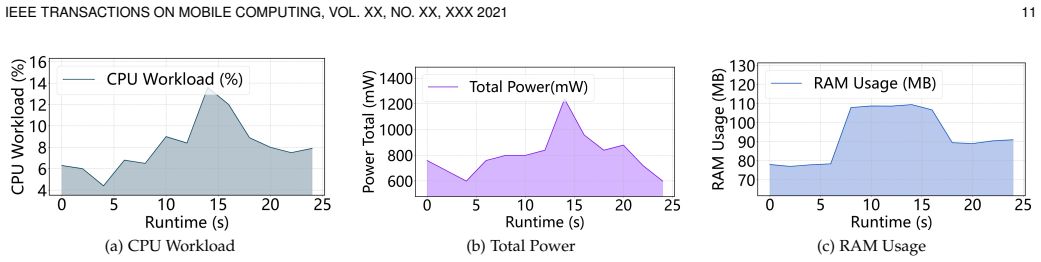
- A simulation-refined experience base can be deployed directly on physical drones, reaching 96.25% success while keeping onboard CPU under 14%, RAM under 110 MB, and power under 1300 mW.
Where Pith is reading between the lines
- The paper tests one simulator-to-reality transfer; an untested corollary is that the same experience-base transfer would hold under changing weather, lighting, or different drone models, since the constrained action space is hardware-specific.
- Because failure localization is 80.07%, roughly one in five plan-level failures is still mislocated; a natural next change the paper does not make is to feed vision-language model captions into CMSR, which might close the residual gap and address perception-level failures noted in field tests.
- The same 'process evaluation plus structured repair in a constrained edit space' recipe transfers to other formal plan languages, such as finite state machines or PDDL, and to other embodied platforms if their execution traces can be converted to LLM-comprehensible narratives.
- The paper compares against human guidance only in simulation; my inference is that the real advantage of SRDrone over expert-guided operation is not raw success rate but removing the expert's attention, which the paper measures only indirectly via resource consumption.
Editorial analysis
A structured set of objections, weighed in public.
Referee Report
Summary. The paper proposes SRDrone, a self-refinement framework for embodied drone task planning. It combines a continuous state evaluation module (CMSR), which converts action-triggered sensor streams into LLM-compatible semantic narratives, with a hierarchical Behavior Tree modification model that localizes failures at action/logic/mission layers and applies node-level corrections within a constrained action/logic strategy space. The resulting structured experiences are stored in an experience base with kNN retrieval. The authors evaluate SRDrone in PX4 SIL/HIL simulation, report large Success Rate (SR) gains over ChatFly, LLM-Planner, LLM-Planner-HLP, and REFLECT across four task categories, and report a 96.25% SR in real-world indoor/outdoor tests using a simulation-refined experience base. They also report failure-explanation metrics and a human-in-the-loop comparison.
Significance. If the empirical claims are sustained, the combination of process-level LLM evaluation with structured, syntax-aware BT repair is a meaningful advance over final-state-only reflection for robotic task planning. The paper's strengths include the concrete BT/LLM system design, the use of objective task-completion SR, an attempt to compare with human-guided variants, and an open-source release. The large simulation gains are plausible and the failure-diagnosis idea is well motivated. However, the evidence as presented is not tight: there are no error bars or significance tests; the real-world deployment does not exercise the self-refinement loop or include a non-refined control; and the ground-truth construction for the 176-failure diagnosis dataset is undocumented. These gaps are load-bearing for the paper's stronger claims about simulation-to-real transferability and about the source of the measured improvements, though the central mechanism remains credible.
major comments (5)
- [Section 5.1.2, Table 4] The real-world evaluation is presented as validating SRDrone and its 'effective simulation-to-reality transferability,' but the text states that physical testing was conducted exclusively with the refined experience base, and no comparison is made against an unrefined BT, a static baseline, or a self-updating baseline. The online self-refinement loop is not exercised at all in the real world. With only four tasks and 10 runs per environment, the aggregate 96.25% SR has a wide confidence interval and could reflect task simplicity rather than the refinement mechanism. This section should be reframed as a deployment feasibility study, or augmented with a real-world control on at least the safer tasks; the abstract and conclusion should be softened accordingly.
- [Section 5.1.1, Table 3] The main simulation comparison reports only aggregate SR percentages with no trial counts, standard deviations, confidence intervals, or significance tests. Since several baseline SR values are very low (e.g., 3.57% for ChatFly on composite tasks), small absolute differences in trial outcomes could dominate the comparison. The authors should report the number of runs per scenario, the random seeds, and statistical tests. It should also be made explicit whether the 'up to 5 refinement steps' allowance is applied uniformly and whether baselines that cannot replan are given any equivalent advantage.
- [Section 5.2.1, Table 5] The 176 plan-level failures are the sole basis for the Det/Exp/Loc accuracy claims, but their construction is not documented. The paper does not state how many failures came from simulation versus real-world runs, how plan-level failures were distinguished from execution failures, what the annotation protocol was, or whether the 'Final State-based' baseline consumed the exact same traces. Without this information the 90.38% detection and 80.07% localization numbers are not reproducible and may be affected by selection bias. Provide the dataset construction details and, if human annotation was used, inter-annotator agreement.
- [Section 5.2.2, Figure 8] The iterative-refinement curves are reported without per-iteration sample sizes or variance estimates, so it is unclear whether the crossover between SRDrone and the baselines at iteration 2 is robust. The text also refers to 'near-ubiquitous fault detection' for REFLECT and the ablation without quantifying it. Please give the number of tasks/trials behind each point, the stopping criteria, and the per-iteration success counts or confidence bounds.
- [Section 7, Section 3.2.1] The Discussion admits that SRDrone lacks detailed execution-level diagnostics and that the Action-Centric State Filtering discards images captured during unsuccessful Detect actions. The paper should quantify how many such events are excluded from the evaluation and whether this filtering affects the measured SR or the refinement loop. If difficult execution failures are systematically removed from the evidence stream, the reported SR may overstate the planner's performance relative to what a fully informed evaluator would observe.
minor comments (6)
- [Section 4.1 / 5.1] The LLM backend is not specified. Model name/version, API, temperature, and prompt templates are needed for reproducibility.
- [Section 3.3.3] The kNN retriever's neighborhood size k is not reported, nor is a sensitivity or ablation for k. Please add this value and any retrieval ablations.
- [Abstract / Section 5.1.1] The '44.87% improvement' should be defined explicitly as an absolute percentage-point difference or a relative improvement; the current wording is ambiguous.
- [Equation (8)] Clarify that N_success^(i) counts tasks that succeed at iteration i and were not already counted as successful in an earlier iteration, and state whether a succeeded task is retried in later iterations.
- [Table 2] Tasks with randomly initialized positions (IDs 5, 6, 10, 11) need a description of the randomization and the number of seeds tested; otherwise the reported SR may depend on the specific draws.
- [Throughout] There are several typos and inconsistent terms, e.g., 'MoveForawrd', 'Hierarchy BT Modification' vs 'Hierarchical BT Modification', and 'Y ongjian Fu' in the author block. A careful proofreading pass is recommended.
Circularity Check
No definitional circularity: the headline success rate is measured by task completion, the self-evaluator is independently checked against human labels, and no load-bearing self-citation or imported uniqueness claim is used.
full rationale
The paper's central claim is empirical, not definitional. Success Rate (Eq. 8) is defined as the ratio of tasks that successfully complete user instructions after up to five refinement steps; it is a task-completion count, not a function of SRDrone's own outputs. The continuous-state evaluator (CMSR) is a component whose detection, localization, and explanation quality are independently scored against human-labeled plan-level failures in Table 5 (Det=90.38%, Exp=85.26%, Loc=80.07%). This external ground-truth check breaks any self-certification loop from using the same LLM for evaluation and repair. The hierarchical BT modification (Sec. 3.3) is constrained by drone-specific action spaces and BT syntax, not by the success metric it is meant to improve. The experience base is self-generated, but it is an input to subsequent planning; the real-world 96.25% SR is a measured task-completion rate, not a restatement of the experience base. The paper's own limitation statement in Sec. 5.1.2 says physical testing used only the pre-refined experience base 'due to unacceptable physical risks' and did not exercise the online refinement loop; this is a real generalization/attribution concern, but it is not circularity in the definitional sense. Self-citations are not load-bearing: e.g., [42] is offered as one of several interchangeable stereo-depth alternatives, and no uniqueness theorem or ansatz is imported from the authors' prior work. Baseline comparisons are external and adversarial. Therefore no specific circular step can be exhibited with the paper's own equations or definitions.
Axiom & Free-Parameter Ledger
free parameters (3)
- kNN neighborhood size k
- Refinement step cap =
5
- Action-boundary state sampling =
action completion only
axioms (4)
- domain assumption PX4 SIL/HIL simulation is a faithful proxy for real drone dynamics, sensors, and environment
- domain assumption The LLM can perform reliable spatial-temporal reasoning from the CMSR narratives
- domain assumption The 176 plan-level failures are correctly and consistently labeled
- domain assumption Perception and localization modules (YOLOv5, FAST-LIO) are accurate enough for semantic derivation
Cite this review
Pith. "Pith review of LLM-Driven Self-Refinement for Embodied Drone Task Planning." pith.science (2026). https://pith.science/paper/YYUJC6A7
@misc{pith2026250815501,
  author       = {Pith},
  title        = {Pith review of: LLM-Driven Self-Refinement for Embodied Drone Task Planning},
  year         = {2026},
  howpublished = {\url{https://pith.science/paper/YYUJC6A7}},
  note         = {Machine review of arXiv:2508.15501}
}
read the original abstract
We introduce SRDrone, a novel system designed for self-refinement task planning in industrial-grade embodied drones. SRDrone incorporates two key technical contributions: First, it employs a continuous state evaluation methodology to robustly and accurately determine task outcomes and provide explanatory feedback. This approach supersedes conventional reliance on single-frame final-state assessment for continuous, dynamic drone operations. Second, SRDrone implements a hierarchical Behavior Tree (BT) modification model. This model integrates multi-level BT plan analysis with a constrained strategy space to enable structured reflective learning from experience. Experimental results demonstrate that SRDrone achieves a 44.87% improvement in Success Rate (SR) over baseline methods. Furthermore, real-world deployment utilizing an experience base optimized through iterative self-refinement attains a 96.25% SR. By embedding adaptive task refinement capabilities within an industrial-grade BT planning framework, SRDrone effectively integrates the general reasoning intelligence of Large Language Models (LLMs) with the stringent physical execution constraints inherent to embodied drones. Code is available at https://github.com/ZXiiiC/SRDrone.
Figures



Forward citations
Cited by 1 Pith paper
-
Decoupled Travel Planning with Behavior Forest
Behavior Forest decouples multi-constraint travel planning into parallel behavior trees with LLM nodes and global coordination, yielding 6.67% and 11.82% gains over prior methods on two benchmarks.
Reference graph
Works this paper leans on
-
[1]
The small-drone revolution is coming—scientists need to ensure it will be safe,
X. Huang, “The small-drone revolution is coming—scientists need to ensure it will be safe,”Nature, vol. 637, no. 8044, pp. 29–30, 2025
work page 2025
-
[2]
In- dustry state-of-art and opportunities for the use of drones in smart grids inspections,
N. Tang, N. Landas, Y. R. Rodrigues, and M. R. Monteiro, “In- dustry state-of-art and opportunities for the use of drones in smart grids inspections,” in 2024 International Symposium on Power Electronics, Electrical Drives, Automation and Motion (SPEEDAM) . IEEE, 2024, pp. 327–331
work page 2024
-
[3]
A. Serrano-Hernandez, A. Ballano, and J. Faulin, “Selecting freight transportation modes in last-mile urban distribution in pamplona (spain): An option for drone delivery in smart cities,” Energies, vol. 14, no. 16, p. 4748, 2021
work page 2021
-
[4]
The next generation of human-drone partnerships: Co-designing an emergency response system,
A. Agrawal, S. J. Abraham, B. Burger, C. Christine, L. Fraser, J. M. Hoeksema, S. Hwang, E. Travnik, S. Kumar, W. Scheirer et al. , “The next generation of human-drone partnerships: Co-designing an emergency response system,” in Proceedings of the 2020 CHI Conference on Human Factors in Computing Systems , 2020, pp. 1–13
work page 2020
-
[5]
Chatfly: Low-latency drone planning with large language models,
G. Chen, X. Yu, N. Ling, and L. Zhong, “Chatfly: Low-latency drone planning with large language models,” IEEE Transactions on Mobile Computing, 2025
work page 2025
-
[6]
Net-gpt: A llm-empowered man-in-the- middle chatbot for unmanned aerial vehicle,
B. Piggott, S. Patil, G. Feng, I. Odat, R. Mukherjee, B. Dhar- malingam, and A. Liu, “Net-gpt: A llm-empowered man-in-the- middle chatbot for unmanned aerial vehicle,” in Proceedings of the Eighth ACM/IEEE Symposium on Edge Computing , 2023, pp. 287– 293
work page 2023
-
[7]
Multi-uav place- ment for integrated access and backhauling using llm-driven op- timization,
Y. Wang, J. Farooq, H. Ghazzai, and G. Setti, “Multi-uav place- ment for integrated access and backhauling using llm-driven op- timization,” in 2025 IEEE Wireless Communications and Networking Conference (WCNC). IEEE, 2025, pp. 1–6
work page 2025
-
[8]
Llm as bt- planner: Leveraging llms for behavior tree generation in robot task planning,
J. Ao, F. Wu, Y. Wu, A. Swikir, and S. Haddadin, “Llm as bt- planner: Leveraging llms for behavior tree generation in robot task planning,” arXiv preprint arXiv:2409.10444, 2024
Pith/arXiv arXiv 2024
-
[9]
Lifelong robot learning with human assisted lan- guage planners,
M. Parakh, A. Fong, A. Simeonov, T. Chen, A. Gupta, and P . Agrawal, “Lifelong robot learning with human assisted lan- guage planners,” in 2024 IEEE International Conference on Robotics and Automation (ICRA). IEEE, 2024, pp. 523–529
work page 2024
-
[10]
Btgenbot: Behavior tree generation for robotic tasks with lightweight llms,
R. A. Izzo, G. Bardaro, and M. Matteucci, “Btgenbot: Behavior tree generation for robotic tasks with lightweight llms,” in 2024 IEEE/RSJ International Conference on Intelligent Robots and Systems (IROS). IEEE, 2024, pp. 9684–9690
work page 2024
-
[11]
X. Chen, Y. Cai, Y. Mao, M. Li, W. Yang, W. Xu, and J. Wang, “Integrating intent understanding and optimal behavior planning for behavior tree generation from human instructions,” arXiv preprint arXiv:2405.07474, 2024
Pith/arXiv arXiv 2024
-
[12]
Behavior trees and state machines in robotics applications,
R. Ghzouli, T. Berger, E. B. Johnsen, A. Wasowski, and S. Dragule, “Behavior trees and state machines in robotics applications,” IEEE Transactions on Software Engineering , vol. 49, no. 9, pp. 4243–4267, 2023
work page 2023
-
[13]
Research progress and application of behavior tree technology,
L. Ruifeng, W. Jiasheng, Z. Haolong, and T. Mengfan, “Research progress and application of behavior tree technology,” in 2019 6th International Conference on Behavioral, Economic and Socio-Cultural Computing (BESC). IEEE, 2019, pp. 1–4
work page 2019
-
[14]
Behavior trees in action: a study of robotics applications,
R. Ghzouli, T. Berger, E. B. Johnsen, S. Dragule, and A. Wasowski, “Behavior trees in action: a study of robotics applications,” in Proceedings of the 13th ACM SIGPLAN international conference on software language engineering, 2020, pp. 196–209
work page 2020
-
[15]
Increasing modularity of uav control systems using computer game behavior trees,
P . Ogren, “Increasing modularity of uav control systems using computer game behavior trees,” in Aiaa guidance, navigation, and control conference, 2012, p. 4458
work page 2012
-
[16]
Reflexion: Language agents with verbal reinforcement learning,
N. Shinn, F. Cassano, A. Gopinath, K. Narasimhan, and S. Yao, “Reflexion: Language agents with verbal reinforcement learning,” Advances in Neural Information Processing Systems, vol. 36, pp. 8634– 8652, 2023
2023
-
[17]
Reflect: Summarizing robot experiences for failure explanation and correction,
Z. Liu, A. Bahety, and S. Song, “Reflect: Summarizing robot experiences for failure explanation and correction,” arXiv preprint arXiv:2306.15724, 2023
Pith/arXiv arXiv 2023
-
[18]
Learning to refine with fine-grained natural language feedback,
M. Wadhwa, X. Zhao, J. J. Li, and G. Durrett, “Learning to refine with fine-grained natural language feedback,” in Findings of the Association for Computational Linguistics: EMNLP 2024 , Y. Al-Onaizan, M. Bansal, and Y.-N. Chen, Eds. Miami, Florida, USA: Association for Computational Linguistics, Nov. 2024, pp. 12 281–12 308. [Online]. Available: https://...
work page 2024
-
[19]
Y. Chen, J. Arkin, Y. Hao, Y. Zhang, N. Roy, and C. Fan, “PRompt optimization in multi-step tasks (PROMST): Integrating human feedback and heuristic-based sampling,” in Proceedings of the 2024 Conference on Empirical Methods in Natural Language Processing , Y. Al-Onaizan, M. Bansal, and Y.-N. Chen, Eds. Miami, Florida, USA: Association for Computational L...
work page 2024
-
[20]
Agile: A novel reinforcement learning framework of llm agents,
F. Peiyuan, Y. He, G. Huang, Y. Lin, H. Zhang, Y. Zhang, and H. Li, “Agile: A novel reinforcement learning framework of llm agents,” Advances in Neural Information Processing Systems , vol. 37, pp. 5244–5284, 2024
work page 2024
-
[21]
Countering reward over-optimization in LLM with demonstration-guided reinforcement learning,
M. Rita, F. Strub, R. Chaabouni, P . Michel, E. Dupoux, and O. Pietquin, “Countering reward over-optimization in LLM with demonstration-guided reinforcement learning,” in Findings of the Association for Computational Linguistics: ACL 2024 , L.-W. Ku, A. Martins, and V . Srikumar, Eds. Bangkok, Thailand: Association for Computational Linguistics, Aug. 2024...
work page 2024
-
[22]
Do as i can, not as i say: Grounding language in robotic affordances,
M. Ahn, A. Brohan, N. Brown, Y. Chebotar, O. Cortes, B. David, C. Finn, C. Fu, K. Gopalakrishnan, K. Hausman et al., “Do as i can, not as i say: Grounding language in robotic affordances,” arXiv preprint arXiv:2204.01691, 2022
Pith/arXiv arXiv 2022
-
[23]
Prompt, plan, perform: Llm-based humanoid control via quantized imita- tion learning,
J. Sun, Q. Zhang, Y. Duan, X. Jiang, C. Cheng, and R. Xu, “Prompt, plan, perform: Llm-based humanoid control via quantized imita- tion learning,” in 2024 IEEE International Conference on Robotics and Automation (ICRA). IEEE, 2024, pp. 16 236–16 242
work page 2024
-
[24]
Learning rewards from linguistic feedback,
T. R. Sumers, M. K. Ho, R. D. Hawkins, K. Narasimhan, and T. L. Griffiths, “Learning rewards from linguistic feedback,” in Proceedings of the AAAI Conference on Artificial Intelligence , vol. 35, no. 7, 2021, pp. 6002–6010
work page 2021
-
[25]
Fine-grained human feedback gives better rewards for language model training,
Z. Wu, Y. Hu, W. Shi, N. Dziri, A. Suhr, P . Ammanabrolu, N. A. Smith, M. Ostendorf, and H. Hajishirzi, “Fine-grained human feedback gives better rewards for language model training,” Ad- vances in Neural Information Processing Systems , vol. 36, pp. 59 008– 59 033, 2023
work page 2023
-
[26]
D. Das and S. Chernova, “Semantic-based explainable ai: Leverag- ing semantic scene graphs and pairwise ranking to explain robot failures,” in 2021 IEEE/RSJ International Conference on Intelligent Robots and Systems (IROS). IEEE, 2021, pp. 3034–3041
work page 2021
-
[27]
Llm4ts: Aligning pre-trained llms as data-efficient time-series forecasters,
C. Chang, W.-Y. Wang, W.-C. Peng, and T.-F. Chen, “Llm4ts: Aligning pre-trained llms as data-efficient time-series forecasters,” ACM Transactions on Intelligent Systems and Technology , vol. 16, no. 3, pp. 1–20, 2025
work page 2025
-
[28]
Time-LLM: Time series forecasting by reprogramming large language models,
M. Jin, S. Wang, L. Ma, Z. Chu, J. Y. Zhang, X. Shi, P .-Y. Chen, Y. Liang, Y.-F. Li, S. Pan, and Q. Wen, “Time-LLM: Time series forecasting by reprogramming large language models,” in Interna- tional Conference on Learning Representations (ICLR), 2024
work page 2024
-
[29]
Are transformers effective for time series forecasting?
A. Zeng, M. Chen, L. Zhang, and Q. Xu, “Are transformers effective for time series forecasting?” in Proceedings of the AAAI conference on artificial intelligence , vol. 37, no. 9, 2023, pp. 11 121– 11 128
2023
- [30]
-
[31]
Mind’s eye of llms: visualization-of-thought elicits spatial rea- soning in large language models,
W. Wu, S. Mao, Y. Zhang, Y. Xia, L. Dong, L. Cui, and F. Wei, “Mind’s eye of llms: visualization-of-thought elicits spatial rea- soning in large language models,” Advances in Neural Information Processing Systems, vol. 37, pp. 90 277–90 317, 2024. IEEE TRANSACTIONS ON MOBILE COMPUTING, VOL. XX, NO. XX, XXX 2021 14
work page 2024
-
[32]
Mpnet: Masked and permuted pre-training for language understanding,
K. Song, X. Tan, T. Qin, J. Lu, and T.-Y. Liu, “Mpnet: Masked and permuted pre-training for language understanding,”Advances in neural information processing systems , vol. 33, pp. 16 857–16 867, 2020
work page 2020
-
[33]
MAVLink. (2025) Mavros. [Online]. Available: https://github. com/mavlink/mavros
work page 2025
-
[34]
BehaviorTree. (2025) Behaviortree.cpp. [Online]. Available: https: //www.behaviortree.dev/
work page 2025
-
[35]
Ultralytics. (2025) Yolov5. [Online]. Available: https://github. com/ultralytics/yolov5
work page 2025
-
[36]
NVIDIA. (2022) Jetson orin nx 16gb. [Online]. Avail- able: https://www.nvidia.com/en-us/autonomous-machines/ embedded-systems/jetson-orin/
work page 2022
-
[37]
CUAV . (2020) Cuav v5 nano autopilot. [Online]. Available: https://doc.cuav.net/controller/v5-autopilot/en/v5-nano.html
work page 2020
-
[38]
livox. (2025) mid-360. [Online]. Available: https://www.livoxtech. com/cn/mid-360
work page 2025
-
[39]
(2024) Fast-lio: Fast lidar-inertial odometry
Hong Kong University MaRS Lab. (2024) Fast-lio: Fast lidar-inertial odometry. [Online]. Available: https://github.com/ hku-mars/FAST LIO
work page 2024
-
[40]
intel. (2025) d435i. [Online]. Available: https://www. intelrealsense.com/depth-camera-d435i/
work page 2025
-
[41]
S. Liang, H. Wu, L. Zhen, Q. Hua, S. Garg, G. Kaddoum, M. M. Hassan, and K. Yu, “Edge yolo: Real-time intelligent object de- tection system based on edge-cloud cooperation in autonomous vehicles,” IEEE Transactions on Intelligent Transportation Systems , vol. 23, no. 12, pp. 25 345–25 360, 2022
work page 2022
-
[42]
Mobidepth: Real-time depth estimation using on- device dual cameras,
J. Zhang, H. Yang, J. Ren, D. Zhang, B. He, T. Cao, Y. Li, Y. Zhang, and Y. Liu, “Mobidepth: Real-time depth estimation using on- device dual cameras,” in Proceedings of the 28th Annual International Conference on Mobile Computing And Networking, 2022, pp. 528–541
work page 2022
-
[43]
Anytime Stereo Image Depth Estimation on Mobile Devices
Y. Wang, Z. Lai, G. Huang, B. H. Wang, L. Van Der Maaten, M. Campbell, and K. Q. Weinberger, “Anytime stereo image depth estimation on mobile devices,” arXiv preprint arXiv:1810.11408 , 2018
work page internal anchor Pith review Pith/arXiv arXiv 2018
-
[44]
X. Chen, Y. Cai, Y. Mao, M. Li, W. Yang, W. Xu, and J. Wang, “Integrating intent understanding and optimal behavior planning for behavior tree generation from human instructions,” in Proceedings of the Thirty-Third International Joint Conference on Artificial Intelligence , ser. IJCAI ’24, 2024. [Online]. Available: https://doi.org/10.24963/ijcai.2024/755
-
[45]
Llm-planner: Few-shot grounded planning for embodied agents with large language models,
C. H. Song, J. Wu, C. Washington, B. M. Sadler, W.-L. Chao, and Y. Su, “Llm-planner: Few-shot grounded planning for embodied agents with large language models,” inProceedings of the IEEE/CVF International Conference on Computer Vision (ICCV), October 2023
work page 2023
-
[46]
Code as policies: Language model programs for embodied control,
J. Liang, W. Huang, F. Xia, P . Xu, K. Hausman, B. Ichter, P . Florence, and A. Zeng, “Code as policies: Language model programs for embodied control,” in2023 IEEE International Conference on Robotics and Automation (ICRA). IEEE, 2023, pp. 9493–9500
work page 2023
-
[47]
Enhancing the llm-based robot manipulation through human-robot collaboration,
H. Liu, Y. Zhu, K. Kato, A. Tsukahara, I. Kondo, T. Aoyama, and Y. Hasegawa, “Enhancing the llm-based robot manipulation through human-robot collaboration,”IEEE Robotics and Automation Letters, 2024
work page 2024
-
[48]
H. Zhao, X. Yu, D. M. Bossens, I. Tsang, and Q. Gu, “Beyond- expert performance with limited demonstrations: Efficient imitation learning with double exploration,” in The Thirteenth International Conference on Learning Representations , 2025. [Online]. Available: https://openreview.net/forum?id=FviefuxmeW
work page 2025
-
[49]
Distilling and retrieving generalizable knowledge for robot manipulation via language corrections,
L. Zha, Y. Cui, L.-H. Lin, M. Kwon, M. G. Arenas, A. Zeng, F. Xia, and D. Sadigh, “Distilling and retrieving generalizable knowledge for robot manipulation via language corrections,” in 2024 IEEE International Conference on Robotics and Automation (ICRA) . IEEE, 2024, pp. 15 172–15 179
work page 2024
-
[50]
On the opportunities and risks of foundation models,
R. Bommasani, D. A. Hudson, E. Adeli, R. Altman, S. Arora, S. von Arx, M. S. Bernstein, J. Bohg, A. Bosselut, E. Brunskill et al., “On the opportunities and risks of foundation models,” arXiv preprint arXiv:2108.07258, 2021
Pith/arXiv arXiv 2021
-
[51]
Multitask prompted training enables zero-shot task generalization,
V . Sanh, A. Webson, C. Raffel, S. Bach, L. Sutawika, Z. Alyafeai, A. Chaffin, A. Stiegler, A. Raja, M. Dey, M. S. Bari, C. Xu, U. Thakker, S. S. Sharma, E. Szczechla, T. Kim, G. Chhablani, N. Nayak, D. Datta, J. Chang, M. T.-J. Jiang, H. Wang, M. Manica, S. Shen, Z. X. Yong, H. Pandey, R. Bawden, T. Wang, T. Neeraj, J. Rozen, A. Sharma, A. Santilli, T. F...
work page 2022
-
[52]
J. Achiam, S. Adler, S. Agarwal, L. Ahmad, I. Akkaya, F. L. Aleman, D. Almeida, J. Altenschmidt, S. Altman, S. Anadkat et al., “Gpt-4 technical report,” arXiv preprint arXiv:2303.08774, 2023
Pith/arXiv arXiv 2023
-
[53]
Gemini: a family of highly capable multimodal models,
G. Team, R. Anil, S. Borgeaud, J.-B. Alayrac, J. Yu, R. Soricut, J. Schalkwyk, A. M. Dai, A. Hauth, K. Millican et al. , “Gemini: a family of highly capable multimodal models,” arXiv preprint arXiv:2312.11805, 2023
Pith/arXiv arXiv 2023
-
[54]
Deepseek-r1: Incentivizing reason- ing capability in llms via reinforcement learning,
D. Guo, D. Yang, H. Zhang, J. Song, R. Zhang, R. Xu, Q. Zhu, S. Ma, P . Wang, X. Bi et al. , “Deepseek-r1: Incentivizing reason- ing capability in llms via reinforcement learning,” arXiv preprint arXiv:2501.12948, 2025
Pith/arXiv arXiv 2025
-
[55]
J. Bai, S. Bai, Y. Chu, Z. Cui, K. Dang, X. Deng, Y. Fan, W. Ge, Y. Han, F. Huang et al. , “Qwen technical report,” arXiv preprint arXiv:2309.16609, 2023. Deyu Zhang[S’14, M’16] received the B.Sc. de- gree in communication engineering from PLA Information Engineering University, Zhengzhou, China, in 2005, and the M.Sc. degree in com- munication engineerin...
Pith/arXiv arXiv 2023
-
[2024]
studies in Computer Science at the same institution
He is currently in the second year of his M.Sc. studies in Computer Science at the same institution. His research interests include mobile computing and edge intelligence. Tingting Long received her B.Sc. degree in Computer Science from Central South Univer- sity, China, in 2023. She is currently in the second year of her M.Sc. studies in Computer Science...
work page 2023
This paper was first reviewed by deepseek-v4-flash on August 5, 2026.
discussion (0)
Sign in with ORCID, Apple, or X to comment. Anyone can read and Pith papers without signing in.