REVIEW 2 major objections 1 cited by
A single dark component unifies dark matter and dark energy by transitioning from pressureless fluid to solid at late times.
Reviewed by Pith at T0; open to challenge. T0 means a machine referee read the full paper against a public rubric. the ladder, T0–T4 →
T0 review · grok-4.3
2026-06-26 03:34 UTC pith:ZPQ2EYKJ
load-bearing objection Abstract claims a generalized Chaplygin solid unifies dark matter and dark energy via late-time phase transition without fluid instabilities, but gives no construction, equations, or checks. the 2 major comments →
A solid unification of the dark sector
The pith
A machine-rendered reading of the paper's core claim, the machinery that carries it, and where it could break.
Core claim
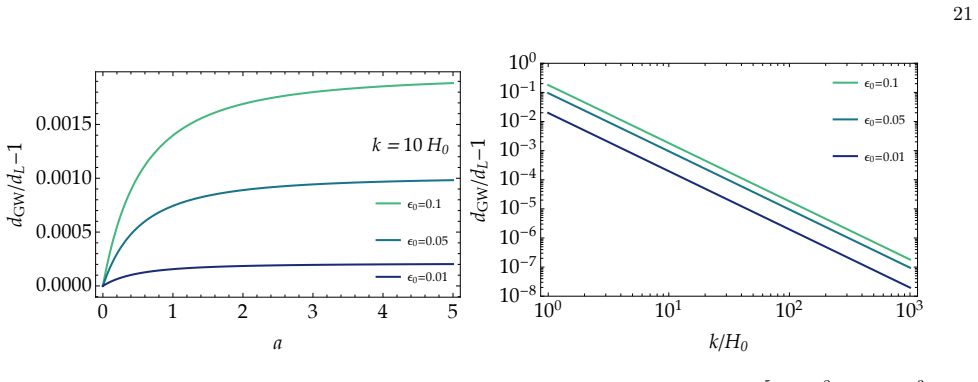
We construct a unified description of dark matter and dark energy in terms of a single dark component that behaves as a pressureless fluid in the early Universe and undergoes a transition to a solid phase at late times that can support accelerated expansion. A generalized Chaplygin-type solid provides a simple realization of this scenario. The solid nature of the dark medium prevents the instabilities and strong acoustic oscillations that typically arise in perfect-fluid unifications. It also gives rise to distinctive signatures in cosmological perturbations, such as a suppression of structure growth, a nontrivial gravitational slip, and an effective mass for gravitational waves. Since these
What carries the argument
generalized Chaplygin-type solid, which supplies the background transition from pressureless to accelerating behavior while eliminating fluid instabilities and generating the listed perturbation signatures.
Load-bearing premise
A generalized Chaplygin-type solid can be constructed to reproduce the required background transition from pressureless to accelerating behavior while remaining free of instabilities and consistent with existing data.
What would settle it
Detection of strong acoustic oscillations in late-time dark sector perturbations or absence of suppressed structure growth and gravitational slip at low redshifts would show that the solid unification does not hold.
If this is right
- Structure growth is suppressed at low redshifts.
- A nontrivial gravitational slip appears in the perturbations.
- Gravitational waves acquire an effective mass.
- High-redshift cosmology stays unmodified.
- The background transition from dark matter to dark energy is reproduced without fluid instabilities.
Where Pith is reading between the lines
- The solid-phase mechanism could be tested by cross-correlating weak lensing and galaxy clustering measurements at z less than 1.
- Similar solid descriptions might be applied to other unified models to address perturbation issues.
- The effective mass for gravitational waves could produce measurable damping or dispersion in signals from distant sources.
- Future surveys sensitive to modified gravity parameters at late times could confirm or rule out the predicted slip.
Editorial analysis
A structured set of objections, weighed in public.
Referee Report
Summary. The manuscript claims to construct a unified dark sector model in which a single component behaves as pressureless dust at high redshift and transitions to a solid phase supporting late-time acceleration. A generalized Chaplygin-type solid is proposed as a realization that eliminates gradient instabilities and acoustic oscillations characteristic of perfect-fluid unifications while producing low-redshift signatures including suppressed structure growth, gravitational slip, and an effective mass for gravitational waves, leaving high-redshift cosmology unmodified.
Significance. If the explicit construction and stability analysis were provided and verified, the approach would represent a potentially significant advance by offering a mechanism for dark-sector unification that naturally confines new effects to low redshifts and introduces testable perturbation signatures distinct from fluid-based models. The solid degrees of freedom could address known shortcomings of unified dark energy scenarios without additional fine-tuning.
major comments (2)
- [Abstract] Abstract: the central claim that a generalized Chaplygin-type solid realizes a stable background transition from pressureless to accelerating behavior is asserted without any explicit Lagrangian, stress-energy tensor, equation-of-state parametrization, or dispersion relation, rendering it impossible to verify that the shear modulus and other parameters can be chosen to satisfy both the required expansion history and the absence of instabilities.
- [Abstract] Abstract: the statements that the solid phase 'prevents the instabilities and strong acoustic oscillations' and 'gives rise to distinctive signatures' are presented as direct consequences of the model, yet no stability analysis, perturbation equations, or comparison to existing data (e.g., growth-rate measurements or GW constraints) is supplied to substantiate these load-bearing assertions.
Simulated Author's Rebuttal
We thank the referee for their report and for highlighting the need for clarity in the abstract. The abstract is a high-level summary; the explicit construction, Lagrangian, stress-energy tensor, stability analysis, and perturbation equations are all provided in the body of the manuscript. We address the two major comments point by point below.
read point-by-point responses
-
Referee: [Abstract] Abstract: the central claim that a generalized Chaplygin-type solid realizes a stable background transition from pressureless to accelerating behavior is asserted without any explicit Lagrangian, stress-energy tensor, equation-of-state parametrization, or dispersion relation, rendering it impossible to verify that the shear modulus and other parameters can be chosen to satisfy both the required expansion history and the absence of instabilities.
Authors: The abstract summarizes the main result. The explicit Lagrangian for the generalized Chaplygin-type solid (Eq. 1), the derived stress-energy tensor (Eq. 2), the equation-of-state parametrization (Eq. 3), and the dispersion relation (Eq. 7) are all given in Section II, where we explicitly show the choice of shear modulus and other parameters that produces the required background transition while eliminating gradient instabilities. revision: no
-
Referee: [Abstract] Abstract: the statements that the solid phase 'prevents the instabilities and strong acoustic oscillations' and 'gives rise to distinctive signatures' are presented as direct consequences of the model, yet no stability analysis, perturbation equations, or comparison to existing data (e.g., growth-rate measurements or GW constraints) is supplied to substantiate these load-bearing assertions.
Authors: These statements in the abstract are conclusions drawn from the analysis in the main text. Section III derives the perturbation equations for the solid, performs the stability analysis (showing absence of instabilities and acoustic oscillations), and obtains the distinctive low-redshift signatures (suppressed growth, gravitational slip, effective GW mass). Section IV compares these signatures to growth-rate and GW constraints, confirming they are confined to low redshifts. revision: no
Circularity Check
No circularity; derivation presented as explicit construction without reduction to inputs
full rationale
The provided abstract and context contain no equations, fitting procedures, or self-citations. The paper states it constructs a generalized Chaplygin-type solid that realizes the background transition while avoiding instabilities, with perturbation signatures arising from the solid phase. No load-bearing step reduces by construction to a fitted parameter, self-definition, or prior self-citation chain. The central claim is framed as a new construction whose validity rests on the explicit model (not supplied in abstract but asserted to exist), making the derivation self-contained. No patterns from the enumerated list are exhibited, so the honest finding is zero circularity.
Axiom & Free-Parameter Ledger
axioms (1)
- domain assumption A generalized Chaplygin-type solid exists that transitions from pressureless fluid to solid phase at late times while supporting accelerated expansion without instabilities.
invented entities (1)
-
Generalized Chaplygin-type solid dark component
no independent evidence
read the original abstract
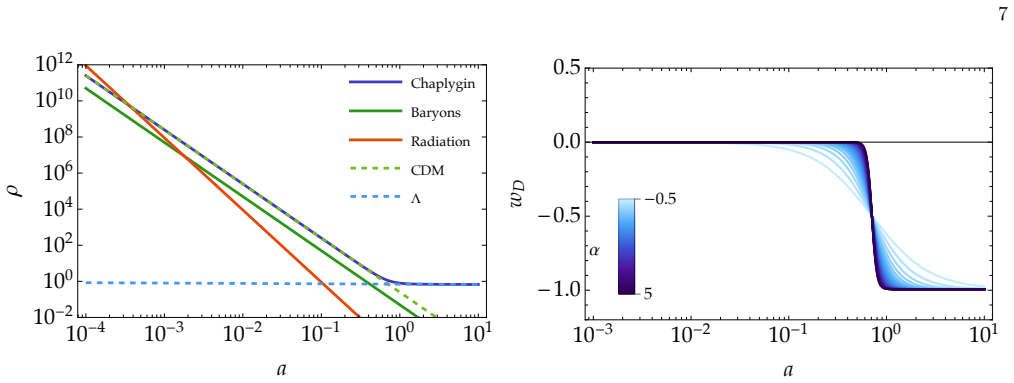
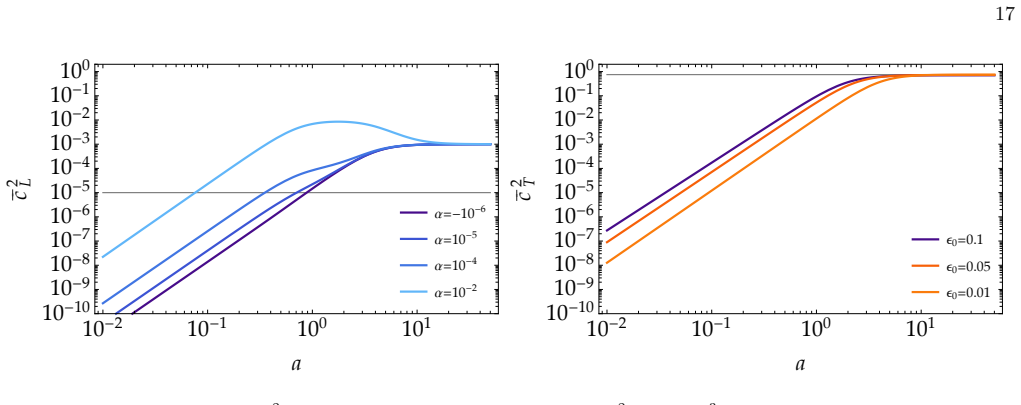
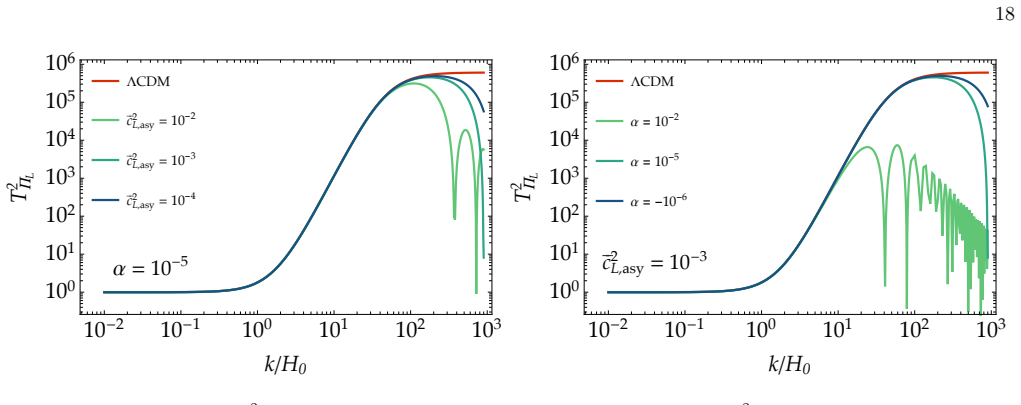
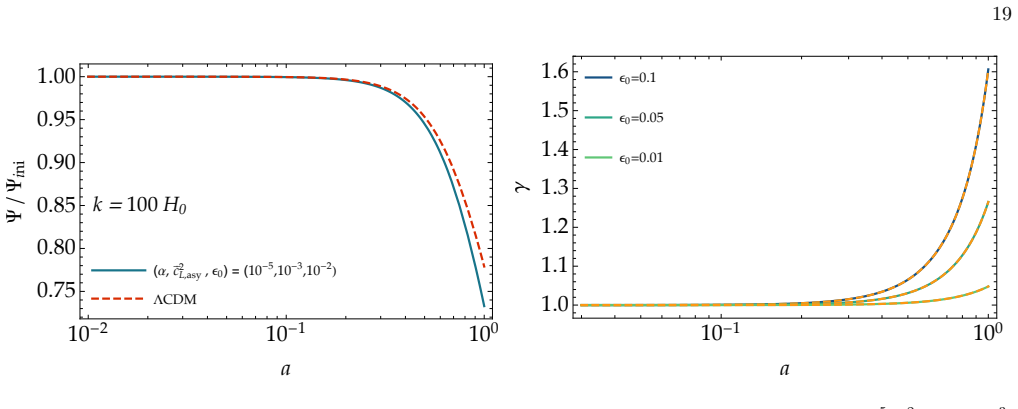
We construct a unified description of dark matter and dark energy in terms of a single dark component that behaves as a pressureless fluid in the early Universe and undergoes a transition to a solid phase at late times that can support accelerated expansion. A generalized Chaplygin-type solid provides a simple realization of this scenario. The solid nature of the dark medium prevents the instabilities and strong acoustic oscillations that typically arise in perfect-fluid unifications. It also gives rise to distinctive signatures in cosmological perturbations, such as a suppression of structure growth, a nontrivial gravitational slip, and an effective mass for gravitational waves. Since these effects share a common origin in the solid phase, they become relevant only at low redshifts, leaving the high-redshift cosmology essentially unmodified. This demonstrates that a solidly unified dark sector can reproduce the desired background transition from dark matter to dark energy while yielding testable imprints in cosmological perturbations.
Figures
Forward citations
Cited by 1 Pith paper
-
The silent dark sector: a field-theory approach to unified dark fluids with vanishing speed of sound
All vanishing-speed-of-sound TDiff scalar theories reduce to a two-parameter mimetic action describing the dark sector as interacting dust plus vacuum; a quadratic-potential example tracks the DESI CPL background.
Reference graph
Works this paper leans on
-
[1]
Vector perturbations In the vector sector, the perturbed line element (3.3) contains only the perturbed fieldS i after imposing the gauge in which the contribution 2a 2∂iFjdxidxj vanishes. Choosing the Fourier wave vector to be along thezdirection, we can take the nonvanishing components ofS i and the transverse phonon perturbationπ i T to be Si = [S1(t, ...
-
[2]
Scalar perturbations For scalar perturbations, we do not fix the gauge conditions from the outset, but instead derive the second-order action in a gauge-ready form by using the perturbed line element (4.1). In the Schutz-Sorkin action (A1), the current J µ contains two scalar perturbations,δJandδj, asJ 0 =N 0 +δJandJ i =δ ik∂kδj/a2, whereN 0 =n 0a3 and n0...
-
[3]
Zwicky,Helv
F. Zwicky,Helv. Phys. Acta6, 110 (1933)
1933
-
[4]
V. C. Rubin and W. K. Ford, Jr.,Astrophys. J.159, 379 (1970)
1970
-
[5]
Nine-Year Wilkinson Microwave Anisotropy Probe (WMAP) Observations: Cosmological Parameter Results
G. Hinshawet al.(WMAP),Astrophys. J. Suppl.208, 19 (2013), arXiv:1212.5226 [astro-ph.CO]
work page internal anchor Pith review Pith/arXiv arXiv 2013
-
[6]
Planck 2018 results. VI. Cosmological parameters
N. Aghanimet al.(Planck),Astron. Astrophys.641, A6 (2020), [Erratum: Astron.Astrophys. 652, C4 (2021)], arXiv:1807.06209 [astro-ph.CO]. 26
work page internal anchor Pith review Pith/arXiv arXiv 2020
-
[7]
D. J. Eisensteinet al.,Astrophys. J.633, 560 (2005), arXiv:astro-ph/0501171
work page internal anchor Pith review Pith/arXiv arXiv 2005
-
[8]
W. J. Percivalet al.,Astrophys. J.657, 51 (2007), arXiv:astro-ph/0608635
work page internal anchor Pith review Pith/arXiv arXiv 2007
-
[9]
J. A. Tyson, G. P. Kochanski, and I. P. Dell’Antonio,Astrophys. J. Lett.498, L107 (1998), arXiv:astro-ph/9801193
work page internal anchor Pith review Pith/arXiv arXiv 1998
-
[10]
A direct empirical proof of the existence of dark matter
D. Clowe, M. Bradaˇ c, A. H. Gonzalez, M. Markevitch, S. W. Randall, C. Jones, and D. Zaritsky,Astrophys. J. Lett.648, L109 (2006), arXiv:astro-ph/0608407
work page internal anchor Pith review Pith/arXiv arXiv 2006
-
[11]
Particle Dark Matter: Evidence, Candidates and Constraints
G. Bertone, D. Hooper, and J. Silk,Phys. Rept.405, 279 (2005), arXiv:hep-ph/0404175
work page internal anchor Pith review Pith/arXiv arXiv 2005
-
[12]
A. G. Riesset al.(Supernova Search Team),Astron. J.116, 1009 (1998), arXiv:astro-ph/9805201
work page internal anchor Pith review Pith/arXiv arXiv 1998
-
[13]
Measurements of Omega and Lambda from 42 High-Redshift Supernovae
S. Perlmutteret al.(Supernova Cosmology Project),Astrophys. J.517, 565 (1999), arXiv:astro-ph/9812133
work page internal anchor Pith review Pith/arXiv arXiv 1999
-
[14]
Weinberg,Rev
S. Weinberg,Rev. Mod. Phys.61, 1 (1989)
1989
-
[15]
The Case for a Positive Cosmological Lambda-term
V. Sahni and A. Starobinsky,Int. J. Mod. Phys. D9, 373 (2000), arXiv:astro-ph/9904398
work page internal anchor Pith review Pith/arXiv arXiv 2000
-
[16]
S. M. Carroll,Living Rev. Rel.4, 1 (2001), arXiv:astro-ph/0004075
work page internal anchor Pith review Pith/arXiv arXiv 2001
-
[17]
Cosmological Constant - the Weight of the Vacuum
T. Padmanabhan,Phys. Rept.380, 235 (2003), arXiv:hep-th/0212290
work page internal anchor Pith review Pith/arXiv arXiv 2003
-
[18]
P. J. E. Peebles and B. Ratra,Rev. Mod. Phys.75, 559 (2003), arXiv:astro-ph/0207347
work page internal anchor Pith review Pith/arXiv arXiv 2003
-
[19]
J. Martin,Comptes Rendus Physique13, 566 (2012), arXiv:1205.3365 [astro-ph.CO]
work page internal anchor Pith review Pith/arXiv arXiv 2012
-
[20]
Tensions between the Early and the Late Universe
L. Verde, T. Treu, and A. G. Riess,Nature Astron.3, 891 (2019), arXiv:1907.10625 [astro-ph.CO]
work page internal anchor Pith review Pith/arXiv arXiv 2019
-
[21]
In the Realm of the Hubble tension $-$ a Review of Solutions
E. Di Valentino, O. Mena, S. Pan, L. Visinelli, W. Yang, A. Melchiorri, D. F. Mota, A. G. Riess, and J. Silk,Class. Quant. Grav.38, 153001 (2021), arXiv:2103.01183 [astro-ph.CO]
work page internal anchor Pith review Pith/arXiv arXiv 2021
-
[22]
A. G. Riess, W. Yuan, L. M. Macri, D. Scolnic, D. Brout, S. Casertano, D. O. Jones, Y. Murakami, L. Breuval, T. G. Brink,et al.,Astrophys. J. Lett.934, L7 (2022), arXiv:2112.04510 [astro-ph.CO]
work page internal anchor Pith review Pith/arXiv arXiv 2022
- [23]
-
[24]
A. G. Adameet al.(DESI),JCAP02, 021 (2025), arXiv:2404.03002 [astro-ph.CO]
work page internal anchor Pith review Pith/arXiv arXiv 2025
-
[25]
DESI DR2 Results II: Measurements of Baryon Acoustic Oscillations and Cosmological Constraints
M. Abdul Karimet al.(DESI),Phys. Rev. D112, 083515 (2025), arXiv:2503.14738 [astro-ph.CO]
work page internal anchor Pith review Pith/arXiv arXiv 2025
-
[26]
Fujii,Phys
Y. Fujii,Phys. Rev. D26, 2580 (1982)
1982
-
[27]
P. J. E. Peebles and B. Ratra,Astrophys. J. Lett.325, L17 (1988)
1988
-
[28]
Wetterich,Nucl
C. Wetterich,Nucl. Phys. B302, 668 (1988)
1988
-
[29]
T. Chiba, N. Sugiyama, and T. Nakamura,Mon. Not. Roy. Astron. Soc.289, L5 (1997), arXiv:astro-ph/9704199
work page internal anchor Pith review Pith/arXiv arXiv 1997
-
[30]
E. J. Copeland, A. R. Liddle, and D. Wands,Phys. Rev. D57, 4686 (1998), arXiv:gr-qc/9711068
work page internal anchor Pith review Pith/arXiv arXiv 1998
-
[31]
R. R. Caldwell, R. Dave, and P. J. Steinhardt,Phys. Rev. Lett.80, 1582 (1998), arXiv:astro-ph/9708069
work page internal anchor Pith review Pith/arXiv arXiv 1998
-
[32]
E. J. Copeland, M. Sami, and S. Tsujikawa,Int. J. Mod. Phys. D15, 1753 (2006), arXiv:hep-th/0603057
work page internal anchor Pith review Pith/arXiv arXiv 2006
-
[33]
Approaches to Understanding Cosmic Acceleration
A. Silvestri and M. Trodden,Rept. Prog. Phys.72, 096901 (2009), arXiv:0904.0024 [astro-ph.CO]
work page internal anchor Pith review Pith/arXiv arXiv 2009
-
[34]
A. De Felice and S. Tsujikawa,Living Rev. Rel.13, 3 (2010), arXiv:1002.4928 [gr-qc]
work page internal anchor Pith review Pith/arXiv arXiv 2010
-
[35]
Modified Gravity and Cosmology
T. Clifton, P. G. Ferreira, A. Padilla, and C. Skordis,Phys. Rept.513, 1 (2012), arXiv:1106.2476 [astro-ph.CO]
work page internal anchor Pith review Pith/arXiv arXiv 2012
-
[36]
S. Tsujikawa,Class. Quant. Grav.30, 214003 (2013), arXiv:1304.1961 [gr-qc]
work page internal anchor Pith review Pith/arXiv arXiv 2013
-
[37]
Beyond the Cosmological Standard Model
A. Joyce, B. Jain, J. Khoury, and M. Trodden,Phys. Rept.568, 1 (2015), arXiv:1407.0059 [astro-ph.CO]
work page internal anchor Pith review Pith/arXiv arXiv 2015
-
[38]
Cosmological Tests of Modified Gravity
K. Koyama,Rept. Prog. Phys.79, 046902 (2016), arXiv:1504.04623 [astro-ph.CO]
work page internal anchor Pith review Pith/arXiv arXiv 2016
-
[39]
Dark energy in Horndeski theories after GW170817: A review
R. Kase and S. Tsujikawa,Int. J. Mod. Phys. D28, 1942005 (2019), arXiv:1809.08735 [gr-qc]
work page internal anchor Pith review Pith/arXiv arXiv 2019
-
[40]
Euclid preparation: VII. Forecast validation for Euclid cosmological probes
A. Blanchardet al.(Euclid),Astron. Astrophys.642, A191 (2020), arXiv:1910.09273 [astro-ph.CO]
work page Pith review arXiv 2020
- [41]
-
[42]
P. A. Abellet al.(LSST Dark Energy Science), arXiv:1211.0310 [astro-ph.CO]
work page internal anchor Pith review Pith/arXiv arXiv
-
[43]
The LSST Dark Energy Science Collaboration (DESC) Science Requirements Document
R. Mandelbaumet al.(LSST Dark Energy Science), arXiv:1809.01669 [astro-ph.CO]
-
[44]
A. Y. Kamenshchik, U. Moschella, and V. Pasquier,Phys. Lett. B511, 265 (2001), arXiv:gr-qc/0103004
work page internal anchor Pith review Pith/arXiv arXiv 2001
-
[45]
Unification of Dark Matter and Dark Energy: the Inhomogeneous Chaplygin Gas
N. Bilic, G. B. Tupper, and R. D. Viollier,Phys. Lett. B535, 17 (2002), arXiv:astro-ph/0111325
work page internal anchor Pith review Pith/arXiv arXiv 2002
-
[46]
M. C. Bento, O. Bertolami, and A. A. Sen,Phys. Rev. D66, 043507 (2002), arXiv:gr-qc/0202064
work page internal anchor Pith review Pith/arXiv arXiv 2002
-
[47]
A. Dev, J. S. Alcaniz, and D. Jain,Phys. Rev. D67, 023515 (2003), arXiv:astro-ph/0209379
work page internal anchor Pith review Pith/arXiv arXiv 2003
-
[48]
J. C. Fabris, S. V. B. Goncalves, and P. E. de Souza,Gen. Rel. Grav.34, 53 (2002), arXiv:gr-qc/0103083
work page internal anchor Pith review Pith/arXiv arXiv 2002
-
[49]
Does a relativistic metric generalization of Newtonian gravity exist in 2+1 dimensions?
V. Gorini, A. Kamenshchik, U. Moschella, and V. Pasquier,Int. J. Mod. Phys. D13, 1385 (2004), arXiv:gr-qc/0207070
work page internal anchor Pith review Pith/arXiv arXiv 2004
-
[50]
The end of unified dark matter?
H. Sandvik, M. Tegmark, M. Zaldarriaga, and I. Waga,Phys. Rev. D69, 123524 (2004), arXiv:astro-ph/0212114
work page internal anchor Pith review Pith/arXiv arXiv 2004
-
[51]
Null energy condition and superluminal propagation
S. Dubovsky, T. Gregoire, A. Nicolis, and R. Rattazzi,JHEP03, 025 (2006), arXiv:hep-th/0512260
work page internal anchor Pith review Pith/arXiv arXiv 2006
-
[52]
The quantum mechanics of perfect fluids
S. Endlich, A. Nicolis, R. Rattazzi, and J. Wang,JHEP04, 102 (2011), arXiv:1011.6396 [hep-th]
work page internal anchor Pith review Pith/arXiv arXiv 2011
-
[53]
Effective field theory for hydrodynamics: thermodynamics, and the derivative expansion
S. Dubovsky, L. Hui, A. Nicolis, and D. T. Son,Phys. Rev. D85, 085029 (2012), arXiv:1107.0731 [hep-th]
work page internal anchor Pith review Pith/arXiv arXiv 2012
-
[54]
S. Endlich, A. Nicolis, and J. Wang,JCAP10, 011 (2013), arXiv:1210.0569 [hep-th]
work page internal anchor Pith review Pith/arXiv arXiv 2013
-
[55]
Effective perfect fluids in cosmology
G. Ballesteros and B. Bellazzini,JCAP04, 001 (2013), arXiv:1210.1561 [astro-ph.CO]
work page internal anchor Pith review Pith/arXiv arXiv 2013
-
[56]
The effective theory of fluids at NLO and implications for dark energy
G. Ballesteros,JCAP03, 001 (2015), arXiv:1410.2793 [hep-th]
work page internal anchor Pith review Pith/arXiv arXiv 2015
-
[57]
Towards an effective action for relativistic dissipative hydrodynamics
P. Kovtun, G. D. Moore, and P. Romatschke,JHEP07, 123 (2014), arXiv:1405.3967 [hep-th]
work page internal anchor Pith review Pith/arXiv arXiv 2014
-
[58]
The expected anisotropy in solid inflation
N. Bartolo, M. Peloso, A. Ricciardone, and C. Unal,JCAP11, 009 (2014), arXiv:1407.8053 [astro-ph.CO]
work page internal anchor Pith review Pith/arXiv arXiv 2014
-
[59]
Primordial gravitational waves in supersolid inflation
A. Ricciardone and G. Tasinato,Phys. Rev. D96, 023508 (2017), arXiv:1611.04516 [astro-ph.CO]
work page internal anchor Pith review Pith/arXiv arXiv 2017
-
[60]
M. Celoria, D. Comelli, L. Pilo, and R. Rollo,JHEP01, 185 (2021), arXiv:2010.02023 [gr-qc]
-
[61]
M. Celoria, D. Comelli, L. Pilo, and R. Rollo,JHEP06, 147 (2021), arXiv:2103.10402 [astro-ph.CO]
- [62]
- [63]
-
[64]
R. A. Battye and A. Moss,Phys. Rev. D72, 023528 (2005), arXiv:astro-ph/0503033
work page internal anchor Pith review Pith/arXiv arXiv 2005
-
[65]
R. A. Battye and A. Moss,Phys. Rev. D76, 023005 (2007), arXiv:astro-ph/0703744
work page internal anchor Pith review Pith/arXiv arXiv 2007
-
[66]
J. Motoa-Manzano, J. B. Orjuela-Quintana, T. S. Pereira, and C. A. Valenzuela-Toledo,JCAP07, 026 (2021), 27 arXiv:2012.09946 [gr-qc]
-
[67]
A. Gruzinov,Phys. Rev. D70, 063518 (2004), arXiv:astro-ph/0404548
work page internal anchor Pith review Pith/arXiv arXiv 2004
-
[68]
R. Arjona and S. Nesseris,JCAP11, 042 (2020), arXiv:2001.11420 [astro-ph.CO]
-
[69]
G. Alestas, L. Kazantzidis, and S. Nesseris,Phys. Rev. D106, 103519 (2022), arXiv:2209.12799 [astro-ph.CO]
-
[70]
A. M. Pinho, S. Casas, and L. Amendola,JCAP11, 027 (2018), arXiv:1805.00027 [astro-ph.CO]
work page internal anchor Pith review Pith/arXiv arXiv 2018
-
[71]
F. Skara and L. Perivolaropoulos,Phys. Rev. D101, 063521 (2020), arXiv:1911.10609 [astro-ph.CO]
- [72]
-
[73]
S. Guerrini and E. M¨ ortsell,Phys. Rev. D109, 023533 (2024), arXiv:2309.11915 [astro-ph.CO]
-
[74]
B. F. Schutz and R. Sorkin,Annals Phys.107, 1 (1977)
1977
-
[75]
Action functionals for relativistic perfect fluids
J. Brown,Class. Quant. Grav.10, 1579 (1993), arXiv:gr-qc/9304026
work page internal anchor Pith review Pith/arXiv arXiv 1993
-
[76]
Cosmological perturbations of a perfect fluid and noncommutative variables
A. De Felice, J.-M. Gerard, and T. Suyama,Phys. Rev. D81, 063527 (2010), arXiv:0908.3439 [gr-qc]
work page internal anchor Pith review Pith/arXiv arXiv 2010
-
[77]
Cosmology in generalized Proca theories
A. De Felice, L. Heisenberg, R. Kase, S. Mukohyama, S. Tsujikawa, and Y.-l. Zhang,JCAP06, 048 (2016), arXiv:1603.05806 [gr-qc]
work page internal anchor Pith review Pith/arXiv arXiv 2016
-
[78]
Effective gravitational couplings for cosmological perturbations in generalized Proca theories
A. De Felice, L. Heisenberg, R. Kase, S. Mukohyama, S. Tsujikawa, and Y.-l. Zhang,Phys. Rev. D94, 044024 (2016), arXiv:1605.05066 [gr-qc]
work page internal anchor Pith review Pith/arXiv arXiv 2016
discussion (0)
Sign in with ORCID, Apple, or X to comment. Anyone can read and Pith papers without signing in.